
At the sign of the teapot on Putnam Street
Trending
Miss Nellie S. Carothers, at the age of 39, was a woman with good, sound business sense. Having already tried careers as a milliner and a nanny, in September of 1914 she opened her own tea room in downtown Marietta. It happened in the right place at the right time. Important social changes, including women's rights and Prohibition, made a cozy, respectable tea room as popular then as a Starbucks is today.
In the early 20th Century, restaurants were dominated by cigar-smoking, meat-and-potatoes men, and women were not admitted without a male escort.
Tea rooms, on the other hand, were decorated with candles and flowers and served lighter fare, such as salads, sandwiches, and lemonade. They offered a place for lively conversation and gossip.
Many Marietta residents of that era believed that an influx of oil field workers and other outside influences had made their town a bit too rowdy and fond of drink. The controversy over alcohol was still running high in 1914 when Nellie opened her shop.
Then in 1920, the Eighteenth Amendment to the U.S. Constitution prohibited the manufacture and sale of alcohol, closing saloons for the next 13 years. Business boomed at The Tea Room!
The first location of Nellie's restaurant was at the southwest corner of Third and Putnam streets, now the site of People's News. One of her first customers was Mrs. Tasker Bosworth, who "gathered a group of ladies there for an afternoon chat and a cup of tea." According to the Marietta Daily Times, "the Tea Room is proving a delightful place for small afternoon teas." It quickly became the fashionable spot for lunch and dinner, as well.
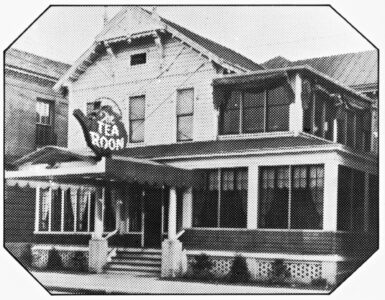
In 1917, Nellie bought a house at 306 Putnam St., remodeled it for her tea room and home, and hung out a welcoming sign in the shape of a teapot.
She was joined by an assistant and "sturdy mainstay," Miss Martha Masters. Women were the customers of honor in The Tea Room, but a double-parlor was set aside as a room for men and a space for parties, meetings, and banquets.
Theater and concert audiences were a big part of The Tea Room's dinner trade, as the City Hall Auditorium was across the street. Marietta College students also enjoyed the "savory food," "prompt and proper service," and home-like atmosphere. The Tea Room became so busy that Nellie began hiring college students as servers. More than 125 of them worked there during their time in school.
After 25 years in a highly successful business, Nellie Carothers decided it was time to retire, and The Tea Room served its last meal on April 12, 1939. It had become such an iconic part of Marietta that the closing was even reported in The Columbus Citizen, which said, "It began simply as a place to eat well and reasonably, and, despite temptation, the policy stood. The food may have been a trifle on the dainty side, but it was always palatable and well-seasoned."
Nellie Carothers continued to live at 306 Putnam St. until her death in 1943. The building was home to a variety of businesses and residents until September of 1956, when it was demolished to provide parking for the Marietta Osteopathic Hospital, and now for Marietta's water and sewer a