
Curiosities of the Mountains
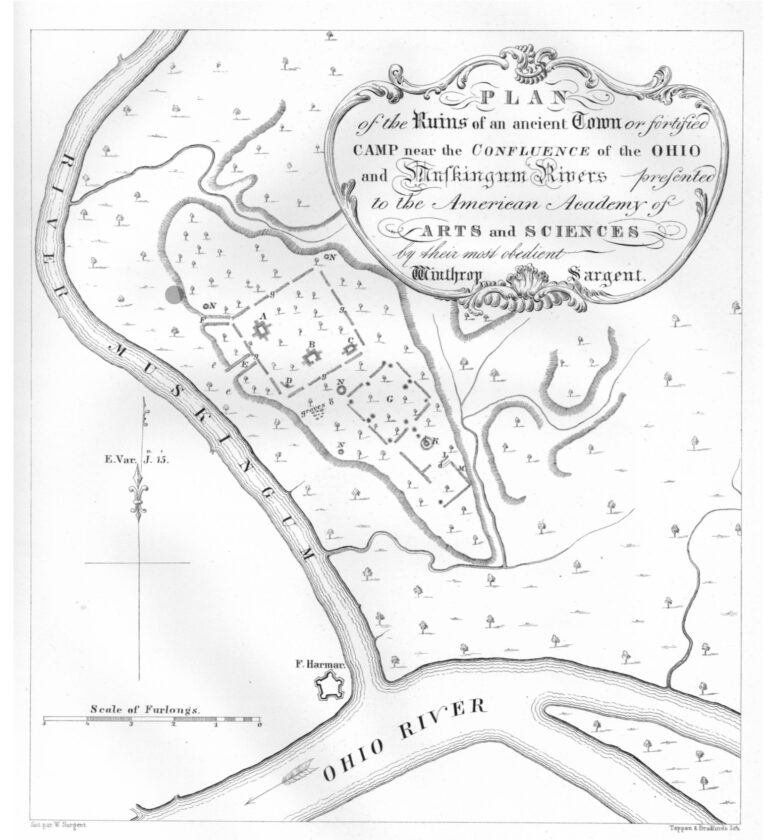
Early drawing of Marietta Earthworks submitted to American Academy of Arts and Sciences. (Photo provided from jstor.org)

Scan QR code to learn more about the Marietta Earthworks.

Scan to see a more detailed drawing and related documents.
Early drawing of Marietta Earthworks submitted to American Academy of Arts and Sciences. (Photo provided from jstor.org)
Scan QR code to learn more about the Marietta Earthworks.
Scan to see a more detailed drawing and related documents.
Trending
The first observers called them ancient ruins, ancient remains, antiquities, curiosities of the mountains. We know them today as Indian Mounds, or locally as the Marietta Earthworks.
The word "curiosity" conveyed the sense of awe and mystery prevalent at the time. These were not the work of American Indians. What were they? Learn more by scanning the QR codes.
The Marietta earthworks were among the very the first to be documented in America.
Their origin was being debated in the 1780s by such distinguished luminaries as Ben Franklin, Thomas Jefferson, Noah Webster, and scholars at Harvard and Yale. This drawing was sent by Winthrop Sargent to the Academy of Arts and Sciences in Cambridge MA on March 27, 1787.
A 1,500 year old calendar: Sacra Via along with Quadranaou (at Camp Tupper park) and Capitolium (Public Library) mounds are aligned with the winter solstice sunset.
See this phenomenon in person (weather permitting) by attending The Castle Museum program "Solstice Watch" with archaeologist Wesley Clarke on Sunday, December 21, 2025 at 4:00 pm in Sacra Via Park.