
Spotted Lanternflies emerging in southern Ohio
Trending
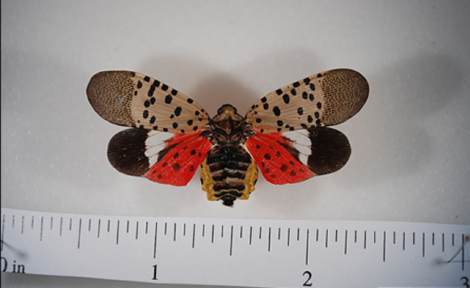
The Ohio Department of Agriculture has confirmed the first emergence/egg hatch of Spotted Lanternfly (SLF) (Lycorma delicatula) nymphs in Cincinnati on April 24, 2024. First instar nymphs were collected on young Trees of Heaven (Ailanthus altissima), one of its favored host plants. Spotted Lanternfly is now known to be in 12 Ohio counties (Belmont, Muskingum, Franklin, Hamilton, Jefferson, Columbiana, Mahoning, Cuyahoga, Lorain, Erie, Ottawa, and Lucas).
Currently, we do not have any reports of any spotted lanternfly establishments in Washington County, however it is only a matter of time. If you see or think you may have seen a spotted lanternfly, please take a picture, or capture the insect and inform your local extension office immediately. Reporting observations and findings from the public is crucial in helping to document the movement of SLF as it spreads across the state.
If you have any concerns about handling or capturing SLF, have no worries as they DO NOT bite or sting. They are safe to handle. Although they are not harmful to humans, they can be a major nuisance. They can make a mess in your yard by excreting a sticky substance that causes the growth of black sooty mold. The mold is harmless to people but can kill trees and ornamental plants.
Spotted Lanternfly’s preferred host is the dreaded invasive Tree of Heaven, Ailanthus altissima. When SLF occurs in a new area the adults are most likely to be found on this tree, so be sure to scout these trees on your property for SLF. However, late season adults tend to move away from Tree of Heaven to other food sources, such as grapes (including wild), hardwoods (maples, oaks, willows, walnuts, sycamore, etc.), and fruit trees. This is especially alarming news for grape and wine producers in Ohio. SLF can cause significant yield reduction in grapes and the risk assessment for grapes is high. Why does this matter to Ohio? Ohio is the #6 producers of wine in the U.S., and a reduced production and yield of grapes can severely impact our wine industry.
Spotted Lanternfly nymphs are black with white spots on the first through third instars. Right now, look for first instars which are approximately 1/4 inch long. In their fourth and final instar, they will reach approximately 1/2 inch in length and will develop red aposematic coloration that is associated with the adult. As the nymphs begin feeding now through spring, honeydew will be found on nearby plants and other surfaces that could attract other insects such as wasps and butterflies. This can aid in finding SLF infestations.
The Spotted Lanternfly (SLF) overwinters as egg masses and begins hatching in May and June. Old eggs will have a horizontal slit in the egg where nymphs have emerged. There is one generation per year consisting of four nymphal stages and an adult stage. Adults begin to appear in July and mating takes place in late August. Females begin laying eggs in September and this continues until the first killing frost.
Again, report any suspicion of spotted lanternfly and we need your help tracking its movement.
Marcus McCartney is the OSU Extension Agriculture and Natural Resources Educator for Washington County. He has been with Extension since 2014. Marcus received both his bachelor's and master's degrees from West Virginia University.