
Hazardous Duty
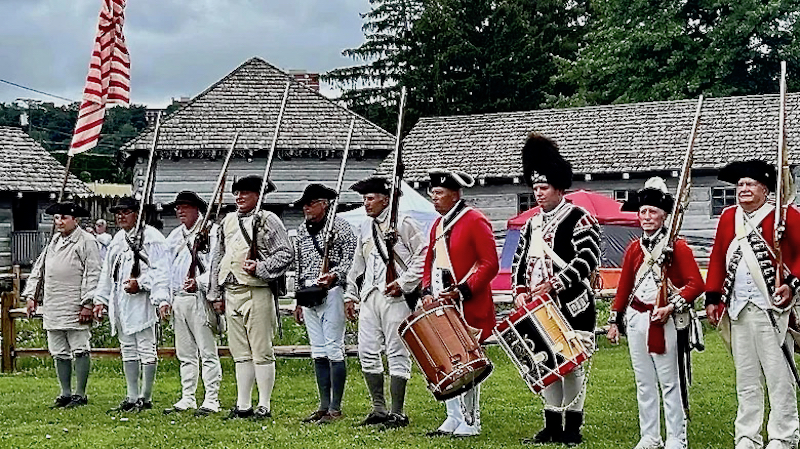
(Photo provided from islands.com) Soldiers at Fort Harmar might have resembled these reenactors from Fort Steuben.
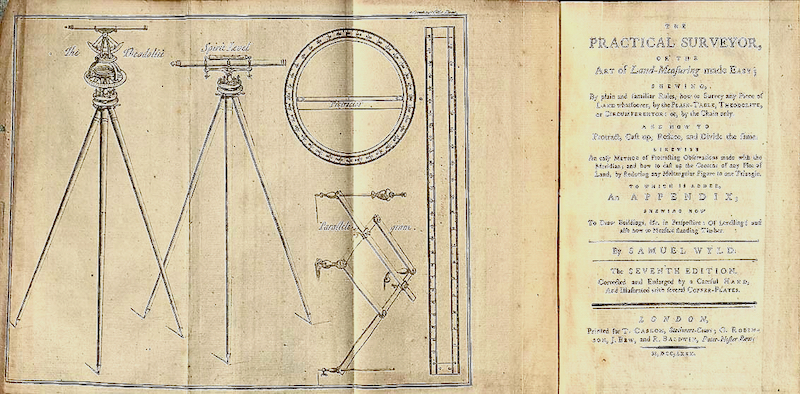
(Photo provided from amphilsoc.org) Samuel Wyld surveying book published 1780: a 1679 edition was in George Washington’s library.
(Photo provided from islands.com) Soldiers at Fort Harmar might have resembled these reenactors from Fort Steuben.
(Photo provided from amphilsoc.org) Samuel Wyld surveying book published 1780: a 1679 edition was in George Washington’s library.
Trending
How many 15 year-olds would run away from home to join the army? John Mathews did in 1780, serving in the Revolutionary War under his uncle, Rufus Putnam, with "remarkable fortitude and endurance." His next adventure was life-changing: he left his native Massachusetts and joined the 48 original settlers who started Marietta in 1788. He was a surveyor, having apprenticed with Rufus Putnam.
In June of 1789, John Mathews and James Backus led a surveying trip in today's Lawrence County Ohio, across from Huntington WV. The surveyors were accompanied by 7 soldiers from Fort Harmar. Duty at Fort Harmar in the late 1780s was never easy – one day heart-pounding threats, the next tedious chores, along with strict discipline and supply shortages. Protecting surveyors was part of their mission.
Weather was hot and humid. Backus's journal reported "cursed hilly country," "gnats troubled us amazingly," heavy rain, and a balky compass which "plagued my soul out." Two pack horses with supplies wandered off and could not be found. Indian hunting parties in the area had depleted wild game that the surveyors needed for food. July 10: Flour ran out. They had to survive on poor quality meat alone.
On July 22, the surveyors headed upriver to Marietta for resupply. They met a Marietta group going downriver including Parsons, Tupper, and Meigs – who "requested" (ordered?) the surveyors to turn back and continue working. They did. Supplies were finally replenished on July 31. Good news, except for 3 weeks they'd been starved – and weakened. Their daily liquor ration (about 4 oz.) helped; they kept their spirits up by pouring spirits down, you could say.
August 3: Surveyors resumed their work. There were ominous signs of Indians. August 6: A horse disappeared. Mathews' assistant Mr. Patchen scouted ahead and found tracks of a man and horse. He found 10 horses tethered in the woods and saw moccasin tracks as he returned to camp. Mathews put the group on full alert. Sentries were posted that night and each man was armed at dawn. August 7 past sunrise: thinking the threat of attack had passed (attacks usually happened just before dawn), the men relaxed, tended fires and cooked breakfast. Mathews sat on his blanket, half dressed. Suddenly, there was deafening gunfire. Indians! Patchen was mortally shot in the chest. Another volley killed all of the soldiers except for a corporal shielded by a tree.
John Mathews, barefoot and wearing only a hat and shirt, and 3 others fled through the woods. The Indians soon gave up pursuit. Mathews' feet and legs were bloodied from the underbrush and briars. A surveyor with him gave him a coat; Mathews used the sleeves as leggings. It was then he noticed a bullet hole in his shirt. They reached the Ohio River and were rescued by a passing boat. The corporal was the only Fort Harmar soldier who survived. He had hidden behind a log near the camp and watched the Indians as they ransacked the camp. He was surprised to see the Indians' amusement when they found a compass. They reacted with "great glee" as the needle moved.
August 13: John Mathews returned to the raid site to bury the dead, a stark reminder of the risks faced by surveyors and the soldiers at Fort Harmar. All of his camp and surveying equipment was gone, a serious financial blow. I was surprised to learn that 7 years later the Ohio Company partially reimbursed Mathews for his lost equipment. Undaunted, Mathews continued surveying, married Sally Woodbridge in 1803, operated successful businesses, and served in the Ohio legislature. Like many of our early settlers, Mathews persevered through adversity to live a successful and productive life.