Signs of suicide
Staffers from Fort Frye, Marietta, Warren listen, learn
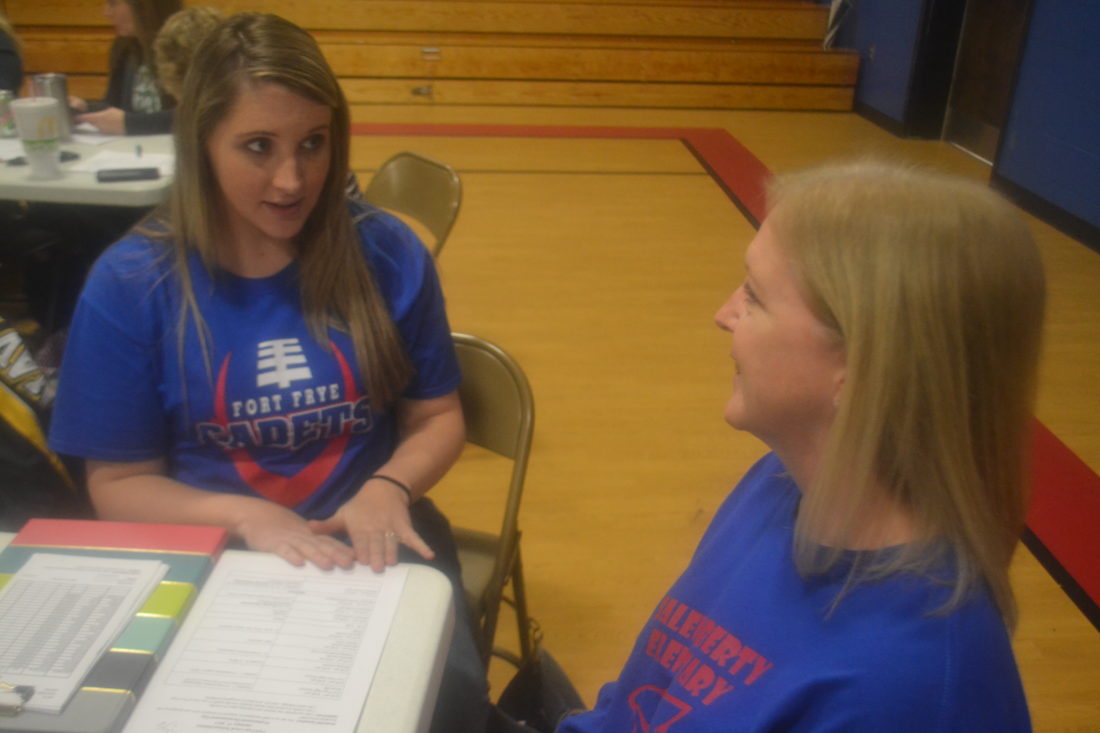
PEYTON NEELY The Marietta Times Second-grade teachers Sara Marshall, of Lowell, and Lisa Blain, of Lower Salem, role play during the Signs of Suicide program at Beverly-Center Elementary School on Tuesday.
BEVERLY–For some, their high school years are among their happiest, with a schedule full of athletics, friends and fun.
But one in six high school students have contemplated suicide at one point in their life, according to Nationwide Children’s Hospital’s Center for Suicide Prevention and Research (CSPR).
In an effort to educate the staff and administrators in the public school system the Fort Frye Local school district hosted a training program called Signs of Suicide on Tuesday. The training was mandatory for all the teachers for grades kindergarten through high school in the Fort Frye district. More than 70 administrators, teachers and counselors attended the program along with staff from both Warren Local school district and Marietta City district.
“This wasn’t brought on because of the given circumstances with Marietta City Schools a couple weeks ago,” said Fort Frye Superintendent Stephanie Starcher. “Our thoughts and prayers are there for those affected.”
Marietta High School junior Tyler Beckett, 16, took his own life at home Jan. 6.
Starcher said she’s been working on this program since summer of 2016 and wants her staff in the district to be prepared.
The district brought in Melanie Fluellen, a suicide prevention specialist from Nationwide Children’s Hospital
Josie Bintz, a seventh-grade teacher at Warren Middle School, said as an educator, it’s important to know the signs.
“My daughter was really close with Tyler and his passing affected her,” she said. “I heard of this opportunity and asked to come because kids are sometimes around their teachers more than their own parents.”
Bintz said she hopes to take the information learned at the Signs of Suicide program back to her home district and share the knowledge among other teachers.
“The more you educate yourself, the more likely you are to help someone,” she said.
The CSPR has worked with many middle and high schools in Ohio to implement the classroom-based program called Signs of Suicide. This program has been shown to decrease student suicide attempts by 40 percent, reduce negative attitudes and stigma associated with mental health, increase the knowledge of students and staff about suicide and depression and increase the number of students willing to seek help for themselves or their friends.
“The goal here is to educate yourself on suicide prevention,” said Fluellen to the group of staff members gathered in the gym of Beverly-Center Elementary School. “We want you to learn about youth suicide, discuss the role schools play in prevention and practice acknowledging the signs of suicide.”
The staff was taught to know the signs of a possible suicide and then follow the acronym ACT which is to act on the situation, inform the student that someone cares and then tell someone rather than hiding it. Some of the signs they were told to look for included dramatic mood swings from normal behavior or any verbal signs that a student may want to harm themselves. Another thing was to remain aware of significant life-changing events like a breakup, family problems or bullying in the school.
Fluellen gave the staff members several scenarios to practice involving common situations of depression among students.
“Unfortunately we can’t solve the problem and suicide may still happen but maybe the staff here is the trusted adult students will tell,” said Fluellen.
Suicide is the No. 1 cause of death among young people, according to Nationwide Children’s Hospital. Second-grade teacher Sara Marshall, of Lowell, said she fears that students are exposed to a lot more than previous generations and that could be the cause.
“Even little kids have access to a lot more stuff now, especially technology,” said Marshall. “It’s important to know what to look for even at a younger age.”
Lisa Blain, a second-grade teacher at Salem-Liberty Elementary School, said she sees her students accessing the Internet more easily than in the past.
“There’s more they have to worry about now,” she said. “It’s sad but knowing what to do in case of that situation is important.”
Fluellen said she reached out to schools in Ohio last year and Starcher responded.
“The signs of suicide are universal and all these adults can take this knowledge back with them,” she said. “I don’t think the increase in technology is the cause for the increase in suicides among young people but it is definitely playing a role. Suicide awareness will help address the issue a little better.”
Local News

Local donor makes $300K gift to Harmar Bridge project
Three candidates vie for two Williamstown council seats
WILLIAMSTOWN – With three candidates on the ballot for two seats, the race for Williamstown City Council will ...
Wood Commission and Union Williams PSD discuss their future
Wood County BOE candidates outline priorities ahead of election
PARKERSBURG – Voters in Wood County will choose from among nine candidates in this year’s Wood County Board of ...
Butler appointed to OhioSE Development Board of Directors
Ohio Southeast Economic Development (OhioSE) announces the appointment of Craig W. Butler to its Board of ...