Lyme disease
Cases reported in area; hunters urged to take precautions

Graphic courtesy of the Ohio Department of Health Since 2010, black-legged tick populations in Ohio have increased dramatically, and their range continues to expand in the state, particularly in the forest habitats preferred by this tick. This is the latest map of blacklegged ticks in Ohio.
Lyme disease is on the rise in Ohio, according to statistics released from the Ohio Department of Health, and Washington County is no exception.
“This year we’ve already had eight confirmed cases reported to us so it’s definitely here,” said Washington County Health Commissioner Dick Wittberg. “It is in the county and you need to take precautions.”
Especially for those taking advantage of the hunting seasons and getting out in the woods, pants tucked into socks, insect repellants, head coverings and throrough checks afterward need to remain a priority.
“Lyme disease is still very important to think about, even in cold weather,” said Ohio Department of Health Medical Director Dr. Clint Koenig in a statement. “You still need to take precautions like wearing bug repellent to make sure you are protected while outside enjoying the fall season.”
The ODH is reporting 241 cases of Lyme disease in 60 counties so far in 2017, including one case in Noble County. Cases of Lyme disease have steadily increased in Ohio during the past five years, with 93 cases in 2013, 119 cases in 2014, 154 cases in 2015 and 160 cases in 2016. The increase in cases coincides with the increase of blacklegged ticks in Ohio which have now been reportedly found in 61 of Ohio’s 88 counties as recently as October.
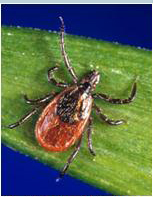
Lyme disease is a bacterial disease transmitted to humans via the bite of an infected deer tick. Symptoms can include a flu-like illness, muscle pain,and headache; a bull’s-eye shaped rash is often also seen at the site of the bite.
Glen Potts, of Newport, said it’s become a part of his family’s routine to check for ticks after every hunting trip.
“My sons are 7 and 12 and so we’ve been checking the kids often,” he said. “Ticks are especially terrible in tall weeds in the fall.”
Potts said he’s versed his boys in what to look for but also makes sure that when they venture out they’re wearing the right protection.
“Most of the time we wear tall rubber boots and our pants are tucked inside them,” he explained. “And hats are a key thing too. It seems like ticks love heads of hair so the hats help.”
Wittberg also pointed out that humans aren’t the only one susceptible to Lyme.
“I can remember three or four years ago my dog was acting really sick. She wimpered getting up and down and was lethargic but I really had to twist arms to get them to test for Lyme because nobody believed it was here,” he said. “Sure enough she has it, thankfully she’s now in remission but you need to catch it early.”
He noted that while not all ticks carry Lyme disease it’s better to be safe and catch the bite early rather than suffer.
“Always assume when you’re outside that you could come in contact with infected ticks,” he said. “If you see a bulls eye rash get yourself to the doctor.”
According to ODH there are currently no vaccines to prevent tickborne diseases. But if detected at an early stage, Lyme disease can be treated successfully with appropriate antibiotic therapy.
For more information about Ohio hunting season, go to ohiodnr.gov.
For more information about ticks and Lyme disease, go to odh.ohio.gov.
At a glance
How to avoid tick bites before and after you hunt:
¯ When possible, walk in the center of trails and paths to avoid brushing up against ticks.
¯ Apply bug repellent to everyone in your party, including pets.
¯ Tuck your pants into your boots or socks and tuck your shirt into your pants to prevent ticks from crawling inside clothing.
¯ Shower immediately after returning from the outdoors to remove unattached ticks.
¯ Check dogs for ticks after returning from tick habitats.
¯ Remove any attached tick immediately by grasping it with tweezers, as close to the skin as possible, and pulling it straight out. Do not twist or jerk.
Source: Ohio Department of Health.
-
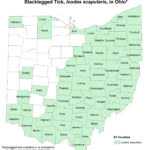
- Graphic courtesy of the Ohio Department of Health Since 2010, black-legged tick populations in Ohio have increased dramatically, and their range continues to expand in the state, particularly in the forest habitats preferred by this tick. This is the latest map of blacklegged ticks in Ohio.
Local News

Marietta Main Street’s April First Friday: Happy Birthday, Marietta
Pomeroy water system receiving EPA funds
From staff reports COLUMBUS — Ohio Rep. Kevin Ritter, R-Marietta, announced this week that the Ohio ...

Wildlife photographer Dianne Wigal featured at WesBanco

Williamstown High School presents Local School Improvement Council Showcase

Washington County Commissioners say they don’t approve data center tax abatement