
Stop the Bleed brings training program to church
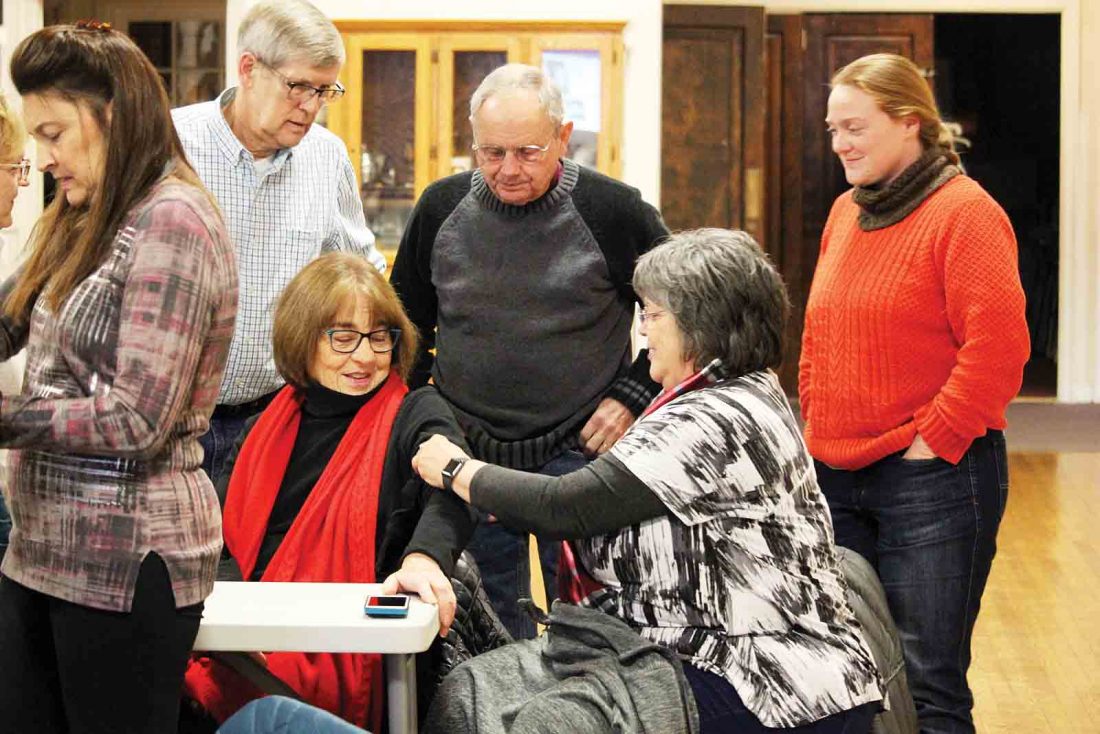
Jan Powell, right, applies a tourniquet to the arm of Mary Grubert, left, as fellow congregation members watch during a Stop the Bleed training in Marietta Monday. (Photo by Janelle Patterson)
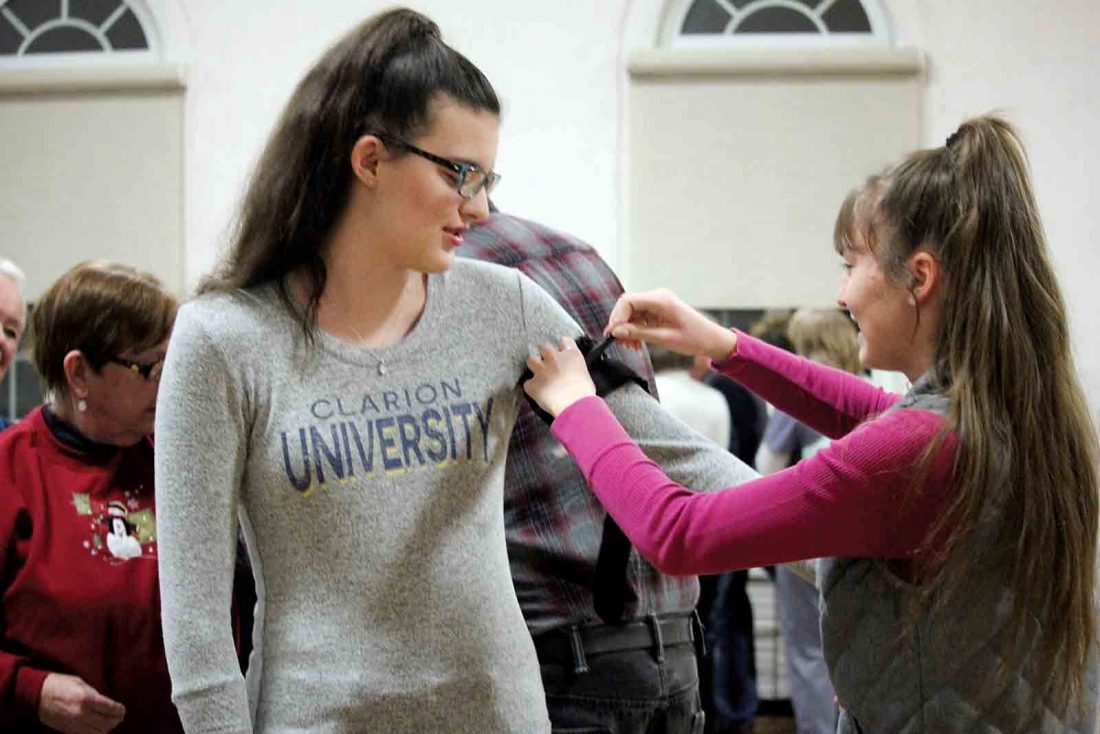
Katelyn Cline, right, applies a tourniquet to the arm of her sister Jessica during a Stop the Bleed training held at the First Congregational Church in Marietta Monday. (Photo by Janelle Patterson)
Jan Powell, right, applies a tourniquet to the arm of Mary Grubert, left, as fellow congregation members watch during a Stop the Bleed training in Marietta Monday. (Photo by Janelle Patterson)
Katelyn Cline, right, applies a tourniquet to the arm of her sister Jessica during a Stop the Bleed training held at the First Congregational Church in Marietta Monday. (Photo by Janelle Patterson)
Trending
Branching into local church halls and later this year banks, the mission to "stop the bleed" continues.
Stop the Bleed is a training program developed by the American College of Surgeons and The Committee on Trauma to arm laypersons with the tools to stabilize injuries after an active shooter situation.
It has been shared in schools across Washington and Wood counties by both Memorial Health System and WVU Medicine's Camden Clark personnel.
For the first time in Washington County, WVU's team entered a local church to offer the same free training Monday.
"We've offered this in the schools, but this is the first church in Marietta, in Washington County, we've brought this to," said Surgeon Bill Cline, a patron of the First Congregational Church.
The free training Monday gathered 22 members of the church's congregation into the fellowship hall to learn from Cline and Director of Trauma Services Christina Dellinger.
Jan Powell, of Marietta, and Mary Grubert, of Marietta, practiced applying tourniquets to each other during the second-half of the training.
"You know, I didn't realize people died from bleeding in those horrible cases," said Powell, referring to active shooter tragedies referenced by Cline both in schools and churches over the years.
"That's what bleeding out means," pointed out Grubert. "At work I definitely think about it, because I'm the first one you see."
Cline opened the training walking attendees through personal safety.
"Safety, safety, safety, never render aid until that danger is clear," he said. "Personal protection not only from being accosted, but also dangers from exposing yourselves to bodily fluids is important."
Then, Cline outlined the "ABCs" of stopping the bleed:
¯ A – Alert 911.
"Know your location, especially if you're calling on a cell phone make sure to share your exact position," he guided.
¯ B – Bleeding.
Ascertain where the bleeding is coming from; extremities, junctions and the torso.
"For the most part, bleeding in the torso cannot be controlled by these measures," said Cline. "Those are the individuals needing immediate transport to a medical facility."
¯ C – Compress/Compact.
"Pressure applied directly to the wound, it takes a lot of pressure to make this happen," described Cline. "If you're putting pressure on somebody's limb, and they're awake they're going to tell you that it hurts -- that's OK. It's supposed to hurt."
After direct pressure, Cline explained, deeper wounds may still continue to bleed and require packing or the use of tourniquets.
Cline also cautioned those present to never remove an impaled object, but to pack around it.
Questions from the crowd began with concerns over head injuries.
"Most head injuries your only salvage is immediate transport," Cline responded.
The second question was if the public can buy "stop the bleed" kits, and if so, where.
The group was guided to online kits from retailers like Amazon and StopTheBleed.org.
Then the group gathered got hands-on a portion which even Cline's twin daughters were eager to practice.
"He's run us through the general idea of what he's teaching, but so far all of those trainings were for adults only," said Kaelyn Cline, 18, of Marietta. "But this applies to more than just a stabbing or a shooting. If there's a car accident you could be punctured by glass or if there's a tornado there's flying debris."
Interim Minister Rev. David Zerby said he hoped to offer more courses like 'Stop the Bleed' training at the church, open not only to parishioners but to the community at large.
For more information on the program visit stopthebleed.org.