Survey answers election questions
Many voters are casting their ballots early, but others are still seeking final answers to questions concerning levies in Washington County and specific to their townships, school districts and communities before Nov. 3.
“There are a good bit of people that still wait until Election Day,” acknowledged Doug Mallett, Marietta City Schools board of education president, on Thursday.
So for those on the fence, considering options in the present city school district bond issue, The Marietta Times held a blind survey to bring answers to voters.
Participants had through this past weekend to log their questions, share their top and second priorities concerning the school district and note additional reasons they stood in favor of the bond levy, against it, or remained without a decision.
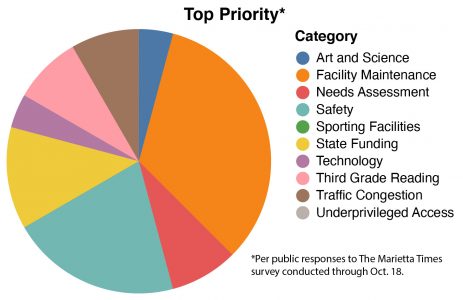
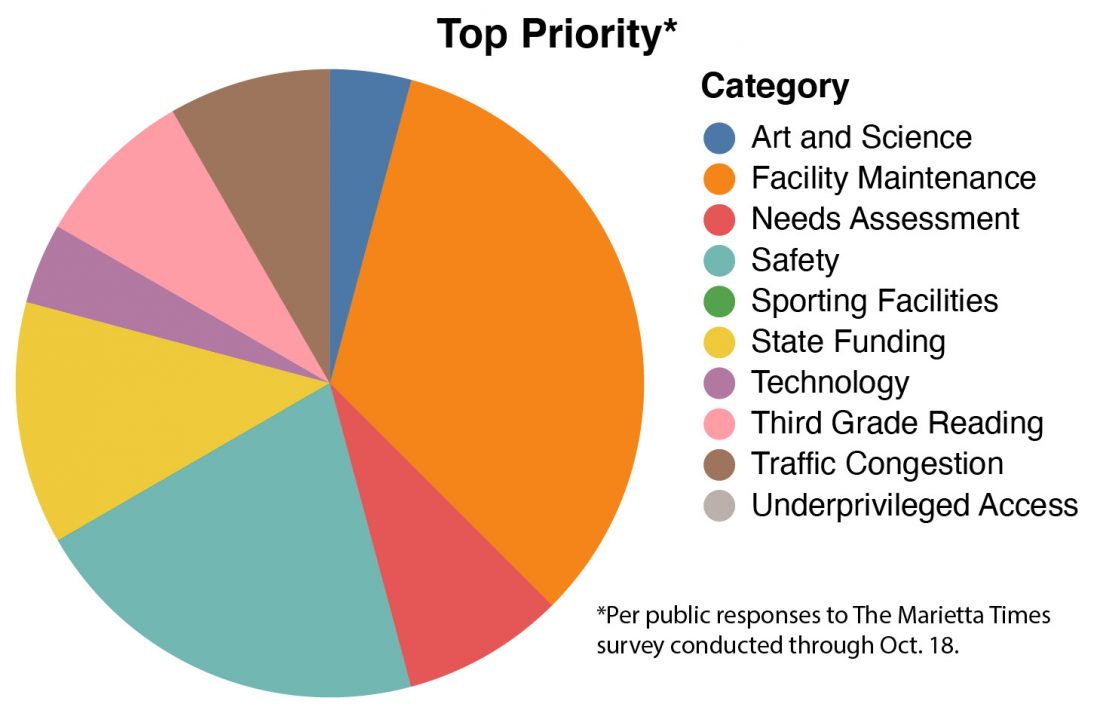
The top three priorities noted by the percentage of participants identifying their primary concerns were in order: facility maintenance and upkeep costs (33.3 percent); safety of buildings and intrusion prevention (20.8 percent); and state funding mechanisms and the constitutionality of operational funding and district academic performance (12.5 percent).
TOP PRIORITY
Facility maintenance and upkeep:
¯ Costs and useful life estimates were identified by participants as the largest concern of the public, with 33.3 percent selecting this topic first.
Some were in favor of moving away from aged buildings, while others were reserved or against the concept of building new.
“Many cities use schools built 100-plus years ago,” wrote one respondent “(They have) no problem upgrading for technology or air conditioning. Parents want quality education for their children, not the equivalent of an eighth-grade education at graduation time. Pretty and new doesn’t mean better.”
“New buildings do not ensure boards will be washed, floors swept and mopped, and so forth. This is common knowledge among staff,” wrote another. “Unfortunately, the public is not aware of the lack of cleanliness, even during a pandemic.”
Several responses focused on a need for clear information on the ages of current buildings, the costs to maintain them, and how that would differ from an itemized cost analysis of building new.
Meanwhile, others looked to the health of students within aged buildings.
“I have a health compromised child and I’m not sure these buildings are suitable,” wrote one parent.
Safety of buildings and intrusion prevention:
Both the current academic buildings and the proposed two new campus designs (middle/high school build behind Washington State Community College and a new elementary school on the present high school practice football field) produced a litany of questions and concern topics for administrators to explain.
Those included:
¯ Lockdown procedures.
¯ Multiple entrances and exits.
¯ Having multiple children in classes together during coronavirus.
¯ Stress on students and teachers.
¯ Human trafficking.
¯ Citizens suffering from drug addiction.
¯ Sexual predators.
¯ Door and window access, age, and ability to open and close.
¯ Surveillance equipment.
¯ Distance from main areas of town for emergency response time.
¯ Consolidating students to become a single or centralized target.
¯ Visitor access, bypass front office check-in now, versus in new buildings.
¯ Age and maintenance of the present alarm systems.
And one respondent described current basement rooms as feeling like a “fish tank for a potentially dangerous situation.”
State funding:
¯ The constitutionality of operational funding and district academic performance by state report cards.
¯ What happens to the district’s present priority for Ohio Facilities Construction Commission funding if this levy doesn’t pass on Nov. 3?
Equal concerns:
Receiving equal 8.33 percent portions of participants’ top priority were:
¯ Needs assessment and aid for both students with special needs (i.e. speech therapy, behavioral counseling, learning disability) and students identified as gifted and talented.
“By consolidating, can resources be better distributed, and will travel time between schools no longer be an issue?” asked one parent who noted past responses for aid pointed to minimal staff to support a gifted child.
¯ Third-grade reading guarantee.
“How will a new facility make Marietta City Schools better at offering a quality education than it does now?” asked one voter.
Another, called for a back-to-basics approach under the same question prompt.
“Parents of third graders should expect their children to be reading,” they wrote. “Not learning about alternative lifestyles and one-sided climate change issues.”
¯ Traffic congestion along Colegate Drive, and an assumption of increased busing for students due to consolidation.
“As a resident of Colegate Drive, I am concerned about the increased traffic, congestion and disruption of access for ingress to and egress from my property, especially during morning and afternoon drive times,” wrote one participant. “For most of its length, (Colegate is) a two-lane road not designed to handle high volumes of buses. There are already problems with semi-truck traffic especially early in the morning.”
Receiving equal 4.17 percent portions of participants’ top priority were:
¯ Arts and science curriculum.
¯ Technology access.
SECOND PRIORITY
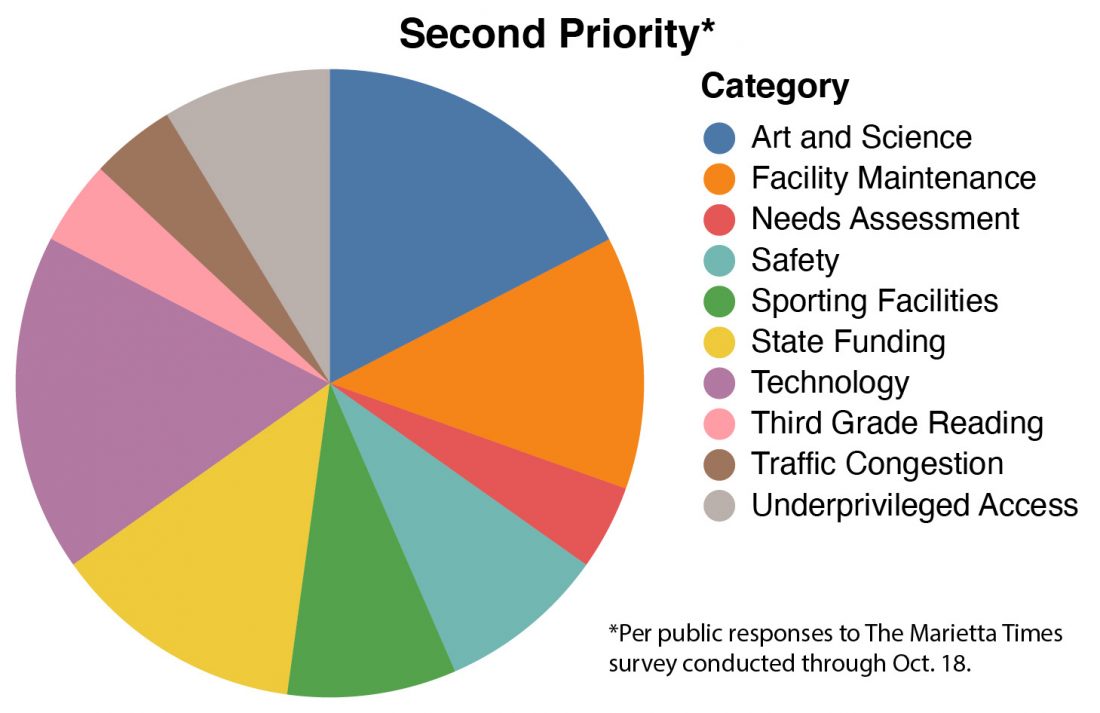
(See Figure 2)
While the same issues and topics identified above were also selected, two additional options made the second spot for some respondents.
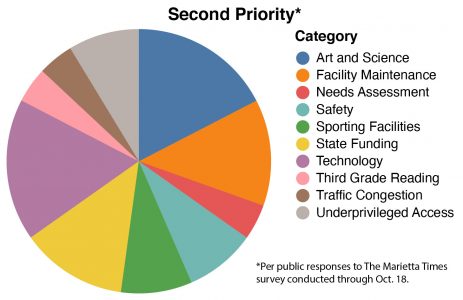
Sporting facilities and staffing were noted by 8.33 percent of participants as the second-highest priority motivating their vote this cycle.
Likewise, access to equitable education by underprivileged and low-income students also ranked second for 8.33 percent of participants.
Safety also received 8.33 percent of the second-priority ranking.
Facility maintenance received 12.5 percent.
State funding received 12.5 percent.
Technology access received 16.7 percent.
Arts and science curriculum received 16.7 percent.
Needs assessments and aid; third-grade reading guarantee and traffic congestion each equally received 4.17 percent.
The Times is now coordinating with the school district administration and board to select a date and time before the Nov. 3 election to host a live moderated question and answer session broadcast online for detailed answers to the submitted questions and concerns.
Local News
Local donor makes $300K gift to Harmar Bridge project
Three candidates vie for two Williamstown council seats
WILLIAMSTOWN – With three candidates on the ballot for two seats, the race for Williamstown City Council will ...
Wood Commission and Union Williams PSD discuss their future
Wood County BOE candidates outline priorities ahead of election
PARKERSBURG – Voters in Wood County will choose from among nine candidates in this year’s Wood County Board of ...
Butler appointed to OhioSE Development Board of Directors
Ohio Southeast Economic Development (OhioSE) announces the appointment of Craig W. Butler to its Board of ...