
911 dispatch call center improves information gathering
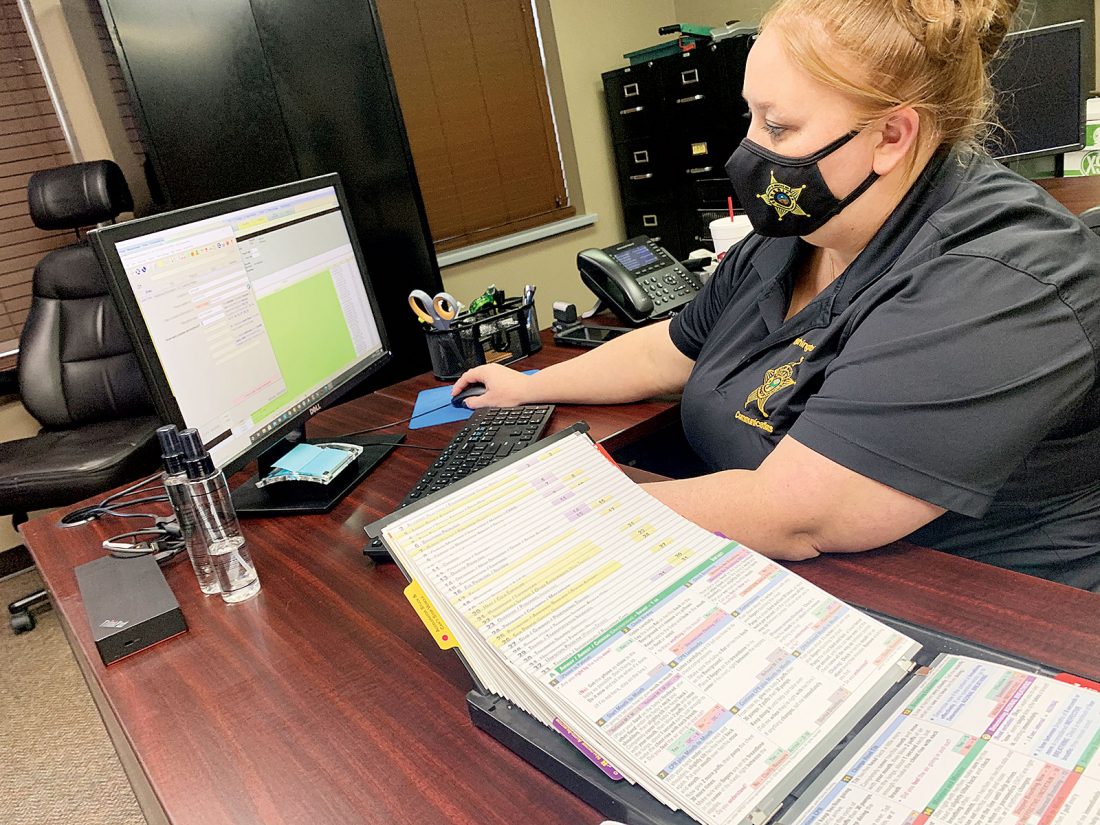
Lt. Jeni Erb demonstrates how the new digital prompts of medical protocols will aid in effective emergency response in Washington County from the 911 Dispatch Center of the Washington County Sheriff’s Office. (Photo by Janelle Patterson)
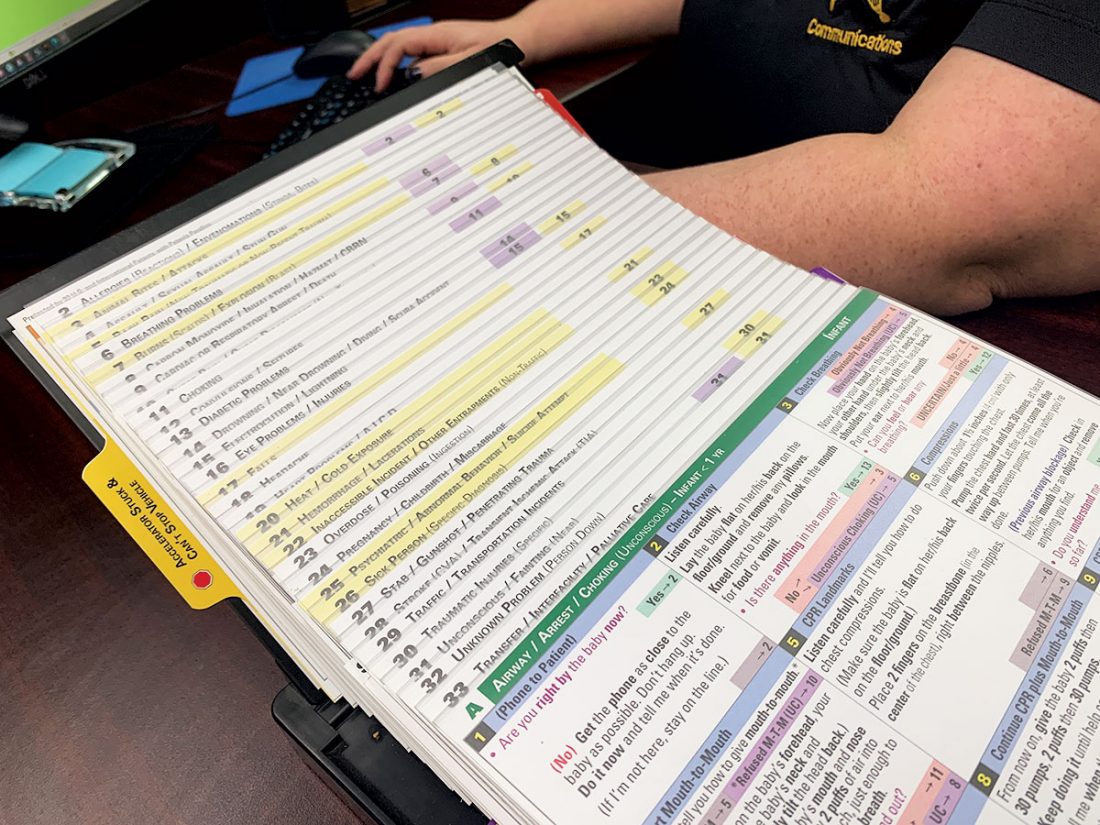
Medical protocol prompts have been upgraded from a flipbook-system of questions with the caller to a more automated approach on a computer screen that simplifies the script the dispatcher uses while on the line with a person in crisis. (Photo by Janelle Patterson)
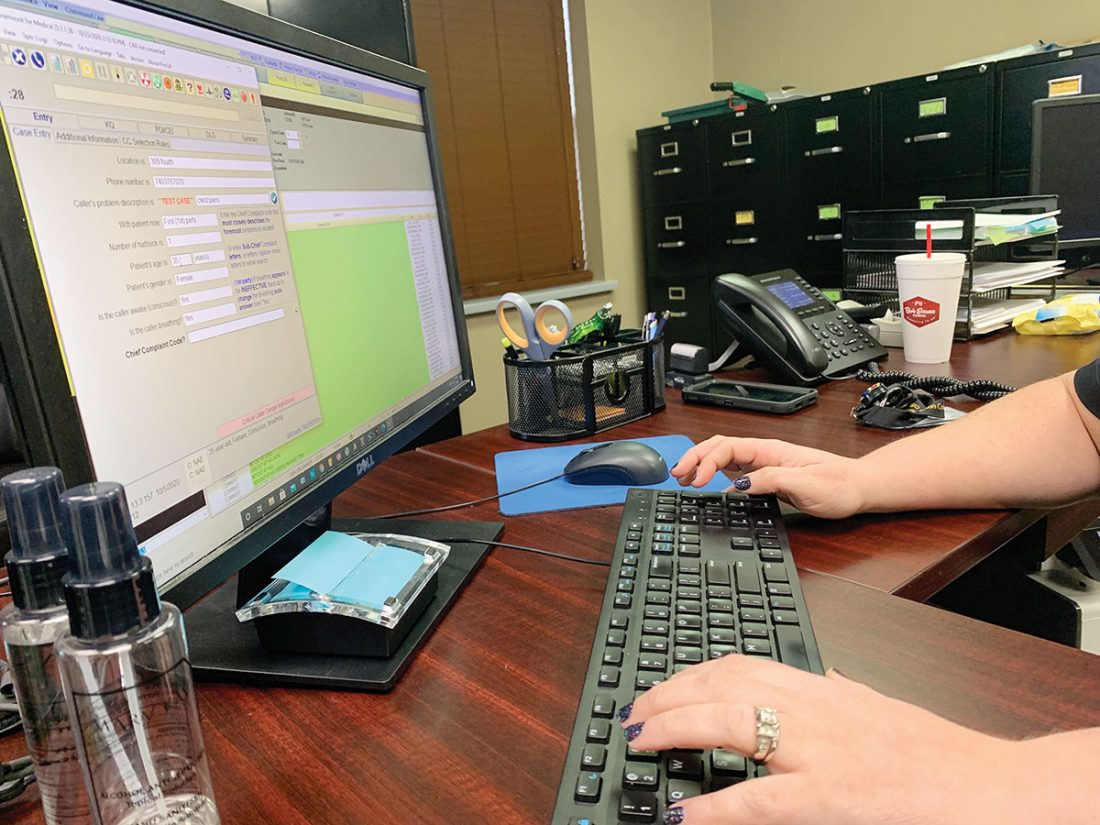
Medical protocol prompts have been upgraded from a flipbook-system of questions with the caller to a more automated approach on a computer screen that simplifies the script the dispatcher uses while on the line with a person in crisis. (Photo by Janelle Patterson)
Lt. Jeni Erb demonstrates how the new digital prompts of medical protocols will aid in effective emergency response in Washington County from the 911 Dispatch Center of the Washington County Sheriff’s Office. (Photo by Janelle Patterson)
Medical protocol prompts have been upgraded from a flipbook-system of questions with the caller to a more automated approach on a computer screen that simplifies the script the dispatcher uses while on the line with a person in crisis. (Photo by Janelle Patterson)
Medical protocol prompts have been upgraded from a flipbook-system of questions with the caller to a more automated approach on a computer screen that simplifies the script the dispatcher uses while on the line with a person in crisis. (Photo by Janelle Patterson)
Trending
Dialing 911 in the heat of a crisis may not be the best place to learn process, but for many who are used to dialing and simply demanding a squad run: be prepared for more thorough questions.
"People as a whole, don't like change," explained Lt. Jeni Erb.
But a change has been implemented within the 911 dispatch call center at the Washington County Sheriff's Office, which is where cell phone calls in the county most often, and landlines outside of city limits in the county always will ring in to during an emergency.
"I think the idea behind it is just to try to make the process run smoother for everybody involved," added Lt. Brian Rhoades. "[Dispatchers] are going to be asking more questions and giving [callers] pre-arrival instructions on what to do."
Why?
To better inform the volunteer and paid squads dispatched to help and prepare them before arriving on-scene.
To begin life-saving measures like CPR earlier and increase the likelihood of success.
To aid in the coordination of multiple medical transports when needed.
To eliminate inefficiency.
What changed?
Erb said the office, which is required to follow national medical codes per their Emergency Medical Dispatch certification, was able to upgrade its medical protocol prompts from a flipbook-system of questions with the caller, to a more automated approach on a computer screen that simplifies the script the dispatcher uses while on the line with a person in crisis.
Before the automation was implemented on Jan. 20, a multi-colored flipbook with tabs and subsections took up real estate on the desk of each dispatcher.
"It's very hard to know exactly where to flip to each card because you'll have like nine cards here and it'll say well go to 'X3', so then you got to find it," she described.
But finding the next prompt on a spreadsheet of color-coordinated prompts can be confusing or over-stimulating while someone is crying on the other end of the line.
More than 40 pages, front and back, with additional pull-out tabs specific to the type of cardiac event, age of patient not breathing, or what to say if the patient is pregnant can eat away at the seconds needed to stabilize a fading life, Erb explained.
The program simplifies flipping, to clicking, and searching to reading gender-specific automated questions, including changing the script automatically if the person calling is the person in distress and needing medical attention themselves, or if they're calling as a second-party.
What kinds of prompts are given?
In an example call where a babysitter has dialed 911 to request help with a child not breathing, Erb walked through the steps, as her script appeared on screen.
She explained the first questions would be getting the babysitter's name, the address they're calling from and a phone number to be able to call back in case they're disconnected.
Then an ambulance can be dispatched to the home, with the caller on hold, before returning to the call.
"I'm going to say, 'stay on the line, I'm going to dispatch the squad,'" she explained. "OK, I'm sending the paramedics to help you now."
Then once the ambulance is headed out, the dispatcher is back on the line to begin giving CPR instructions.
"So lay him flat on his back on the floor and remove anything under his head," she would instruct, following the script that has come up on her screen. "Kneel next to him and look in the mouth for food or vomit. Is there anything in the mouth?"
With the answer of "no" the dispatcher can move on to walking the caller through mouth-to-mouth including specific guidance on tilting the child's head backward, and what to look for when blowing.
"Breathe into his lungs about one second," she instructs. "Just enough to make the chest rise with each breath. Do you feel air going in and out?"
This time with an animated prompt on her screen as she counts with the caller through the number of compressions before turning to aided breaths for the child.
"Place the heel of your hand on the breastbone," she explains.
If asked what that is, she pivots, with the script on the screen.
"Right between the nipples in the center of the chest," she says, not missing a beat. "OK, you're going to push down two inches, with only the heel of one hand touching the chest. Pump the chest hard and fast about 30 times … between pumps count out loud so I can count with you."
She continued through the mock call explaining the prompts if the door to outside is unlocked or not for paramedic entry and the handoff to EMTs arriving on scene, explaining that the system also tracked the number of compressions and breaths logged in the call to forward for medical aid once handed to those treating the patient.
Will this impact response time?
Both Rhoades and Erb said the impact, as the dispatchers practice utilizing the new tool, should increase efficiency and therefore expect to see a smoother transition from crisis call to arrival of medical aid and transport to medical care.