
SleepOut raises awareness, funds for youth transitional living program
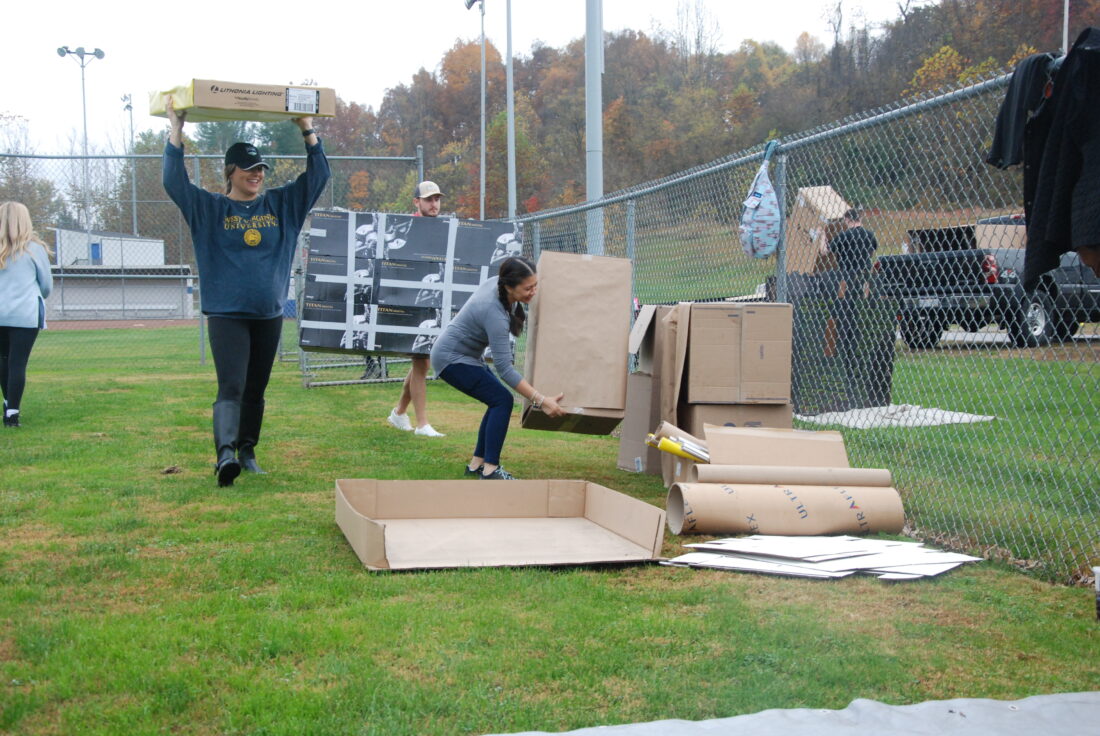
(Photo by Evan Bevins) Bailee Ullman, left, and Grace Najarro-Burk, right, bring in the components for United Bank’s cardboard castle Saturday as part of the Children’s Home Society’s eighth annual Parkersburg SleepOut at Jackson Park in Vienna.
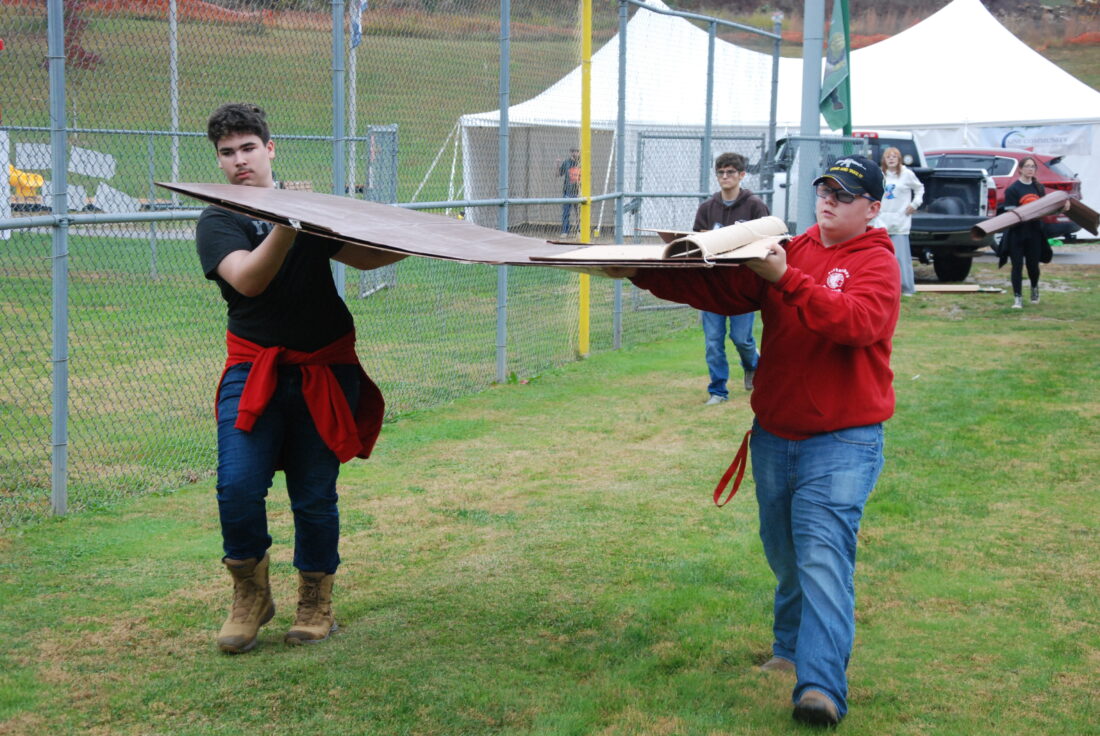
(Photo by Evan Bevins) Parkersburg High School Navy Junior ROTC members Steven Miller, left, and Elijah Wiant carry pieces of their entry in the Children’s Home Society’s eighth annual Parkersburg SleepOut onto a baseball field at Jackson Park in Vienna Saturday at the start of the event.
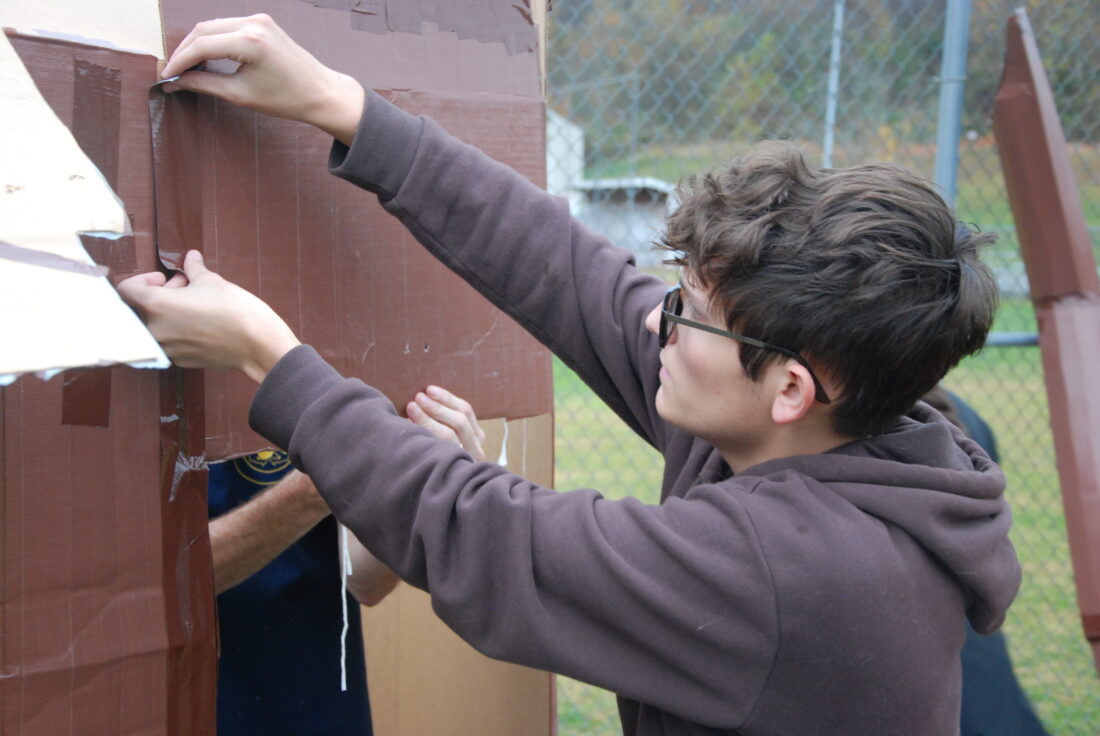
(Photo by Evan Bevins) Gregory Rickard, son of Parkersburg High School naval science instructor Glenn Rickard, works to assemble the PHS Navy Junior ROTC’s cardboard replica of Shrek’s swamp dwelling Saturday during the Children’s Home Society’s eighth annual Parkersburg SleepOut at Jackson Park in Vienna.
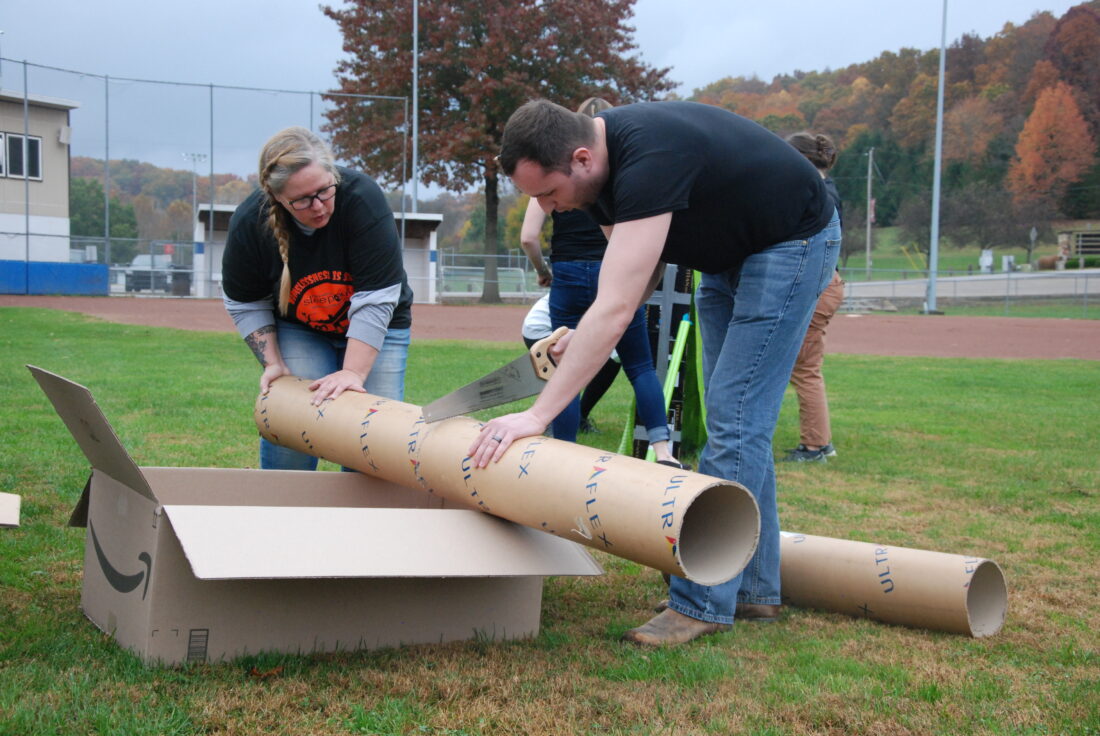
(Photo by Evan Bevins) Kim Ellison, left, and Sean Harris work to assemble United Bank’s cardboard castle entry Saturday during the Children’s Home Society’s eighth annual Parkersburg SleepOut at Jackson Park in Vienna.
(Photo by Evan Bevins) Bailee Ullman, left, and Grace Najarro-Burk, right, bring in the components for United Bank’s cardboard castle Saturday as part of the Children’s Home Society’s eighth annual Parkersburg SleepOut at Jackson Park in Vienna.
(Photo by Evan Bevins) Parkersburg High School Navy Junior ROTC members Steven Miller, left, and Elijah Wiant carry pieces of their entry in the Children’s Home Society’s eighth annual Parkersburg SleepOut onto a baseball field at Jackson Park in Vienna Saturday at the start of the event.
(Photo by Evan Bevins) Gregory Rickard, son of Parkersburg High School naval science instructor Glenn Rickard, works to assemble the PHS Navy Junior ROTC’s cardboard replica of Shrek’s swamp dwelling Saturday during the Children’s Home Society’s eighth annual Parkersburg SleepOut at Jackson Park in Vienna.
(Photo by Evan Bevins) Kim Ellison, left, and Sean Harris work to assemble United Bank’s cardboard castle entry Saturday during the Children’s Home Society’s eighth annual Parkersburg SleepOut at Jackson Park in Vienna.
Trending
VIENNA -- The goal of the eighth annual Parkersburg SleepOut is to raise money and awareness for the Children's Home Society of West Virginia's Transitional Living Program to assist homeless youth.
Lower priority, but still there, is a competitive aspect too.
"We don't come to lose," laughed Bailee Ullman, with United Bank, which has participated in all eight of the events.
"We got together after work. We had little sketches of what we wanted to do this year," added co-worker Samalla Roberts.
As their fairy tale castle began to take shape out of cardboard boxes Saturday afternoon, members of the Parkersburg High School Navy Junior ROTC program were assembling their similarly constructed replica of Shrek's swamp abode. The theme of this year's event was "Once Upon a Time," and sophomore Elijah Wiant said they were in it to win it.
"We worked pretty hard on this," he said.
Chief Glenn Rickard, the naval science instructor at PHS, is a foster parent and has been involved with the Children's Home Society for 15 years.
"I deal with teenagers all the time," Rickard said of why the event is important to him. "It's important to make sure teens are taken care of."
Entry fees and other donations go toward the Transitional Living Program, which works with youth age 16 to 22 who are either homeless, have no permanent address or are living in conditions not fit for human habitation, said Denise Hughes, director of programming for the Children's Home Society. Building structures out of boxes -- with participants given the option of spending the night in them -- highlights the problem of youth homelessness, although Hughes noted folks can also spend their time in a tent with games and other activities.
"We're not pretending to be homeless," she said.
Judges pick the best box overall and the one that best exemplifies the theme.
Some participants in Saturday's event were there because they know firsthand the benefits of the programs.
"I wanted to help out this place because it helped me out," said 19-year-old Ryder Hamrick, adding with a laugh, "And I heard there was a cookout."
Hamrick said they moved to the area to get away from a "toxic" situation and struggled to find a place to live. They've also dealt with mental health issues and said the Transitional Living Program "helped me find myself.
"I've got my own job. I've got my own place," Hamrick said. "What you didn't learn, this program teaches you. And you've got a bunch of peers in this group that are here to help you."
In the program, staff assess a youth's situation and develop a plan to help them live independently. This includes not only finding a place to live and assisting with rent, but could also involve education, connecting with mental health services and training in life skills like financial planning. There's also programming geared toward pregnant and parenting youth.
"We want to break that cycle of abuse that may have caused them to be in the homeless situation," Hughes said.
With federal funding and Community Development Block Grant money from the City of Parkersburg, the program can support 26 youth. There are 16 in the program now because eight have graduated from the program in the last month-and-a-half, Hughes said.
At the last federal assessment in 2020, the program posted an 84% success rate, defined as being safely housed, employed, stable in terms of mental and physical health and having positive adult connections 24 months after completion, said Michelle Pritchett, transitional living social worker. The assessment covered a three-year period.