Flood leftovers a danger: Health Department gives tips for safe flood cleanup
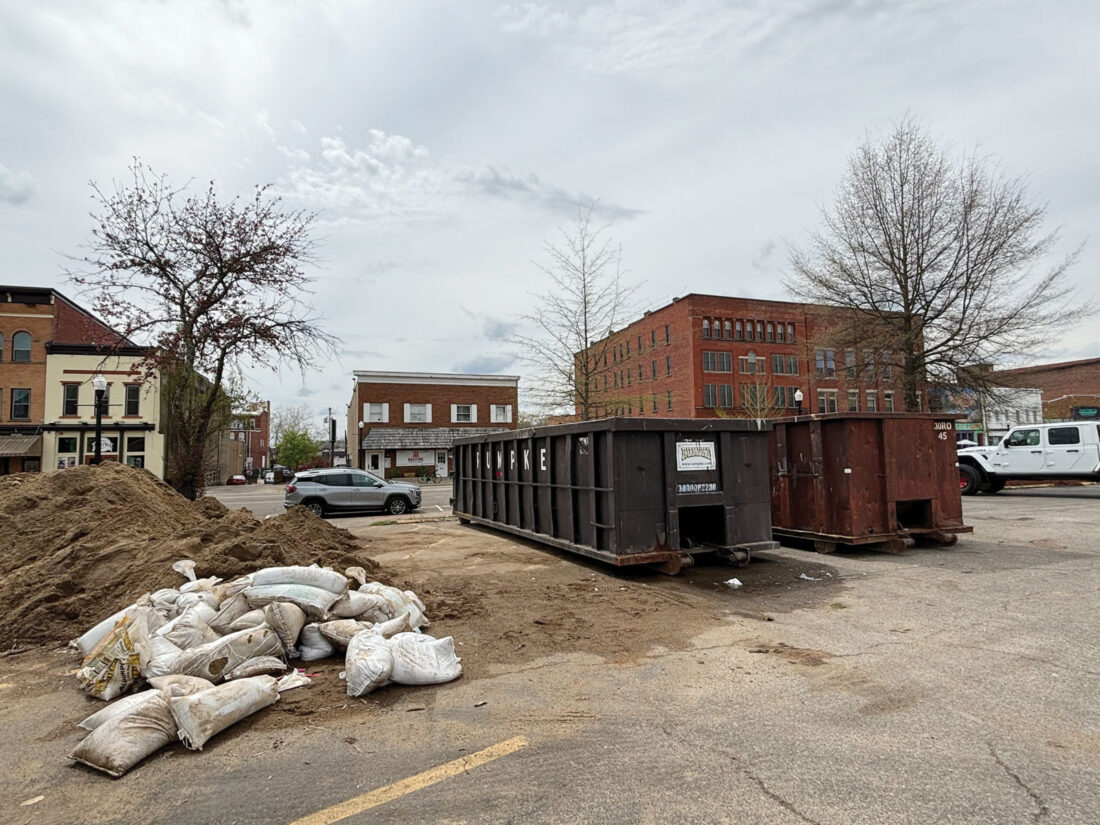
Photo by Michelle Dillon The City of Marietta has provided dumpsters for residents to put their flood debris. The dumpsters are located at several places throughout the city including the Parking Partners parking lot on Second Street
Area businesses and residents are facing the arduous process of cleanup after the recent flooding – tearing down wet drywall, cleaning floors and walls muddied by flood waters, sanitizing surfaces and more.
The United States Environmental Protection Agency’s website says “flood waters can carry sewage and other harmful substances. After a flood, standing water and wet materials become a breeding ground for viruses, bacteria and mold.”
The Marietta/Belpre Health Department and the EPA have some helpful tips for how to stay safe in light of the possible dangers of cleaning up after a flood.
Marietta/Belpre Health Department Administrator Barbara Bradley said “in working with cleanup you should have your tetanus shots and Hepatitis A and probably Hepatitis B shots”.
She said that Hepatitis A and B can be caught from sewage and other diseases that can be picked up from flood water.
“And of course tetanus, we all know the horror stories with it,” she said.
According to the Centers for Disease Control website, tetanus is an infection caused by a bacterium called clostridium tetani that can enter peoples’ bodies through broken skin and can lead to serious health problems, including being unable to open the mouth and having trouble swallowing and breathing.
Bradley said that when clearing up from the flood people should use bleach water. She also mentioned throwing out food if the power went out or someone had to unplug their fridge or freezer due to the flood.
“If you lost any power, when in doubt, throw it out,” Bradley said.
She also emphasized the importance of wearing protective equipment.
“Definitely (wear) rubber gloves when clearing,” she said.
The United States Environmental Protection Agency website states people should wear personal protective equipment when clearing up from a flood, including goggles, an N-95 respirator, long sleeves, protective gloves, long pants and boots or work shoes.
The website said that children, pregnant people and people with weakened immune systems or chronic breathing problems like asthma should not take part in flood cleanup.
It also provides information about clearing surfaces and ventilating homes.
The website said to clean hard surfaces with detergent and water and to throw away anything that cannot be cleaned and dried. It also said to not mix cleaning products together or add bleach to other chemicals.
The EPA said people should, if at all possible, venilate and dry their home with fans and dehumidifiers and by opening doors and windows, but if they can already see mold they should not use fans because they spread the mold.
More information can be found at https://www.epa.gov/indoor-air-quality-iaq/flood-cleanup-infographic.
Michelle Dillon can be reached at mdillon@newsandsentinel.com
Local News

Local donor makes $300K gift to Harmar Bridge project
Three candidates vie for two Williamstown council seats
WILLIAMSTOWN – With three candidates on the ballot for two seats, the race for Williamstown City Council will ...
Wood Commission and Union Williams PSD discuss their future
Wood County BOE candidates outline priorities ahead of election
PARKERSBURG – Voters in Wood County will choose from among nine candidates in this year’s Wood County Board of ...
Butler appointed to OhioSE Development Board of Directors
Ohio Southeast Economic Development (OhioSE) announces the appointment of Craig W. Butler to its Board of ...