AI errors cited in denial of injunction over Parkersburg sanitation contracts
-
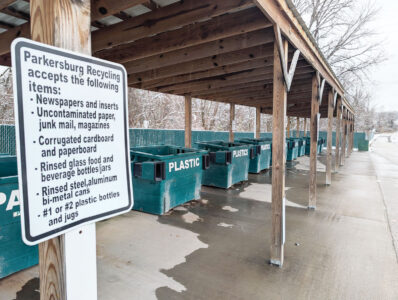
- Bins for various recyclable materials are seen Dec. 3 at Parkersburg’s Municipal Recycling Facility off 24th Street. Parkersburg stopped accepting recyclable materials from commercial haulers at the facility as of Dec. 1. (File photo)
-
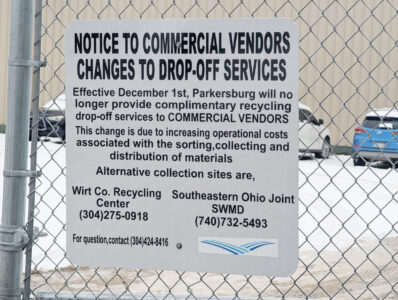
- A sign posted at Parkersburg’s Municipal Recycling Facility off 24th Street on Dec. 3 notifies commercial haulers the city will no longer accept materials from commercial haulers. (File photo)
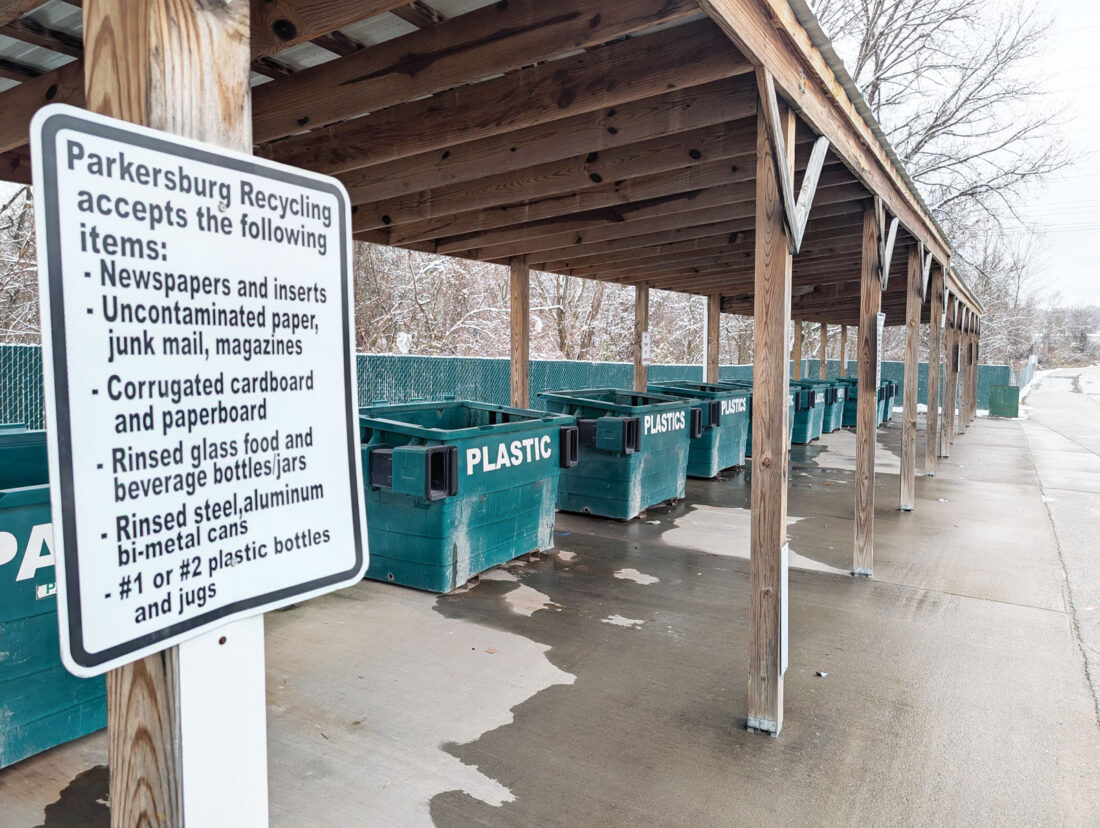
Bins for various recyclable materials are seen Dec. 3 at Parkersburg’s Municipal Recycling Facility off 24th Street. Parkersburg stopped accepting recyclable materials from commercial haulers at the facility as of Dec. 1. (File photo)
PARKERSBURG — A Wood County judge on Tuesday denied a petition seeking an injunction to prevent Parkersburg officials from moving forward with potential contracts for trash and recycling services, in part because it contained inaccurate citations generated by AI.
Circuit Judge J.D. Beane’s order was released ahead of public meetings in which members of Parkersburg City Council and the administration were expected to hear questions and concerns from residents then vote on the first readings of ordinances authorizing the contracts with Waste Management and Rumpke.
Carole Hanlon, who does not live in the city but owns multiple properties in it, filed a complaint Monday in Wood County Circuit Court asking for a temporary restraining order or injunction prohibiting the city from taking action on the contracts prior to potential review by state agencies.
Beane denied it, saying the complaint was unlikely to succeed. He cited the city’s statutory authority to provide for the government, regulation and control of its affairs, including entering into contracts.
“The court will not step in and direct the municipality in the running of its day to day business unless it plainly runs afoul of Constitutional principles,” the order says.
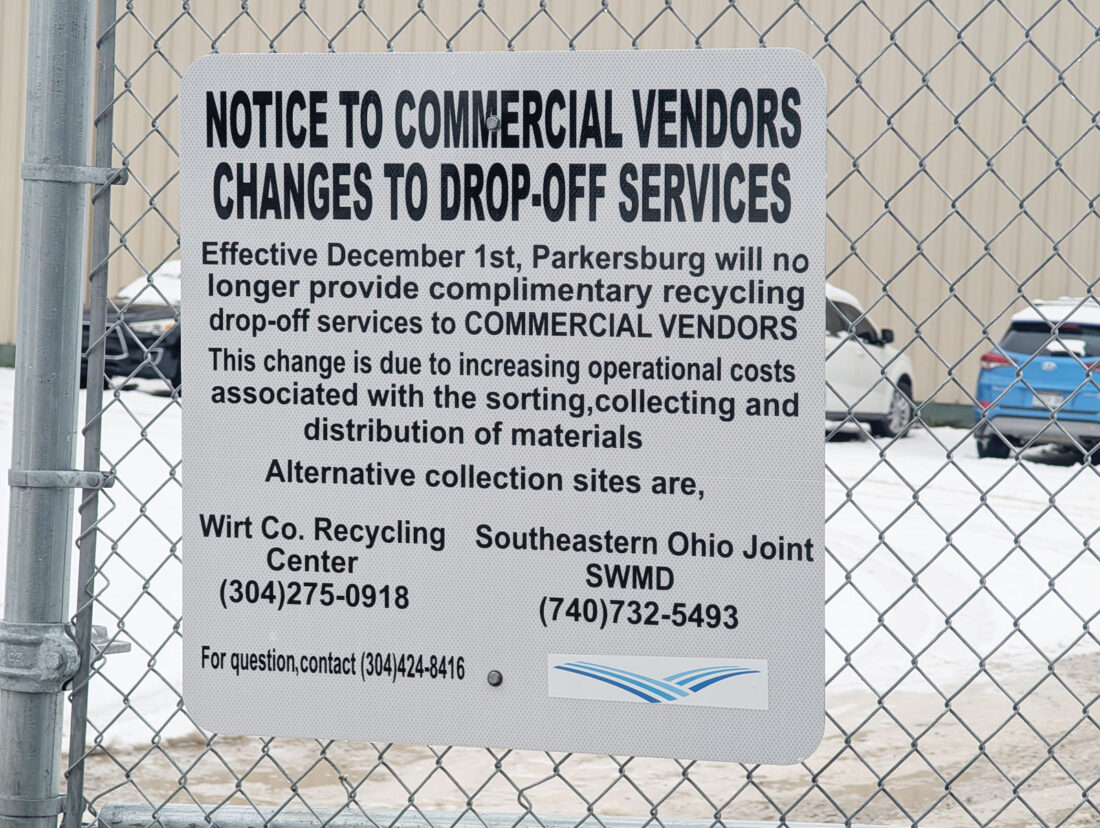
A sign posted at Parkersburg’s Municipal Recycling Facility off 24th Street on Dec. 3 notifies commercial haulers the city will no longer accept materials from commercial haulers. (File photo)
In addition, he described the initial filing as “riddled” with errors, including citations of cases that do not exist.
“The Court is left with the conclusion that this complaint was drafted, perhaps entirely, with the assistance of a large language AI model program, which hallucinated a significant body of caselaw and regurgitated it onto paper,” he said. “The Court cannot grant injunctive relief – an extraordinary remedy – on the basis of a complaint that includes multiple citations to non-existent authority, and several citations to irrelevant authority.”
Some examples Beane cited include cases that did not contain the language referenced in Hanlon’s complaint, cases whose names could not be found in the record and whose numbers referenced other cases and one that was brought by a former dog warden against a county commission and did not address the legislative powers of municipalities.
The order also noted there was no finding the plaintiff “attempted to be intentionally deceptive with this complaint, but (the court) urges caution when making representations in a legal filing.”
Hanlon said she used AI to obtain case law citations to support her claims and it produced faulty, irrelevant and non-existent citations. She called it a “cautionary tale.”
“The issues remain, the facts remain, but – and the judge is right about this – I should have been more careful and double-checked the cites that were given to me,” she said. “Anyone should be careful in using AI, but it’s a new frontier.”
Beane added in the order that the court recognizes people are, and should be, interested in how the city conducts its business and the order is not intended to “suppress speech or passion for our community.”
Hanlon said her goal has been to make sure a decision on sanitation and recycling is done properly before irreversible changes are made. She said it seems like the decision is being rushed without seeking input from the community.
People are concerned, Hanlon said, “that we may be jumping before we’re looking, and we may be jumping into quicksand.”
Hanlon’s complaint noted potential pending action by state entities including the Public Service Commission,the Auditor’s Office, the Department of Environmental Protection and the Solid Waste Management Board.
Hanlon asked the PSC to open a formal investigation examining the proposed changes to sanitation and recycling services, compel the city to produce documents and data regarding the issue, require the city to produce a cost-analysis and service-impact statement and conduct a public hearing on the matter.
The PSC gave the filing a case number, but had taken no other action on it as of Tuesday afternoon.
Mark Holstine, executive director of the state Solid Waste Management Board, said neither that agency nor the DEP “are taking any action at this time.” He added that the Wood County Solid Waste Authority is trying to address the matter.
Sarah Robinson, director of the county’s Solid Waste Authority, said they have no jurisdiction over the city’s sanitation but they are monitoring the situation because of the potential impact on the county. That is primarily related to Parkersburg’s Municipal Recycling Facility, which Mayor Tom Joyce has said accepted recyclable materials from commercial haulers at no charge for years. The city recently stopped accepting materials from commercial haulers, causing one to change what material it takes and another to stop collecting recyclables, Robinson said.
The authority is under no statutory obligation to provide recycling in the county, she said, but the organization and board “feel compelled to address the effects” if the city’s facility closes or stops accepting material from people living outside the city.
“We feel like you’re probably going to see, obviously, more trash going to the landfill,” Robinson said, adding that increased litter and illegal dumping are also concerns.
City officials have not said what plans might be for the recycling center if the service is contracted out.
A joint committee of City Council voted in June to seek requests for proposals from companies to take over sanitation. After initially asking for solid waste and recycling, the city issued a new request for proposals in November for a separate, subscription-based recycling service.
Negotiations by the administration yielded proposed contracts from Waste Management for trash service that would be paid for through the city’s sanitation fee. Joyce has proposed reducing that fee from $22 to $19.50 a month and giving customers current on their bills a $44 credit for issues with sanitation over the past year.
Waste Management will bill the city at $17.65 per unit for the first two years. That price increases in the third through fifth years of the proposed contract.
The proposed recycling contract with Rumpke would charge residents who want to recycle $15.25 a month, with the first six months due up front. That rate would increase annually over the course of the three-year deal, with options for two more if the city and company agree.
Recycling services were suspended in May due to staffing issues that included increased call-offs. Despite a pay increase approved by council for medium equipment operators and additional incentives like paid time to study for the commercial driver’s license exam, those issues have continued, with Joyce saying Monday just five full-time employees remain in the Sanitation Department. Workers from other departments and temporary workers, including some on work release, have been used to cover the other duties.
Local News
Civil War Roundtable: Hunter’s retreat through West Virginia subject of presentation

American Discovery Trail: 250th anniversary relay to pass through MOV in 2026
AI errors cited in denial of injunction over Parkersburg sanitation contracts
AAA releases latest gas price statistics for surrounding area
PARKERSBURG — Cheaper crude oil prices and supply increases are contributing to the decrease in gasoline prices, ...

Civins appointed to Marietta College Board of Trustees