Civil War Roundtable: Hunter’s retreat through West Virginia subject of presentation
-
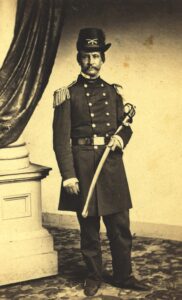
- Union Gen. David Hunter led 18,000 troops in the Army of West Virginia up the Shenandoah Valley in June 1864 with orders to destroy Confederate rail transportation hubs at Staunton and Lynchburg. Historian Jon-Eric Gilot will present “The Hardest Campaign Ever Inaugurated: Hunter’s Retreat from Lynchburg” at the next meeting of the Civil War Round Table of the Mid-Ohio Valley at 7 p.m. Jan. 15 at the Knights of Columbus in Marietta. (Photo provided)
-
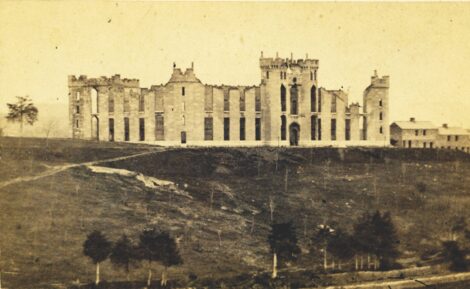
- The Virginia Military Institute is in ruins following Gen. David Hunter’s raid on Lexington on June 17-18, 1864. Cadets from VMI helped defeat Union forces commanded by Gen. Franz Sigel at the Battle of New Market on May 15, 1864. (Photo provided)
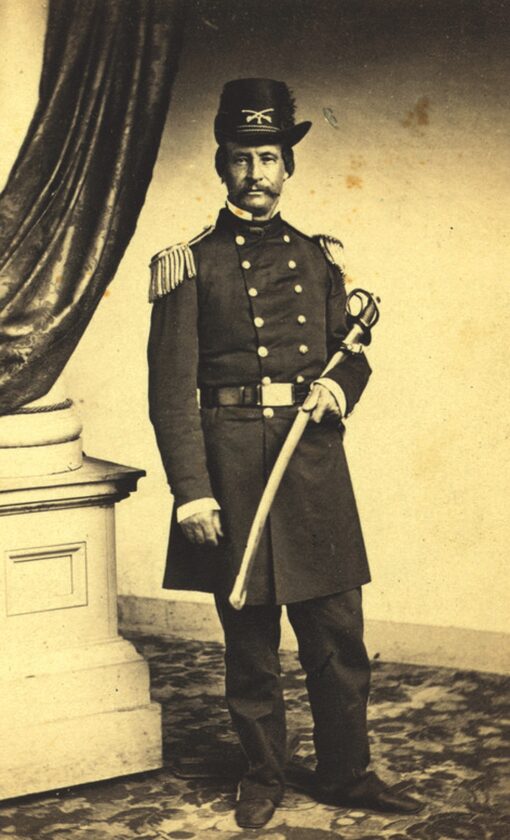
Union Gen. David Hunter led 18,000 troops in the Army of West Virginia up the Shenandoah Valley in June 1864 with orders to destroy Confederate rail transportation hubs at Staunton and Lynchburg. Historian Jon-Eric Gilot will present “The Hardest Campaign Ever Inaugurated: Hunter’s Retreat from Lynchburg” at the next meeting of the Civil War Round Table of the Mid-Ohio Valley at 7 p.m. Jan. 15 at the Knights of Columbus in Marietta. (Photo provided)
A presentation about the retreat from Lynchburg and Gen. David Hunter will be held at 7 p.m. Jan. 15 at the Knights of Columbus at a meeting of the Civil War Round Table of the Mid-Ohio Valley.
Jon-Erik Gilot, author, historian and archivist, will present “The Hardest Campaign Ever Inaugurated: General David Hunter’s Retreat from Lynchburg.”
In the spring of 1864, President Abraham Lincoln implemented a broad re-organization of Union military strategies. Gen. U.S. Grant was summoned from the Western Theater of the war, promoted to lieutenant general and assigned command of all Union armies.
Grant subsequently conceived a coordinated strategy to strike at the heart of the Confederacy from multiple directions. Gen. Meade and the Army of the Potomac would move against Gen. Lee in Virginia. Gen. Sherman succeeded Grant as commander of most of the Western armies and would pursue Joe Johnston in Georgia to secure Atlanta. Nathaniel Banks was ordered to capture the port of Mobile, Ala. Franz Sigel, commander of the Department of West Virginia, was to control the Shenandoah Valley.
It was the first time the Union armies planned a coordinated strategy in multiple theaters.
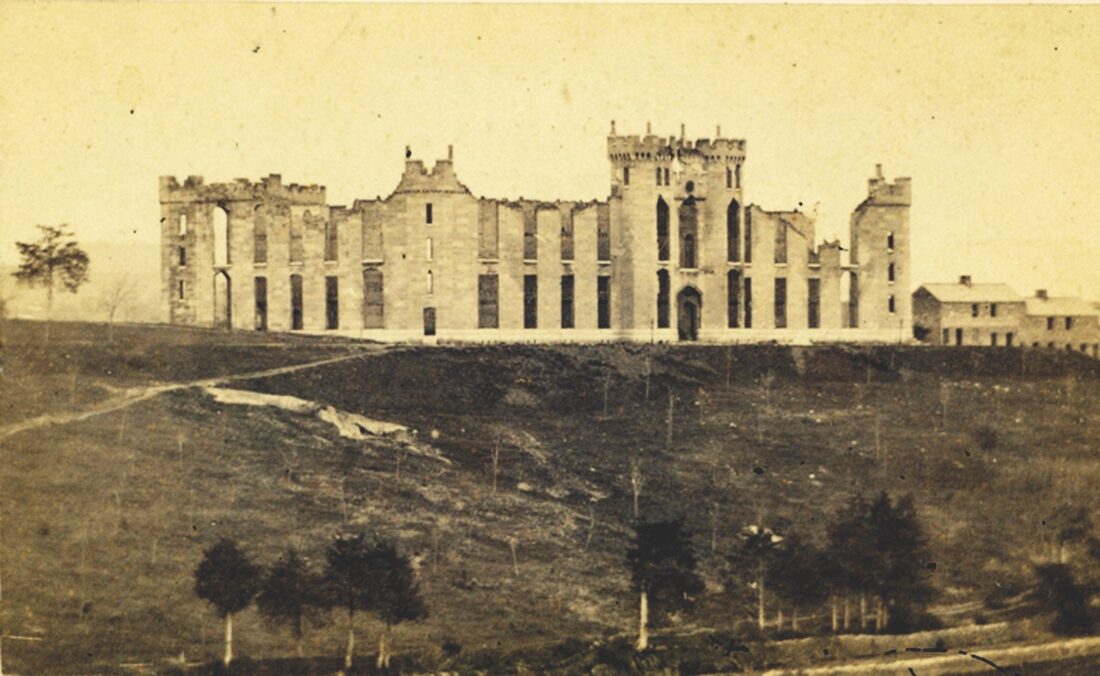
The Virginia Military Institute is in ruins following Gen. David Hunter’s raid on Lexington on June 17-18, 1864. Cadets from VMI helped defeat Union forces commanded by Gen. Franz Sigel at the Battle of New Market on May 15, 1864. (Photo provided)
While Grant and Meade pressed Lee in the Overland Campaign from the wilderness to Petersburg, Sigel and 18,000 Union soldiers moved up the Shenandoah Valley to control the transportation hubs at Staunton and Lynchburg and, more importantly, to prevent the escape of Lee’s army from Meade. If Sigel succeeded, Lee’s army had no escape route and this action might bring an abrupt end to the war.
But when Sigel was defeated at New Market on May 15, 1864, due in large part to cadets from the Virginia Military Institute, Sigel was promptly replaced by Maj. Gen. David Hunter.
After brief clashes at Port Republic and Piedmont on June 4 and 5, 1864, Hunter’s force occupied Staunton on June 8 and destroyed bridges, railroad tracks, depots, warehouses and factories. From there, Hunter marched to Lexington and on June 12 burned most of the town including Virginia Military Institute and the personal residence of Virginia Gov. John Letcher.
Next, Hunter turned east to attack Lynchburg. Initially, Lynchburg was defended only by aged men and boys as most local men were already serving in the Confederate army. However, Lee dispatched Gen. Jubal Early and the Confederate II Corps by rail from Charlottesville and the force arrived just in time to surround Lynchburg and thwart Hunter’s attack.
Hunter, whose supply lines were depleted, withdrew and began a retreat through West Virginia to the Ohio River. The withdrawal gave Gen. Early a clear path to attack Washington, D.C., thereby distracting Union resources from the Siege of Petersburg and extending the war.
Gilot’s presentation will examine Hunter’s raid up the Shenandoah Valley and consider the circumstances of his retreat through West Virginia. The strategy effectively removed an entire Union army from the conflict for nearly a month.
Gilot will compare how Hunter, his commanding officers and his men assessed the campaign and will explore its impact on the war and Hunter’s legacy.
Gilot’s interest in history developed from an early age.
He is a native of Mount Pleasant, Ohio, a small town in eastern Ohio steeped in Civil War history. The interest was nurtured by his mother and other members of the local historical society and working with historical records and artifacts under the supervision of the society’s members.
Gilot studied history as an undergraduate at Bethany College and earned a master’s in library information science with an emphasis on archival management at Kent State University. He has worked for the Library of Congress and is records manager and archivist for the Diocese of Wheeling-Charleston.
He is a contributing member of the Emerging Civil War Series, produces the annual spring Civil War Symposium hosted by the Andrew Carnegie Free Library in Carnegie, Pa., where he also is curator of the Capt. Thomas Espy GAR Post SUVCW and is a former board member of the West Virginia Independence Hall Foundation.
His research has been published in numerous books, magazines, websites and C-Span networks. Gilot’s first book, “John Brown’s Raid: Harpers Ferry and the Coming of the Civil War,” was published in 2023.
Gilot and his wife and two daughters live in Wheeling.
The presentation is free to attend, but donations will be accepted to defray a portion of the cost of the event. The presentation is made possible by a matching grant from the Ohio Arts Council and with the collaboration by Knights of Columbus Council 478.
For more information, email cwrtmor@gmail.com or call 740 525 7470.
Local News
Civil War Roundtable: Hunter’s retreat through West Virginia subject of presentation

American Discovery Trail: 250th anniversary relay to pass through MOV in 2026

AI errors cited in denial of injunction over Parkersburg sanitation contracts
AAA releases latest gas price statistics for surrounding area
PARKERSBURG — Cheaper crude oil prices and supply increases are contributing to the decrease in gasoline prices, ...

Civins appointed to Marietta College Board of Trustees