Research office dedicated: Train derailment research continues in East Palestine
Train derailment research continues in East Palestine
-
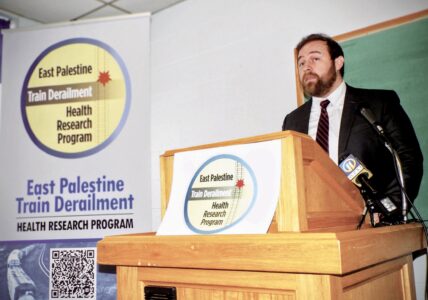
- (Photo by Stephanie Ujhelyi) Kyle Walsh of the National Institute of Environmental Health Sciences addresses attendees Tuesday morning during opening comments before the ribbon cutting at the East Palestine Train Derailment Health Research Program’s new offices within the village’s Way Station.
-
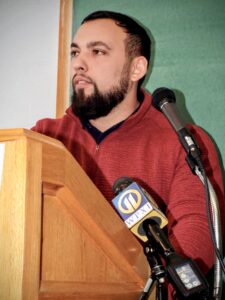
- (Photo by Stephanie Ujhelyi) East Palestine Village Manager Antonio Diaz-Guy speaks during a ribbon cutting for the East Palestine Health Research Team office Tuesday in the Way Station.
-
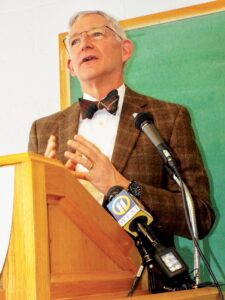
- (Photo by Stephanie Ujhelyi) Dr. Bruce Vanderhoff, director of the Ohio Department of Health, speaks during an event marking the opening of the East Palestine Train Derailment Health Research Program’s office Tuesday.
-

- (Photo by Stephanie Ujhelyi) It was a standing-room-only crowd Tuesday morning during a ceremony that marked the dedication of the East Palestine Health Research Team’s office in the Way Station as well as the third anniversary of the 2023 Train Derailment.
-
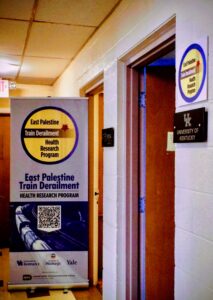
- (Photo by Stephanie Ujhelyi) These doors lead to the East Palestine Health Research Team’s new offices on an upper level of the Way Station in East Palestine. The nonprofit Way Station had acquired the building, which is the former First Presbyterian Church, last year.
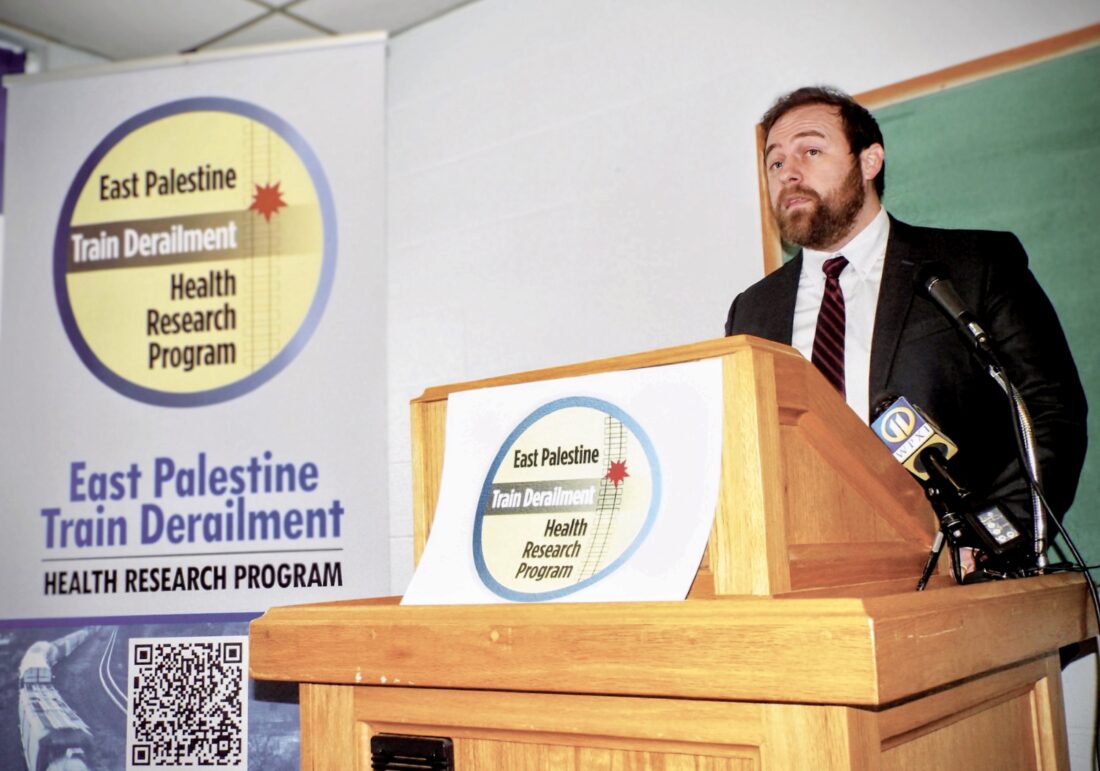
(Photo by Stephanie Ujhelyi) Kyle Walsh of the National Institute of Environmental Health Sciences addresses attendees Tuesday morning during opening comments before the ribbon cutting at the East Palestine Train Derailment Health Research Program’s new offices within the village’s Way Station.
EAST PALESTINE — Area media and dignitaries gathered Tuesday morning to mark the grand opening of the Train Derailment Health Research Program office inside the Way Station building.
The invitation-only event included representatives from the National Institute of Environmental Health Science, Ohio Department of Health, University of Kentucky, University of Pittsburgh and Yale University, along with mayors and municipal administrators from neighboring communities like New Waterford and Columbiana.
Misti Allison, of the East Palestine Train Derailment Health Research Program, emceed Tuesday’s festivities that included a few words from the participating organizers and community partners before concluding with a ribbon cutting.
National Institute of Environmental Health Science Director Kyle Walsh explained at the event that he had a unique interest in the train derailment, as he grew up less than 65 miles away in Geauga County. He was named director in October, months after the U.S. Department of Health and Human Services awarded the five-year, $10 million research initiative last summer.
Through the East Palestine Train Derailment Health Research Program office, researchers will engage directly with the community, coordinate studies and help enroll residents in federally supported research.
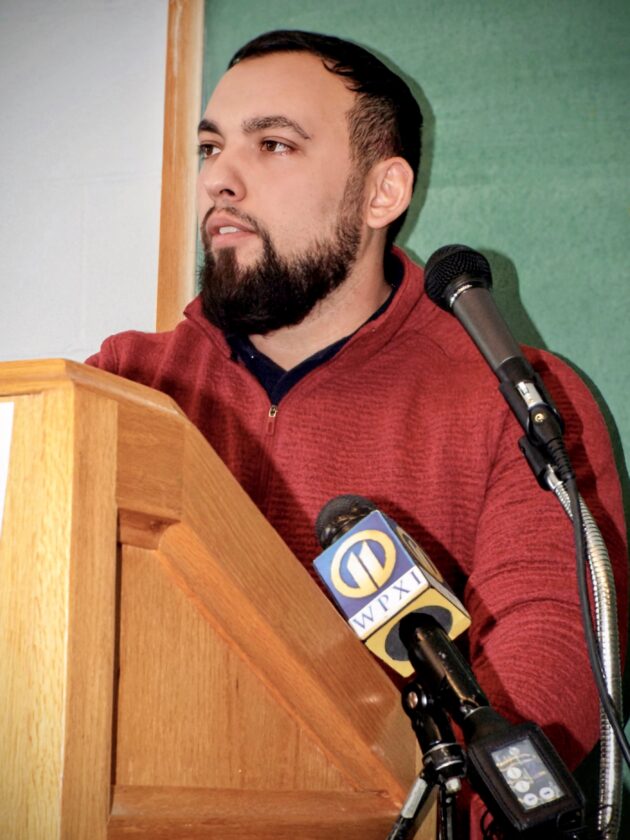
(Photo by Stephanie Ujhelyi) East Palestine Village Manager Antonio Diaz-Guy speaks during a ribbon cutting for the East Palestine Health Research Team office Tuesday in the Way Station.
Three years ago, a Norfolk Southern freight train derailed in East Palestine while carrying 38 railcars containing hazardous chemicals including vinyl chloride, butyl acrylate and ethylene glycol. The crash resulted in prolonged fires and controlled burns that raised concerns regarding air quality — especially after locals started reporting adverse health symptoms, including headaches, respiratory trouble and skin conditions.
The program is designed to give residents clear, credible information about the 2023 disaster’s public health effects, according to a press release from the Department of Health and Human Services.
“The NIH’s (National Institutes of Health) research hub offers the people of East Palestine a pathway to clear answers about their health they deserve,” HHS secretary Robert F. Kennedy Jr. said in the release. “Everyone affected by this environmental disaster deserves access to independent, gold-standard science that puts their well-being first.”
Dr. Bruce Vanderhoff, director of the Ohio Department of Health, also made the trip up from Columbus for the occasion. He stated that Tuesday’s opening of the office stands out as a very important step in moving forward.
“The State of Ohio remains committed to this community,” Vanderhoff added.
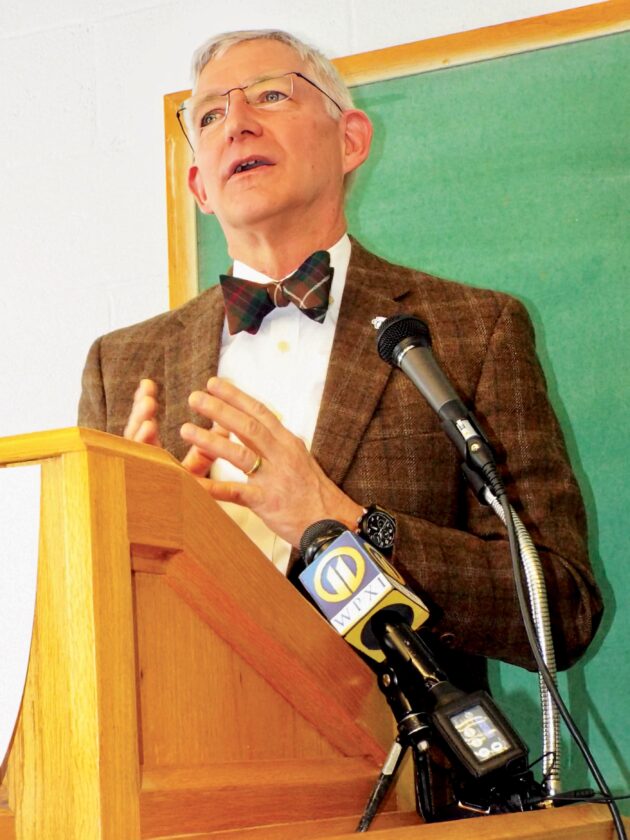
(Photo by Stephanie Ujhelyi) Dr. Bruce Vanderhoff, director of the Ohio Department of Health, speaks during an event marking the opening of the East Palestine Train Derailment Health Research Program’s office Tuesday.
East Palestine Village Manager Antonio Diaz-Guy, a lifelong resident, stressed how important the research is to finding answers.
“Today is important because days like this forward the conversation. The village government also is committed to this,” he said, although he acknowledged the research will take time to interpret.
East Liverpool City Hospital, which operates the clinic in East Palestine where the majority of the follow-up health measures will be conducted, was represented by their chief executive officer, Stephanie Conn. She affirmed her institution’s commitment toward assuring the health of area residents.
The team, which is led by University of Pittsburgh’s Erin Haynes, also was on hand.
Haynes noted that just in July, the team had been collecting samples for its research in the exact room that they were occupying, as she urged more people to sign up for participation in the study even if they don’t have symptoms.
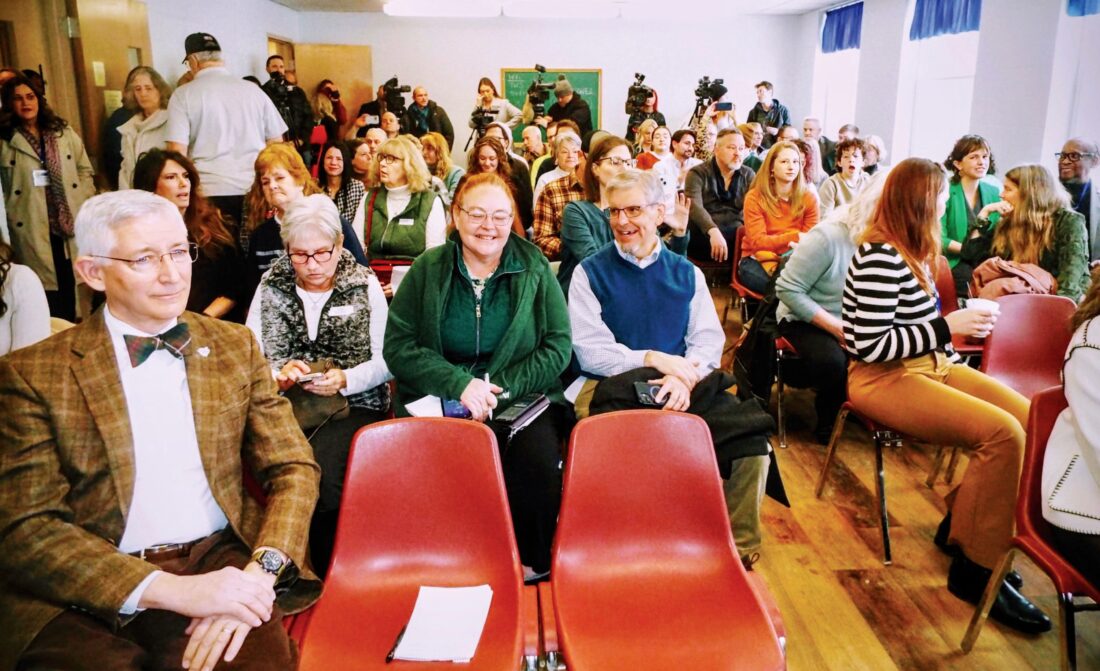
(Photo by Stephanie Ujhelyi) It was a standing-room-only crowd Tuesday morning during a ceremony that marked the dedication of the East Palestine Health Research Team’s office in the Way Station as well as the third anniversary of the 2023 Train Derailment.
The research study is open to anyone who lived within East Palestine or the surrounding area, as well as those who responded to the derailment or cleanup efforts. Anyone 8-17 years old must have a parent or primary caregiver participate as well.
Participants can receive compensation for inclusion in the surveys and follow-up health measures.
The team also is studying liver and thyroid function as well as the impacts on the water quality.
For information, visit www.research.uky.edu/environmental/east-palestine-health-research
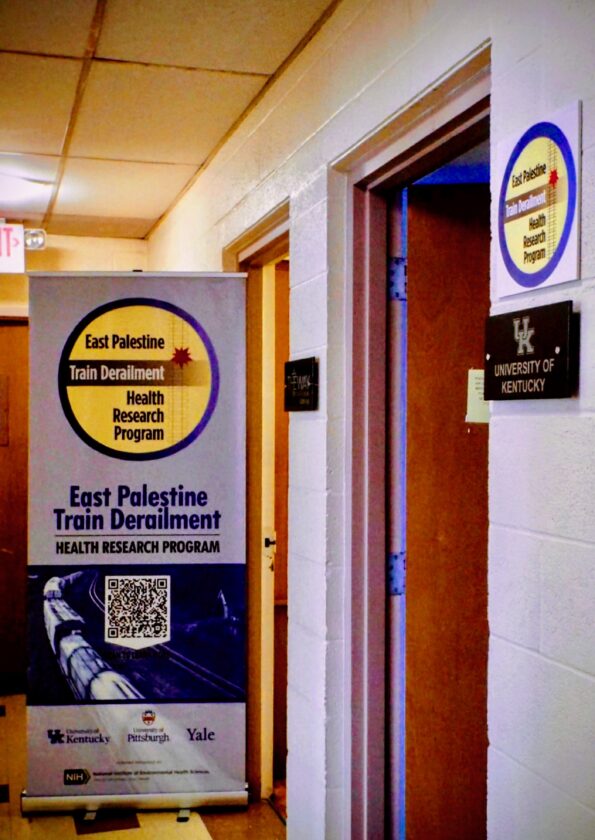
(Photo by Stephanie Ujhelyi) These doors lead to the East Palestine Health Research Team’s new offices on an upper level of the Way Station in East Palestine. The nonprofit Way Station had acquired the building, which is the former First Presbyterian Church, last year.
Local News
Middle school mergers going smoothly at halfway point

Kim Caldwell Facebook post fake, how to identify AI-created content
Residents seek to reverse Parkersburg sanitation vote
PARKERSBURG — Residents wanting Parkersburg City Council to reconsider a recent sanitation contract with Waste ...
Newport EMS recruiting: Hiring event for new personnel slated for March
Research office dedicated: Train derailment research continues in East Palestine