Civil War Round Table to discuss weapons of mass destruction
-
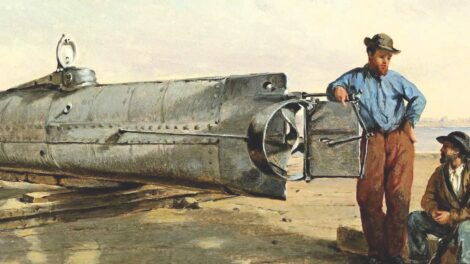
- All eight crew members of the CSS H.L. Hunley were lost when the vessel, the first submarine to sink an enemy warship, targeted the USS Housatonic in Charleston Harbor, S.C., on Feb. 17, 1864. The Hunley was raised in 2000 and is on permanent display at the Warren Lasch Conservation Center in North Charleston, S.C. (Photo provided)
-
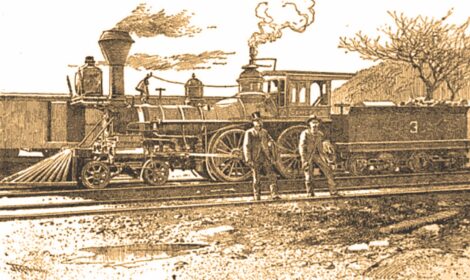
- The Great Locomotive Chase was a military raid in April 1862 led by civilian James J. Andrews and volunteers from several Ohio regular army regiments. Andrews’ raiders stole the steam locomotive The General from a rail yard in Atlanta and travelled north toward Chattanooga destroying track, bridges and telegraph lines along the way. The General is fully restored and on permanent display at the Southern Museum of Civil War and Local History, Kennesaw, Ga. (Photo provided)
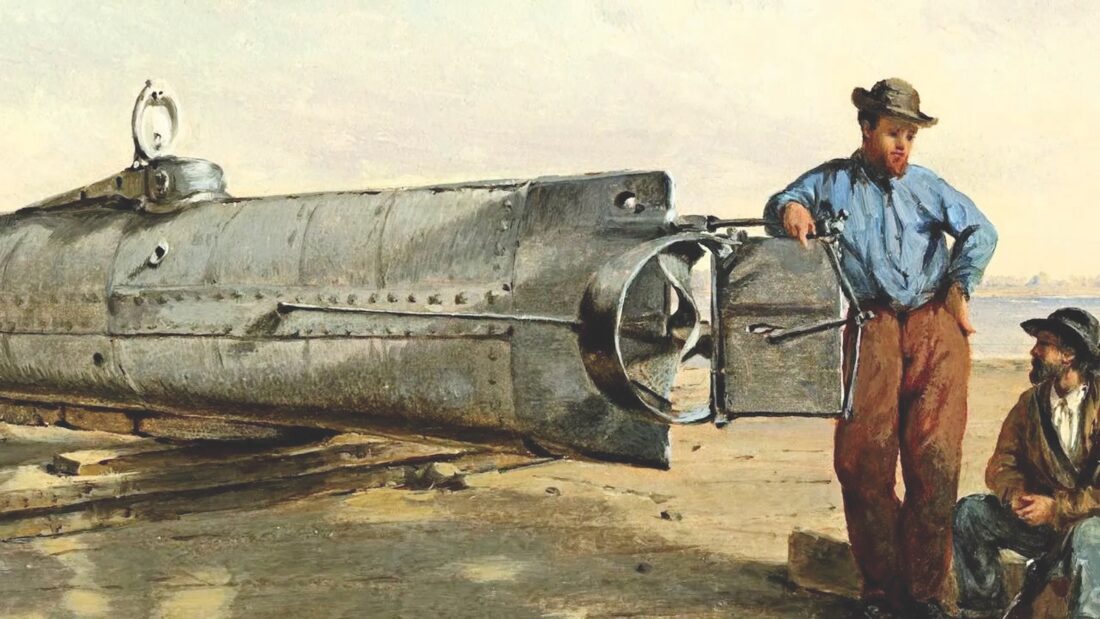
All eight crew members of the CSS H.L. Hunley were lost when the vessel, the first submarine to sink an enemy warship, targeted the USS Housatonic in Charleston Harbor, S.C., on Feb. 17, 1864. The Hunley was raised in 2000 and is on permanent display at the Warren Lasch Conservation Center in North Charleston, S.C. (Photo provided)
Weapons of mass destruction during the Civil War will be discussed at a special meeting of the Civil War Round Table of the Mid-Ohio Valley at 7 p.m. March 12 at the Knights of Columbus, 312 Franklin St., Marietta.
Mark Laubacher, an author, historian, registered nurse, paramedic and certified specialist in poison information, will present “Weapons of Mass Destruction Considered in the Civil War.”
Presentations are free, but donations will be collected to cover the cost of the event. The presentation is funded by a matching grant from the Ohio Arts Council and collaboration with the Knights of Columbus, which is handicapped accessible, and accommodations for other disabilities are considered upon request.
For more information, email cwrtmov@gmail or call 740 525 7479.
Throughout millennia, war has resulted in technical innovations that have yielded strategic advantages in weapons and defense systems, expanded industrial efficiency, unforeseen break-throughs in transportation and communications and radical advancements in medical technology and procedures.
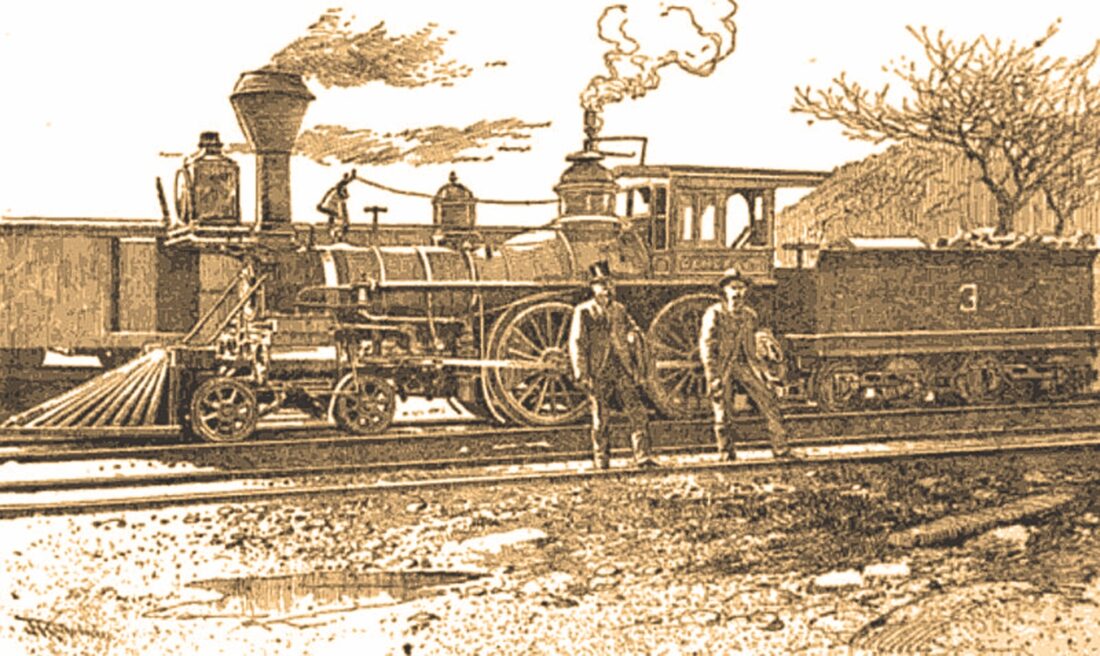
The Great Locomotive Chase was a military raid in April 1862 led by civilian James J. Andrews and volunteers from several Ohio regular army regiments. Andrews’ raiders stole the steam locomotive The General from a rail yard in Atlanta and travelled north toward Chattanooga destroying track, bridges and telegraph lines along the way. The General is fully restored and on permanent display at the Southern Museum of Civil War and Local History, Kennesaw, Ga. (Photo provided)
In the Civil War, technical innovation led to advances in weapons that included rifled gun barrels that resulted in greater accuracy and longer range than smooth-bore muskets and cannon. Minie balls travelled farther with greater accuracy and flattened when they impacted human tissue to effectively shatter bone, facilitate infection and amputations.
Ironclad warships fitted with steel plates were impenetrable by enemy fire and steam-powered vessels replaced sailing ships and were vital to the blockade of southern ports.
The CSS Hunley was the first submarine to sink an enemy ship by ramming it with a new device, the torpedo.
Railroads were used for the first time to transport troops, arms, supplies, medicine and wounded, and rail hubs became primary targets of armies. Photography changed the way the world perceived war and judged leaders.
Telegraph cables connected front-line armies to command centers and political leaders, and medical advances led to battlefield ambulances, hospitals and “triage” to prioritize the treatment of the wounded.
In addition, weapons of mass destruction, including chemical and biological agents, poison gases, chemically infused artillery shells, glass hand-grenades that contained acid, and schemes to poison the armies and populations of both the North and South were considered by the military and government leaders of both the Union and Confederacy. With the exception of an alleged attempt to assassinate President Lincoln with yellow fever, these weapons were never utilized.
Laubacher will explore the chemical and biological agents considered by both military and political leaders during the Civil War and considerations that limited their use.
Laubacher was a staff member at the Central Ohio Poison Center for 28 years and a full-time staff nurse at Nationwide Children’s Hospital. He earned a bachelor’s of science in nursing from Capital University and is a faculty member at the Paramedic School at Grant Medical Center in Columbus.
He has presented to the National Museum of Civil War Medicine, Society of Civil War Surgeons and American Congress of Clinical Toxicology. He is an active member of the 1st Ohio Light Artillery, Battery A, Central Ohio Civil War Round Table, Society of Civil War Surgeons, National Museum of Civil War Medicine and Society of Civil War Historians.
Local News

Cruisin’: Riverboats schedule 2026 stops in Marietta

Wood County Commissioners accepts poll worker list

‘Just keep swimming’: ‘Finding Nemo Jr.’ opens at the Actors Guild of Parkersburg
Civil War Round Table to discuss weapons of mass destruction

Conflict in Iran expected to impact gas prices