Ohioans are getting fed up with data centers, state lawmakers are starting to notice
-
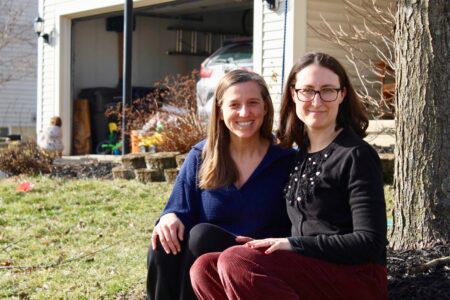
- (Ohio Capital Journal Photo) Annie Cannelongo, left, and Annette Singh are neighbors who live in the same Hilliard subdivision. They’re organizing against proposed fuel cell powering a data center just outside their neighborhood.
-
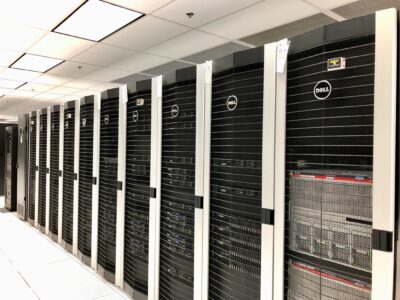
- In this Dec. 20, 2018 photo computers at Chemical Abstracts Service store data that bound journals used to catalog chemical breakthroughs by scientists in Columbus, Ohio. Today computers in its 16,800-square-foot data center stores three petabytes of information for CAS customers. (AP Photo/Julie Carr Smyth)
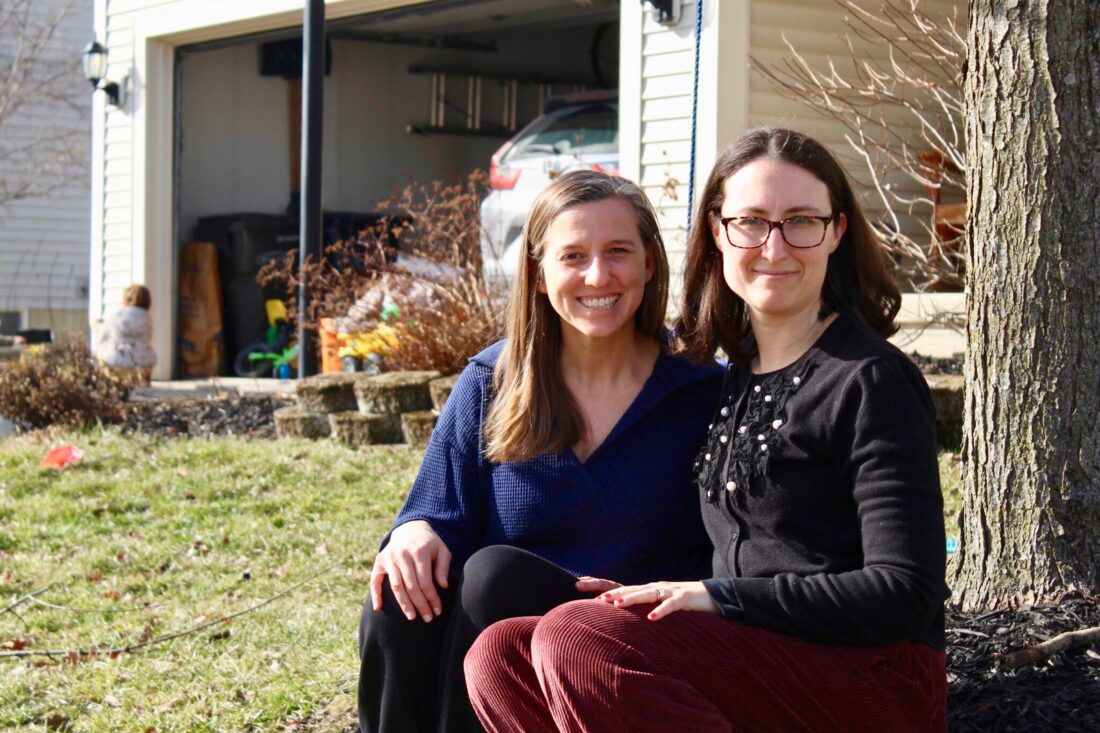
(Ohio Capital Journal Photo) Annie Cannelongo, left, and Annette Singh are neighbors who live in the same Hilliard subdivision. They’re organizing against proposed fuel cell powering a data center just outside their neighborhood.
By Nick Evans
Special to The Times
Annie Cannelongo and Annette Singh are neighbors who have lived in the same Hilliard, Ohio subdivision for years.
It’s a classic suburb — two-story homes with well-kept lawns and neat sidewalks lining long, gently curving streets.
Cannelongo and Singh both have young kids and seem to love the area.
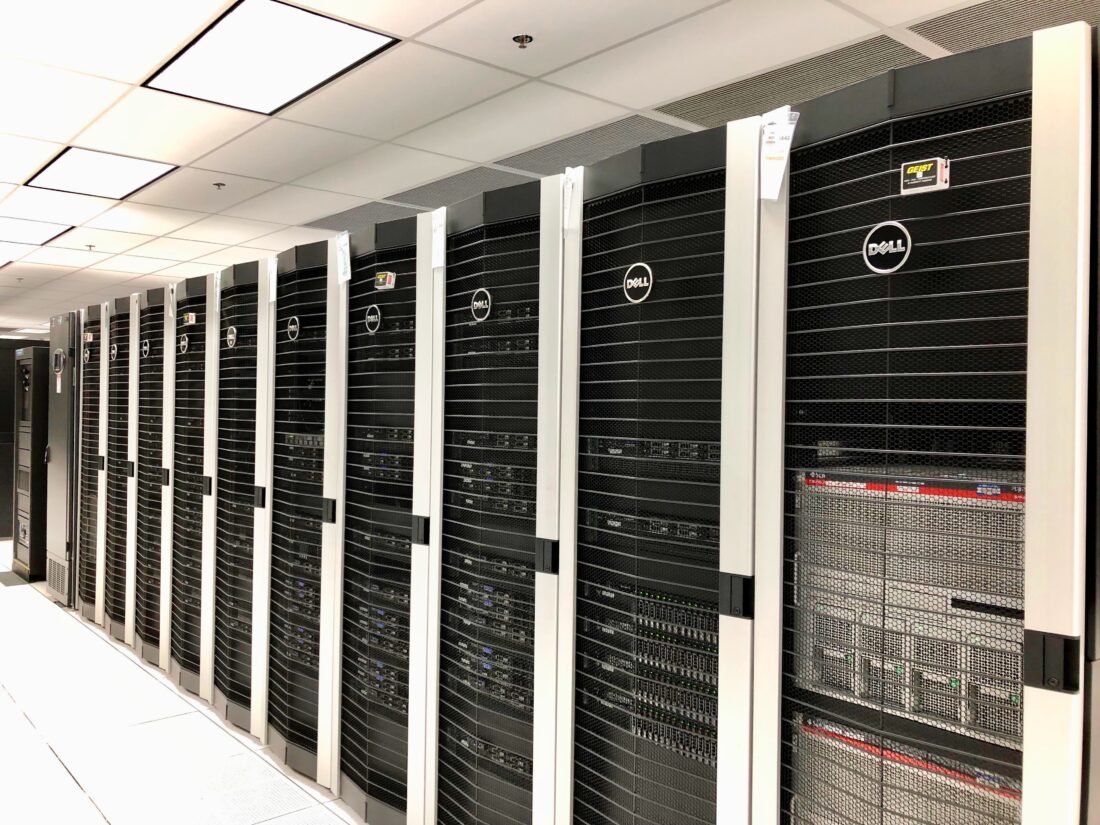
In this Dec. 20, 2018 photo computers at Chemical Abstracts Service store data that bound journals used to catalog chemical breakthroughs by scientists in Columbus, Ohio. Today computers in its 16,800-square-foot data center stores three petabytes of information for CAS customers. (AP Photo/Julie Carr Smyth)
What they don’t love is the nearly 73-megawatt fuel cell Amazon wants to install to power its data center next door.
“They only notified the people right along the fence line,” Cannelongo said. “They didn’t notify the whole neighborhood. We don’t know how far the emissions effect.”
“It’s also just the volume of this and all in one location,” Singh said.
The proposed fuel cell, she explained, would be the largest of its kind in North America.
“How does that impact a park that it abuts?” Singh went on. “It’s a playground. My kids ride their bike there every other day.”
Ohio is rushing toward a power supply crisis driven in part by growing demand from facilities like data centers.
It can take years to navigate the process for building new standalone power plants.
Data centers are moving faster than that. So, state lawmakers thought why not get the data centers to provide their own electricity on-site?
That’s the “behind-the-meter” electricity generation lawmakers envisioned when they approved Ohio House Bill 15 last year.
Under that legislation, the Hilliard project gets to move forward quickly, and it gets to bypass local review.
Last October, AEP Ohio informed the city of Hilliard they were withdrawing a local zoning application.
“No further review is necessary,” a company attorney told the city following approval from state officials on the Ohio Power Siting Board.
Hilliard appealed the Ohio EPA’s air permit for the project about a week later.
The city also requested an air quality study.
Late last month Bloom Energy, the company building the fuel cell, shared a report stating project emissions “do not represent a cause for concern.”
The company noted its fuel cells produce less emissions than traditional power sources.
“The predicted CO2 concentrations from the project are a fraction of typical ambient air concentrations,” the report added, “and therefore are not predicted to have a measurable impact on local air quality.”
Cannelongo and Singh are skeptical.
“We don’t trust that they’re unbiased,” Cannelongo said. “We want an independent study.”
They also want a slower, more rigorous process for on-site power when a facility sits next to a neighborhood.
“Now you have 45 days,” Singh said. “There’s no way for anyone to petition, to question it. The cities lose power, and it, to me, it’s pulling power in the wrong direction.”
“What happens here can happen to your neighborhood,” she added.
State plans
Hilliard is just one example among many around Ohio.
In cities and townships, proposed data centers are roiling otherwise sleepy public hearings and raising difficult questions about electricity, water, and noise.
State lawmakers have noticed.
On both sides of the aisle, they’ve offered measures acting as guardrails — or speed bumps — for data center development.
What they haven’t proposed yet is the kind of short-term moratorium that a handful of Ohio cities and townships have approved in recent months. Lawmakers in at least 11 other states have also proposed such temporary bans.
Ohio Senate Democrats were quick out the gate with plans for several bills eliminating tax breaks, ensuring developers cover the cost of new infrastructure, and imposing environmental safeguards.
Most of those proposals haven’t been filed yet. Democratic lawmakers are working to secure co-sponsors across aisle.
Meanwhile, leaders in the Ohio House and Ohio Senate seem eager to nix a state sales tax exemption for data centers.
The idea was included in the most recent budget, but Gov. Mike DeWine vetoed it, arguing that the tax exemption for data centers helps Ohio compete with other states.
Last week, Ohio House Speaker Matt Huffman said he was whipping votes, with an eye on bringing the veto override vote to the House floor by the end of the month.
House proposals
In the House, a proposal setting up a study commission is waiting for a floor vote.
One of Ohio House Bill 646’s co-sponsors, Ohio state Rep. Gary Click, R-Vickery, described it as a way to separate wheat from chaff when it comes to public concerns.
For instance, how will data centers affect utility bills? What about energy grid reliability? Will data centers create new problems with wastewater?
“I’m not saying that I have the answers to all of these questions,” Click said, “but I am saying all of these questions deserve to be answered. They deserve to be examined, and people deserve answers.”
Initial drafts of the bill included a six-month statewide moratorium on data centers, but Click removed it before filing the bill.
He got diverging views about whether a moratorium would violate Ohio’s home rule authority. It was also clear to him that even a short-term ban would be hotly debated.
“I think that by the time It got through the legislature, it would be removed anyway,” Click said.
“But if it wasn’t, then it would be enjoined by some court somewhere, until it got sorted out and settled out, which would put the whole thing on hold.”
Another proposal, Ohio House Bill 706, sponsored by Ohio state Reps. David Thomas, R-Jefferson, and Tristan Rader, D-Lakewood, would extend AEP Ohio’s new data center billing standards statewide.
Last year, state regulators approved AEP Ohio’s new data center tariff, which places conditions like minimum purchasing agreements and late exit fees on new data center customers.
That tariff is getting challenged in court, but Thomas and Rader think it’s good idea and should be extended to other Ohio utilities.
“These standards ensure that if these projects move forward, they do so responsibly, transparently, and without increasing rates for everyone else,” Rader said in a press release.
Thomas added that data centers are important to Ohio’s future, but “utilities and regulators need clear rules so that grid investments are planned responsibly and existing customers are not left holding the bag.”
Ohio state Reps. Brian Stewart, R-Ashville and Adam Bird, R-New Richmond, have filed Ohio House Bill 695 in response to an apparent data center development without mentioning data centers at all.
“There’s a mega site that is located in the village of Mt. Orab in Brown County that I represent,” Bird explained. “And many of the residents in that community were upset about a non-disclosure agreement that was signed by local government officials.
“Is it a data center? I don’t know — they signed an NDA,” Bird said.
Bird and Stewart proposed legislation prohibiting county, township, and village officials from signing non-disclosure agreements.
Bird stressed he’s looking for transparency, not a way for state lawmakers to meddle in local development decisions.
“Let’s say that it is a data center,” he said of the Mt. Orab proposal. “Well, if it is a data center, then we should be open and honest with the public, and tell the public why this is a good idea for our community, and sell the public on why it’s going to be a positive because of reasons X, Y and Z.”
Ohio House Bill 710, offered by Ohio state Reps. Steve Demetriou, R-Bainbridge, and Heidi Workman, R-Rootstown, takes a noticeably aggressive posture, compared with other proposals.
The bill would prohibit state and local governments from awarding incentives of any kind for a data center.
That prohibition extends to the state economic development agency JobsOhio.
The bill also places new restrictions on siting. Public land and residential neighborhoods are off-limits.
Prime farmland is too, unless it’s voluntarily sold and the county commission passes a resolution green-lighting a proposed data center.
The measure explicitly bars the use of eminent domain to acquire property for a data center project.
“At this point,” Workman said, “we’re just making sure that we preserve farmland and individual (property). There’s no eminent domain opportunity here.”
As for electricity, Demetriou and Workman’s proposal prohibits utilities from connecting a data center to the grid unless they provide their own behind the meter power, or agree to pay for all “generation, transmission, distribution, capacity, congestion, and ancillary service costs,” related to the project.
Workman said, “The data centers that come into these communities will absolutely not be able to put any of that electricity burden on the community.”
“Hopefully, in the future,” she added, “we’ll start seeing that these data centers will be able to feed back to the grid, so they’ll start helping our communities.”
Local response
Cannelongo and Singh are primarily focused on what happens with the project in their backyard, but they’re interested in what state lawmakers are doing.
The bill barring non-disclosure agreements doesn’t apply to cities which have home rule authority under the state constitution, but the idea sounded good to them.
One potential tweak Singh mentioned: It should apply to staffers, too.
If planning decisions run through the equivalent of a city manager, prohibiting NDAs for elected officials might miss the problem.
The study commission is a fine idea, they agreed, but they want to see greater input from citizen advocacy groups.
Cannelongo used to work for the Ohio Department of Education, and she described the process they used to develop new math standards.
The office took input from parents, teachers, unions, and academia and then fed that through working groups with direct classroom experience.
“That would be what I would like to see,” Cannelongo said, “that there’s representatives from all areas of the state, the cities, the country, and that the different organizations also have a voice at table.”
Singh said Demetriou and Workman’s bill eliminating tax breaks is “moving in the right direction.”
“Giving all these tax breaks, that affects the community,” Singh said. “And again, where could that money have been used? Somewhere else and for something else.”
“This is a great neighborhood,” she added.
“They’re building a brand-new elementary school here for millions of dollars. They’re trying to make the area better. Yet this, I believe, is making it worse — the data center — so it’s just really a hard place to be.”
Follow Ohio Capital Journal Reporter Nick Evans on X or on Bluesky.
Original story can be found at https://ohiocapitaljournal.com
Local News

Bright spot

Ohio State Fire Marshal announces recipients of 2026 Equipment, Training Reimbursement Grants

Commissioners approve magistrate court funding, Belpre America 250 sub-grant
Marietta BOE holds special meeting
Building Bridges to Careers event highlights regional collaboration to support future workforce