
Easter Lilly comes into bloom
-
- Photo Illustration
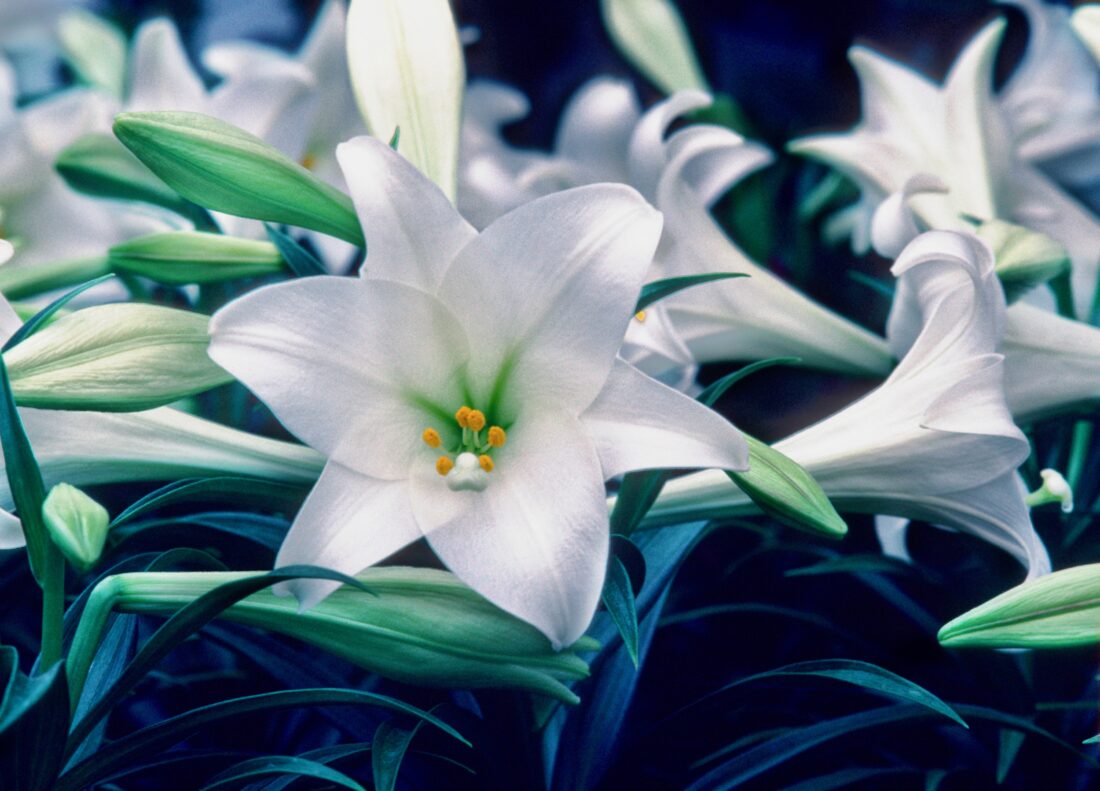
Photo Illustration
By J.J. Barrett
WV Extension | Agriculture and Natural Resources
Hello Mid-Ohio Valley farmers and gardeners! Happy Easter to all! I hope everyone is enjoying the beauty of our spring flowering trees and shrubs around the Mid-Ohio Valley.
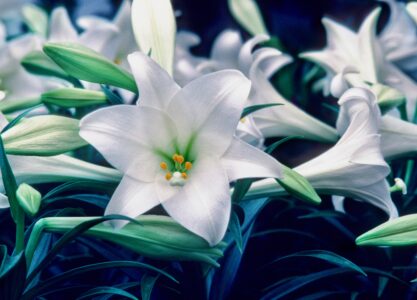
Every year at Easter, you will find the beautiful white flowers of the Easter lily, (Lilium longiflorum), gracing the altars at churches and for sale in nurseries. Covered in large, showy white flowers, Easter Lilies have come to represent the essence of Easter including purity, virtue, innocence, hope, and rebirth.
A member of the Liliaceae (lily) family, its species name means “long-flowered.” Their pure-white or sometimes light pink, 5 to 9-inch, fragrant, trumpet-shaped flowers borne on stiff, 24 to 36-inch stems grow from perennial bulbs, hardy to USDA zones 4-8.
These plants are native to the northernmost islands of the Ryukyu Archipelago in southern Japan and the mainland seacoast and small islands of the eastern part of Taiwan. They were introduced to England in 1819 and to America in 1888. By the 1880s, they were grown commercially in Bermuda and shipped for sale to the United States.
Japan became the dominant exporter of Easter lilies to the United States by 1900. However, the onset of World War II resulted in Japan halting its export of lilies to the United States, so we began to grow them commercially ourselves. Today, 95% of the bulbs grown for potted Easter lilies are produced by approximately 10 growers in a small coastal region along the California-Oregon border.
Producing Easter lilies is a time-consuming process that requires meticulous planning and management to have blooms ready in time for Easter. Before bulbs are shipped to greenhouses across the country, growers invest 2-3 years in their development.
This task is made even more challenging due to the date of Easter changing each year based on the lunar calendar as it relates to the spring equinox. Easter is the first Sunday after the first full moon that is on or after the spring equinox.
Growers are required to force the bulbs to provide blooming lilies in time for the Easter season. Forcing is a method causing plants to flower at a different time than they would under normal conditions. This is achieved by simulating natural growing conditions to initiate flower buds at a desired time, in this case, Easter.
Easter lily bulbs require around a six-week period of cold temperatures in order to bloom. Once the bulbs are cooled, they are forced by adjusting greenhouse temperatures to speed the development of flower buds.
When purchasing a potted Easter lily from a store, select one with dense foliage along the entire stem and no signs of disease, such as wilted, yellowed, or dark spotted leaves or insect damage such as holes chewed in the leaves. Look for plants with many buds in different stages of development, with only one or two open flowers. This will prolong the blooming time in your home.
Once home, remove any protective plastic or paper sleeves around the plant. Avoid placing it in direct sunlight, but instead, set it in an area of indirect light, away from drafts. To prolong blooming, the ideal daytime temperature is between 60 and 65 degrees Fahrenheit, with slightly lower temperatures at night.
They prefer even moisture. Never allow the plant to sit in standing water, and if the pot has a foil wrapper, either remove it or poke holes in it to allow water to drain.
As the flowers begin to open, you may remove the yellow anthers holding the pollen. Pollen removal extends the flower’s bloom life and prevents the pollen from staining the flower and anything around the plant. As the flowers die, pinch spent blooms where they attach to the stem.
When planting in your garden, you may choose to plant your potted lily or purchase bulbs. You may plant your potted lilies any time after the risk of frost in the spring through fall. If planting in spring, acclimate the plant to the outside temperatures before planting it in the ground.
They prefer well-drained, rich, organic soil and full sun to part shade. If planting bulbs, plant them 4-6 inches deep and 12-18 inches apart in the fall, with the growing points facing upward.
Easter lilies bloom naturally from July to August. They may require staking as they grow. If using them for cut flowers arrangements, remove no more than one-third of the stem. Allow leaves and stems to turn yellow before cutting back to provide energy for the next year’s blooms. Cover in the fall with a layer of mulch and remove the following spring to allow new shoots to sprout.
Be cautious, Easter lilies are highly toxic to cats. All parts of the plant, even the pollen, are poisonous and may cause kidney failure and death if ingested. Contact your veterinarian immediately if a cat has eaten any part of an Easter lily. Early symptoms of poisoning may include vomiting, disorientation, loss of appetite, and lethargy.
Contact me at the Wood County WVU Extension Office (304)-424-1960 or e-mail me at jj.barrett@mail.wvu.edu with questions. Until next time, Good Luck and Happy Gardening!
Local News

Marietta Main Street’s April First Friday: Happy Birthday, Marietta
Pomeroy water system receiving EPA funds
From staff reports COLUMBUS — Ohio Rep. Kevin Ritter, R-Marietta, announced this week that the Ohio ...

Wildlife photographer Dianne Wigal featured at WesBanco

Williamstown High School presents Local School Improvement Council Showcase

Washington County Commissioners say they don’t approve data center tax abatement