
Boot me out of the ballgame: A College World Series appreciation of Lambert Bartak
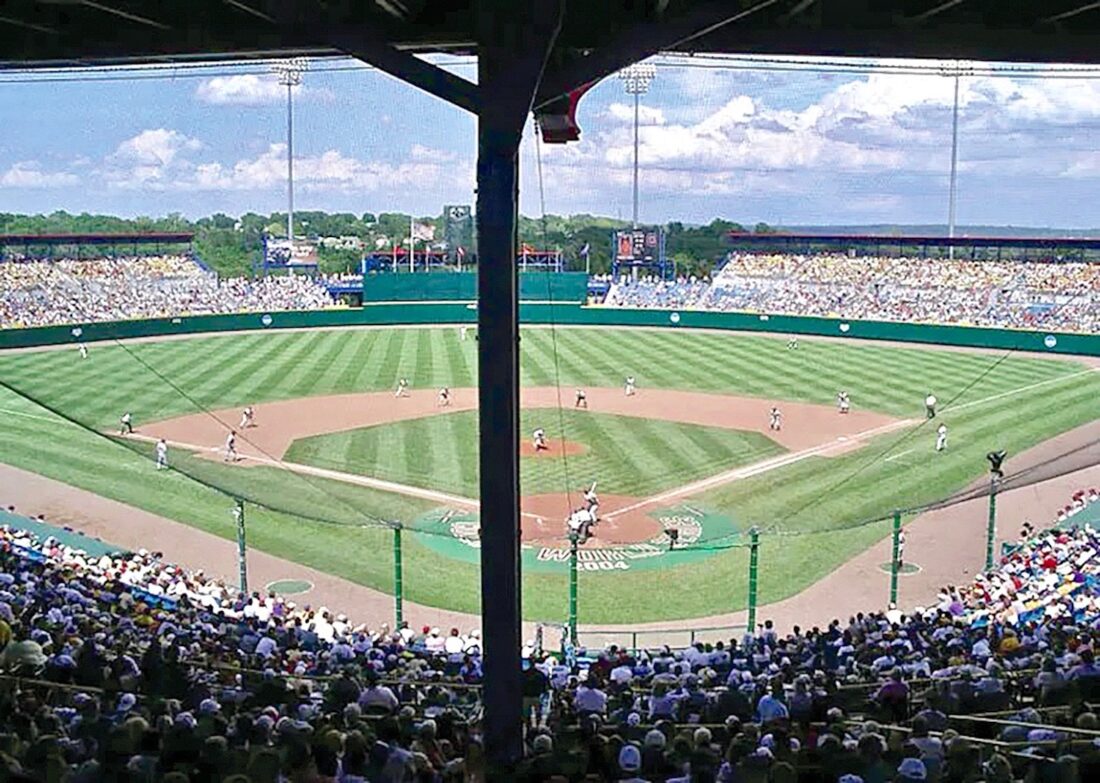
Deep center and sight for sore eyes: So went taking in a game at The Blatt — the original Johnny Rosenblatt Stadium in Omaha. which hosted the College World Series for six decades. (Photo courtesy of Omaha Exploration)
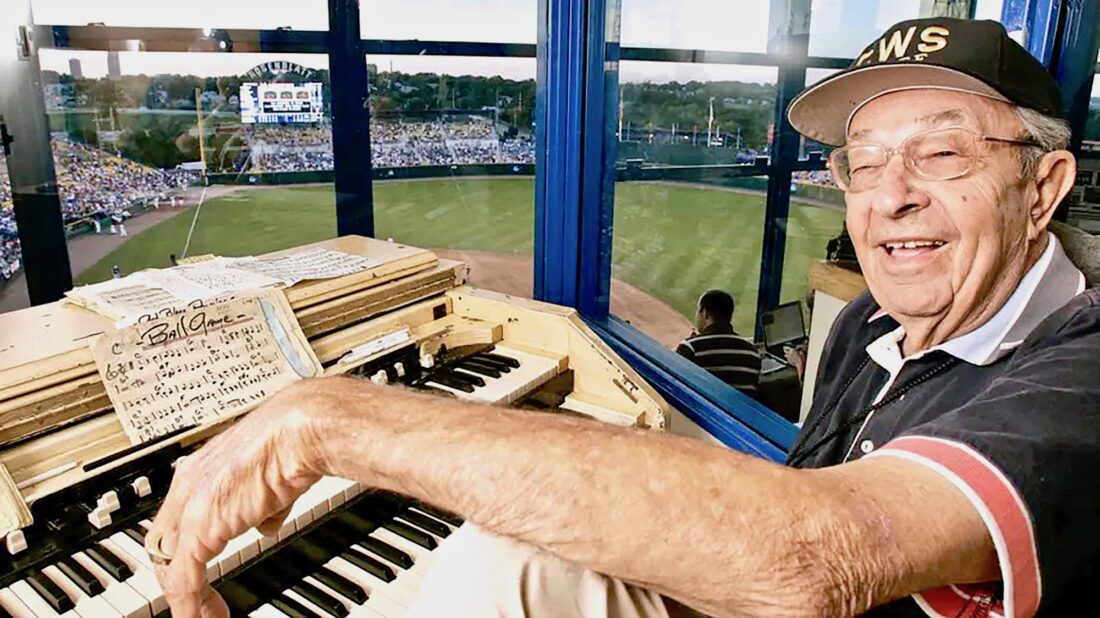
Lambert Bartak, who played the organ for decades at Johnny Rosenblatt Stadium during the College World Series, had the dubious distinction of being tossed one game — because the umpire felt he was being taunted by the music. (AP file photo)
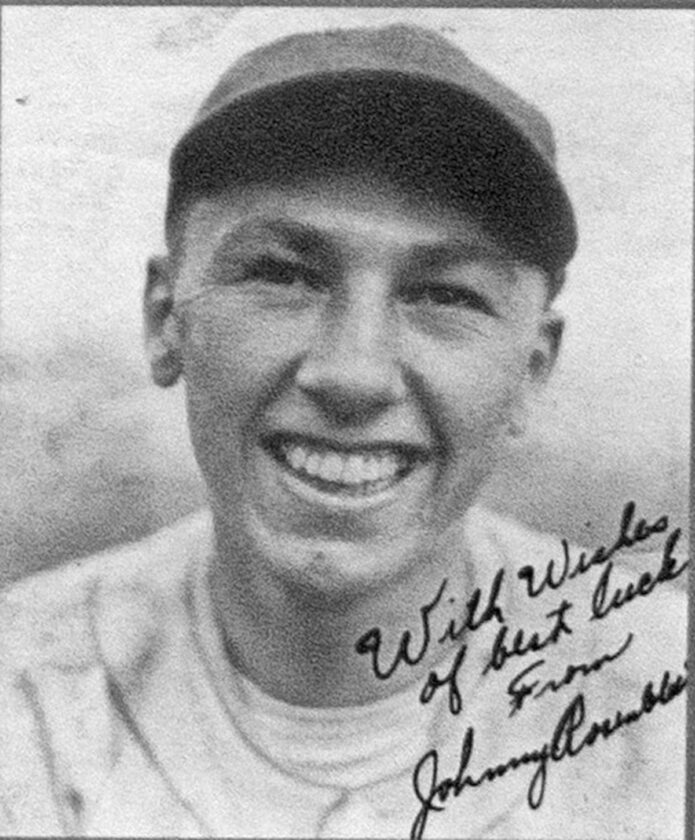
Johnny Rosenblatt, the Omaha mayor who helped bring baseball, and college baseball's World Series to his city, was a journeyman who played semipro ball for 20 years before entering politics. (Photo courtesy of the Nebraska Jewish Historical Society)
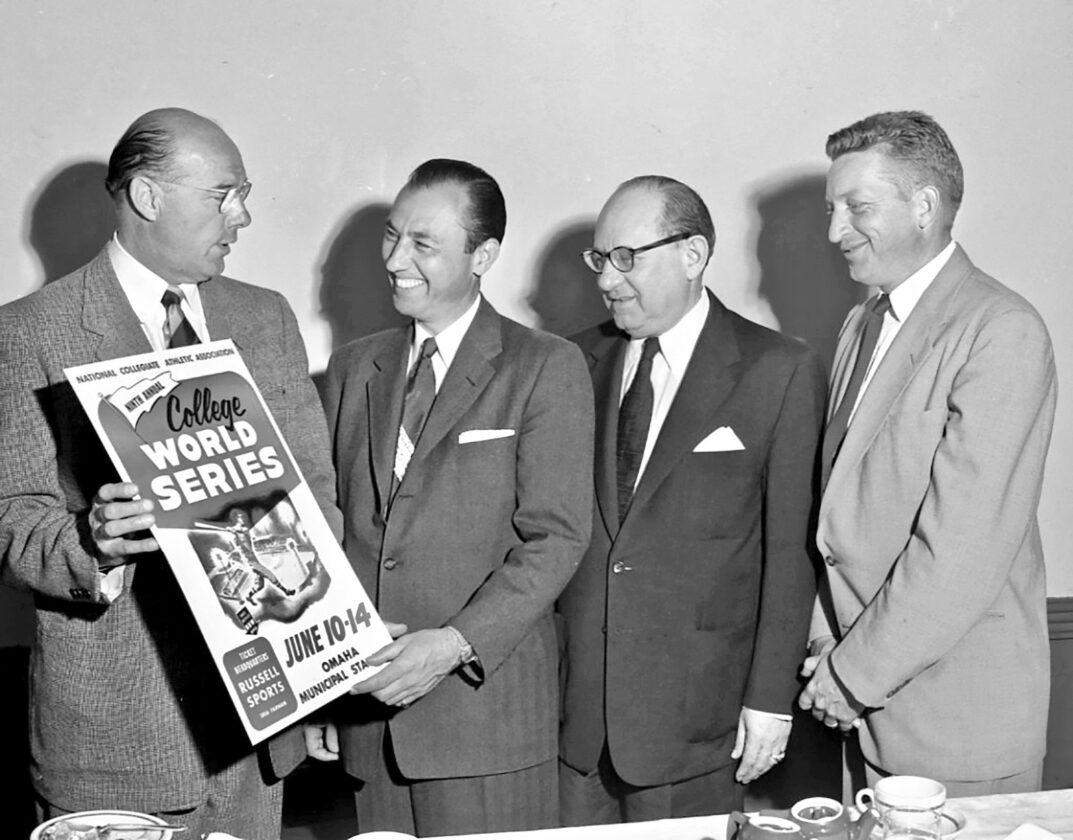
Mayor Johnny Rosenblatt, second from left, helps show off a poster advertising the 1959 College World Series with other officials — five years before the host stadium would be renamed in his honor. (Photo courtesy of Omaha Exploration Omaha)
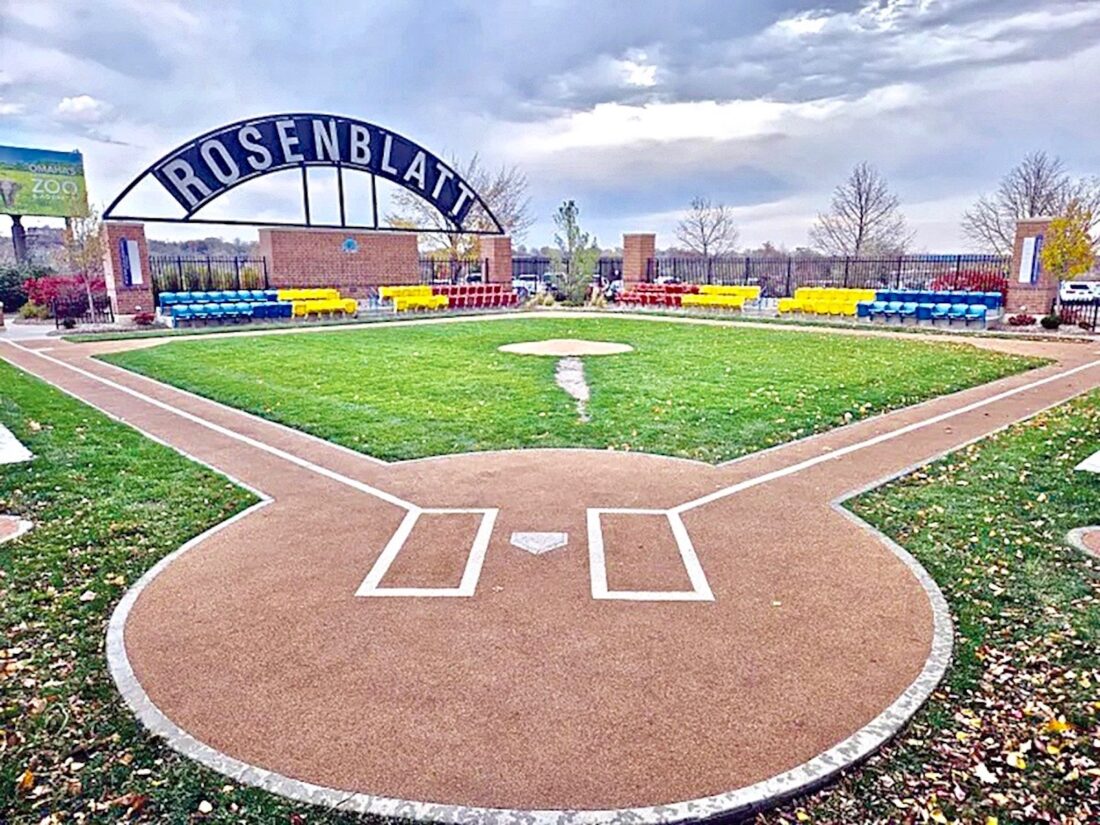
Seats and other artifacts from the original Johnny Rosenblatt Stadium are now part of a permanent exhibit at Omaha's Henry Doorly Zoo and Aquarium next door. (Photo courtesy of Henry Doorly Zoo)
Deep center and sight for sore eyes: So went taking in a game at The Blatt — the original Johnny Rosenblatt Stadium in Omaha. which hosted the College World Series for six decades. (Photo courtesy of Omaha Exploration)
Lambert Bartak, who played the organ for decades at Johnny Rosenblatt Stadium during the College World Series, had the dubious distinction of being tossed one game — because the umpire felt he was being taunted by the music. (AP file photo)
Johnny Rosenblatt, the Omaha mayor who helped bring baseball, and college baseball's World Series to his city, was a journeyman who played semipro ball for 20 years before entering politics. (Photo courtesy of the Nebraska Jewish Historical Society)
Mayor Johnny Rosenblatt, second from left, helps show off a poster advertising the 1959 College World Series with other officials — five years before the host stadium would be renamed in his honor. (Photo courtesy of Omaha Exploration Omaha)
Seats and other artifacts from the original Johnny Rosenblatt Stadium are now part of a permanent exhibit at Omaha's Henry Doorly Zoo and Aquarium next door. (Photo courtesy of Henry Doorly Zoo)
Trending
OMAHA, Nebraska - Hey Ump: That probably was a Mickey Mouse call.
Even if Lambert Bartak didn't realize the sonic implications of what just happened; what he just did, are you heading out to Omaha for the College Baseball World Series and West Virginia University's first-ever foray to the Field of Dreams, big-time?
Be sure and lift your frothy beverage in appreciation of the aforementioned Mr. Bartak.
Heck, even if you're watching from your living room, you'll want to do that for him anyway.
Don't know him?
Bartak was the guy who played the organ for World Series games for years at the old Johnny Rosenblatt Stadium, which hosted the series from 1950-2010, before it was torn down to create a parking lot for the city zoo next door.
He did the same for the Omaha Royals, the farm club of the Kansas City Royals, which played in the same house.
Said parking lot ended up being a de facto tribute and museum for the venerable house of baseball, instead.
Aura, as opposed to asphalt.
A recreation of the infield, with many of the park's original artifacts, is now a permanent part of Omaha's Henry Doorly Zoo and Aquarium, as decreed by management of the regarded attraction.
Meanwhile, the college series is now played at the gleaming Charles Schwab Stadium.
"The Blatt,” which emerged from the plains like a cornfield Wrigley or Fenway, was there first.
NEW VISION - FOR NINE INNINGS
So was Hizzoner Rosenblatt, who was walking and working among the denizens of the Nebraska city on a daily basis, when the CWS relocated from Michigan after its second year.
It was Omaha's mayor who made all this baseball business happen, in fact.
His name would eventually adorn the stadium. Omaha City Council did that in 1964, three years after he retired.
"We could make long speeches about this," said Council President Henry Trustin, who didn't.
The mayor was on the hunt for minor league baseball. Build it, and they will come, to paraphrase the mystical baseball movie.
Rosenblatt was a baseball aficionado -- who, in the prime of his conditioning, was also a pretty good practitioner of Mr. Doubleday's pastime.
The outfielder who was born on Christmas Day 1907 played in the semipro leagues in and around Nebraska for 20 years.
By all accounts, the mayor with the glove respectable - that is, he didn't embarrass himself during one memorable exhibition game in 1927 against the vaunted New York Yankees, when scooping hits by Babe Ruth and Lou Gehrig.
VITAL STATS
Like a lot of the old stadiums, The Blatt had its charms on the field of play and surrounding environs.
The neighborhood was great, for instance.
Parking wasn't but enterprising residents close by would open their front yards where you could steer your Studebaker, once you proffered a few bucks, for nine innings.
The upper deck and awnings in the Rosenblatt Stadium's general design ensured a lot of the seats were covered -- meaning shade from that relentless sun and shelter from those sudden storms that always conjure over Nebraska skies come July and August.
Just like Randy's Ridge at the Ken in Granville, the Blatt boasted the Berm, a raised, grassy area where non-ticket holders could set up their viewing.
Seating was for around 25,000, but a packed Berm could top it off at 30,000, if it was a marquee game.
Your power alleys were 375 feet apiece and centerfield went back, back, back to 408 feet, complete with a giant green wall (a la Fenway), just to make it interesting - should a batter really get a hold of one.
Today, the sprawling city of 487,000 on the plains is the diamond holder of heart for those who love the collegiate version of baseball.
Jasmyn Goodwin, the executive director of Visit Omaha, reports that last year's men's series had a local economic impact of $147.6 million for the city's hotels, motels, restaurants, nightspots and other attractions.
More than 150,000 out-of-town visitors made the series pilgrimage, she recounted further.
"We're proud to be the undisputed college baseball capital of the country," she said.
"We're going to love welcoming the West Virginia University Mountaineers and all their fans and families to our traditions. Let's play ball."
PUT ME IN, COACH
Omaha is brimming with baseball character, she said. And, baseball characters.
Take Bartak, for instance. He was a farm kid from around 80 miles northwest of Omaha who was born with an ear for music.
According to family lore, his Czech immigrant father sold 20 pigs a year over an extended period to come up with the $19.95 to order an accordion for his son from the Sears catalog in 1931, when Bartak was 12.
That's a little more than $380 today.
During World War II, when Bartak shipped out to Europe in uniform, the Army let him take the accordion with him.
THE CLUB THAT’S MADE FOR YOU AND ME
Bartak played for the Blitzkrieg-wracked citizens of London and back home in Omaha, he performed on radio and with Johnny Carson, the future Tonight Show host and fellow Nebraskan also fresh from the war zone.
Carson was honing his act as a magician and standup comic and he needed somebody on stage for musical accompaniment and banter.
Said accompanist was married with Baby Boom babies that were arriving quickly. Dad needed a gig.
At The Blatt, Bartak generated all the ballpark faves from his bench and two keyboard rows of the 1947 Hammond organ at the far end of the press box.
"Take Me Out the Ballgame." "The Chicken Dance." "You Are My Sunshine."
One musical selection in 1988 got him into (comical) trouble during an Omaha Royals game.
A close call at home plate led to one of those scenes between the Royals manager and the umpire - with said official standing stoic in the maelstrom of flailing gestures and creatively compound curse words.
From on high, Bartak broke into the theme song of “The Mickey Mouse Club,” the Walt Disney TV show, and when he got to the second chorus with the M-I-C-K-E-Y part, another ump pointed in the direction of the press box: Yer outta here.
A chagrined organist gathered his sheet music and left without incident.
Bartak was 94 when he died in 2013. His son, Jim, laughed when he recounted the story of the stadium booting - but it was a gentle laugh.
His musician father wasn't really a baseball fan. He wasn't any kind of sports fan, in fact, Jim said.
"He loved seeing people bounce in their seats. He said he was playing Mickey Mouse for the kids. He was about the music."
In Omaha, that music comes by way of a sphere with seams that are all what they seem.
Bissett can be reached at JBissett@DominionPost.com.