
Grandin urges schools to recognize different minds, restore hands-on learning
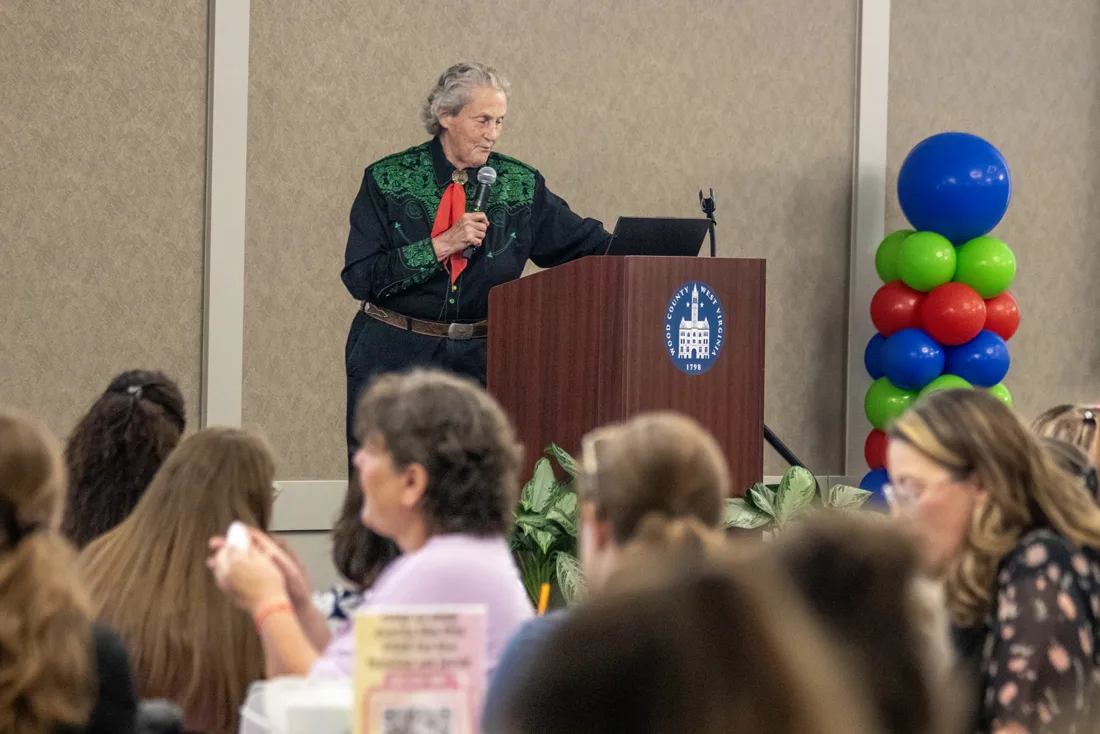
Dr. Temple Grandin shares her concept behind the different kinds of intelligences such as spatial visualizers, object visualizers and verbal thinkers during UnPuzzled Parents Connect's Empowering Families Conference Saturday afternoon. (Photo by Gwen Sour)
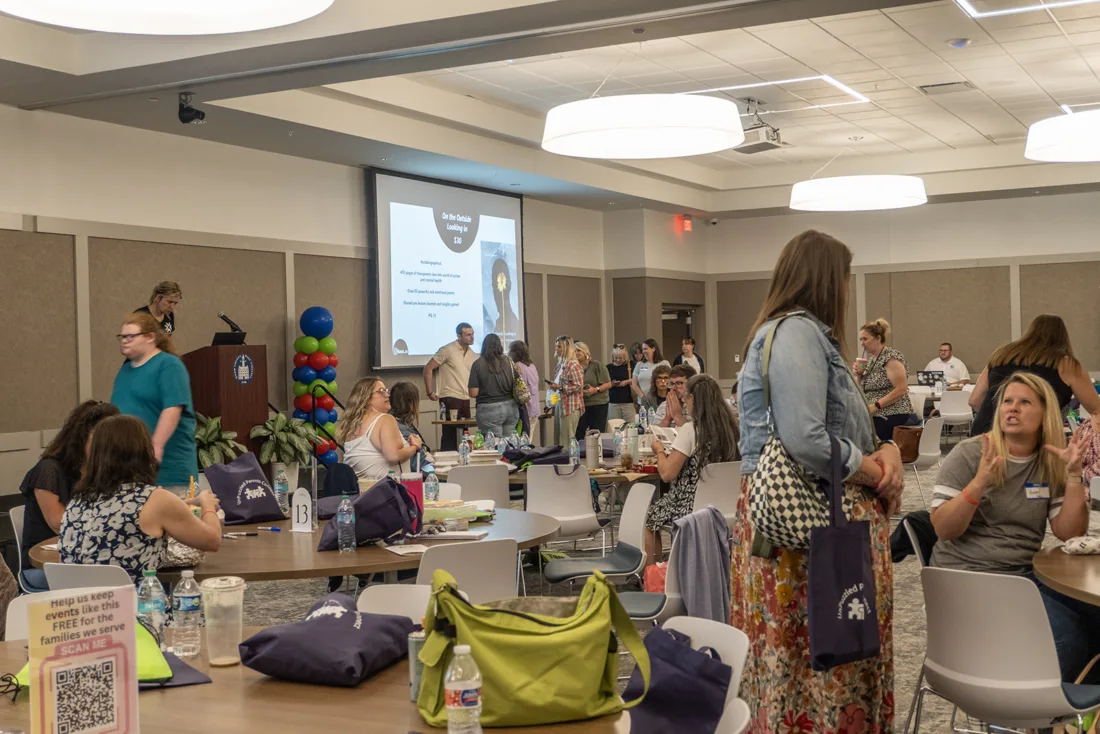
Hundreds of people attended the Empowering Families Conference hosted by UnPuzzled Parents Connect Saturday afternoon. (Photo by Gwen Sour)
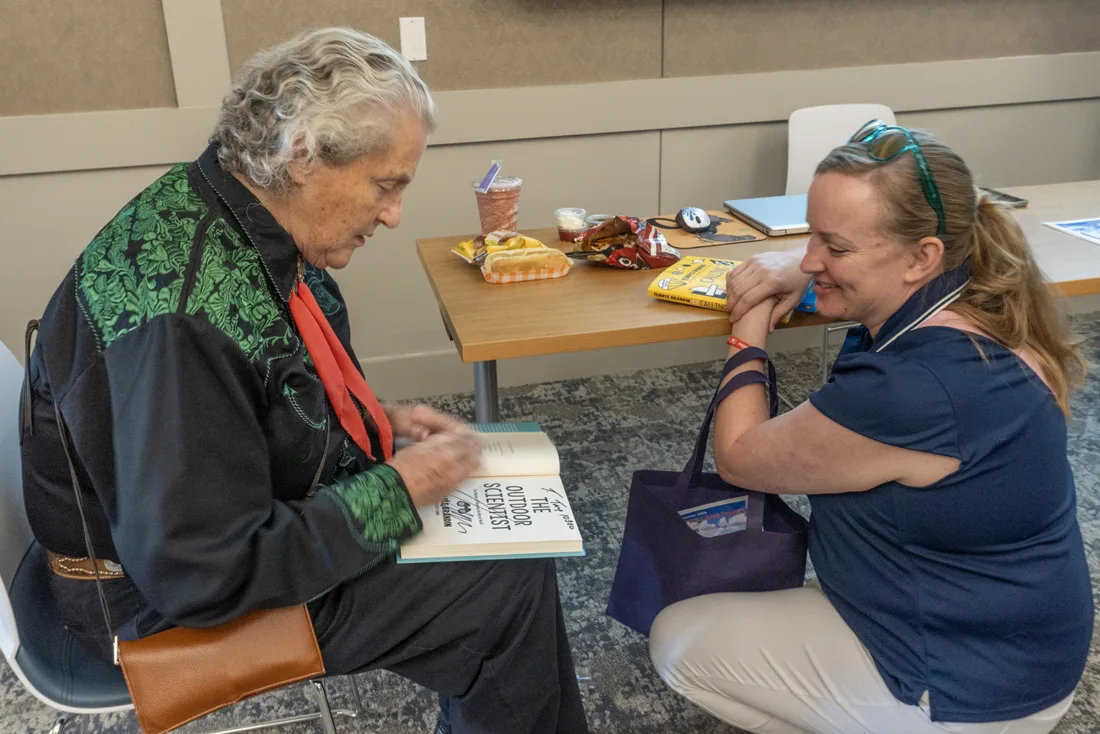
From left, Dr. Temple Grandin signs a book for Elizabeth Grounds and her Girl Scout Troop, Vienna 10300, during Empowering Families Conference hosted by UnPuzzled Parents Connect Saturday afternoon. (Photo by Gwen Sour)
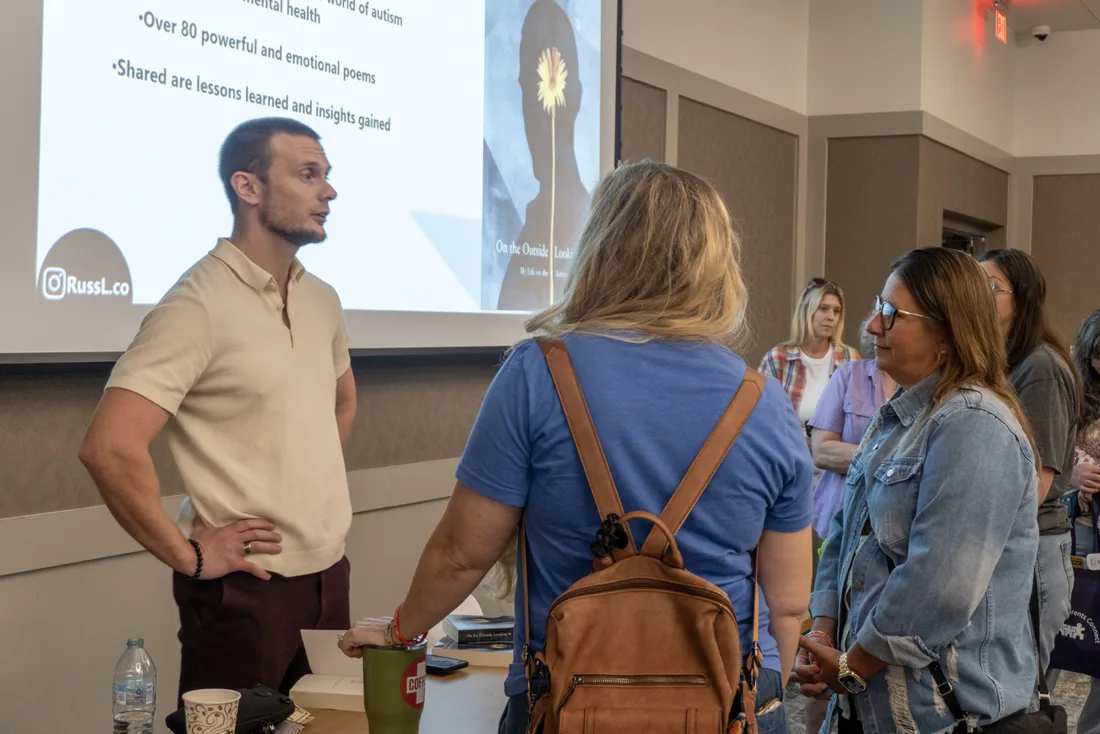
From left, Russell Lehmann discusses friend making strategies for autistic youth with Brandi Wolfe and Lisa Elliott during Saturday afternoon's Empowering Families Conference hosted by UnPuzzled Families Connect. (Photo by Gwen Sour)
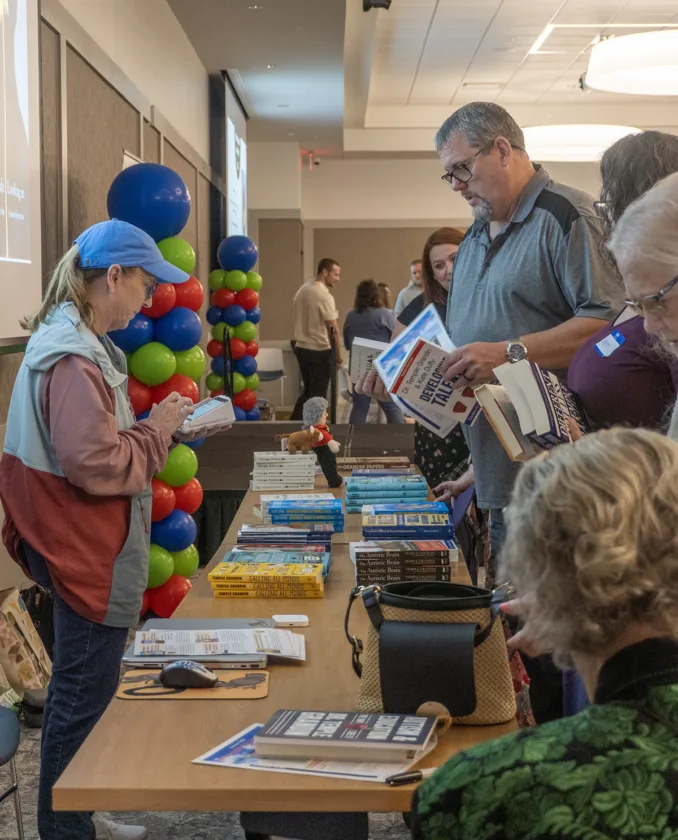
From left, Karen South completes a transaction for books written by Dr. Temple Grandin with Empowering Families Conference attendee David Pierotti Saturday afternoon. (Photo by Gwen Sour)
Dr. Temple Grandin shares her concept behind the different kinds of intelligences such as spatial visualizers, object visualizers and verbal thinkers during UnPuzzled Parents Connect's Empowering Families Conference Saturday afternoon. (Photo by Gwen Sour)
Hundreds of people attended the Empowering Families Conference hosted by UnPuzzled Parents Connect Saturday afternoon. (Photo by Gwen Sour)
From left, Dr. Temple Grandin signs a book for Elizabeth Grounds and her Girl Scout Troop, Vienna 10300, during Empowering Families Conference hosted by UnPuzzled Parents Connect Saturday afternoon. (Photo by Gwen Sour)
From left, Russell Lehmann discusses friend making strategies for autistic youth with Brandi Wolfe and Lisa Elliott during Saturday afternoon's Empowering Families Conference hosted by UnPuzzled Families Connect. (Photo by Gwen Sour)
From left, Karen South completes a transaction for books written by Dr. Temple Grandin with Empowering Families Conference attendee David Pierotti Saturday afternoon. (Photo by Gwen Sour)
Trending
PARKERSBURG -- A professor and internationally recognized autism advocate encouraged parents and educators Saturday to recognize the ways people think and to provide autistic students with practical opportunities to develop their individual strengths.
Temple Grandin was the featured speaker at UnPuzzled Parents Connect's second annual Empowering Families Conference at the Center on Market in Parkersburg.
Organizers expected more than 500 parents, caregivers, educators and professionals from West Virginia and Ohio to attend the conference, which also featured author and disability advocate Russell Lehmann and more than 20 vendors and service organizations.
Grandin focused much of her afternoon presentation on the importance of visual thinking and hands-on education, saying schools and employers can overlook people who struggle with traditional academics but excel at building, repairing and creating things.
"The first step is just realizing that different thinking exists," Grandin said.
Grandin said people generally rely on combinations of three types of thinking: visual, mathematical and verbal. People with autism may have particularly strong abilities in one area, she said, describing herself as an extreme visual thinker who thinks primarily in pictures.
That way of thinking helped Grandin in her work designing livestock-handling systems because she could picture what cattle were seeing and identify reflections, movements and other details that might frighten the animals.
Grandin said visual thinkers can also excel in mechanical work, art, design and other fields requiring them to see how physical objects fit together.
"For some people on the spectrum -- not everybody -- the trades are where they need to be," Grandin said, calling many skilled-trade positions "AI-proof jobs."
Grandin said schools' decisions to eliminate or reduce shop classes have contributed to shortages of workers capable of maintaining industrial machinery, infrastructure and other mechanical systems. She said she regularly visits factories where operators struggle to find employees who can repair equipment.
"We've paid the price for taking hands-on classes out of the schools," she said.
Grandin also said students should be introduced to tools, sewing, mechanics, construction and other practical activities early enough to discover their interests. She also called for greater emphasis on practical math involving budgets, measurements, interest rates and materials rather than requiring every student to follow the same advanced mathematics track.
At the same time, Grandin said mathematically gifted students should be allowed to advance rather than being held to grade-level material that may not challenge them.
Grandin pointed to TACT, a Denver-based program that teaches skilled trades to people on the autism spectrum, as an example of matching individuals' abilities with potential careers. The program offers training in areas such as welding and automotive repair while providing job coaching to help participants navigate workplace expectations.
She also emphasized that different types of thinkers work best together. Mathematical thinkers may perform the calculations behind a project, she said, while visual thinkers determine how to build it and verbal thinkers handle communication, organization or legal matters.
Grandin warned that schools risk screening out talented visual thinkers when success is measured primarily through abstract academic work.
"I'm really, really concerned about this, and it's going back to the educational system," she said.
Whitney Price, founder and executive director of UnPuzzled Parents Connect, said the conference was created to connect families with providers, therapists, advocates and other resources that may be difficult to locate.
"Empowering Families was created for families not just in our region, but throughout the state," Price said. "We wanted to give families a space to connect with providers and therapists, and also bring in speakers."
Price said participating vendors were selected because they provide services or support specifically benefiting people with disabilities and their families. Organizations represented fields including physical therapy, emotional wellness, advocacy and developmental services.
"Some people just don't know where to look," Price said. "By having over 20 vendors here at their disposal, they're able to go out, connect with them and learn how they can support them or their children."
Price said organizers ultimately wanted families to leave knowing they are not alone and that support is available in the Mid-Ohio Valley.
"We hope more than anything that they find emotional support and connection," she said. "We wanted to be the pillars that could guide people in the right direction."
Gwen Sour can be reached at gsour@mariettatimes.com.