
Rural Action, volunteers plant 4,000 plants on former farmland
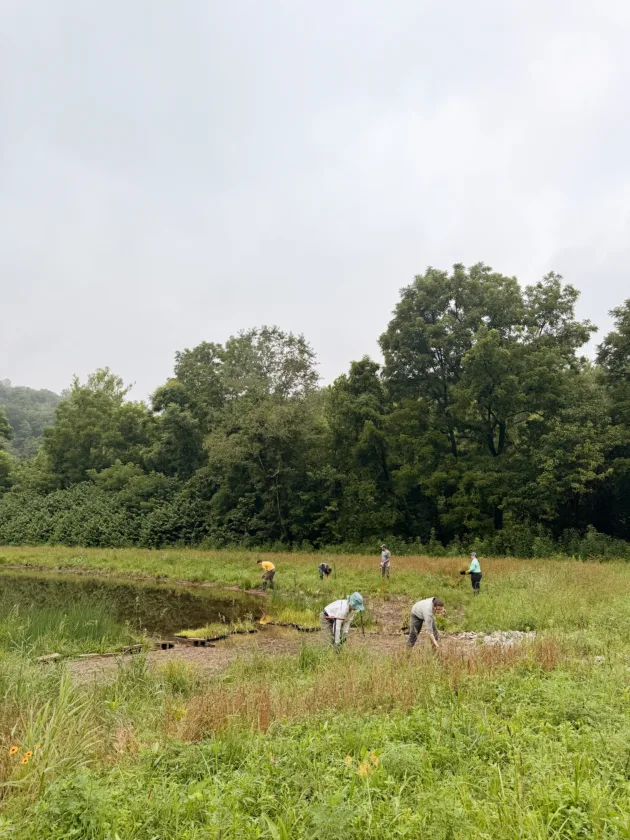
During the watershed construction project, Rural Action staff, AmeriCorps members, and volunteers use dibble bars (a tool used to punch holes in the earth) to plant wetland plugs in Washington County in July. (photo provided)
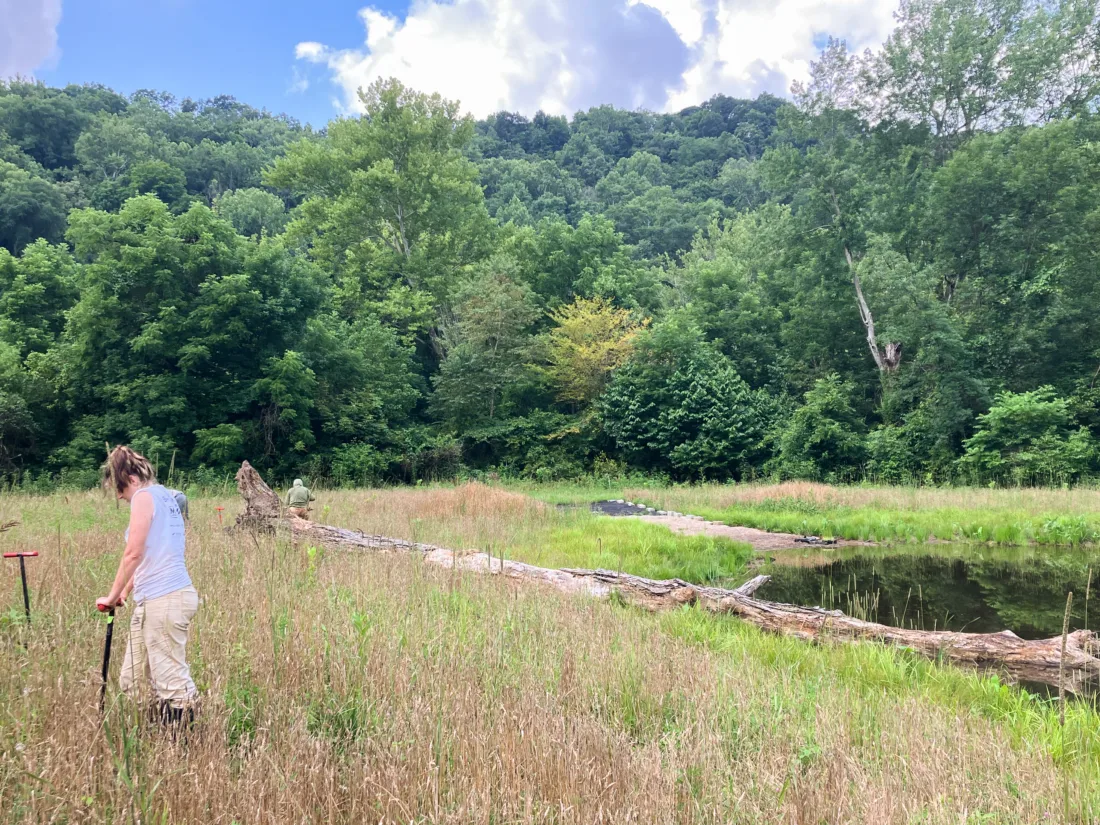
During the watershed construction project, Rural Action staff, AmeriCorps members, and volunteers use dibble bars (a tool used to punch holes in the earth) to plant wetland plugs in Washington County in July. (photo provided)
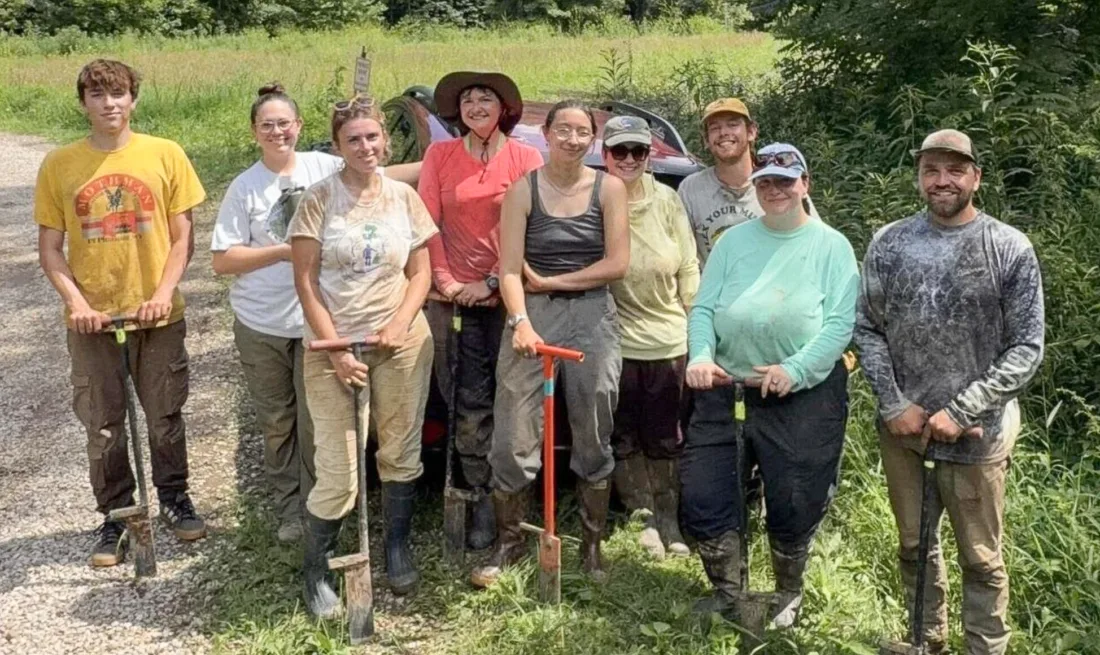
Rural Action staff members and AmeriCorps volunteers pose for a photo following their work on the watershed construction project in Washington County in July. (from third on left to right) Rural Action staff Caitlyn Park, Hannah Kopp, AmeriCoprs volunteer Bee Huelsman. (from right) Rural Action staff Zach Dowler, AmeriCops volunteer Lindsay Robertson, Rural Action staff Dakota Dement. (photo provided)
During the watershed construction project, Rural Action staff, AmeriCorps members, and volunteers use dibble bars (a tool used to punch holes in the earth) to plant wetland plugs in Washington County in July. (photo provided)
During the watershed construction project, Rural Action staff, AmeriCorps members, and volunteers use dibble bars (a tool used to punch holes in the earth) to plant wetland plugs in Washington County in July. (photo provided)
Rural Action staff members and AmeriCorps volunteers pose for a photo following their work on the watershed construction project in Washington County in July. (from third on left to right) Rural Action staff Caitlyn Park, Hannah Kopp, AmeriCoprs volunteer Bee Huelsman. (from right) Rural Action staff Zach Dowler, AmeriCops volunteer Lindsay Robertson, Rural Action staff Dakota Dement. (photo provided)
Trending
ATHENS - A wetland construction project planted approximately 4,000 wetland plants across 8.6 acres on private property in Washington County to improve habitat for aquatic and riparian species while decreasing pollutants entering the Little Muskingum River.
A riparian means relating to or living or located on the bank of a natural watercourse (such as a river) or sometimes of a lake or a tidewater, according to the Marrium-Webster dictionary definition.
The project resulted in the construction of 3.2 acres of wetlands, the restoration of 564 linear feet of an eroding stream, treatment of 5.4 acres of riparian land for non-native invasive species followed by replanting with native species, and the restoration of 1,730 linear feet of floodplain. To complete the project, wetland plugs were installed along the wetland fringes.
Rural Action staff worked with AmeriCorps volunteers and community volunteers and planted nearly 4,000 wetland plants over two days in early July.
"It feels meaningful to be involved with such a large-scale planting and restoration project," said Bee Huelsman, AmeriCorps volunteer with Rural Action's Watersheds team.
Constructing wetlands in floodplains restores the connection rivers once had with the surrounding landscape before European colonization and major land-use changes. This restored connection, along with water retained in wetland cells, not only reduces flooding impacts downstream but also slows runoff, allowing it to infiltrate the soil and capture excess sediment and nutrients before they reach the river.
The wetland plants further absorb nutrients, while providing beneficial habitat for wetland species. The wetland plugs included various sedges, arrowheads, pickerelweed, and pollinator plants such as cardinal flower and turtlehead, which serves as a host plant for the uncommon Baltimore checkerspot (Euphydryas phaeton) butterfly.
During a site tour with Gary Conley and Anthony Small, of Green Reach, which supplied the wetland seeds and plugs, identified other plants growing in the riparian project area, including state-listed species such as ashy sunflower, compass plant, and rattlesnake master.
"There is a lot happening here," Conley remarked.
This project was funded through a Section 319(h) Nonpoint Source Program grant from the U.S. Environmental Protection Agency under an assistance agreement with the Ohio Environmental Protection Agency. Established under the Clean Water Act, the Section 319(h) grant program provides federal funding to restore water quality by reducing nonpoint source pollutants, including nutrients, sediment, and bacteria, and improving stream and floodplain habitat.
Founded in 1991 and based in Appalachian Ohio, Rural Action is a membership-based nonprofit whose mission is to build a more just economy by developing the region's assets in environmentally, socially, and economically sustainable ways. The organization works with members and partners across the region to grow local businesses and jobs, restore the environment, and connect the next generation of leaders to career pathways in sustainable agriculture, forestry, watershed restoration, and environmental education. Rural Action has a network of more than 600 members throughout Appalachian Ohio.
For more information, visit www.ruralaction.org.