
Biological warfare topic of Civil War Roundtable discussion
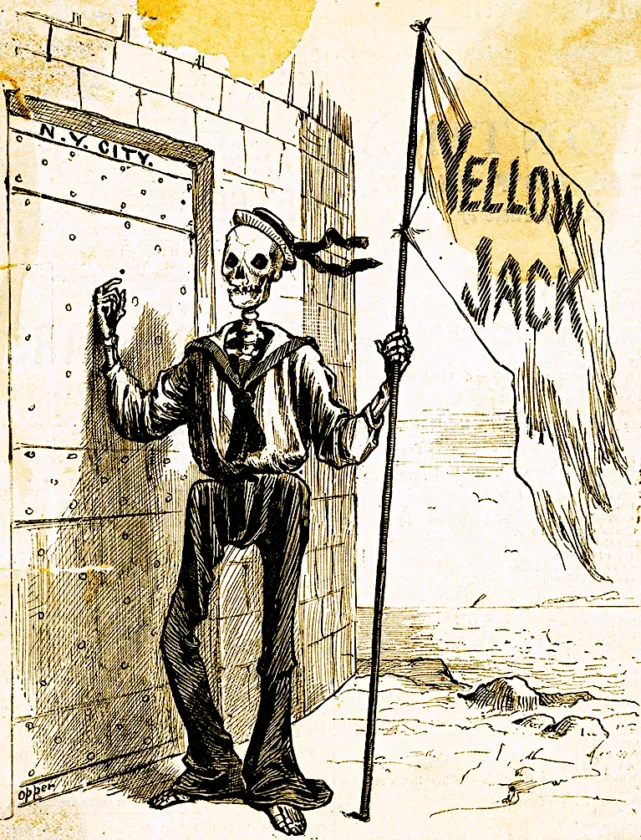
Yellow Fever also was known as Yellow Jack after the flag that was flown from quarantined ships waiting at the docks. Yellow Fever was deadly in the 1800s.

Dr. Matthew Lively will present "The Yellow Fever Plot to Kill Lincoln" at 7 p.m. Thursday at the Knights of Columbus Hall, 312 Franklin St., Marietta. The presentation is free and open to the public.
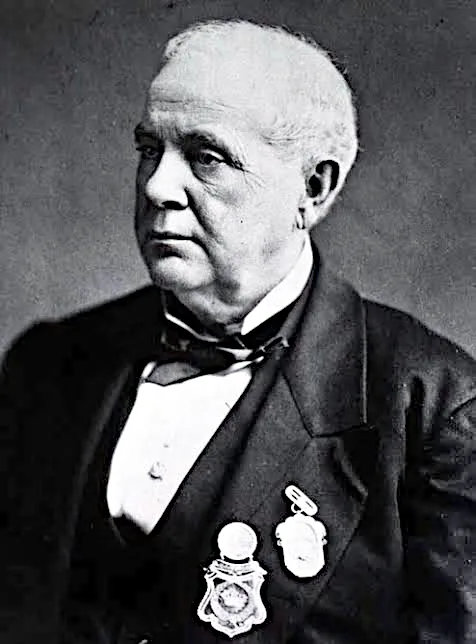
Dr. Luke K Blackburn, a Confederate agent, conceived a plot by spreading Yellow Fever through the distribution of infected clothing. Specific articles were to be sent by courier to President Abraham Lincoln.
Yellow Fever also was known as Yellow Jack after the flag that was flown from quarantined ships waiting at the docks. Yellow Fever was deadly in the 1800s.
Dr. Matthew Lively will present "The Yellow Fever Plot to Kill Lincoln" at 7 p.m. Thursday at the Knights of Columbus Hall, 312 Franklin St., Marietta. The presentation is free and open to the public.
Dr. Luke K Blackburn, a Confederate agent, conceived a plot by spreading Yellow Fever through the distribution of infected clothing. Specific articles were to be sent by courier to President Abraham Lincoln.
Trending
MARIETTA - A suspected bioterrorism plot during the Civil War will be discussed at the next meeting of the Civil War Round Table of the Mid-Ohio Valley at 7 p.m. Thursday at the Knights of Columbus, 312 Franklin St., Marietta.
The Yellow Fever Plot to Kill Lincoln will be presented by historian Dr. Matthew Lively of Morgantown and will be about how Dr. Luke K Blackburn, a Kentucky-born physician, early infectious disease expert and Confederate agent, in the summer of 1864 allegedly conceived to spread yellow fever in northern cities through the distribution of infected clothing, with specific articles to be sent directly by courier to President Abraham Lincoln.
The plot was unsuccessful due to the limitations of the mid-19th century scientific understanding of infectious diseases and because a disenchanted fellow conspirator revealed the scheme to Canadian authorities.
Yellow fever also was known as Yellow Jack after the flag that was flown from quarantined ships anchored in North American harbors waiting to discharge their passengers.
Yellow fever was a deadly disease in the 1880s. An 1853 outbreak in New Orleans took 9,000 lives, 28% of the city's population.
The disease was notorious for causing black vomit from hemorrhage in the digestive track.
Today, Yellow fever is a virus that spreads through the bite of infected mosquitoes. In the Civil War period, before the development of scientific germ theory, scientists and lay populations believed Yellow fever was contracted from direct exposure to those who were infected, primarily through contact with black vomit.
Under this theory Blackburn believed the distribution of contaminated clothing could erode the industrial strength of northern cities and Lincoln's resolve.
Bermuda was a haven for Confederate blockade runners throughout the war and when a yellow fever epidemic broke out there in the summer of 1864, Blackburn, who had expertise in treating the disease in the Deep South, went from Canada to Bermuda to contribute his expertise to the control of the outbreak.
While there, Blackburn took soiled bedding and the clothing of infected patients and packed them into trunks with new coats and shirts in an effort to infect the unused garments with the disease.
Blackburn returned to Halifax, Nova Scotia, in June 1864 with five trunks and a valise filled with inflected clothing. He offered a confidant, Godfrey Hyams, $100,000 to smuggle the trunks into Washington and as far south as he could go "where the federal government held ground and had the greatest concentration of Union troops."
He instructed Hyams to dispose of the new clothing by auction and to send the valise by express courier to Lincoln as a gift. Blackburn further specified the contents of the largest trunk were to be sold in Washington where he callously predicted "It will kill them at 60 yards."
Lively is a West Virginia native and practicing physician in Morgantown. He earned his medical degree at the West Virginia School of Osteopathic Medicine at Lewisburg and completed residency at the WVU School of Medicine with specialties in Internal Medicine and Pediatrics.
He is a professor of internal medicine and pediatrics at the WVU School of Medicine and has been the team physician and medical director of the WVU Athletic Department for more than 20 years. He also has served as medical director of the Human Performance Laboratory at WVU.
Lively will utilize his diagnostic skills and command of forensic medicine and medical history to explore all facets of Blackburn's conspiracies through the performance of an historic autopsy. Lively is the president of the Mason-Dixon Civil War Round Table in Morgantown and is a life-long student of Civil War history.
His first book, "Calamity at Chancellorsville: The Wounding and Death of Confederate General Stonewall Jackson," was published by Savas Beatie in 2013.
The public is welcome to attend the meeting, of which there is no cost, but donations will be accepted. The meeting is made possible by a matching grant from the Ohio Arts Council and the hospitality of Knights of Columbus Council 478 in Marietta.
The venue is handicapped accessible and accommodations for other disabilities are considered upon request. For more information, email cwrtmov@gmail.com or call 740-525-7479.