
Candidates spoke in Marietta about a number of issues facing Ohio
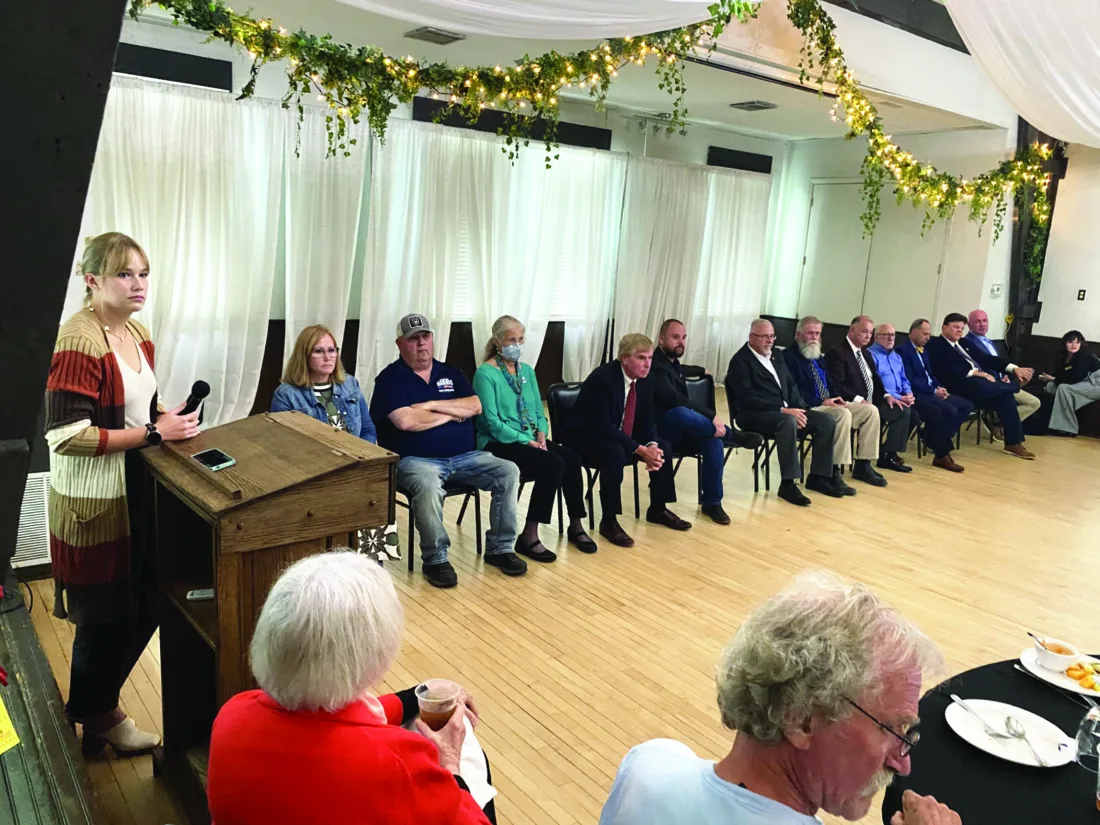
The Marietta Chamber of Commerce hosted around a dozen candidates running for local, state and national offices Tuesday at the Marietta Country Club. (Photo by Brett Dunlap)
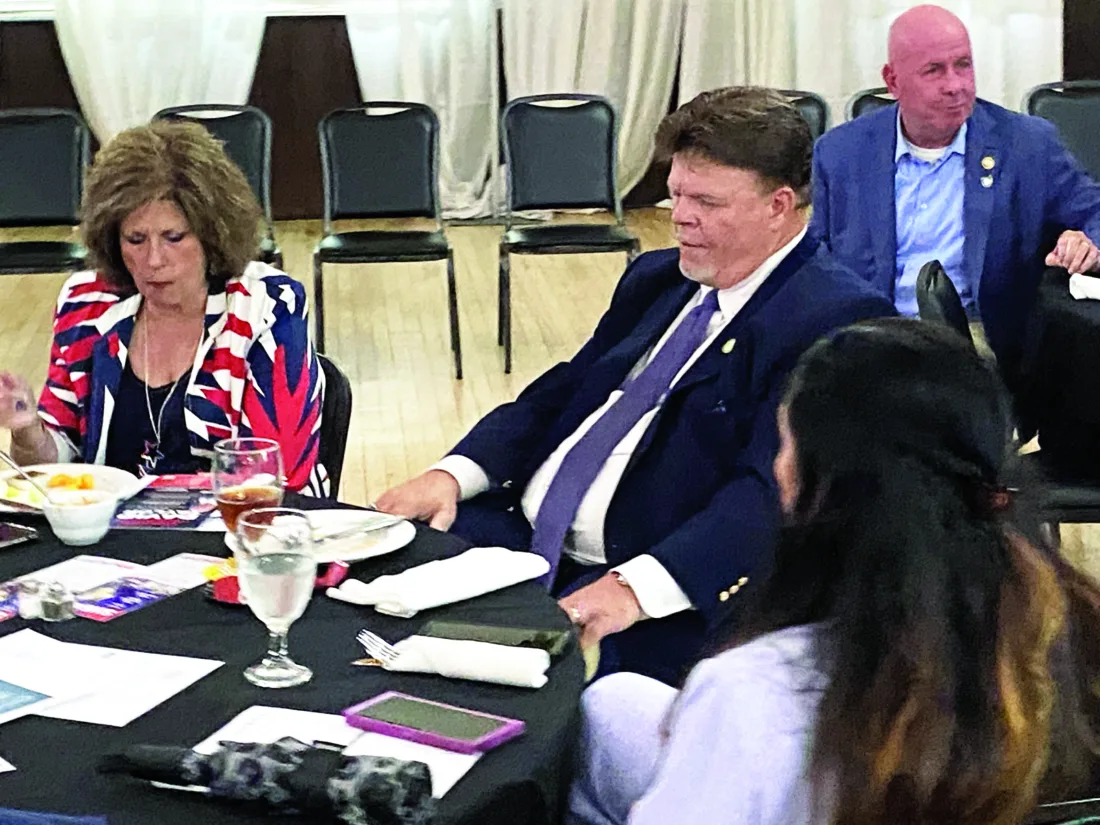
Republican incumbent Ohio State Representative Kevin Ritter, 94th District, was one of the speakers at a event Tuesday at the Marietta Country Club hosted by the Marietta Chamber of Commerce to allow people to hear from candidates about their goals for elected office. (Photo by Brett Dunlap)
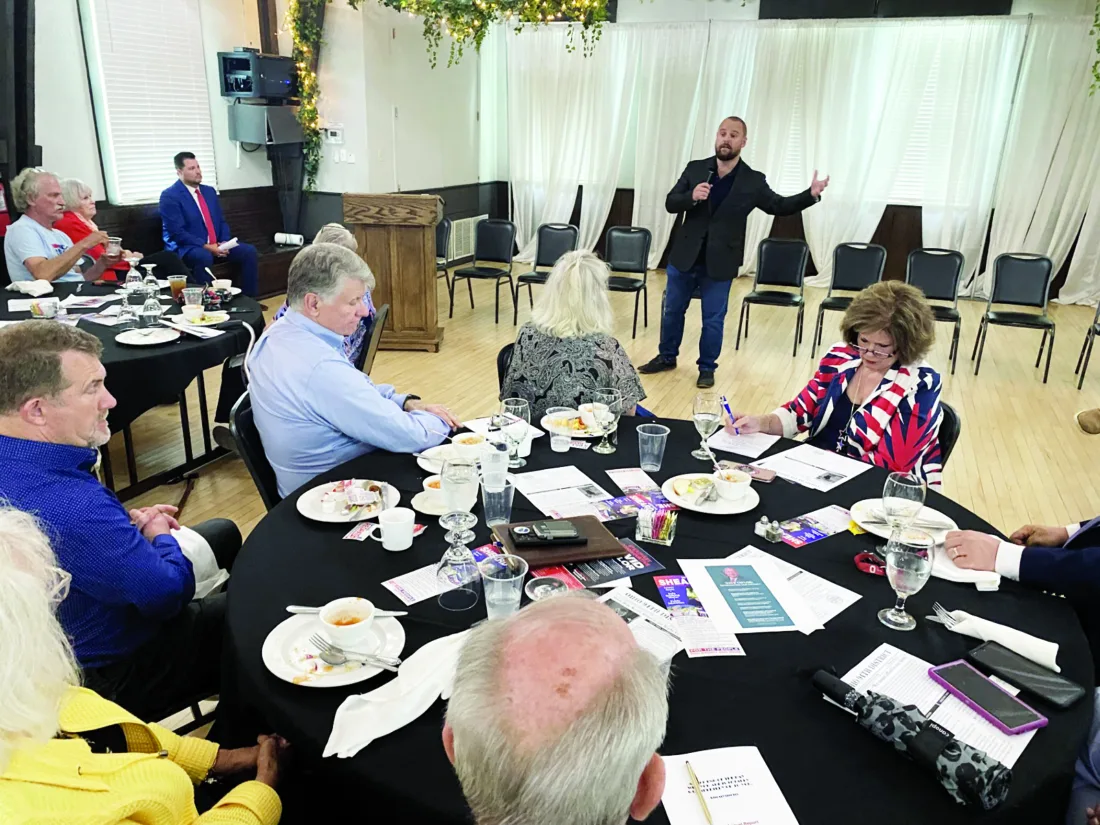
Libertarian candidate for Ohio Lt. Governor James Mills was one of the candidates who spoke Tuesday at the Marietta Country Club at a luncheon hosted by the Marietta Chamber of Commerce to allow the candidates in a number of races to speak to voters in the area. (Photo by Brett Dunlap)
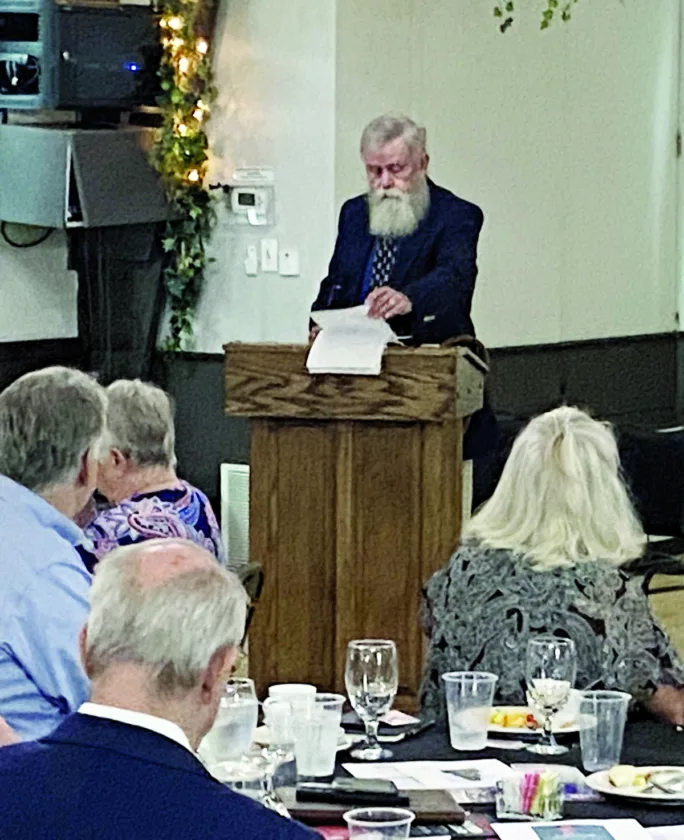
Dr. Brian Whalin, a Democratic candidate for the Washington County Commission, spoke Tuesday at the Marietta Country Club as part of a group of candidates who spoke to voters at an event hosted by the Marietta Chamber of Commerce. (Photo by Brett Dunlap)
The Marietta Chamber of Commerce hosted around a dozen candidates running for local, state and national offices Tuesday at the Marietta Country Club. (Photo by Brett Dunlap)
Republican incumbent Ohio State Representative Kevin Ritter, 94th District, was one of the speakers at a event Tuesday at the Marietta Country Club hosted by the Marietta Chamber of Commerce to allow people to hear from candidates about their goals for elected office. (Photo by Brett Dunlap)
Libertarian candidate for Ohio Lt. Governor James Mills was one of the candidates who spoke Tuesday at the Marietta Country Club at a luncheon hosted by the Marietta Chamber of Commerce to allow the candidates in a number of races to speak to voters in the area. (Photo by Brett Dunlap)
Dr. Brian Whalin, a Democratic candidate for the Washington County Commission, spoke Tuesday at the Marietta Country Club as part of a group of candidates who spoke to voters at an event hosted by the Marietta Chamber of Commerce. (Photo by Brett Dunlap)
Trending
MARIETTA - Candidates for a number of offices gathered in Marietta for a chance to connect with voters.
The Marietta Area Chamber of Commerce hosted a Meet the Candidates Legislative Luncheon Tuesday at the Marietta Country Club.
Around a dozen candidates appeared who were running for local, state and national offices.
"Legislative advocacy is something that is important to the Chamber and we consider this event an important part of that plan to help our business community to interact with our elected officials," said Kelsy Eaton, president and CEO of the Marietta Area Chamber of Commerce.
The chamber is working on issues such as land use, taxes, economic development and workforce development which they hope they can reach out to their elected officials to be able to discuss and work with them on, said Adam Schwendeman, vice chair for business advocacy for the Chamber.
Local concerns regarding fracking and data centers were discussed, as well as financial responsibility, education and governmental transparency.
Washington County Auditor Matthew Livengood, who is a Republican, is running unopposed for his third term in the office, said his position is "a very exciting, yet challenging job."
"I am very proud of the opportunity to be able to serve the county in the way I do," he said.
The candidates running for two seats on the Washington County Commission include Republican Stephanie Lang and Democrat Brian Whalin for the seat currently held by Commissioner Eddie Place who lost his primary bid.
The other seat is for a two-year unexpired term where the seat is currently being held by Republican Greg Nohe, the incumbent who is running to finish out the term after being named to the seat last November to replace James Booth and he will be facing Republican Justin A. Harris and Democrat John B. Rauch.
Lang spoke of growing up with modest life out in the country and how frugal her family was and how those values have stuck with her.
"That has made me who I am today," she said.
She served 12 years on the Fort Frye School Board and in 20 years the district has not had to run a levy.
"I am a principled ordinary woman," she said. "One of faith.I believe in transparency, honesty and integrity."
Whalin, a medical doctor, has served on the Tri-County Rural Water & Sewer district for 10 years and has served as its vice-president.
"There are two main issues this election, ejection wells and data centers," he said.
He spoke of a number of local examples in the region of well failures that have flooded gas wells, the danger of the brine used getting into the local water supply and more. He opposed data centers in the way they are conceived, taxed and regulated as well as a number of issues raised in other areas that have them.
Nohe shared his "mission" for the county which is to "promote Washington County."
"We need to provide the services we deem necessary to increase the value of this county," he said of things like economic development; fiscal responsibility where taxpayer money is being spent wisely, workforce development in job training for young people and public safety.
"When the county prospers, we all prosper," Nohe said. "My mission is to advance Washington County forward."
Rauch said he believes he can help the people in the area. He has worked for 30 years with rural communities to plan and finance water and development projects.
He talked about needing to address the toxic brine being injected into the ground around the area which threaten local drinking water sources. He signed the request for the moratorium on injection wells.
"As a county commissioner I would advocate for safe drinking water," he said.
He would want any data centers to act as good neighbors and he would address the concerns people in those in the area have. He addressed nondisclosure agreements local leaders have signed as projects have moved forward. Those types of agreements lead to misinformation due to the lack of direct information.
Harris received an engineering degree from Ohio University and has worked in problem solving. He said some of the nondisclosure agreements involved in data center development is not good for the public.
"I believe in transparency," Harris said."I am going to be responsible and transparent and hold people accountable."
Judge Timothy Williams is running unopposed for his last six-year term as the juvenile probate court judge in the Washington County Probate Court.
"Not every day is easy, but I feel it is beneficial to the community," he said.
Congressman David Taylor, R-Ohio, is running for the House of Representatives in Ohio's Second District which will include Washington County next year following redistricting.
He spoke about the challenges facing the Appalachian region, including broadband needs, water infrastructure and rural healthcare.
"I am looking forward to adding Washington County to the counties I already represent," Taylor said.
Wenda Sheard, Democrat candidate for Ohio House of Representatives 94th District, said the divisions in the country are not left and right, but billionaires against everyone else.
She talked about how many tax cuts only benefit the ultrawealthy and only have a few minor benefits for everyone else, especially at a time when a lot of people are struggling financially.
"I am a strong believer in simplicity," she said. "We have too many hard to understand laws. People in power use complex language to help them hold on to that power. That is wrong."
She talked about the need for safe water, funding public schools and more.
"(Many of the problems mentioned Tuesday) can be solved at the state level," Sheard said.
Republican incumbent Kevin Ritter said he serves on the education committee, the higher education committee, energy committee and the finance committee.
He spoke about bills he was involved in that eliminated DEI measures in public universities as well as Chinese influence. He was part of a bill that requires university students to pass a civics course before graduating. Bills on energy he was involved in brought seven energy companies to Ohio.
"One of my main motivations in running for this office was to raise the profile of the 94th District," Ritter said. "As you know, we are often forgotten in Columbus.
"I have been very successful in that we have had over $11 million in state investment dollars come to the 94th District."
The event also included a couple of Libertarian candidates, William Redpath who is running for the U.S. Senate and James Mills running for Ohio Lt. Governor.
Redpath said he is regularly excluded from debates and other events. He talked about his financial and business background.
"I got into this race, because I wanted there to be a Libertarian voice in this election," he said.
He wants a multi-party political system in the United States as it is impossible to put everyone into the two major parties.
"The Republican and Democratic parties are seriously failing to address the issues that are affecting the United States and the world," he said.
He wants to repeal all tariffs and have a unilateral free trade system and better immigration policies to address declining population numbers.
Mills said he wants to help create a better small business ecosystem as a way to address poverty and homelessness as opposed to the corporate subsidies they have been seeing. He also wants more openness in regards to Sunshine laws which require government meetings, proceedings, votes, and records to be open to the public. He wants to help create a public database to search government contracts.
"That warms my heart," he said. "Sunshine is the best disinfectant.
"I want there to be more transparency so people can see where their dollars are going."
Contact Brett Dunlap at bdunlap@newsandsentinel.com