
Reedy man continues to look for proof he has Tad Lincoln’s chest of drawers
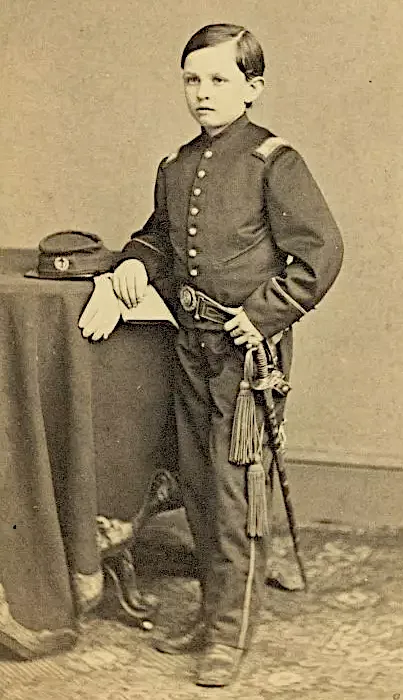
Tad Lincoln in the uniform of a Union soldier.
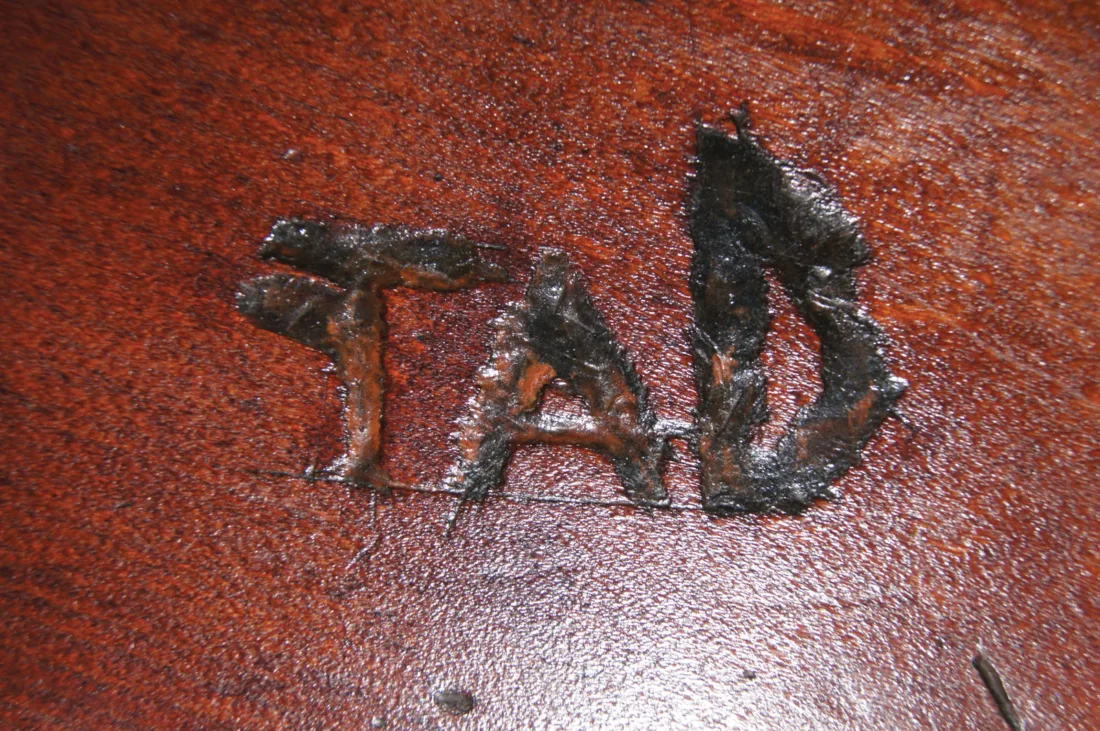
File Photo “TAD” is engraved into a chest of drawers that Brian Ellison of Reedy hopes belonged to Tad Lincoln, the fourth son of President Abraham Lincoln.
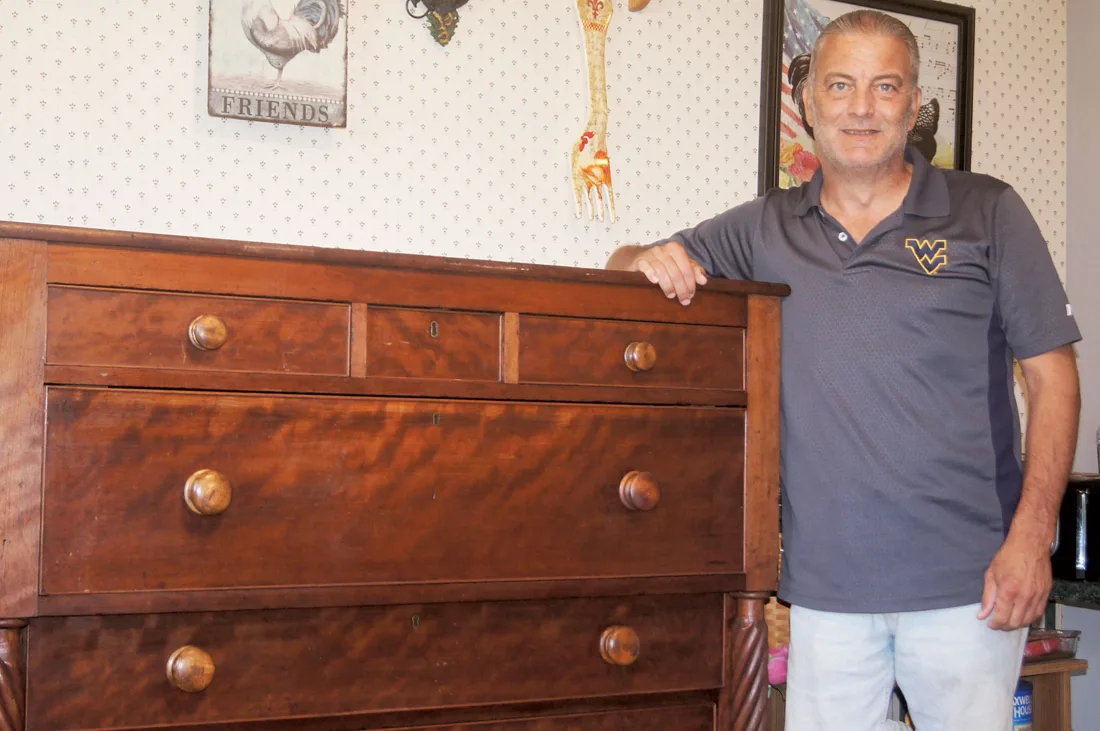
File Photo Brian Ellison of Reedy poses with the chest of drawers he is trying to connect to Tad Lincoln, a son of President Abraham Lincoln. He acquired the piece at an auction where he also purchased a sideboard that belonged to the first governor of West Virginia, Arthur I. Boreman of Parkersburg. (
Tad Lincoln in the uniform of a Union soldier.
File Photo “TAD” is engraved into a chest of drawers that Brian Ellison of Reedy hopes belonged to Tad Lincoln, the fourth son of President Abraham Lincoln.
File Photo Brian Ellison of Reedy poses with the chest of drawers he is trying to connect to Tad Lincoln, a son of President Abraham Lincoln. He acquired the piece at an auction where he also purchased a sideboard that belonged to the first governor of West Virginia, Arthur I. Boreman of Parkersburg. (
Trending
PARKERSBURG - An antiques collector from Reedy, W.Va., remains on a quest to learn whether a chest of drawers he purchased in 2012 once belonged to a son of President Abraham Lincoln.
"I still haven't got the proof," said Brian Ellison, who has researched the piece for 14 years.
Ellison believes, but can't prove beyond a reasonable doubt, that the 1850s Empire mahogany chest of drawers belonged to Tad Lincoln, a son of Lincoln's. The chest has carvings, including "TAD," and other etchings indicative of what the child would do to furniture, Ellison said.
Ellison purchased the antique at an estate auction for $300 in 2012 in Clendenin.
Thomas "Tad" Lincoln was Mary and Abraham Lincoln's fourth son and the youngest. He died in 1871 at the age of 18.
The provenance, the chain of documents and evidence that would conclusively prove the chest of drawers once belonged to the Lincolns' children, has been elusive, Ellison said.
Ellison has been able to develop a timeline, which he describes on his website, thomastadlincoln.com.
Before 1926, the piece may have been given by Robert Todd Lincoln, another son of Abraham Lincoln, to his daughter Mary Lincoln Isham. After Robert Todd Lincoln's death, an inventory recorded a bureau and mirror as the personal property of Mary.
The piece was acquired through Mountaineer Auctions in Clendenin, W.Va., which was consigned the piece from a dealer.
The task has been made easier with AI, he said. Besides helping him keep documents in order and easy to find, AI-powered searches have actually turned up clues and bits of information of which Ellison investigates and otherwise would never have found.
"It's helped out a great deal," Ellison said.
One place where the trail has gone is to the home of Robert Todd Lincoln, called Hildene, located in Manchester Center, Vt., Ellison said. Robert bequeathed a chest of drawers to Mary Lincoln Isham, his daughter, Ellison said.
Another clue led him to an antiques dealer in Canton, Ohio, and requests for information from Stark County residents for anything they can remember or know about the chest. No clue, no remembrance is too small, Ellison said.
Information that may appear to be insignificant actually may be of significance and could open trails to other places heretofore unknown, according to Ellison. A recollection about a pet or someone remembering a chest of drawers possibly being owned by Lincoln, for example, could be all that is needed to establish the provenance, he said.
The motto is no stone goes unturned, he said.
"Whatever tidbit of information I get, I check it out," Ellison said.