
Harmar Bridge secures design funding as capital campaign nears
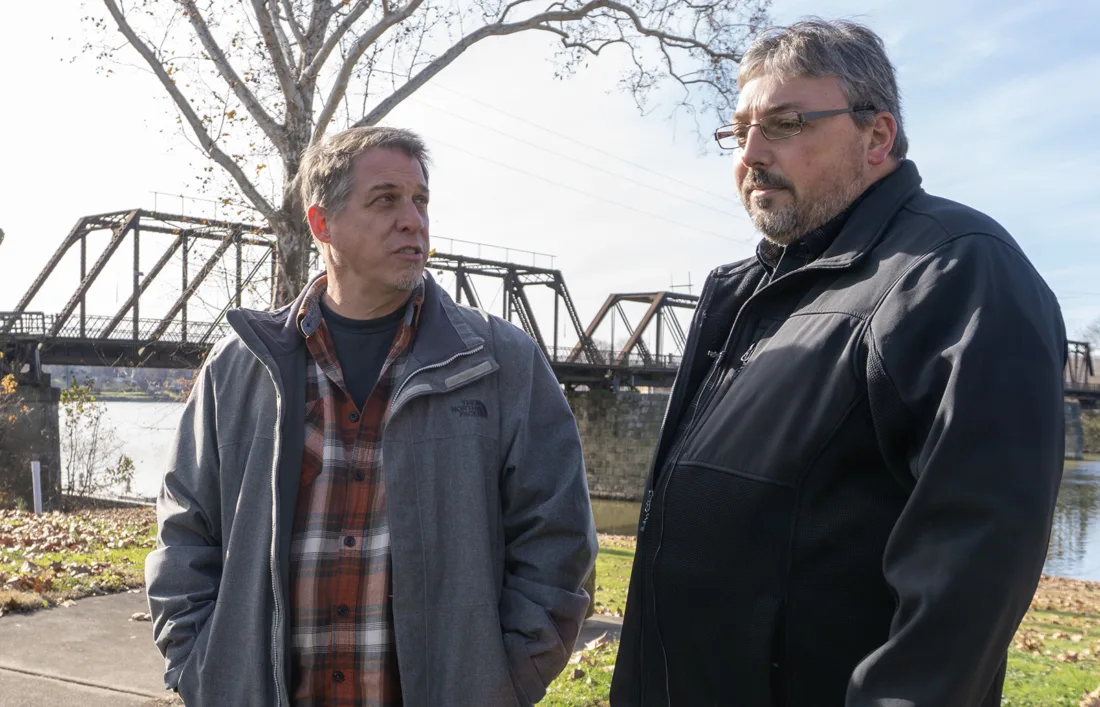
From left, Historic Harmar Bridge Company board member and Marietta Development Director Geoff Schenkel and board Vice Chairman and Washington County Engineer Roger Wright discuss the possible timeline for the Harmar Bridge's opening during a press conference outside the Armory Wednesday. (Photo by Gwen Sour)
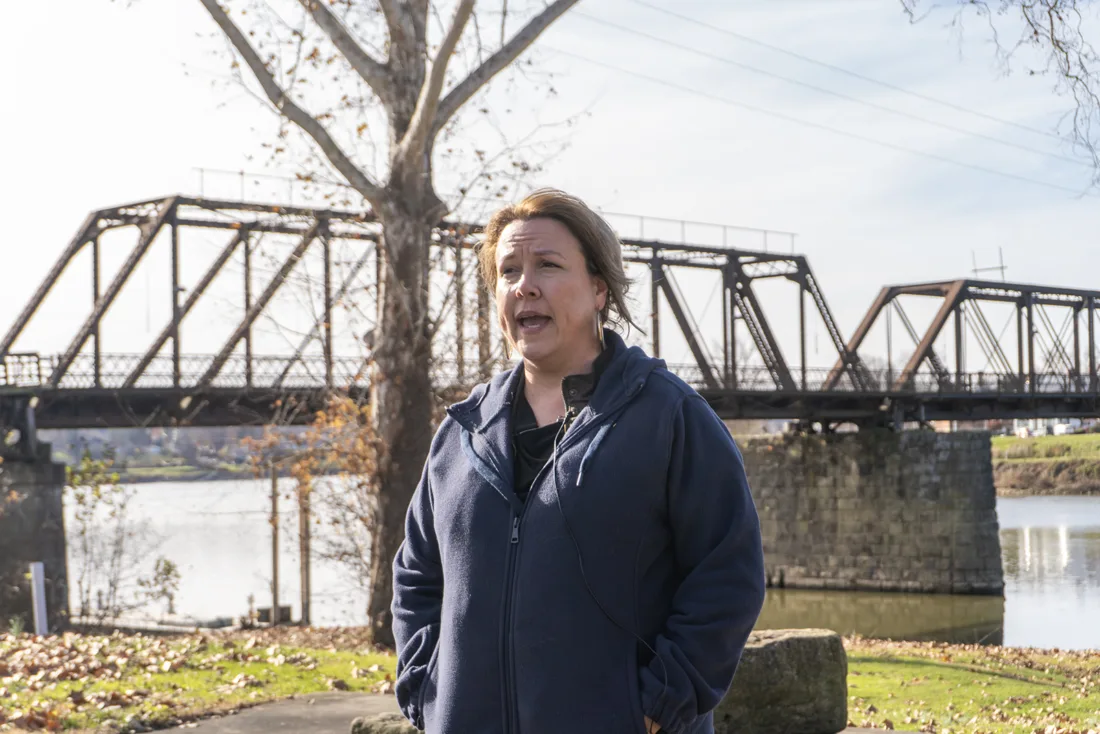
Historic Harmar Bridge Company Executive Director Natalie Bradley discusses grant funding that will allow the nonprofit to complete the design phase for the Harmar Bridge as seen behind her Wednesday morning. (Photo by Gwen Sour)
From left, Historic Harmar Bridge Company board member and Marietta Development Director Geoff Schenkel and board Vice Chairman and Washington County Engineer Roger Wright discuss the possible timeline for the Harmar Bridge's opening during a press conference outside the Armory Wednesday. (Photo by Gwen Sour)
Historic Harmar Bridge Company Executive Director Natalie Bradley discusses grant funding that will allow the nonprofit to complete the design phase for the Harmar Bridge as seen behind her Wednesday morning. (Photo by Gwen Sour)
Trending
MARIETTA -- Plans to reopen the Historic Harmar Bridge have moved closer to design work with confirmation of a federal grant, as the Historic Harmar Bridge Company prepares to launch a two-phase, $12 million capital campaign Dec. 1.
Natalie Bradley, the nonprofit's executive director, said the Congestion Mitigation and Air Quality grant will cover bridge design, allowing the organization to focus its fundraising efforts on construction.
"It's going from vision to reality, and we are very grateful for the funding," Bradley said.
Bradley credited a donation from local philanthropist Laurie Hadler with providing the matching money required for the grant.
The capital campaign's first phase, called "Bridging the Gap Phase One," will seek $6 million for rehabilitation of the swing span. A second $6 million phase will address the rest of the bridge, Bradley said.
Geoff Schenkel, Marietta's community development director and a member of the bridge company's board, said the city will administer the federal funding, which comes through the state. Project partners plan to meet with the Ohio Department of Transportation in early December to refine the scope of work.
The grant allows money to be used for both design and construction, Schenkel said. Design will come first, with any remaining funds potentially available for rehabilitation.
"We've always known, since late 2023, that we need to have design money in hand for this effort as a whole to move forward," Schenkel said.
Washington County Engineer Roger Wright said the goal is to work on the swing-span rehabilitation design during 2027 and 2028, with construction on that portion targeted for 2029.
Wright said the project previously received a Transportation Alternatives Program award in 2025, which he described as approximately $1 million dedicated to the swing span. With the new grant covering design, the earlier award can be used entirely for construction, he said.
The new funding also will allow planners to examine the bridge's other three spans, Wright said. The goal is to have the entire project designed by the end of 2030, giving officials a clearer picture of construction needs and costs.
The effort involves cooperation among the city, county and bridge company. Wright said restoring the connection would benefit the county by strengthening downtown Marietta and helping make the area more attractive to businesses.
Schenkel said cooperation also allows city and county employees to share work and make better use of limited staffing and budgets.
"So we can stretch our limited resources when we can work together as a team," he said.
For Bradley, reopening the bridge means restoring a direct connection between Harmar and downtown Marietta for residents, businesses and visitors. She said a safer walking route would help people reach jobs, shopping and other daily needs while encouraging visitors to spend time on both sides of the river.
Schenkel said pedestrian access is especially important for west-side residents who do not have personal vehicles. A more direct route would reduce barriers that can make everyday trips difficult, he said.
The bridge also fits into broader city plans to connect the west side with Marietta College and recreational trails through the Butler Street corridor, Schenkel said.
Bradley said donations to the capital campaign can be made through the bridge company's website, www.historicharmarbridge.com, or by delivering or mailing a check to the Marietta Community Foundation. Donors using the foundation should designate their contributions for "Bridging the Gap Phase One."
"With that, we have more work to do," Bradley said. "And we want to invite the entire community to help us make that happen."
Gwen Sour can be reached at gsour@newsandsentinel.com.