
U.S. Sen. Capito celebrates passage of permitting reform package
Trending
CHARLESTON - The U.S. Senate passed a bipartisan permitting reform package in the final hours of Thursday, which Sen. Shelley Moore Capito helped negotiate. But the bill may have an uphill climb in a lame duck House of Representatives.
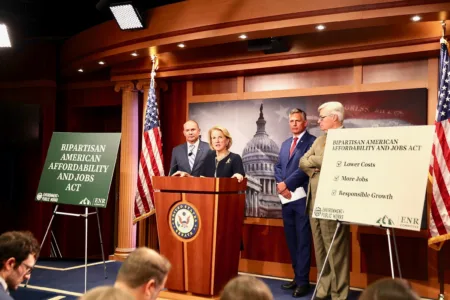
Senators passed the Bipartisan American Affordability and Jobs Act Thursday night in a 62-33 vote with 15 Democratic and independent senators voting with the Republican majority. The bill now heads to the House.
The skeleton of the bill was negotiated by the majority and minority leaders of the Senate’s Energy and Natural Resources Committee and Environment and Public Works Committee, including Capito, R-W.Va., the chairwoman of Environment and Public Works.
"Tonight, the passage of permitting reform in the Senate finally became reality and we took a major step towards addressing the affordability concerns of the American people," Capito said on social media Thursday following the vote. "I have spent years trying to achieve bipartisan compromise on legislation that gets our nation back to building, and the Bipartisan American Affordability and Jobs Act is the culmination of those efforts."
Permitting reform for infrastructure projects has long been a goal in Congress, with some minor reforms made over the last several years. But a comprehensive package has remained elusive. BAAJA includes several provisions aimed at speeding up the permitting processes for multiple kinds of infrastructure projects, including pipelines, power plants, oil and natural gas drilling, transmission lines, and transportation.
The bill would limit reviews under the National Environmental Policy Act, set specific review deadlines and prohibit rescinding already issued federal permits except under very specific circumstances. It also further limits any reviews under the Clean Water Act, National Historic Preservation Act and the Endangered Species Act.
Lawsuits brought against infrastructure projects would face a 150-day statute of limitations. It would also limit who can bring a lawsuit to those who participated in the public comment period for proposed projects or those who could be directly harmed by a project.
The bill would provide the Federal Energy Regulatory Commission with greater authority for approving permits for transmission line construction. It directs FERC to develop policies to protect electric ratepayers from bearing the burden for costs caused by large energy users, such as data centers, and directs data center companies to pay for their own costs associated with connecting into regional grids.
It also speeds up permit approval for a variety of energy projects, including renewable energy; eases limitations on offshore oil and gas drilling; and reforms mine leasing regulations.
Representatives of manufacturing and energy producers, such as the Gas and Oil Association of West Virginia, praised the passage of BAAJA, saying it would help boost the state’s energy economy and spur growth.
"Here in West Virginia, this bill will benefit families facing rising energy costs, small businesses that depend on reliable electricity, and the energy workers who help power our state and nation," said Rebecca McPhail, president of GO-WV. "More predictable federal permitting will help ensure the pipelines, power plants and transmission lines we need can be built in time to meet growing demand."
The bill also has support from some clean energy and environmental groups, though others, such as the Sierra Club, say the legislation goes too far and want to see changes when it hits the House floor.
"The House of Representatives has an equal voice in the legislative process. They must reject the Senate’s fast-tracked bill and demand debate and consideration to deliver for the people, not corporate polluters and Donald Trump," said Sierra Club Executive Director Loren Blackford "The American people made a clear call merely weeks ago: Our elected leaders must address soaring costs and a corrupt system that prioritizes corporate polluter profits over our health, our wallets, and our future."
Capito, a former member of the House, urged her colleagues to quickly consider the bill before the end of the year when a new Democratic-led Congress takes over.
"I encourage leaders in the House to take advantage of the significant opportunity before us to grow our economy, create jobs, and make American life more affordable by expeditiously passing BAAJA," she said.