150 years of service
Marietta Police Department celebrates anniversary
-
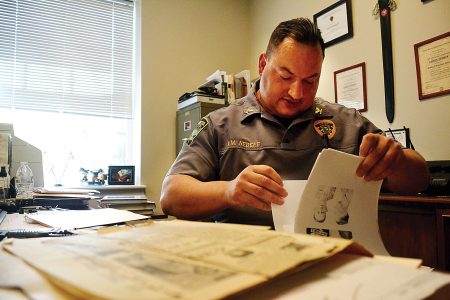
- Marietta Police Chief Aaron Nedeff looks through files he is researching to document the city’s police history.
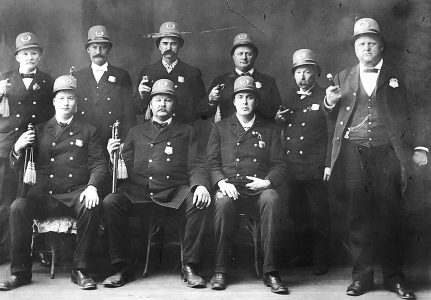
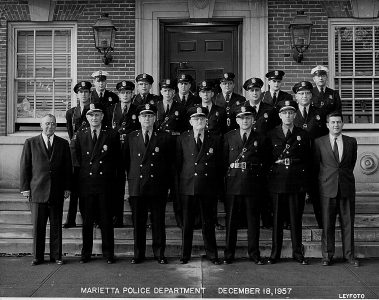
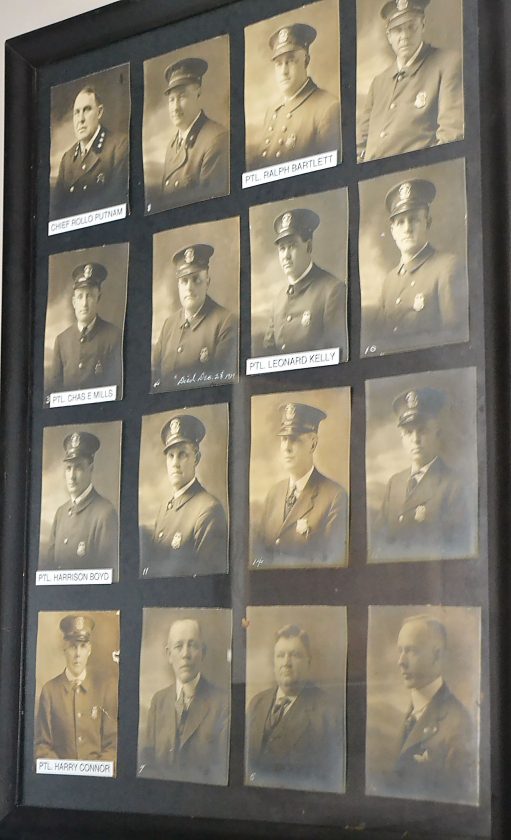
In researching the history of the Marietta Police Department, Chief Aaron Nedeff learned an interesting fact.
“I didn’t remember where I read the Sept. 11 date, but I just remember when I read it, I’m like … well, I’m never going to forget the police department was founded on Sept. 11,” Nedeff said.
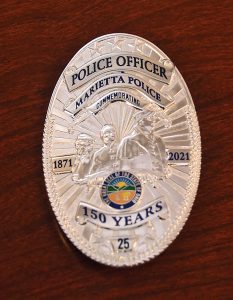
As part of the research, he ran across an article by Parkersburg News columnist Joan Pritchard, who did a column in November 1996 about the history of the police department. It was there he read the department was founded on Sept. 11, 1871, making this the 150th anniversary.
Nedeff’s research began about five years ago when he was digging through some old boxes and found a lot of interesting information about the department through the years.
“My hope was to kind of, eventually put this together and then give it to maybe something like the genealogy building,” Nedeff said.
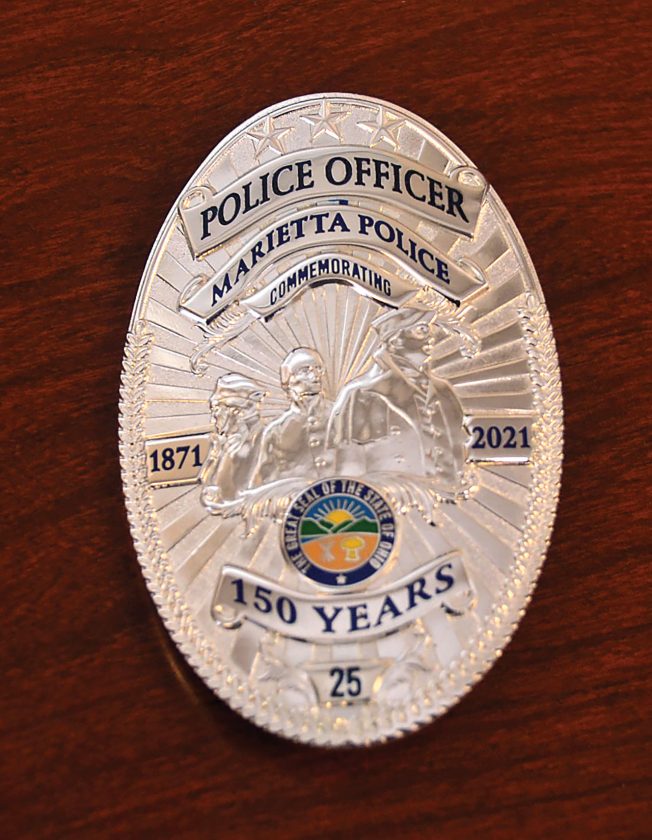
He hopes people will be able to find ancestors who used to work for the department and what their jobs were.
“One of the things that I was working on when I had time, and it’s been a while since I’ve touched it, was we went back and we have books to go back to about the time of the fire (of the city building in the 1930s) that tells who was working every day, every night and stuff like that,” Nedeff said. “We’re creating a master list of who all’s worked here.”
He said the research listed hundreds of people who were hired as “special patrolmen.”
“So whenever there was like a circus in town, or a regatta, they were hiring people that would sometimes work for one or two days and they’d be a special police officer,” he explained.
The people would work for a few days up to a month as a special patrolman.
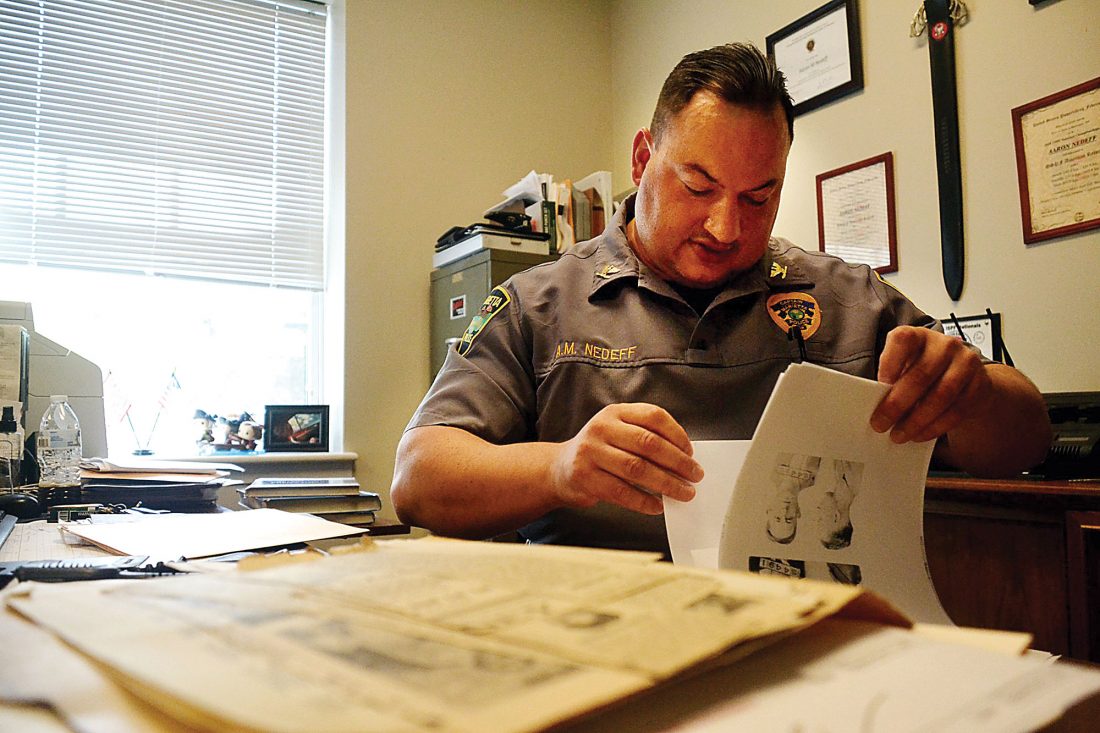
Marietta Police Chief Aaron Nedeff looks through files he is researching to document the city’s police history.
“We’ve identified, up to I think it’s around 430 names of people that have worked, either as a full time officer or even a special officer from town,” he said.
History of the headquarters
In Pritchard’s column, she discussed how in 1792, a jail, courthouse, pillory, stocks and a whipping post were set up on the corner of Second and Putnam streets.
Police headquarters were above 208 Front St., and later moved to Front and Butler, with the jail in the first city hall.
In 1911, the police moved to the city hall, where they remained until 1935, when city hall was destroyed by fire.
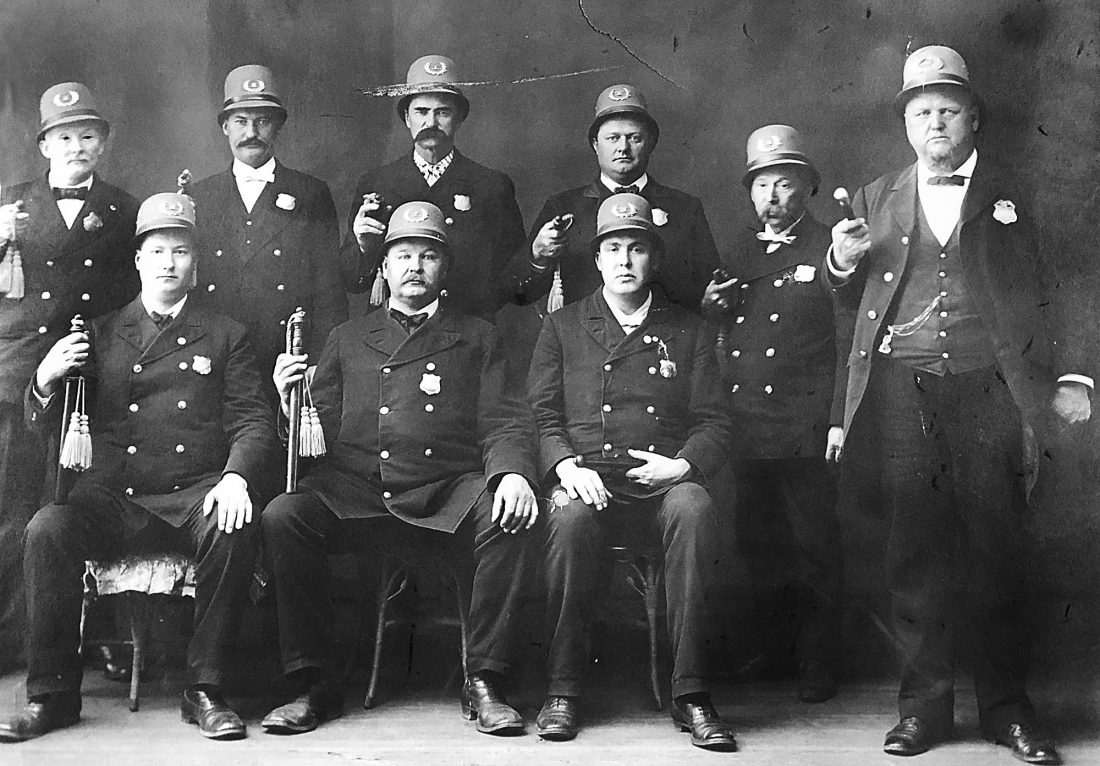
Eventually, they moved again to the current facility at Third and Putnam streets, which was built in 1937.
Pritchard also noted the first record of uniforms was Sept. 6, 1896, “when they appeared in a parade preceding the dedicatory ceremonies of the St. Mary Catholic parochial school on lower Fourth Street.”
History of leadership
Nedeff said a committee was formed and police commissioners were appointed. In 1825, the office of marshal was created and the town was divided into three wards.
The police force was established in 1871 and the mayor appointed two policemen for each ward, along with the marshal, to make up the police force, he said.
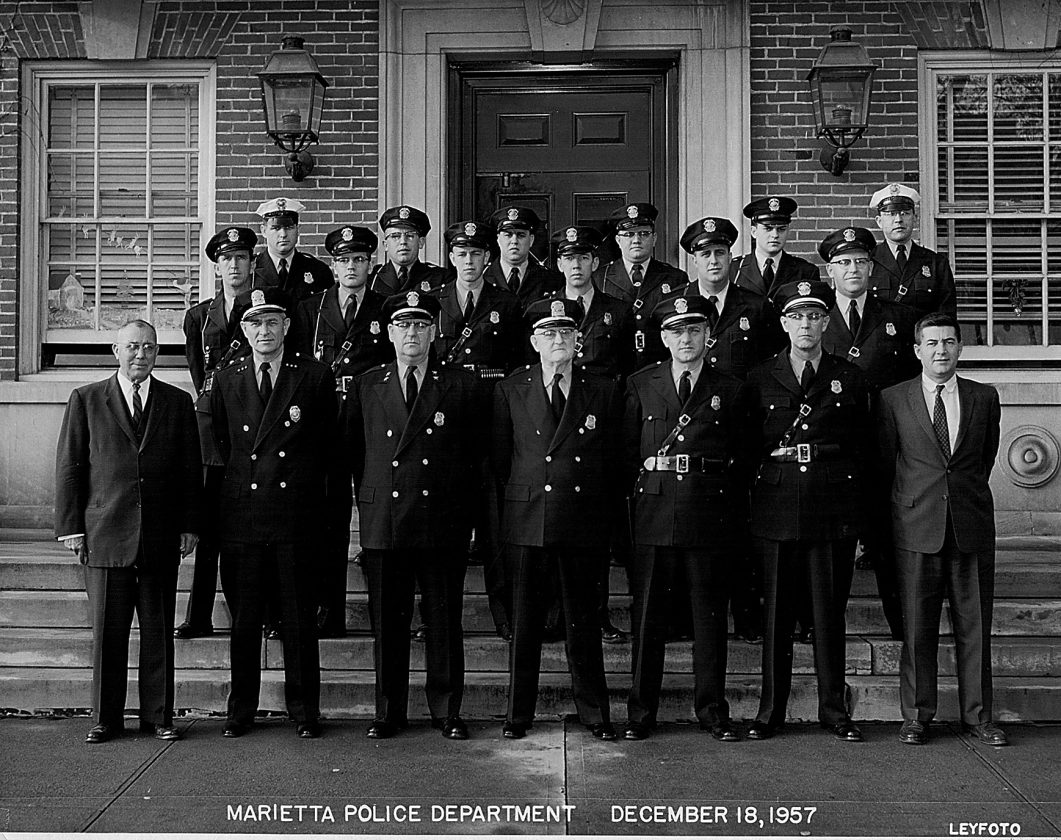
Chief of police was established in 1903, with Jacob H. Dye serving as last marshal and first chief.
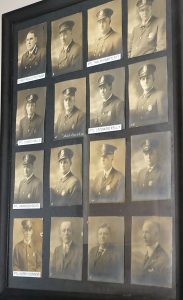
Nedeff is the 11th chief of police in the city’s history. The longest to serve was Homer Wolfe, who was chief from 1925 to 1948.
“(Thomas) Sprague (from 1948 to 1966) is probably the last one that we really know anything about, because there’s some guys that are still alive that worked with him,” Nedeff said. He explained the rank structure of the department has also changed over the years.
In the early 20th century, the rank structure was chief, lieutenants and sergeants. It changed in September 1948 to include a captain, when the patrol division was separated to include a newly created traffic division that primarily used motorcycles.
Divisions were again merged and lieutenant positions were phased out, Nedeff said. The department is now supervised by a chief, captain, administrative sergeant, detective sergeant, four shift sergeants and a records administrator.
Only two officers were lost in the line of duty.
The first, Harrison Boyd, interrupted a burglary in downtown Marietta in January 1925 and was killed in a shootout with two men in the 200 block of Third Street. The second, Charles Scott Jr., suffered a fatal heart attack while in court testifying in January 1989.
Research oddities
Nedeff said in the last year, they had a part time clerk, so to help her get work hours, he started sending her books that went back to 1909. Starting around 1916, the books went from just having a name and what they were arrested for to having stories about the crime.
“The idea was well, let’s see if we can kind of preserve them, but I don’t know what we’re gonna ever do with them,” he said.
Some of the arrests are for crimes people might not want remembered.
“Every couple of months, there’d be a big raid of houses and they’d bust all the prostitutes,” Nedeff said. “Madams and the other people that were there, you know, usually a couple of men that were either soliciting or working for the house would get busted. Essentially, the way I’ve always heard it said was, it was tax collecting. Every so often you’d go down and bust them and they get a fine and you’d see the same names come up again and again and again working at a house of ill repute.”
He said there were other strange things they’ve found in the research.
In 1910, James A. Roney was named chief of police under unusual circumstances.
Between July 31, 1909, and Jan. 2, 1910, the power of appointment and removal of the chief was at the pleasure of the mayor, states Ohio Supreme Court in the William T. Harness v. James A. Roney case of 1910.
On Dec. 4, 1909, the mayor appointed Harness as chief of police to fill a vacancy. On Jan. 1, 1910, the succeeding mayor declared Harness removed and appointed James Roney chief. Harness received notice of his removal on Jan. 1 and Roney was sworn in on Jan. 3.
Harness refused to surrender the office and filed suit in circuit court.
“Now and then you will still find that case mentioned in other cases,” Nedeff said. “That’s just weird stuff that you’ll come across digging into stuff.”
Michele Newbanks can be reached at mnewbanks@mariettatimes.com.
Local News
Local events
Meetings ¯ The Lower Muskingum Historical Society monthly meeting will be at 6:30 p.m. today at the Beverly ...
National Day of Prayer events planned locally
Events around the Mid-Ohio Valley
Belpre Farmers Market opens Sunday
The Belpre Farmer’s Market at 515 Blennerhassett Ave. kicks off its season with opening celebrations from noon-3 ...

O’Neill Center Health Fair connects Marietta seniors with medical services, transportation and community resources