
Efforts to access OVU transcripts continue
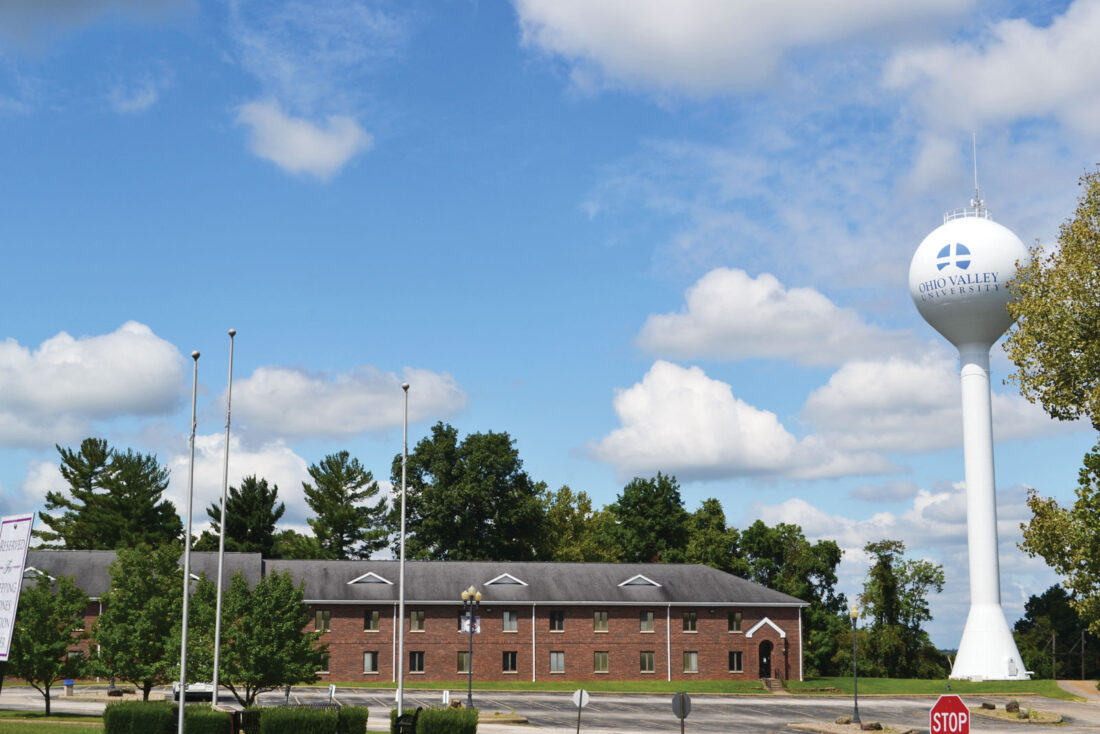
The campus of OVU sits empty after the college’s closing in Dec. Mike Snell, former men’s basketball coach, says he spends a couple hours a day on campus keeping an eye on things. (Photo by Douglass Huxley)
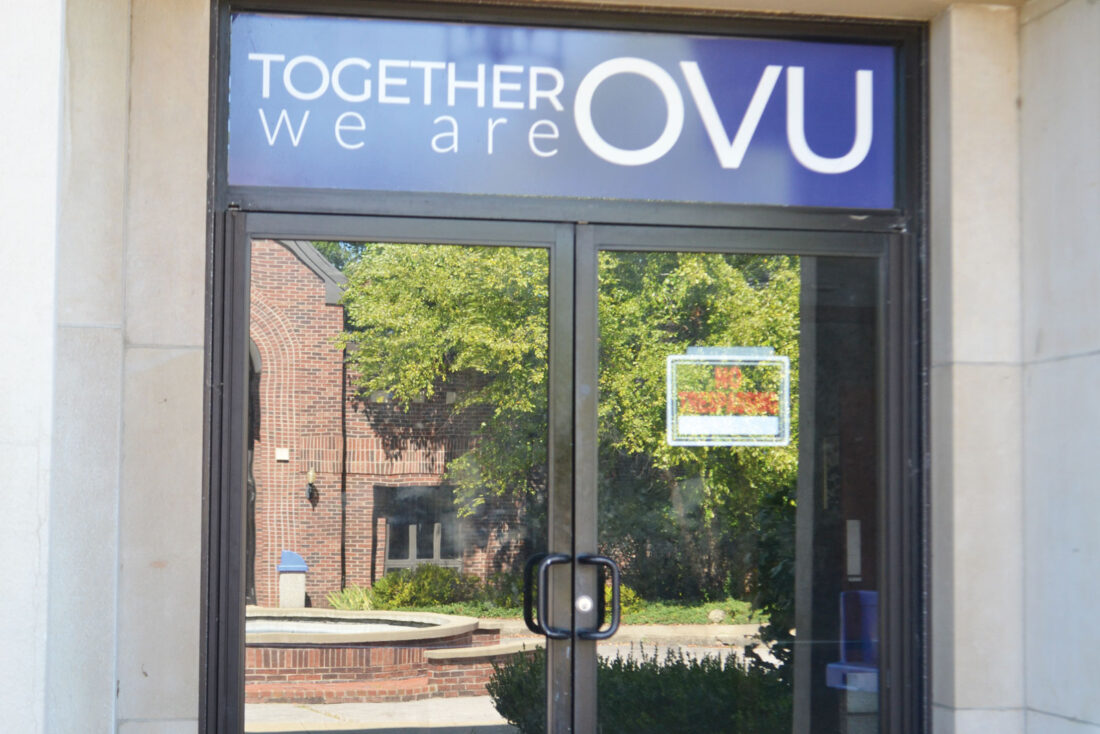
The door that once welcomed student to OVU now has a ‘No Trespassing’ sign. (Photo by Douglass Huxley)
The campus of OVU sits empty after the college’s closing in Dec. Mike Snell, former men’s basketball coach, says he spends a couple hours a day on campus keeping an eye on things. (Photo by Douglass Huxley)
The door that once welcomed student to OVU now has a ‘No Trespassing’ sign. (Photo by Douglass Huxley)
Trending
VIENNA -- An attorney for the Ohio Valley University trust said members of the trust and receivership controlling the property were on the shuttered campus Thursday to access the server that houses transcripts for former students and staff and get those to an institution that can provide access to them.
Michael Kain, authorized representative for ABTV Receivership Services LLC and court appointed receiver for OVU, was seen leaving the north campus.
Kain could not be reached for comment.
A Sept. 2 post to the OVU Updates Facebook page said "there was no longer any means of processing transcripts requests" and that someone using VPN access changed the password to the server operating system and either deleted or removed the data.
Martin Sheehan, an attorney representing the trust established to wind down operations after the Church of Christ-affiliated university closed in December, said the transcripts are not lost, but there are multiple things that have to happen before they can be accessed and distributed.
"There has been an institution identified through that, and I think everyone will be satisfied with the results," he said. "We still have to work out a protocol so official transcripts are only sent out if students pay their bill in full. So there's a two-part problem: who's taking them, how they deal with them and how are we interfacing with the receiver to make sure they have what they are supposed to have. That does not happen instantaneously."
Sheehan said the trust has been actively working to resolve the current server issues and has been making efforts since the school shut down to get them to an institute that can maintain and make them accessible.
Along with the trust -- which consists of former President Michael Ross; Stephen Kenney, who is listed as the assistant professor of criminal justice and Bible in the OVU registry; and Robert Moore, a former board member for the school -- 30 people were asked to stay on as "essential employees" after the closing of the school to assist with a teach-out plan.
The trust was to advise these individuals on how to accomplish their objectives but some members of the employee group say that guidance never came.
"There's just been no leadership in this from Michael (Ross)," said Wes Crum, former vice president of academic affairs.
Attempts to speak with Ross, who is working as executive director of Lipscomb University's Austin center, were answered by his secretary who said, "Mr. Ross has no comment."
Moore referred questions to Sheehan. Kenney could not be reached for comment.
Crum said there was a provisional plan in place and a place for records to go.
"And the day we closed, that plan was not executed," he said. "So basically, we started January with no teach-out plan for these transfer kids."
Crum said he worked with the Higher Learning Commission, OVU's accrediting organization; the academic deans; and a handful of instructors to graduate about 21 or 22 seniors.
"They graduated in May. We had an official ceremony for them. It was bittersweet, because it was our last ceremony, but we celebrated those kids who had finished the semester," he said.
Mike Snell is the former OVU men's basketball coach and another employee designated an essential worker.
"I was part of that essential group, and we showed up, and then there was just no guidance," he said. "I mean, we just stood around and looked at each other, and he (Ross) just kind of disappeared. No one really knew what to do."
Snell said he was told they were going to have to move files, shred documents and clean, but "it never really happened."
He remembered seeing Ross the first couple of days there, but he stayed in his office and never really said anything to anyone, Snell said. When the next pay period came around and there was no money to pay the essential workers, he said, that initial 30 dropped to 15.
"And then a week later, it dropped to 10," he said. "Then there were six or seven of us there that just kind of stuck around."
Snell was already living on campus, having moved in to be a dorm supervisor after his wife passed away. When the receivership took over the property, he had to leave the dorms for a house a few miles down the road. He said the receivership also asked a few of the essential workers still left to stay and assist them.
Snell said he was asked to keep an eye on things and would spend an hour or two on campus in the mornings and afternoons, letting the water company, roofers and vending machine company into the buildings when they needed access.
An admissions office employee was asked to help process transcripts for the receivership.
"She was the only one doing the transcripts," Snell said. "And she didn't have to; she wasn't the registrar; she was an admissions person, and I feel bad for her. She was taking a lot of flak, when in reality, she didn't have to do anything when we closed. She was doing it for the students. I think it was a little more work than what she thought it was going to entail. And then we had the problem with the power and the server, and she felt bad when she couldn't help."
Snell said the employee, who could not be reached for comment, was working with outdated equipment, meaning it would take her an hour to do what could normally be done in five minutes. He described situations where she would have extension cords running from room to room to keep the server on, would move the computer from office to office to get power and paid for ink, stamps and envelopes herself.
In late July, Snell said, a storm knocked out power to the building and the employee couldn't access the server, so she called Mike Johnson, former owner of Serenity Wireless, LLC, to come take a look at it.
Johnson, who had done work for the college before, said he was asked in December to look at their server for an event held before the school closed to allow students to get a transcript and apply to other colleges.
"I'm an IT person; I've been doing this for about 28 years," Johnson said. "So, I said sure. … I took the backups that they had, and I reconstructed the PowerCampus transcript server."
Johnson said some students were able to get a paper copy of their transcripts during that college fair event.
"At that point in time, it was running on my personal system at the house that I develop on and do reconstructions on," he said. "And I redirected it so they could print the transcripts there for the students locally. They didn't have time to rebuild it on the network."
Johnson said he's received a few calls since December to help with server issues, including sometime between March and July when he was told PowerCampus had stopped working and there had been some power issues.
"I stopped by real quick and all it was was the virtual instance had shut down," he said. "I just restarted it, and they were back up and running."
Johnson said in late July he received a call from the admissions employee saying the server was down again and they had had power outages.
"The whole building was in a sham, from electric, switches and stuff are down, but the server room was still running," he said. "I got on the one PC the IT guys always use, pulled up PowerCampus, and it wouldn't log in. Finally, I got it to log in, and there was no database. It was blank. Now, is it able to be recovered? Yes. Unless something happened to the backups that I told the server to kick out, but also too, the override overwrite after so many backups."
Johnson said he's not sure what happened to the database, but doesn't believe it was a power surge.
"They have an industrial enterprise APC power filtering battery backup system. Plus, it was on its own circuit with two circuit breaker boxes. Plus, every rack was on battery backup, too," Johnson said. "I looked at it manually. It looked like it had been deleted. It could have been a crash. I didn't dig that deep. I just noticed it was gone or damaged."
Johnson said he couldn't find any backups, so he rebuilt what he could.
"She (the employee) went to another job; I was busy; we never really got back together to do anything," he said. "I do know she was reaching out, she was trying to find someone."
A post made on Sept. 2 to the OVU Updates Facebook page, which Crum has said he posted, said "there was no longer any means of processing transcripts request." It stated that someone using VPN access changed the password to Power Campus, and either deleted or removed the data.
"The goal was not to incite any fear," Crum said. "It's just 'you need to know what we know.'"
Crum describes the employee who handled the transcripts as "a person of integrity" and said she reached out to him about the server.
"I want to say, first of August," Crum said. "She was the one who told me, with Mike Johnson, she was the one who said that somebody, though VPN access, had changed the password."
Crum said he hoped this wasn't the case and that the transcripts were still there.
"There's two things I want to accomplish," he said. "(It's) that these kids get their transcripts and that record gets to where it needs to be."
Vienna Police Chief Mike Pifer said the Vienna Police department has started a report into the allegations the server at OVU was hacked. He said the investigation is preliminary, but he has a detective talking with people involved.
"We have been in contact with people from the receivership, and some that were employed at Ohio Valley University," Pifer said.
Pifer said he had spoken to Kain and he was in town to address some of the issues.
On Wednesday, Johnson said the server couldn't have been hacked.
"They were not hacked, because there was no internet at the school," he said. "We turned off the fiber back in January, beginning of February. So, there was no inbound internet within the facility. So an outside VPN could not happen."
Johnson also said on Wednesday he had a copy of the database from the OVU server from when he worked on it in December.
"I was hired by the college at the time, not the receivership," he said. "By chance I have a worker copy that I have recovered. And I want to get this to the proper people so that it's not lost, it's not trying to be extorted."
Johnson said he plans to reach out to the West Virginia Higher Education Policy Commission.
"My stance right now is, I have this, and I know people are hurting needing these transcripts," he said. "And I want it to go to the right people."
Johnson said he has spoken with the Vienna Police Department about the situation.
"We have talked to Mr. Johnson," Pifer said. "He said he would definitely talk to us, and he did. …He wanted to get everything he knew out there to us first."
Johnson said he told the Vienna Police Department on Wednesday he was only interested in giving a copy of the database to somebody from the department of education.
"I've just been sick to my stomach about all of it," Johnson said. "About how their lives are being affected, they can't get jobs, they can't join the military, they can't do anything. We gotta get this resolved."