
Marietta and Cincinnati Railroad once provided vital link
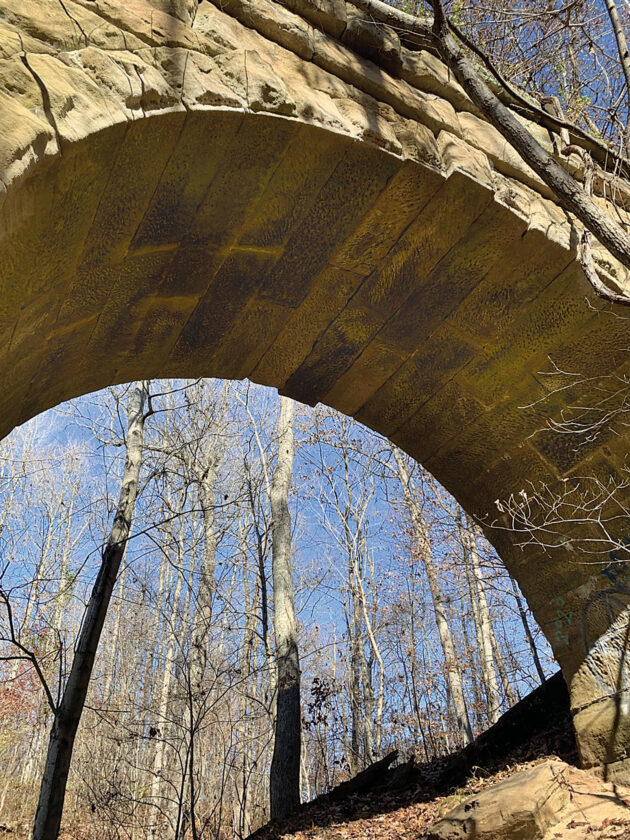
A stone arch supported the eastern end of the bridge over Walsh Road. (Photo by Art Smith)
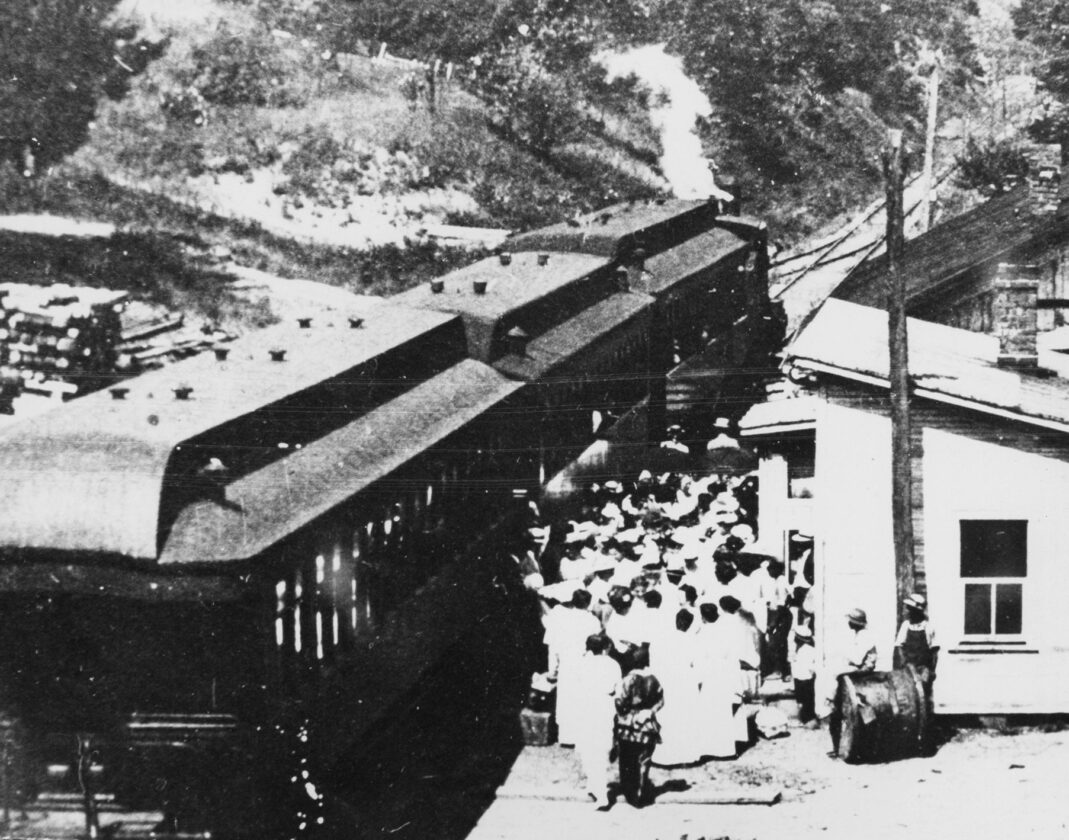
A train stopped at Cutler. (Photo provided by The Marietta College Legacy Library, Slack Research Collection)

Line art from the stock certificates for the railroad. (Photo provided by The Marietta College Legacy Library, Slack Research Collection)
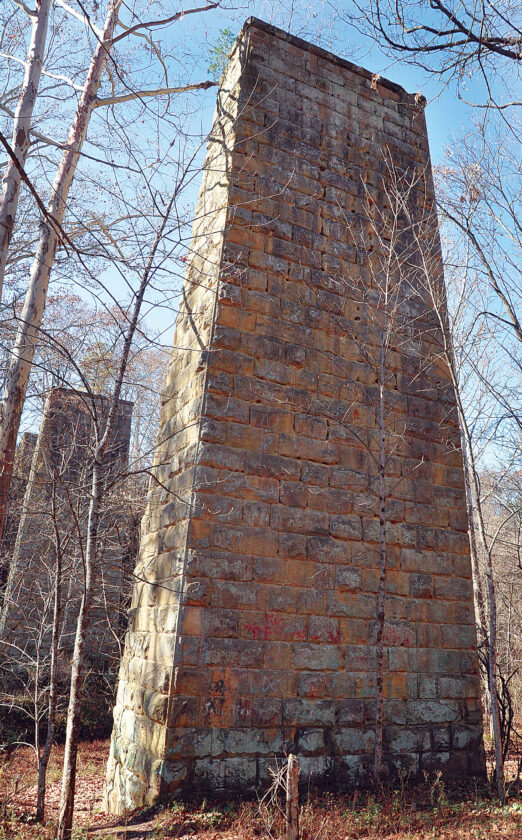
The giant stone piers over Walsh Road took the tracks over a creek. (Photo by Art Smith)
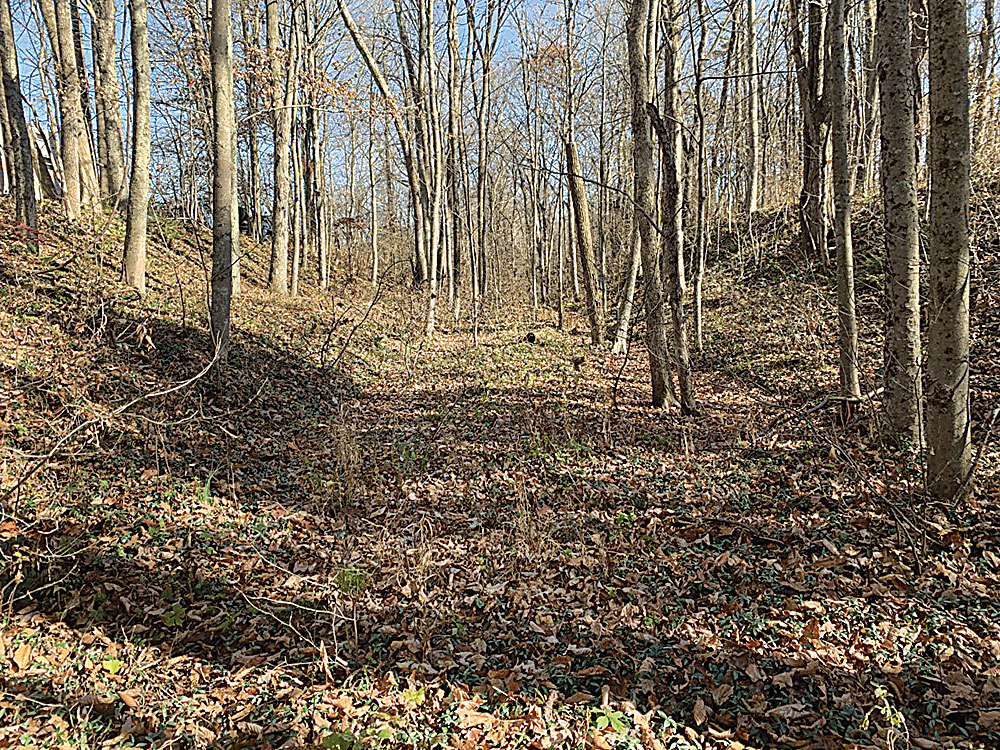
The roadbed of the railroad can still be found traveling over the hills of western Washington County. (Photo by Art Smith)
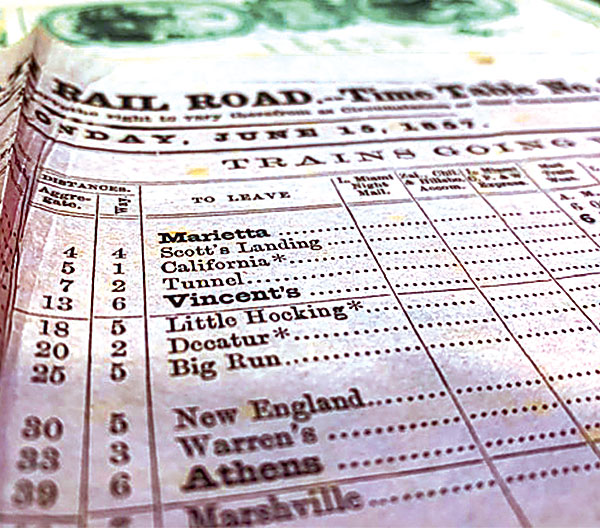
The printed time table. (Photo provided by The Marietta College Legacy Library, Slack Research Collection)
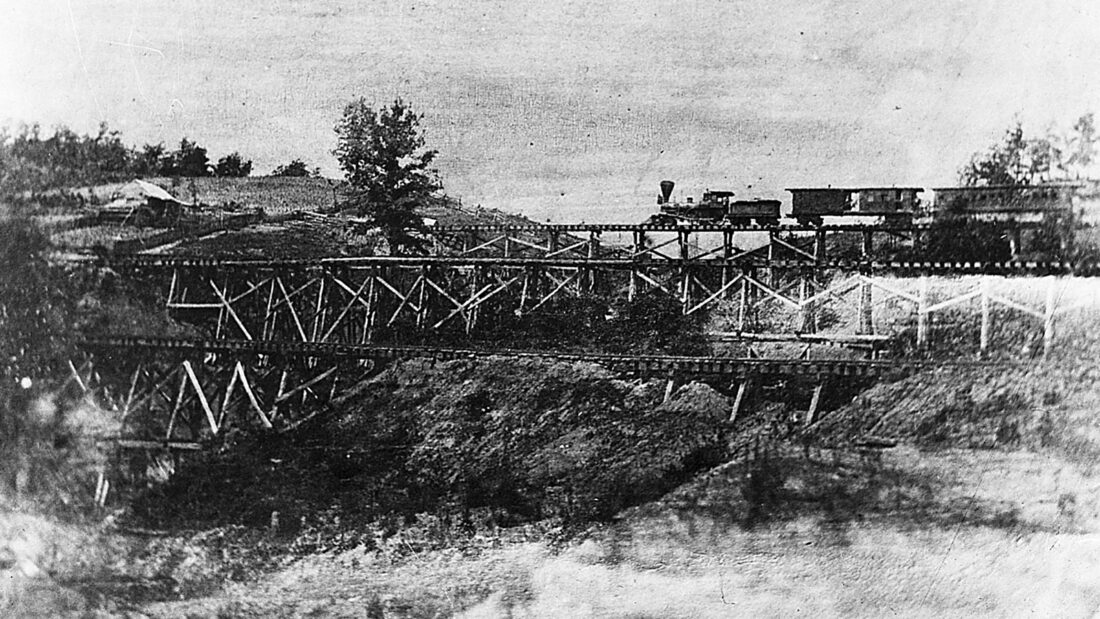
A train crossing a switchback. (Photo provided by The Marietta College Legacy Library, Slack Research Collection)
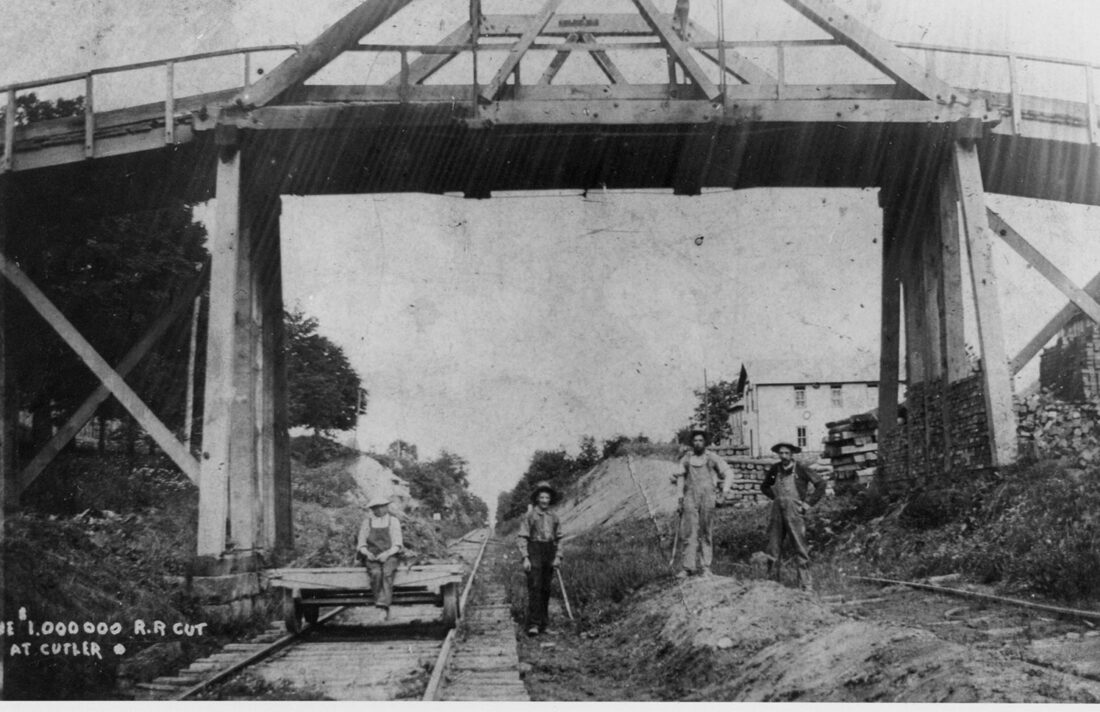
Work being done near the Cutler Cut. (Photo provided by The Marietta College Legacy Library, Slack Research Collection.
A stone arch supported the eastern end of the bridge over Walsh Road. (Photo by Art Smith)
A train stopped at Cutler. (Photo provided by The Marietta College Legacy Library, Slack Research Collection)
Line art from the stock certificates for the railroad. (Photo provided by The Marietta College Legacy Library, Slack Research Collection)
The giant stone piers over Walsh Road took the tracks over a creek. (Photo by Art Smith)
The roadbed of the railroad can still be found traveling over the hills of western Washington County. (Photo by Art Smith)
The printed time table. (Photo provided by The Marietta College Legacy Library, Slack Research Collection)
A train crossing a switchback. (Photo provided by The Marietta College Legacy Library, Slack Research Collection)
Work being done near the Cutler Cut. (Photo provided by The Marietta College Legacy Library, Slack Research Collection.
Trending
Long before Marietta had ribbons of concrete and asphalt heading in all directions, it had ribbons of steel to bring people and goods to and from the city.
One of the earliest ventures was the Marietta and Cincinnati Railroad that connected the two cities through a patchwork of rails from Harmar all the way to the Queen City on the far western edge of the state.
It's been well over a century since the last passenger settled into a railcar for the long ride west. If a person looks hard enough today, he or she can still find pieces of the line along the country roads of Washington County. If you look closely enough, you can still follow the route through the countryside.
The Marietta and Cincinnati Railroad had its roots in several other railroads including the Marietta, Columbus and Cleveland Railroad and the Franklin and Ohio River Railroad. Consolidations and mergers lead to the creation of the Marietta and Cincinnati Railroad which led to the first train traveling between the two cities on April 9, 1857.
The railroad acquired several other lines before eventually being purchased by the Baltimore and Ohio Railroad. The section of track between Scotts Landing near Marietta and Coolville fell into disuse and was eventually abandoned. The rails were removed and sold for scrap. Trains would then follow the Coolville to Belpre route before coming up river along the rail route used today. An unfulfilled plan called for the route to be extended from Marietta to Wheeling.
The original line did not follow the Ohio River to Coolville, but turned inland and followed a route south of Ohio 550. It is along this route that the modern railroad fan can find traces of a train that has not run in more than a century.
The tunnel, for which the community of Tunnel was named collapsed long ago. Many of the other structures remain to this day, serving as reminders of a critical transportation link that was built to last for ages but ended up seeing just decades of use.
Some traces are easy to miss. A graded roadbed crossing Ohio 339 near Vincent for instance, or a small stone bridge over a creek. Others are impossible to miss, including some huge culverts that stand out near roadways, or some of the rock cuts through which the railroad once passed.
The largest reminder of the Marietta and Cincinnati Railroad can be found along Walsh Road in Dunham Township. Deep in a country hollow one passes below a set of giant sandstone piers that loom 84 feet above a creek. The bridge that sat on top of the piers carried the line between Vincent and Cutler before passing through an equally impressive cut through solid rock. A train last passed over the bridge in 1916.
Viewing what remains of the railroad is best done when leaves are gone from the trees. Much of the former route is now on private property, although a lot of it can be viewed from roads.