
Researchers investigate change in wild turkey population
Trending
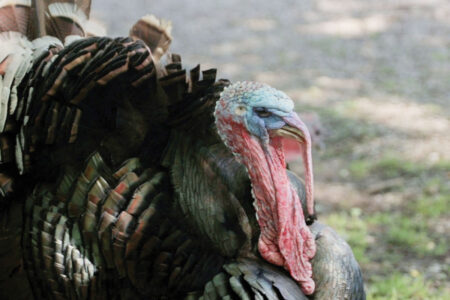
MORGANTOWN -- Plenty of farm-raised turkeys are in groceries, but the wild turkey population is disappearing in many states and a West Virginia University researcher is trying to find out why.
Chris Rota, an associate professor in wildlife and fisheries at the Davis College of Agriculture, Natural Resources and Design, is working with the National Wild Turkey Federation.
"In recent decades, there has been an apparent decline in turkey abundance," Rota said. "There's a lot of interest right now in understanding the cause of that decline and what management actions we can take to potentially reverse it."
Rota, with funding from the National Wild Turkey Federation, will capture turkeys in South Dakota to unravel what's causing their numbers to fluctuate.
"We're going to capture 260 turkeys per year and put VHF radio transmitters on them which will allow us to track their movements," Rota said. "We'll know whether they're alive, whether they're dead, whether they're nesting. We'll be able to track their survival and understand, if they die, what caused the mortality."
Turkey populations have risen and fallen over the past few centuries. Loss of habitat due to logging hurt numbers in the late 1800s and early 1900s and, like many wildlife species, they were overharvested almost to the point of no return.
"That's the story of a lot of North American wildlife," Rota said. "Lots of wildlife were decimated due to unregulated hunting. And then in the late 1800s and early 1900s, we started realizing there was a conservation crisis happening."
In response, many states, including South Dakota and West Virginia, began reintroducing turkeys in the late 1940s. Numbers climbed in response to the effort, but in 2009, wildlife researchers noticed a new trend -- the turkey population started plummeting.
As a quantitative ecologist, Rota conducts statistical modeling of wildlife populations to understand the changes that occur. In the past, he's assisted the West Virginia Division of Natural Resources on whitetail deer projects, and his current research with turkeys in South Dakota is emblematic of the work he does, collaborating closely with wildlife professionals to address questions of management and relevance.
This will be Rota's third collaboration with the state of South Dakota and his second turkey project there.
Reversing the downward trend is crucial because turkeys play an important ecological role as prey for species like bobcats and great horned owls. They fulfill a societal role, too, having been part of many Native American food and cultural systems and, when white settlers arrived, an important game species.
"Culturally, economically, as a game species for people -- that's where a lot of this interest comes from," Rota said. It's also where much of the research information comes from, as game hunters provide reports from the field about turkey numbers.
While often perceived as unintelligent, researchers know turkeys are smart birds. Moreover, turkeys and hunters have a symbiotic relationship. A thriving turkey population means the hunting community will thrive, and vice versa.
"A lot of people don't know this, but conservation in the United States is driven by hunters," Rota said. "Public lands that we all use and love, and state wildlife management areas in West Virginia, are all funded by hunters. It's important to keep species like turkey and deer abundant on the landscape, to keep hunters engaged."