
Twister: The day the cyclone made a surprise visit to Marietta
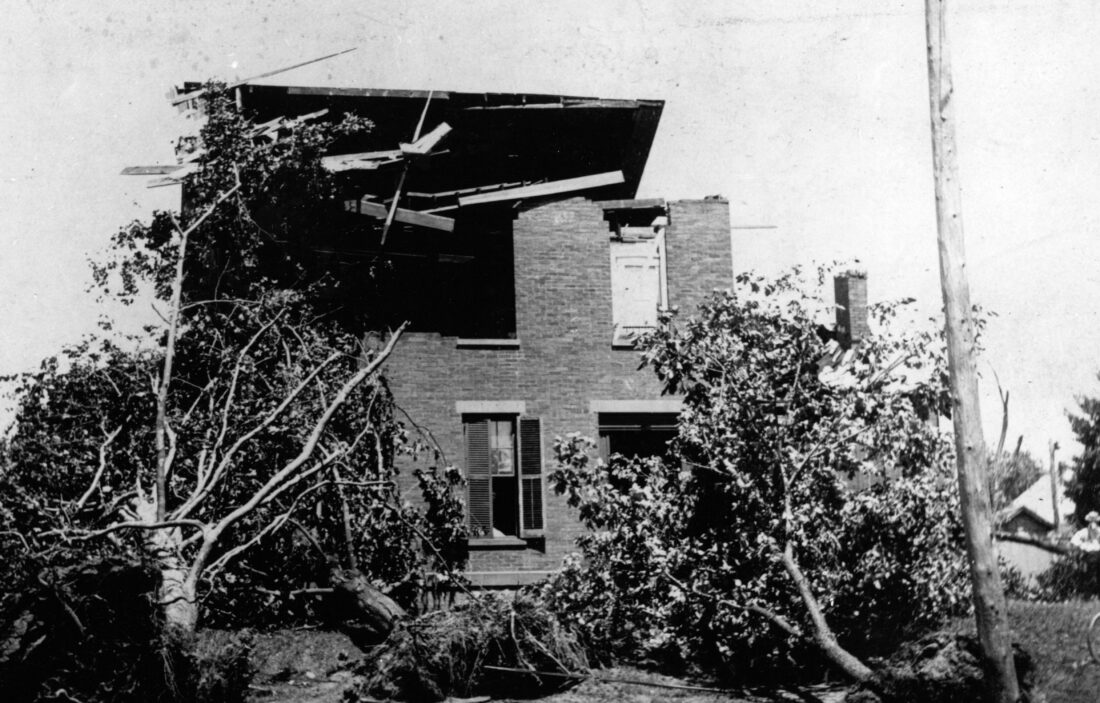
The McKinney home on Fifth Street was heavily damaged as the cyclone made its way across town. (Photos provided by the Marietta College Legacy Library, Slack Research collection)
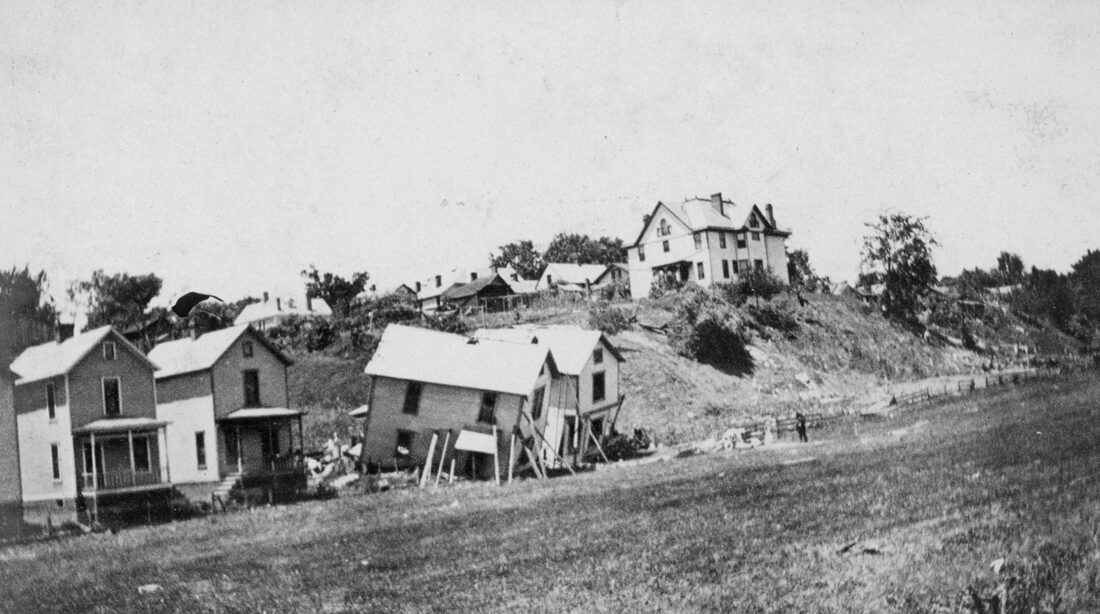
Homes along Glendale Road were knocked from their foundations. (Photos provided by the Marietta College Legacy Library, Slack Research collection)
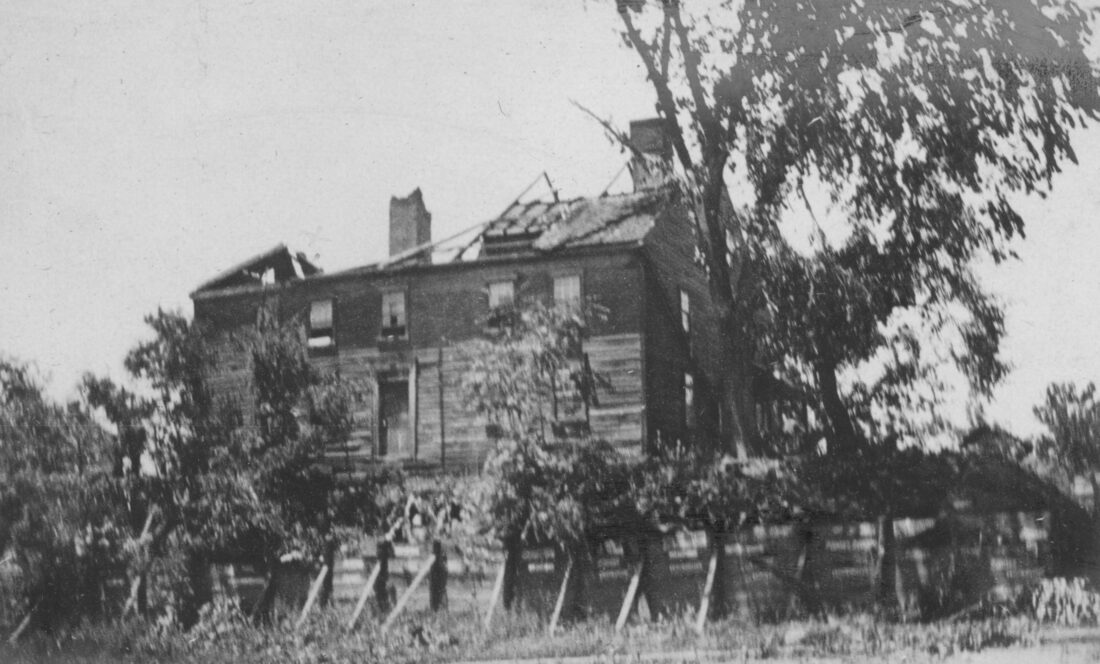
The former home of Rufus Putnam was damage by the storm. The house is now enclosed in the Campus Martius Museum. (Photos provided by the Marietta College Legacy Library, Slack Research collection)
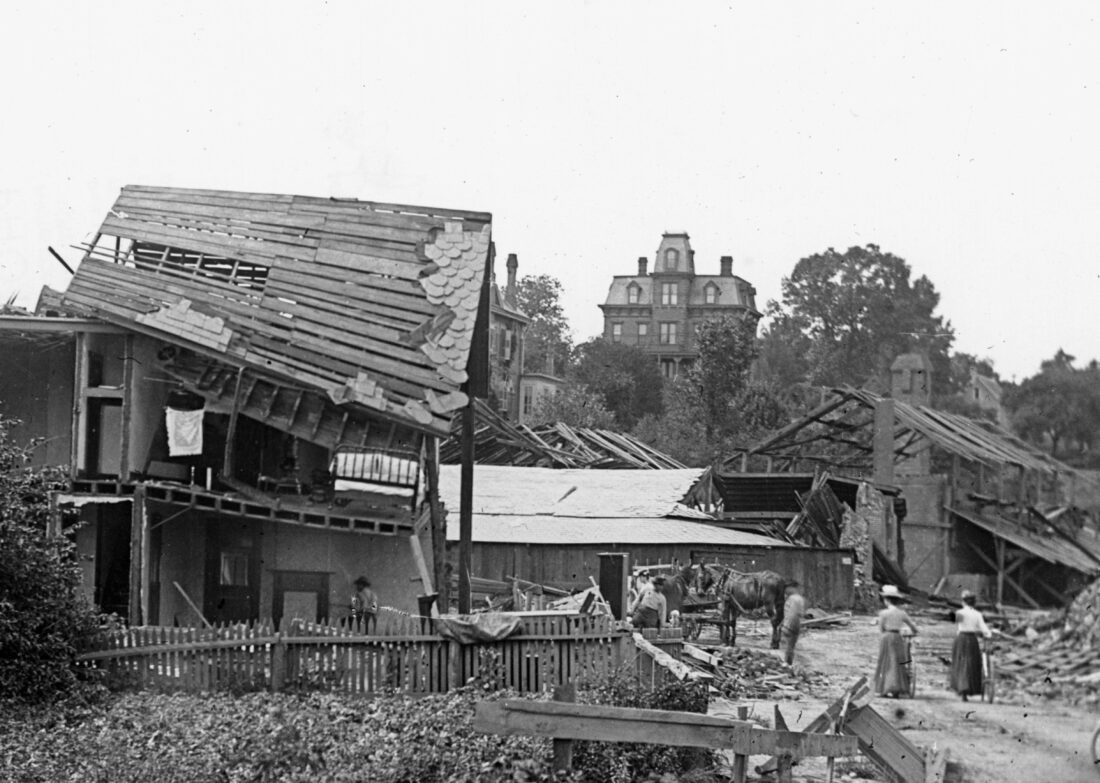
The destroyed Lorentz home in the foreground and the damaged Cisler Brickyard were near where Giant Eagle is today. (Photos provided by the Marietta College Legacy Library, Slack Research collection)
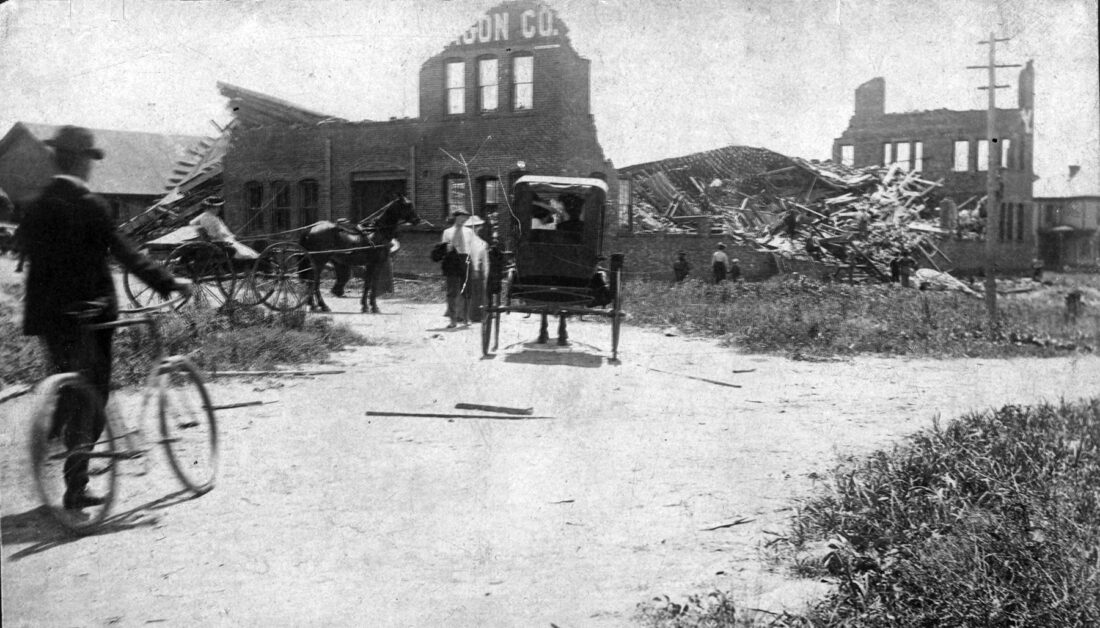
A man pushes his bike toward the Ohio Valley Wagon Works, which was the site of the only fatality of the storm. A man was crushed there from falling debris. (Photos provided by the Marietta College Legacy Library, Slack Research collection)
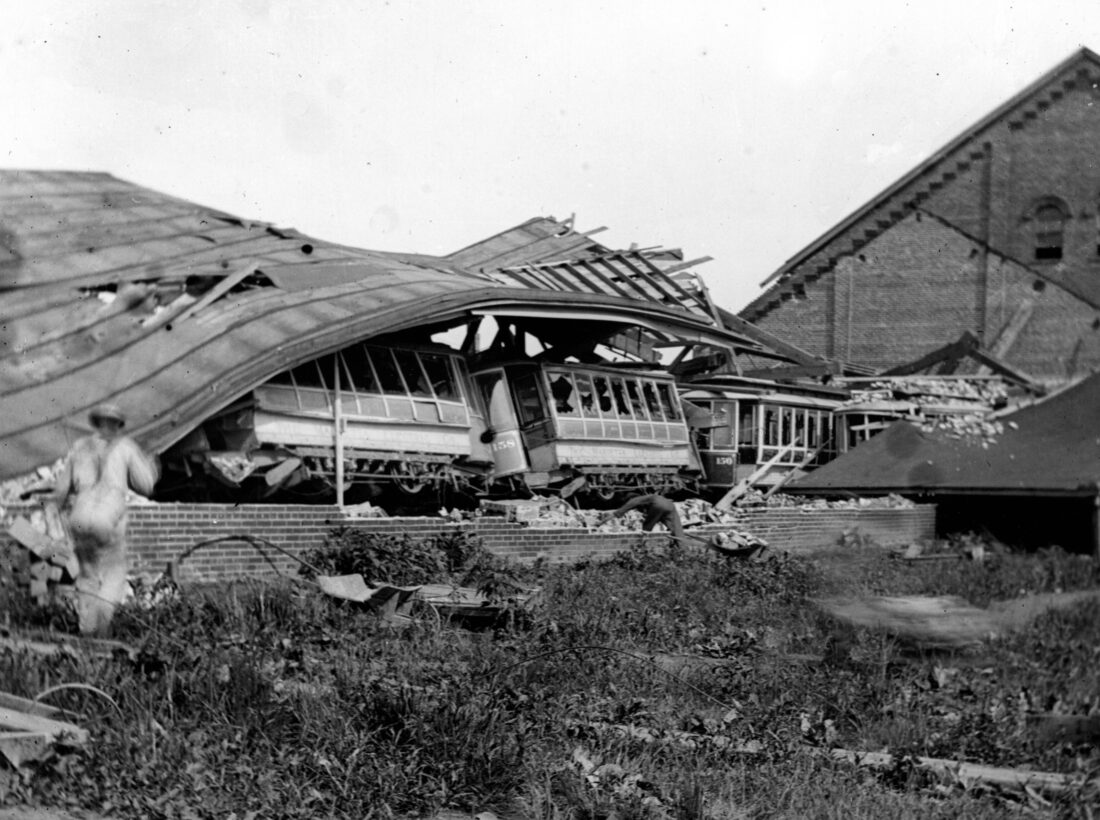
Street cars sit under the fallen roof of a storage building on Greene Street follow the cyclone. (Photos provided by the Marietta College Legacy Library, Slack Research collection)
The McKinney home on Fifth Street was heavily damaged as the cyclone made its way across town. (Photos provided by the Marietta College Legacy Library, Slack Research collection)
Homes along Glendale Road were knocked from their foundations. (Photos provided by the Marietta College Legacy Library, Slack Research collection)
The former home of Rufus Putnam was damage by the storm. The house is now enclosed in the Campus Martius Museum. (Photos provided by the Marietta College Legacy Library, Slack Research collection)
The destroyed Lorentz home in the foreground and the damaged Cisler Brickyard were near where Giant Eagle is today. (Photos provided by the Marietta College Legacy Library, Slack Research collection)
A man pushes his bike toward the Ohio Valley Wagon Works, which was the site of the only fatality of the storm. A man was crushed there from falling debris. (Photos provided by the Marietta College Legacy Library, Slack Research collection)
Street cars sit under the fallen roof of a storage building on Greene Street follow the cyclone. (Photos provided by the Marietta College Legacy Library, Slack Research collection)
Trending
Unlike many parts of the country, residents of the Mid-Ohio Valley rarely have to deal with life-threatening weather. Bad weather events tend to take a while to arrive here. Be it a flood or a bad snowstorm, the Marietta area tends to get plenty of warning that harm is on its way.
This wasn't always the case. There was a time not all that long ago that the weather could sneak up on you.
Such was the case on June 25, 1902 -- the day that a cyclone came up over Harmar Hill and wreaked havoc on Marietta as it chewed its way through town.
Shortly before eight in the evening, it began to rain heavily. A brief but powerful wind swept from west over the hill, "cutting a swath through the woods as could have been made with an ax," according to The Times on June 26. It headed east across the Muskingum, striking the east bank of the river between Washington Street and Sacra Via. It first hit a lumber operation that was near where the park is today before it clipped the former home of Rufus Putnam at Second and Washington streets. Then it headed up Washington and toward the home of future Vice President Charles Dawes on Fourth Street, damaging roofs and trees as it made its way southeast.
On Fifth Street, it damaged the roof and front wall of the McKinney Home at 422 Fifth St., damage that can still be made out in the brick of the house. The nearby Cotton Home had its roof damaged as the storm made its way toward Mound Cemetery, where it stripped most of the leaves off the trees.
Dropping over the hill, the storm destroyed several houses on Short Street before taking aim at the Cisler Brickyard where it threw inventory around and damaged the buildings before heading toward Glendale Road and wrecking several homes across from where the football field is today.
The storm continued to tear up homes as it climbed over the top of the hill on its way to the Norwood neighborhood, where it started destroy some of Marietta's infrastructure. The electric company's car shed, which was storing the company's winter street cars, "was cracked like an egg shell," The Times reported.
It was in Norwood that the storm took its only life, when watchman Herman Sprague was killed by falling debris at the Ohio Valley Wagon Works.
As quickly as it had arrived, it was gone, dropping debris it had picked up along its path against a hillside east of Norwood and leaving a stunned community to clean up the mess and count their blessings. A group of children that had been attending a birthday party were hurt, but they were all alive. A Ferris wheel set up as part of a carnival was blown over, but no one was hurt. Most of those injured were hit by flying debris.
The storm was part of a whole system that tore up towns all over this region of the country, killing around a dozen people in Indiana. Nearly identical conditions were reported to have occurred earlier in the day west of here. In 1902, those in Marietta were unaware of the disaster that was on its way.
The storm left a tangled mess of wires and trees all over town.
The following weekend, the town became a tourist attraction of sorts when hundreds of people from neighboring cities came to town to see what a tornado looked like. They came by train from Cambridge, Athens, Parkersburg and Wheeling to view what one newspaper called "the awful tracks of a real tornado." The streetcar company added cars and ran at full capacity in what would have normally been a quiet summer weekend.
The debris took weeks to cleanup.
Today there would have been an investigation to determine if it was a tornado, or a bow-echo, or even a derecho that had caused so much damage so quickly. Citizens would have been warned by phone-based weather alerts before the storm arrived.
Not in 1902. They were only concern in getting the mess cleaned up, repairing the damage and getting things back to normal.
The Board of Trade met soon after to figure out how to help those that had lost houses and businesses during the storm.
There are still signs of the damage done that day, including signs of repaired walls on brick houses on Fifth Street and gaps in a row of houses on Glendale are still there to remind us of the wrath that nature can cause on a town on a quiet summer night.