
Commissioners hear from LaRose during his visit to Washington County
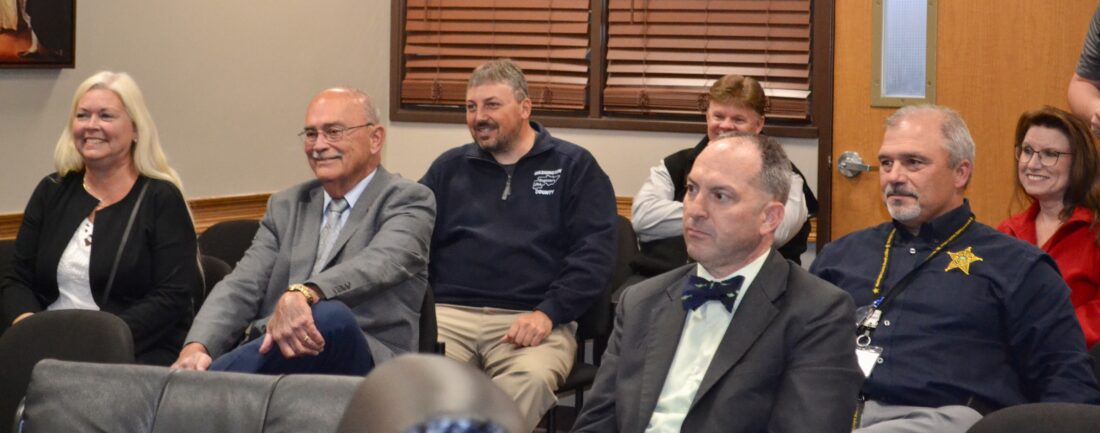
A portion of the group at the county commissioners’ meeting room Tuesday listen to Ohio Secretary of State Frank LaRose. (Photo by Nancy Taylor)
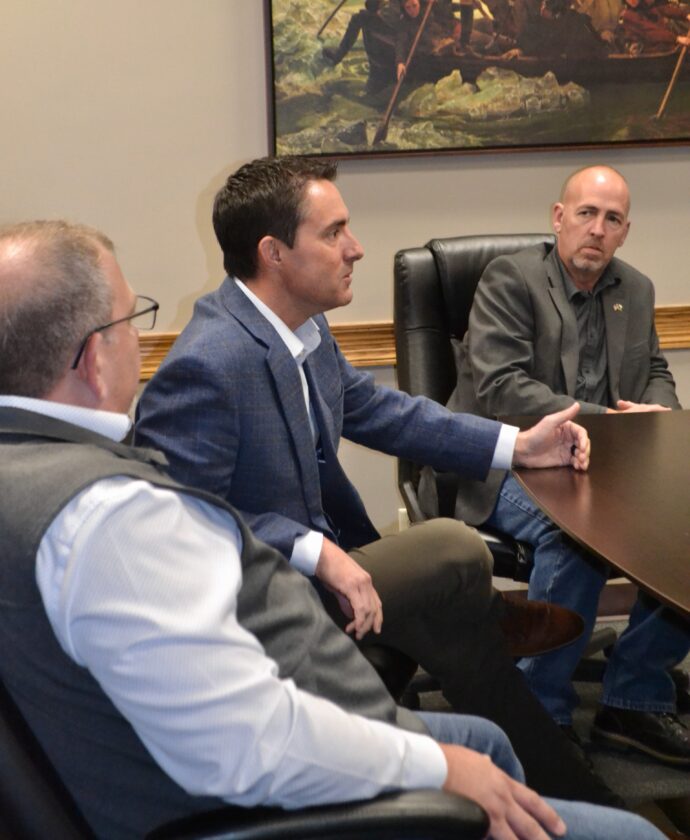
Ohio Secretary of State Frank LaRose emphasizes a point about policies he believes have made America “weaker, poorer and less secure.” With him at the table are Washington County commissioners Charlie Schilling, at left, and James Booth on the right. (Photo by Nancy Taylor)
A portion of the group at the county commissioners’ meeting room Tuesday listen to Ohio Secretary of State Frank LaRose. (Photo by Nancy Taylor)
Ohio Secretary of State Frank LaRose emphasizes a point about policies he believes have made America “weaker, poorer and less secure.” With him at the table are Washington County commissioners Charlie Schilling, at left, and James Booth on the right. (Photo by Nancy Taylor)
Trending
On a tour of Washington County Tuesday, Ohio Secretary of State Frank LaRose discussed his commitment to the integrity of the state's voting system and making the state's voters as informed as possible about the process.
He also confirmed his credentials as a conservative Republican who wants to make Sherrod Brown a former U.S. Senator, not the incumbent. Brown has been Ohio's senior U.S. senator for a dozen years and the only Democratic statewide elected official in Ohio, with the exception of a few nonpartisan judicial races.
LaRose made several local stops Tuesday. He had a 10 a.m. stop at Fort Frye High School auditorium to speak to fourth- and 11th-graders from several schools.
He was a tad late for the next event, a "roundtable" with local officials at the Washington County Commissioners' meeting room, because of a spur-of-the-moment stop, shop and chat with Sylvi Caporale at American Flags and Poles.
Minutes after the meeting with local officials, his entourage hit the Washington County Board of Elections and he joined Director Mandy Amos and Deputy Director Karen Pawloski in a wide-ranging explanation of the election and vote-counting security precautions Ohio undertakes.
As the late afternoon hours arrived, there was still a tour of local businesses to do and a campaign gathering Tuesday evening.
Anything else on the LaRose list?
"That's everything. It's been a whirlwind," County Commissioner James Booth concluded.
Among those gathering at the commissioners' meeting room were the three commissioners, mayors of Belpre and Marietta, the county's sheriff and chief deputy, prosecutor, auditor, treasurer, engineer, and a judge of common pleas court.
LaRose told them he was running for Brown's U.S. Senate seat for Ohio because he believes the U.S. is "weaker, poorer and less secure" than it used to be. He outlined some of the areas where he feels the Biden Administration has made serious errors.
¯ The economy: "This administration is mismanaging inflation." And in the meantime, "More IRS agents are not the answer. A free economy is."
¯ Border security: "There is none right now." On LaRose's list of must-haves are barriers, sensors, and fixing the asylum system now in place.
¯ Parents' rights: "I have children who are 8, 10 and 12. It's not the government that I want raising or educating them."
¯ Spending thousands of dollars to change the name of Wayne National Forest: "Idiotic."
¯ Solidarity with Israel concerning the Hamas attack: "This has been the most deadly attack on Jews since the Holocaust."
¯ The environment: "Yes, we need to take care of the outdoors. But we also need oil and gas exploration, and supply pipelines. This is important, too."
There weren't many questions posed, but there was a brief discussion between LaRose and commissioners about the natural gas needs of local entities such as Solvay and the Marietta Memorial Health System. Schilling told LaRose he was concerned with the needs such large users will have in 50-60 years, in terms of volume and pressure. He is interested in ways to open up more oil and gas production in the area.
County Prosecutor Nicole Coil mentioned a recent trial where certified translators for Spanish were needed, not only for the defendants but for the prosecutor and judge, as well. The county bears the costs not directly affiliated with the defense, and Coil thinks it will become a more frequent issue as more Spanish-speaking migrants come over the southern U.S. border.