Park ranger leads weekly bird walk
-

- Park Ranger Michael Schramm of the Ohio River National Wildlife Refuge started this week’s Birdwalk off by watching the birds at the three bird feeders behind the refuge building. Blue jays are pictured above, but cardinals, finches, mockingbirds and a downy woodpecker also made an appearance at the feeders on Saturday. (Photo by Clara Noelle)
-
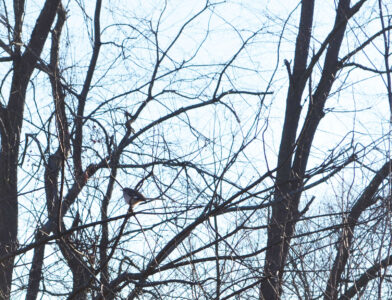
- During the birdwalk on Saturday morning, led by Park Ranger Michael Schramm at the Ohio River National Wildlife Refuge, the participants saw over 25 bird species, from Bald Eagles to Kinglets (pictured above). (Photo by Clara Noelle)

Park Ranger Michael Schramm of the Ohio River National Wildlife Refuge started this week’s Birdwalk off by watching the birds at the three bird feeders behind the refuge building. Blue jays are pictured above, but cardinals, finches, mockingbirds and a downy woodpecker also made an appearance at the feeders on Saturday. (Photo by Clara Noelle)
WILLIAMSTOWN — Park Ranger Michael Schramm led his weekly bird walk on Saturday at the Ohio River Islands National Wildlife Refuge in Williamstown. Schramm noted that the winter walks usually don’t have a lot of people because of the cold weather, but there are also not as many bird sightings in the winter walks.
Schramm said he leads the bird walks “pretty much” every Saturday at 8:30 a.m. He said there tends to be less people on days where the weather is bad.
“May, September and October are the best,” he said. “August is probably the worst of all. It’s very quiet.”
Though the winter months do not have a lot of bird activity, he did point out an exception.
“A polar vortex is the best in winter,” said Schramm. “But nobody wants to come out in the cold.”
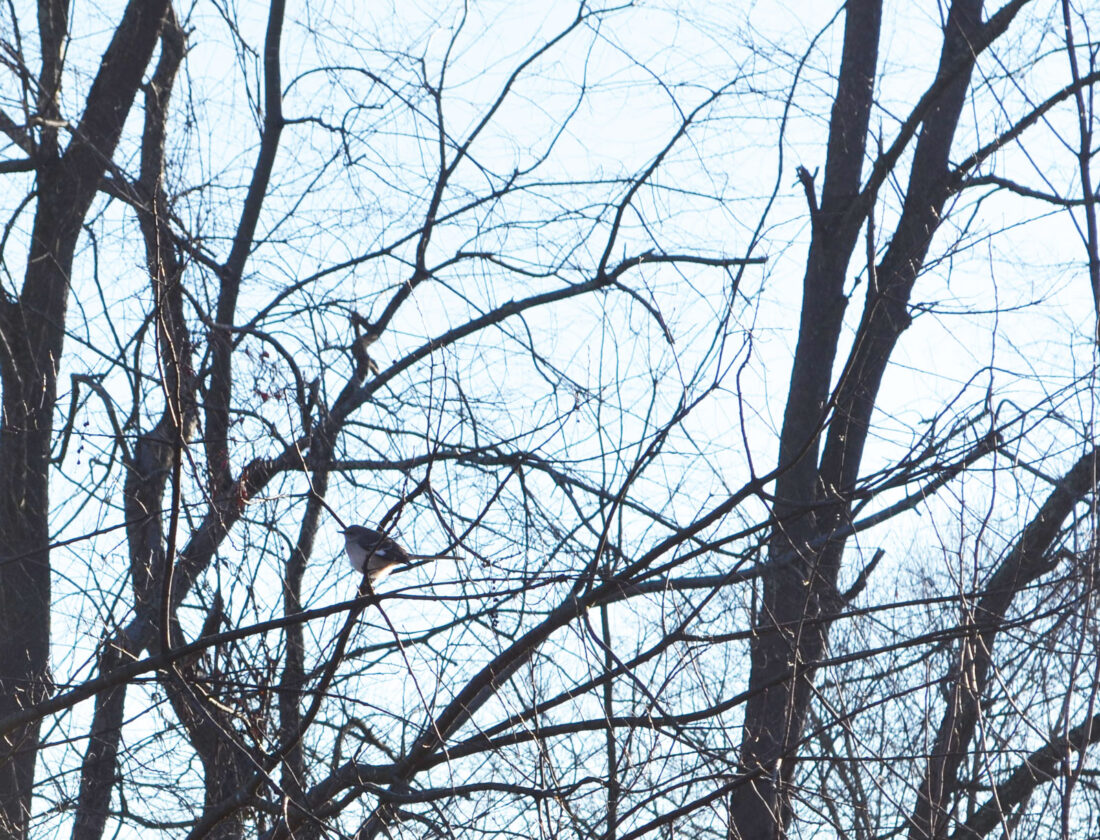
During the birdwalk on Saturday morning, led by Park Ranger Michael Schramm at the Ohio River National Wildlife Refuge, the participants saw over 25 bird species, from Bald Eagles to Kinglets (pictured above). (Photo by Clara Noelle)
During the winter months, the migratory birds move south for the better climate, but some birds stay like seed eating birds like chickadees, finches, doves, mockingbirds, robins, blue jays, cardinals and sparrows. Schramm says even in winter, the refuge sees around 25-30 species of birds a day.
Even though this number is a small portion of the 185 species of birds one can see at the refuge, excluding the “bizarre stuff,” he added.
Though the refuge is the biggest bird watching hot spot in the area, one can bird watch anywhere. Schramm suggests watching birds in places one usually visits like the park or their backyard if someone is wanting to start bird watching.
“You can only learn by doing it,” he says.
He suggested people learn the birds and the birdcalls in their area. The best time for bird watching is the first three hours of daylight.
Schramm suggests “eBird” as a source to help beginner bird watchers. “eBird” has information about different birds, and it is also a place for people to log bird sightings.
“eBird” has a list of hot spots. There are six hotspots in Marietta alone.
“A lot of people know more birds than they realize,” he says.
Schramm also suggests coming to a bird walk if someone is wanting to get into bird watching, there they can have guidance into the world of “birding.”
He has been birding for 15 years, and says he is always learning more. Schramm has a general interest in nature, but he has a special interest in birds.
“If you were to focus on one thing, birds are the most obvious,” he said. “It’s more doable.”
He has learned about the different behaviors of birds and how different species have different behaviors.
“Chickadees are the most daring,” Schramm said. He explained they are usually the first to come back after the other birds fly away from a predator. They have a warning call that tells the other birds how close a predator is, and the other birds listen.
According to Schramm, birding also teaches one about themselves and others.
“People are very visual,” he said.
Schramm says bird watching has helped him start listening to the sounds around him better.
“A lot of people don’t dream with sounds,” he said. “Since I’ve started birding, I’ve begun dreaming with sound.”
Schramm posts event updates on the Ohio River National Wildlife Refuge’s facebook page as well as bird photos and facts.
Local News

Marietta Main Street’s April First Friday: Happy Birthday, Marietta
Pomeroy water system receiving EPA funds
From staff reports COLUMBUS — Ohio Rep. Kevin Ritter, R-Marietta, announced this week that the Ohio ...

Wildlife photographer Dianne Wigal featured at WesBanco
Williamstown High School presents Local School Improvement Council Showcase

Washington County Commissioners say they don’t approve data center tax abatement