Voyage to a new world
-

- (Photo Provided) In 1938 a group of reenactors arrived in Marietta after repeating the trip made in 1788.
-
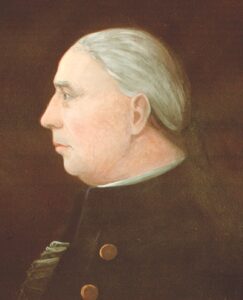
- (Photo Provided) Rufus Putnam
-
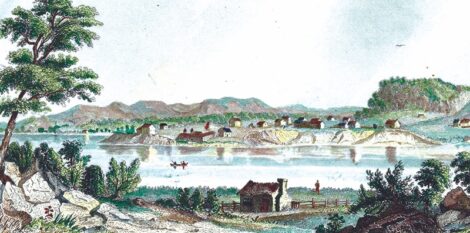
- (Photo Provided) Pittsburgh as it appeared in 1790.
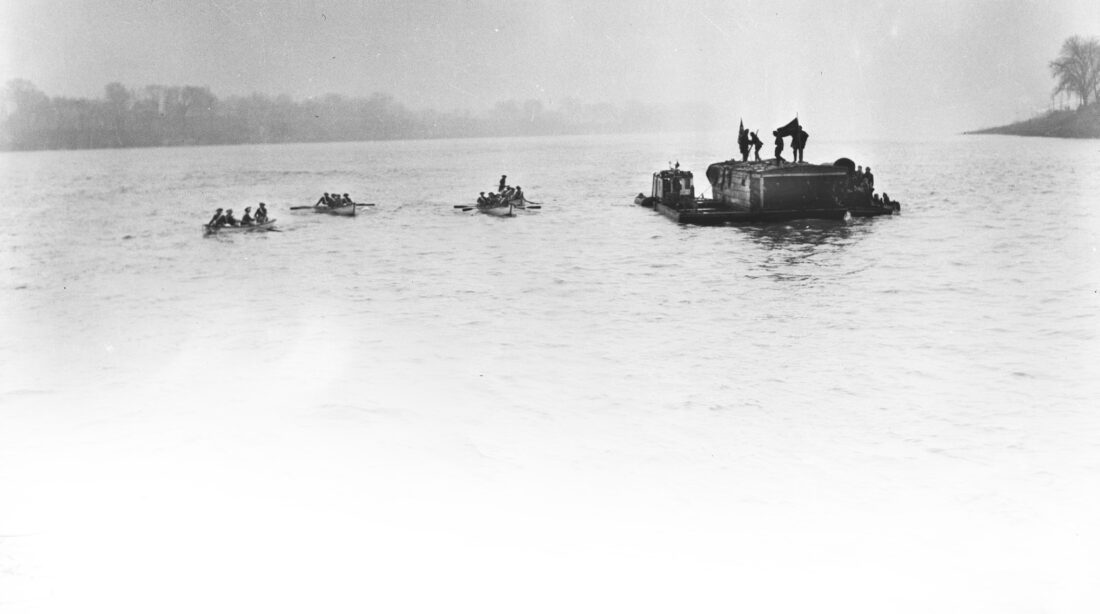
(Photo Provided) In 1938 a group of reenactors arrived in Marietta after repeating the trip made in 1788.
Before the group of 48 men of the Ohio Company could establish Marietta in 1788, they first had to get here.
The trip overland from Massachusetts started Dec. 31. The trip over the mountains had been hard. They battled deep snow, at times building sleds to make their way west.
When they arrived at Sumrells Ferry on the Youghiogheny River they would have to prepare for the second part of their journey that would take them down tributaries to where the Monongahela joins the Allegheny to form the Ohio River at Pittsburgh, and finally to Marietta, arriving 237 years ago on April 7, 1788.
Rufus Putnam, who led the group, kept a daily account of what the journey was like. The journals have been preserved and are part of the physical and online collection of Marietta College’s Special Collections at the school’s Legacy Library.
The journal offers a detailed narrative of the struggles faced by the men getting here as well as the early steps in carving a city out of the wilderness.
(Photo Provided) Rufus Putnam
Excerpts from the river journey section of Putnam’s journal
Thursday, Feb. 14
Sumrells Ferry on the Youghogany River. Here we find Major White had timed for building the boats. Maj. White arrived here on Monday, Jan. 21. He has three canoes on the stocks. The whole of about 3 or 4 tons burden. (Located at the current day town of West Newton, Pa., this would be the point where the group transitioned from an overland journey to a river boat one. The Youghiogheny was the first of three rivers they would travel to reach the new settlement.)
Friday, Feb. 15
It’s determined to build a flatboat 50 feet long 13 feet wide which with the canoes above mentioned are concluded will be sufficient to carry the party and provisions down the river. But before we can engage in this business seriously, we must build a cabin or a storehouse and to accommodate a part of our men. (The flatboat would be loaded with the huge amount of materials needed to start Marietta. The group would also use a few canoes and other crafts to carry men and materials down the river. The men would later take the flatboat apart and use the wood to construct buildings.)
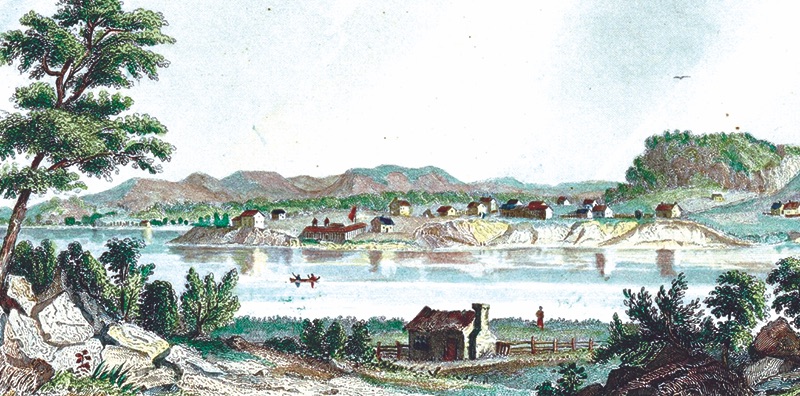
(Photo Provided) Pittsburgh as it appeared in 1790.
Monday, Feb. 18
Mr. Foster (Capt. Peregrine Foster) left out for the westward to purchase provisions.
Sunday, Feb. 24
Mr. Foster returns having contracted for the flour and part of the meat which was proposed to be purchased in the county of Washington and Ohio –In the meantime I have contracted with Maj. Taylor for 1080 weight of flour to be delivered at Jackson Mills at Red Stone on the Monongahela.
Tuesday, Feb. 26
Col. Sproat (Col. Ebenezer Sproat would later become the first sheriff in the Northwest Territory. He is also the origin of the name “Buckeye” to describe someone from Ohio) set out for Red Stone with a party who contracted to build a boat there to take the flour in … they are to build a boat 28 feet long and eight feet wide and for their labor and boarding I am to pay them 10 dollars.
Friday, March 29
Launched our great boat named the Union Galley (Different writings call the flatboat by many names, including the Adventure Galley and Mayflower). She was intended to carry 24 tons … the same day we launched a large walnut canoe called the Katting Tender. Having before put in the river two other canoes one called the Ellen the other the Wesel of about 800 burden. This with the Adelphia ferry boat of about 3-ton burden makes up our fleet with which we shall proceed down river.
Monday, March 31
Col. Sproat, Mr. Foster and others set out with the horses and oxen for the mouth of Buffalo Creek and are to take 500 pounds of hard bread, a number of venison hams with a firken of butter from Washington on pack horses. (A firkin is a small cask that holds around 11 gallons.)
Put a part of our loading on board but the rain prevented our completing the loading and setting out as intended.
Tuesday, April 1
45 minutes past one o’clock we left Sumrells Ferry and falling down 6 miles took in one ton of hay and proceeded to Mr. Gee’s Ferry where we arrived at 9 o’clock the same.
Wednesday, April 2
Got underway at 4 o’clock in the morning and arrived at Pittsburgh about 8 am — left Pittsburgh at 2 o’clock pm. Passed great Beaver Creek at 8 in the evening. (Pittsburgh at that time was already an established community. They did not record what they spent 6 hours doing in the town before continuing down river.)
Thursday, April 3
Came to (a nautical term for stopping) about 3 mile above Harmon Creek at 4 o’clock am. Waiting for day light to find said creek, at 7 o’clock the same morning came to ¾ of a mile below Harmon Creek having passed it through mistake — Mr. Foster arrived about 12 o’clock having been engaged in forwarding a quantity of pork from Mr. Southenland to the river, distance 4 miles. The provisions were all got to the river this evening but the heavy rains which fell this evening prevented there loading a raft of boards from coming down. (Harmon Creek flows into the Ohio River just north of U.S. 22 in Weirton.)
Friday, April 4
Having got the provisions on board and the boards on the raft, we set out 1 o’clock and arrived with the galley at Buffalo about 3 o’clock, leaving the Adelphia Ferry boat to take in some port at Mr. Henderson opposite Mingo Bottom — found the provisions not brought down as expected but Mr. Wells was zealously engaged in the butchering. (Buffalo Creek is at the south end of Wellsburg. The town is named for Alexander Wells, who was likely the man helping the explorers with loading the boats with more provisions. Mingo Bottom would later become Mingo Junction and is across the river from Wellsburg. A community was already there. In 1770, George Washington wrote … “we came to the Mingo Town, situated on the west side the river, a little above the Cross Creeks. This place contains about twenty cabins, and seventy inhabitants of the Six Nations.”)
Saturday, April 5
The provisions were all brought down in the course of the day, but too late to set out until morning.
Sunday, April 6
Put everything on board early and left Buffalo 23 minutes past 9 o’clock am. Passed Short Creek 46 minutes past 10, Wheeling 32 minutes past 12, Grave Creek 55 minutes past 2 o’clock pm. Came to at the southernly part of Round Bottom 55 minutes past 3 except the first mile in the morning we rowed none except to steerage way, but the awing to baggage above the gunwale, the wind being of north easterly gave us about 2 knot through the water. Left Round Bottom ½ past nine in the evening.
Monday April 7
Pass the west line of the 7th range 35 minutes after 11 o’clock am (The line was the western edge of an earlier survey effort. It is near modern day Newport.) – arrived at Muskingum at one o’clock pm and came to on the fort point (Fort Harmar) on fork between the Ohio and Muskingum where we landed with some of our stock and baggage with some of the provisions, both baggage and provisions having suffered considerably by wet weather before the hard bread brought from Washington County (Pa.) being wholly lost and the venison hams much injured by the pack horses falling into a mill race. (Edible food would be a reoccurring problem for the settlers, who had to turn to Virginians across the river to get through the following winter.)
Local News

Rotating exhibit space aims to accelerate learning at Discovery World
Marietta Trolley returns May 2 for 2026 tour season
Mid-Ohio Valley Career Connect Job Fair set for April 8
Parkersburg mayor offers way for petitioners to remove signatures
PARKERSBURG — As a committee seeking to repeal or place on the ballot an ordinance authorizing a trash service ...
Backers urge Ohio lawmakers to require absentee voters to mail in copy of ID