Campus Martius Museum receives $15,300 from state grant for virtual upgrades
Campus Martius Museum receives $15,300 from state grant
-
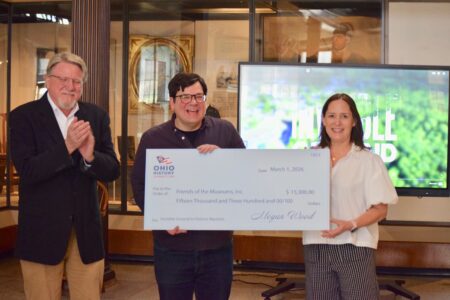
- (Photo by Amber Phipps) Ohio History Connection Program Manager Andy Verhoff, Invisible Ground Founder Brian Koscho and Northwest Territory Museum Society Executive Director Erin Augenstein on Monday hold a $15,300 check from Ohio History Connection for a state grant awarded to the Campus Martius Museum for the Invisible Ground in Marietta project.
-
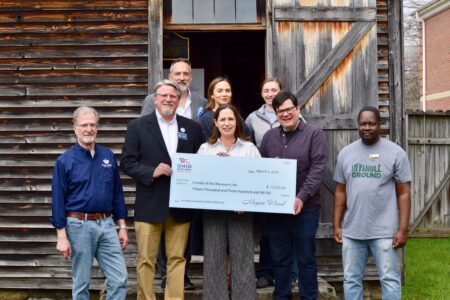
- (Photo by Amber Phipps) Campus Martius Museum, Ohio History Connection and Invisible Ground personnel gather at the steps of the Ohio Company Land Office building with a $15,300 check from a grant awarded by Ohio History connection Monday.
-
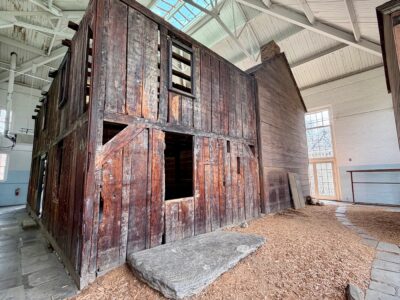
- (Photo by Amber Phipps) Rufus Putnam’s home inside the Campus Martius Museum.
-

- (Photo by Amber Phipps) The Ohio Company Land Office dates back to the creation of Marietta and is one of the oldest buildings in the state of Ohio. The site can be found outside of the Campus Martius Museum in Marietta.
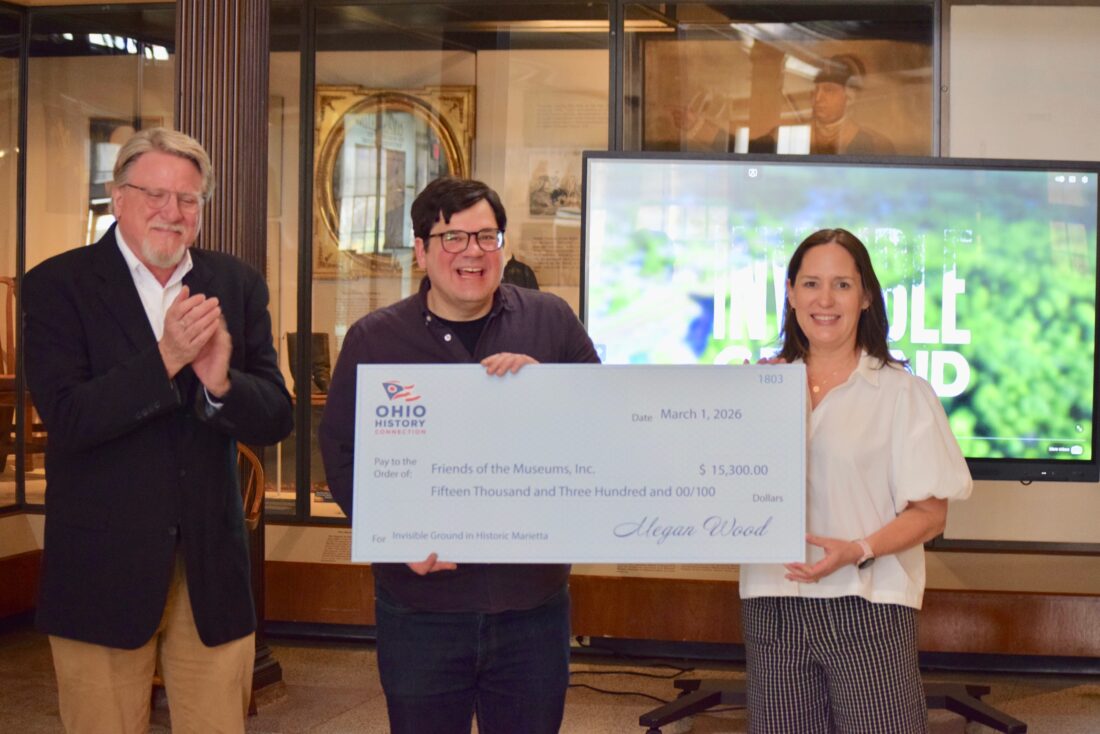
(Photo by Amber Phipps) Ohio History Connection Program Manager Andy Verhoff, Invisible Ground Founder Brian Koscho and Northwest Territory Museum Society Executive Director Erin Augenstein on Monday hold a $15,300 check from Ohio History Connection for a state grant awarded to the Campus Martius Museum for the Invisible Ground in Marietta project.
Campus Martius Museum Monday received $15,300 from the Ohio History Fund for new additions at the museum.
In partnership with Invisible Ground, the money was awarded by the state to implement augmented reality additions throughout the museum with plans for tourism upgrades in the future.
The new additions will include detailed signage and QR codes that can be scanned on a cell phone, which will lead guests to an interactive program through Invisible Ground.
Northwest Territory Museum Society Executive Director Erin Augenstein said there will be installments of this program for the Ohio Company Land Office in the back of Campus Martius Museum.
The second panel will be installed outside Campus Martius so guests can access the QR codes when the museum is closed.
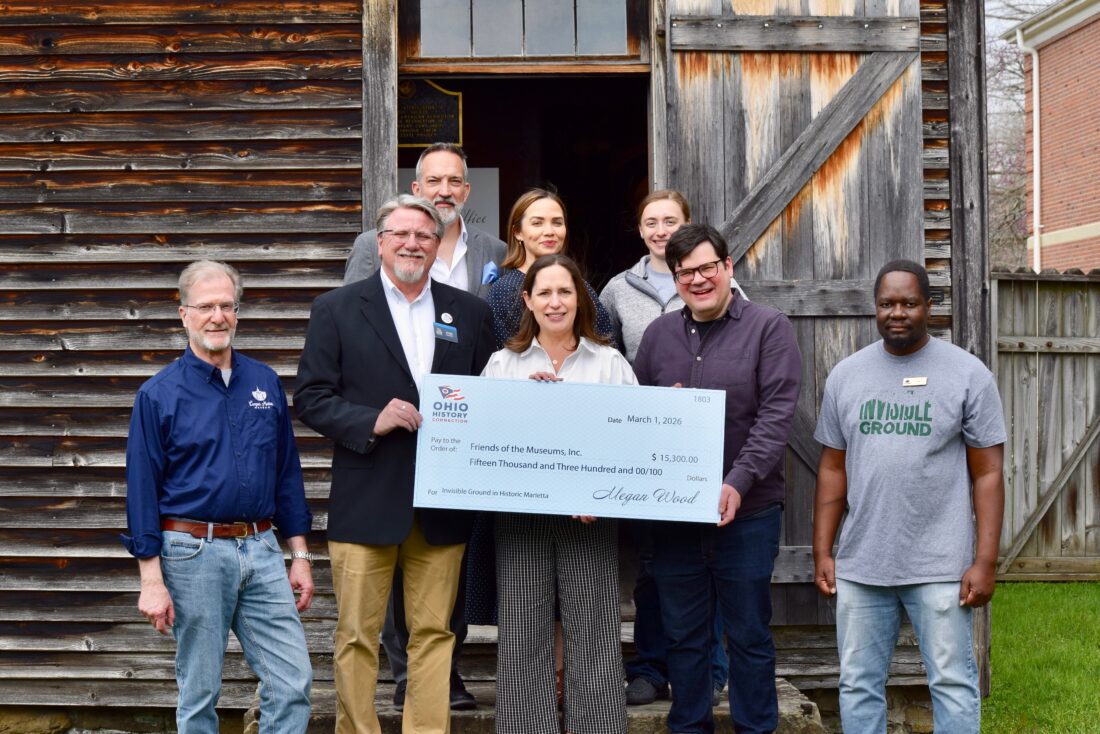
(Photo by Amber Phipps) Campus Martius Museum, Ohio History Connection and Invisible Ground personnel gather at the steps of the Ohio Company Land Office building with a $15,300 check from a grant awarded by Ohio History connection Monday.
Guests will scan the QR codes and use their phone camera to view the structures and historic buildings as they were in their original conditions many years ago. There will be a video and podcast option, which was created by Brian Koscho, the director and producer of Invisible Ground.
“There are about 10,000 people who visit the Campus Martius Museum every year from every county in Ohio and every state in the nation and at least a dozen foreign countries,” said Augenstein. “This is going to give folks an opportunity, if they’re in town visiting, a little more to look at and see and learn about our town.”
As the site manager for Campus Martius, Augenstein said she saw Athens had incorporated the augmented reality program throughout the city and she knew Marietta needed it, too.
She said everyone in the history field was well connected, so she got in contact with Koscho about expanding the Invisible Ground project to Marietta.
“We’ve been talking for about a year or two on how to best approach this project,” she said.
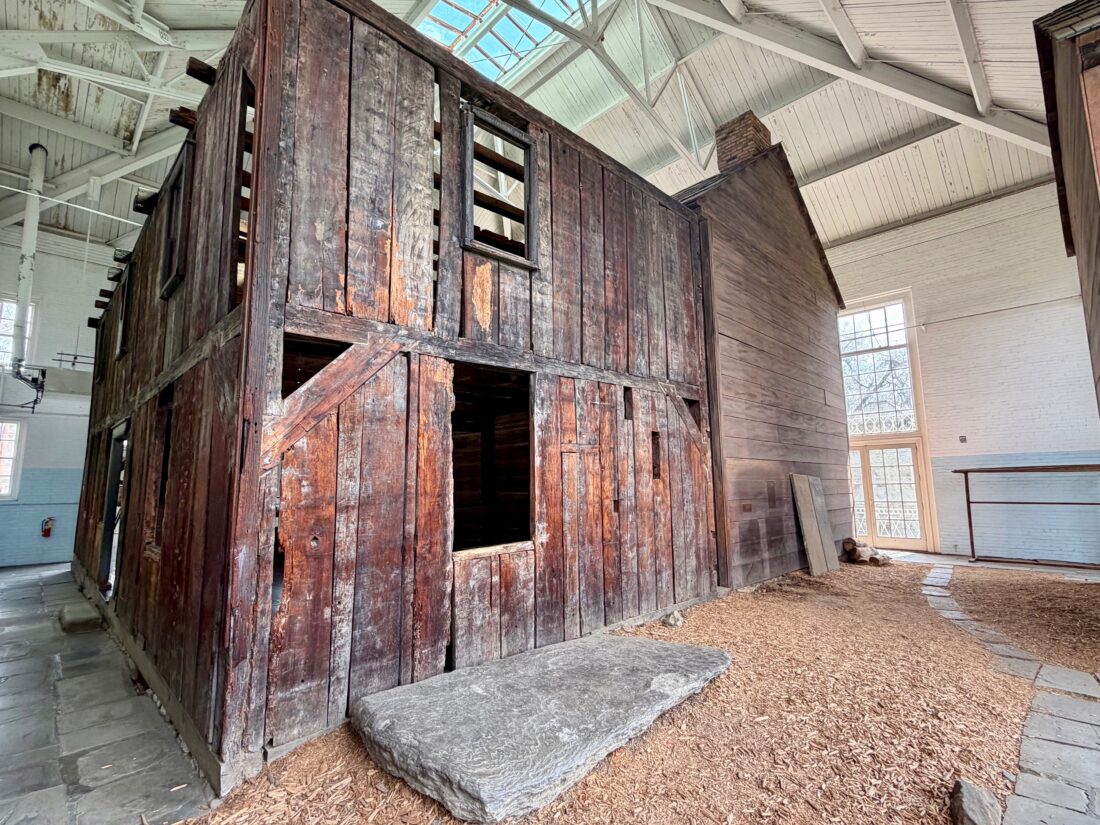
(Photo by Amber Phipps) Rufus Putnam’s home inside the Campus Martius Museum.
Augenstein said the project would create opportunities for tours and school-related partnerships as the project progressed.
“There’s a lot of different ways for people to continue to engage,” she said.
Koscho said the project was inspired by his own passion and excitement about learning something new. He earned his undergraduate degree in social studies education before going back to get his master’s in communication media arts from Ohio University.
“At Campus Martius, they have this wonderful museum here but in some places, the site might not even be there anymore,” he said. “So now you can see it and hear about it and learn about it and connect it to other places.”
He said the program allows people to hold up their phones at a site to view a building from history that might not be standing anymore. There are buildings all across the city of Athens that no longer remain and have newer shops and restaurants in their place.
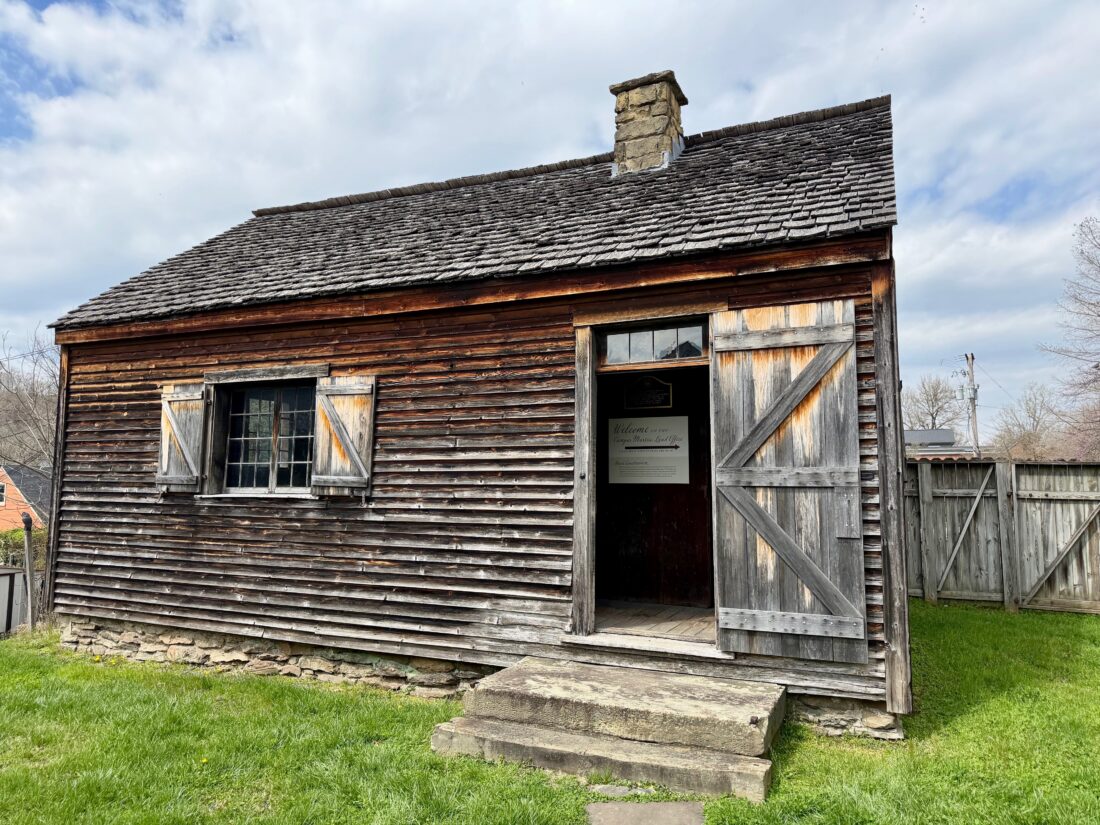
(Photo by Amber Phipps) The Ohio Company Land Office dates back to the creation of Marietta and is one of the oldest buildings in the state of Ohio. The site can be found outside of the Campus Martius Museum in Marietta.
Koscho started the project in Athens with multiple panels around the county for anyone to access.
“As someone interested in history, Marietta is one of those places that I’ve loved for a very long time,” he said. “It just makes so much sense, it’s an expansion and we want to keep doing them in more places around Appalachia Ohio … it’s a natural expansion.”
Augenstein said the Ohio Company Land Office is one of the oldest buildings in the state with its history dating back to 1787.
Koscho said the site panels will be installed for use by the end of summer and beginning of fall.
“Working with someone like Erin (Augenstein) and working with the staff here is really easy because they have a passion for this work and they understand how something like this can help them tell that story,” said Koscho.
He said the history field is close so everyone has connections across the state when it comes to collaborations. He said it’s always easy to work with historians who are passionate about what they do and share that history with the community.
“There’s a lot of incredible stories here,” he said.
To learn more about Koscho’s project and tune in to the podcast go to findinvisibleground.com
The check was presented by Ohio History Connection Program Manager Andy Verhoff who was a previous site manager for Campus Martius.
“This program is funded largely through donations,” said Verhoff. “In Ohio, people can donate a portion of the Ohio income tax refund.”
Verhoff said Ohio taxpayers donated $194,657, which was the second highest amount since the program started in 2012. There were 15 grants awarded this year with a total of 164 grants awarded in the program’s history, which totaled more than $1.8 million.
“We have a review panel that makes recommendations on which grants are funded,” he said. “Our review panel really reacted to this.”
Verhoff said Augenstein’s application was concise and the review panel was familiar with the Invisible Ground project.
“The key is to create different opportunities for people to engage however they choose to do,” he said.
For those interested in donating to the Ohio History Fund, Verhoff said people can purchase an Ohio History Connection license plate for an extra $30 and $20 of that purchase goes to the fund. He said there are other funding source,s but donating through the state’s tax refund and purchasing license plates are the largest sources of funding.
For more information about Campus Martius, go to mariettamuseums.org.
Local News

Ohio House child care bills take aim at fraud, providers say state is solving for lack of a problem

Wood County Commission honors Parkersburg South girls basketball team
Ohio prosecutor pushes back against child care fraud legislation
By Susan Tebben Special to The Times An Ohio prosecuting attorney came to an Ohio House committee personally to ...
Artsbridge releases weekly activity schedule
PARKERSBURG — The Artsbridge calendar for the week: TODAY - Geppetto Woodcarver’s Wood Quilt display, 9 ...
Wood County Commissioners approve budget