Judge orders additional information, time on Parkersburg petition effort
-
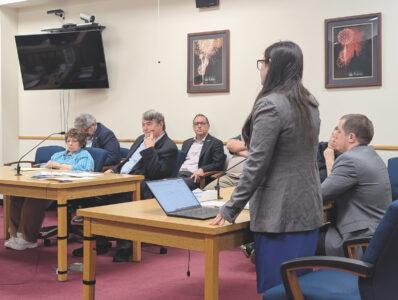
- (Photo by Evan Bevins) ACLU of West Virginia Legal Director Aubrey Sparks, standing, speaks during a hearing Thursday in Wood County Circuit Court as, from left, Parkersburg City Clerk Connie Shaffer, Mayor Tom Joyce, City Attorney Blaine Myers, City Council President Andrew Borkowski and ACLU of West Virginia staff attorney Robb Livingood listen.
-
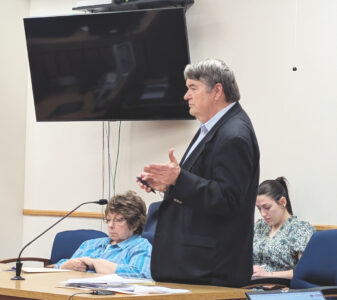
- (Photo by Evan Bevins) Parkersburg City Attorney Blaine Myers, standing, speaks during a hearing Thursday in Wood County Circuit Court as City Clerk Connie Shaffer, left, listens.
-
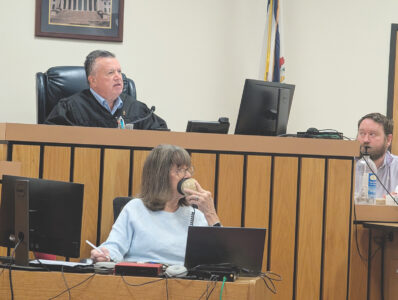
- (Photo by Evan Bevins) Wood County Circuit Court Judge J.D. Beane speaks during a hearing Thursday relating to a referendum petition on a sanitation contract for the City of Parkersburg.
-
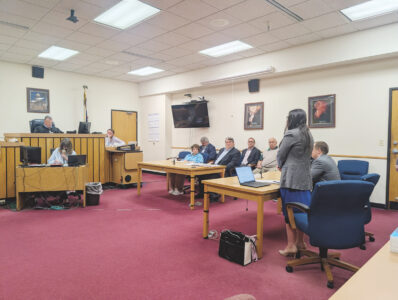
- (Photo by Evan Bevins) ACLU of West Virginia Legal Director Aubrey Sparks, standing, speaks at the start of a hearing Thursday in Wood County Circuit Court.
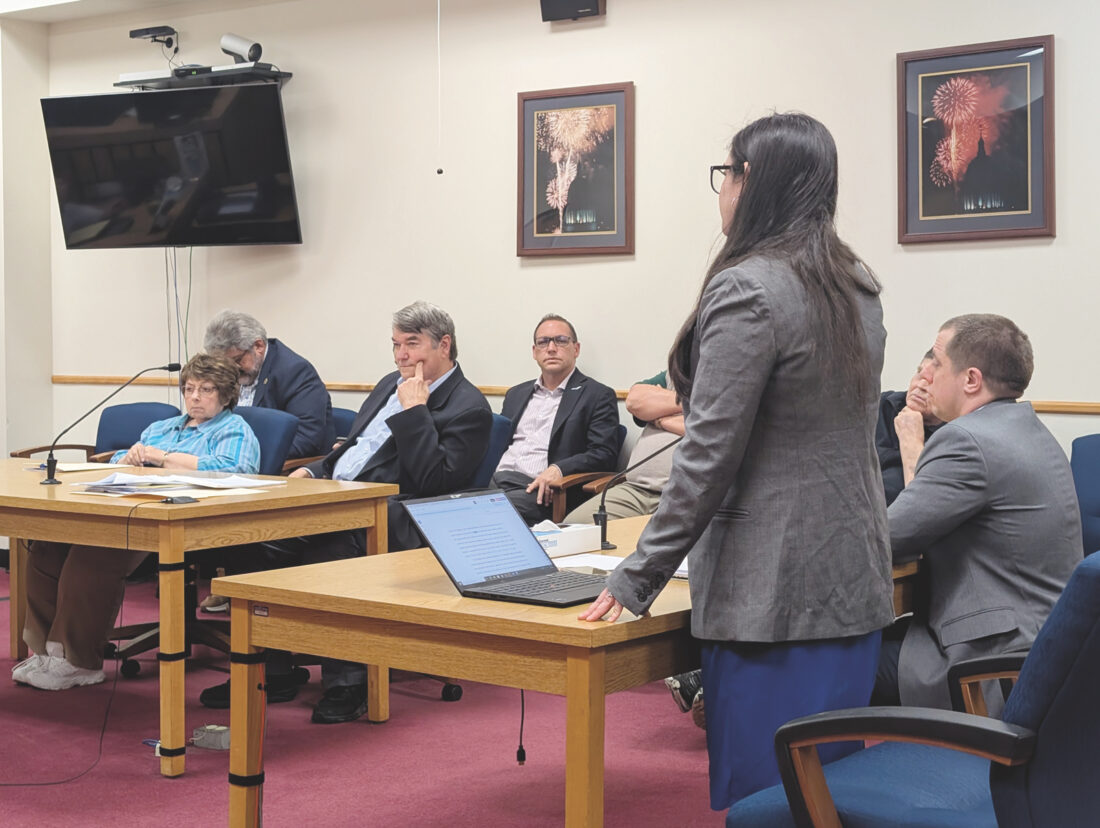
(Photo by Evan Bevins) ACLU of West Virginia Legal Director Aubrey Sparks, standing, speaks during a hearing Thursday in Wood County Circuit Court as, from left, Parkersburg City Clerk Connie Shaffer, Mayor Tom Joyce, City Attorney Blaine Myers, City Council President Andrew Borkowski and ACLU of West Virginia staff attorney Robb Livingood listen.
PARKERSBURG — A potential referendum has prevented Waste Management from signing a nearly $15 million sanitation service contract, Parkersburg’s city attorney said during a hearing over the ongoing petition effort Thursday.
The process will last a little longer after Wood County Circuit Judge J.D. Beane ordered the clock could not start on efforts to cure the petition’s lack of required signatures until the petitioners receive more information about why nearly 900 signatures were declared invalid.
The ACLU of West Virginia is now representing the group that started the petition drive in the wake of Parkersburg City Council’s 6-3 votes in January to authorize Mayor Tom Joyce to sign the contract. Officials have said staffing issues in the Sanitation Department have made it impossible for the city to continue providing the service, while residents opposed to the contract argue not enough efforts were made and want to see the department restored.
The petitioners filed a motion before Beane seeking information on why 862 of the 2,953 signatures were declared invalid.
A minimum of 2,763 signatures – 15% of the city’s registered voters in the 2024 general election – are required to put the ordinance back before council. If council does not vote to repeal the ordinance, the question would go before voters.
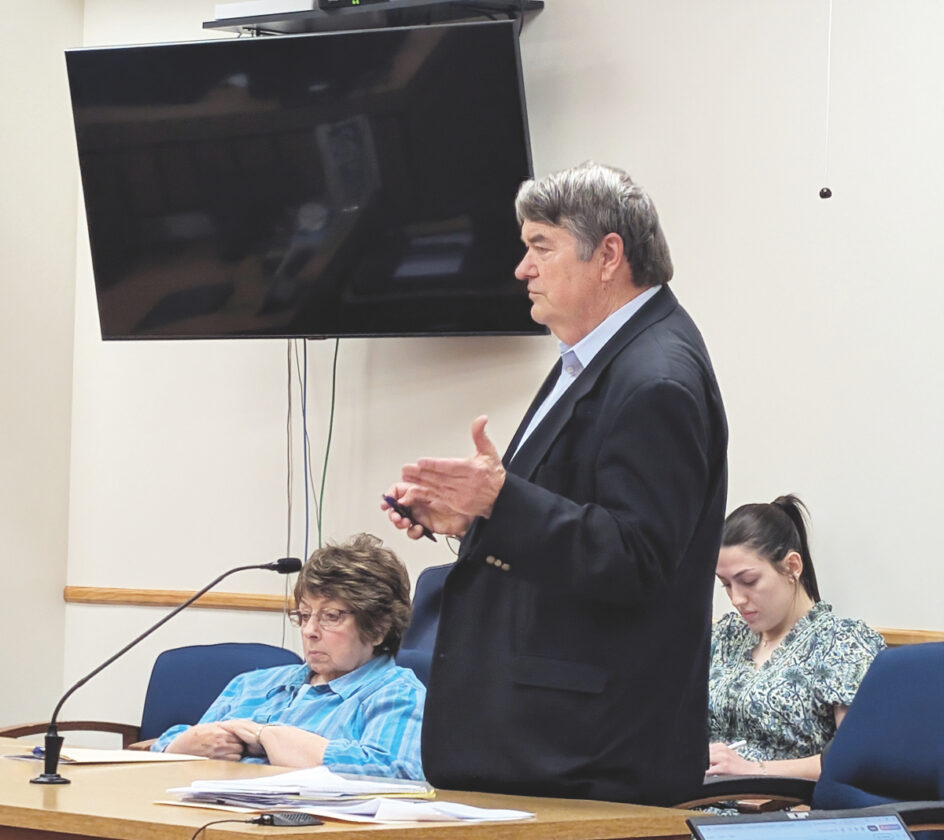
(Photo by Evan Bevins) Parkersburg City Attorney Blaine Myers, standing, speaks during a hearing Thursday in Wood County Circuit Court as City Clerk Connie Shaffer, left, listens.
Parkersburg City Attorney Blaine Myers has argued the ordinance is not subject to the referendum petition in the municipal charter because it involves the allocation of funding. And city officials have said even if the ordinance and contract were invalidated, the Sanitation Department would not be restored.
ACLU of West Virginia Legal Director Aubrey Sparks argued before Beane Thursday morning that the city did not properly certify the petition as invalid because it did not include “the particulars wherein it is defective,” as stated in the charter.
“It didn’t say which signatures were held to be valid, which signatures were held to be invalid,” she said.
While the committee did recently receive the list of 2,091 signatures certified as valid, not having the ones declared invalid prevents individuals from challenging that finding or correcting the issue, if possible, Sparks said.
Myers said the city does not have access to that information because the signatures were reviewed by the Wood County Clerk’s Office. The clerk has access to voter information the city does not.
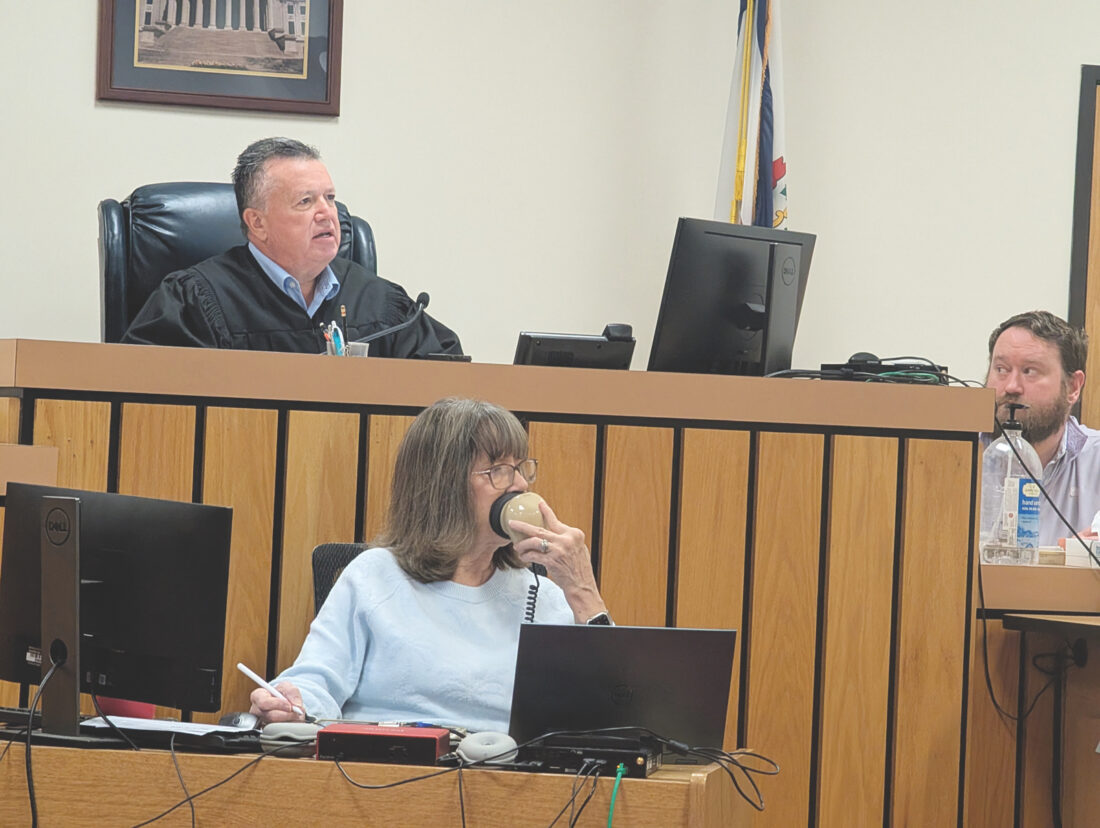
(Photo by Evan Bevins) Wood County Circuit Court Judge J.D. Beane speaks during a hearing Thursday relating to a referendum petition on a sanitation contract for the City of Parkersburg.
“It’s defective because they don’t have enough validated signatures,” Myers said.
Beane disagreed, saying in an order issued Thursday afternoon that requiring the city clerk to specify the particulars in which a petition is defective “plainly means providing more information than simply whether the petition has a sufficient or insufficient number of signatures.” He cited case law indicating there are proper and improper reasons for invalidating signatures on a petition.
“The reasons for invalidating those signatures must have been known to the petitioners for them to have been able to challenge the invalidation in the first instance,” the order says.
Also in dispute was when the 10-day period to cure an insufficient petition begins. Myers argued it started March 19, when a representative of the petition committee received a notification via certified mail from City Clerk Connie Shaffer that the petition was insufficient.
“There’s a 10-day period to get additional signatures,” Myers said. “We’re looking at a 75-day process, which this charter never contemplated.”
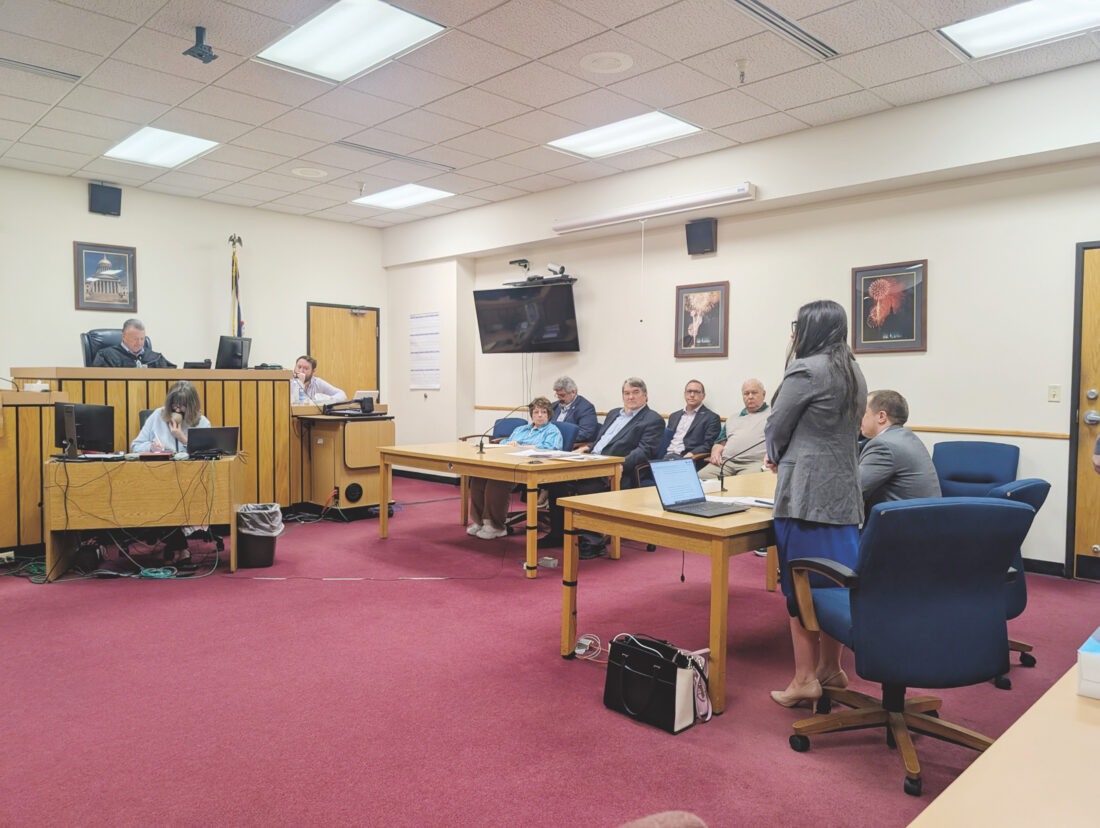
(Photo by Evan Bevins) ACLU of West Virginia Legal Director Aubrey Sparks, standing, speaks at the start of a hearing Thursday in Wood County Circuit Court.
The charter says an ordinance is subject to a referendum petition for a period of 30 days after adoption. Once the city clerk determines if the petition is sufficient, for which the charter allows 20 days, petitioners have another 10 days to fix the issues.
The petitioners sought an extension of the initial period based on the frigid winter weather in January, and the city agreed to an additional 15 days.
Beane questioned the petitioners’ ability to cure an insufficient petition without knowledge of why certain signatures were invalidated.
“If there’s a cure period, what good is it?” he said.
Myers said the city would comply with Beane’s ruling, whatever it was, but objected to extending the signature-gathering period.
“You’re rewriting the provisions of this charter by doing this,” Myers said. “And I don’t believe the court has the authority to do that.”
He added that if that was Beane’s decision, he believed it would be subject to appeal.
Beane ordered the city to obtain from the county clerk a list of the invalidated signatures and the reasons why they were declared invalid.
“Once this list is created, it shall be filed with the Court, and delivered to all counsel of record, at which point the (10-)day cure window shall commence,” the order says.
Myers said additional delays will cause further problems because “the city is hanging by a thread providing sanitation services.”
The department, budgeted this year for 27 employees, was recently down to just four. Workers from the Streets and Parks departments have been called in and paid at a time-and-a-half rate to cover, and temporary employees, including from the Parkersburg Correctional Center have been utilized.
“This is not sustainable,” Myers said. “We are at the end of our rope being able to provide an essential service. … We don’t have a department anymore.”
Sparks said the ACLU of West Virginia got involved because they are concerned about the restriction of people’s rights to engage with their democracy.
Local News
Marietta College to host lecture on Holland brothers’ journey from enslavement
Unpuzzled Parents Connect brings autism training to regional first responders

Wood County Commission approves tentative budget
Lawsuit against ICE from ACLU of Ohio alleges warrantless arrests, citizens detained, other abuses

Residents continue to question Waterford data center project