Washington County Commissioners say they don’t approve data center tax abatement
Commissioners discuss property tax reform possibilities
-
- (Photo provided) Two coolant distribution units in a server aisle at the New Albany data center campus in central Ohio help keep servers cool to keep them operating efficiently.
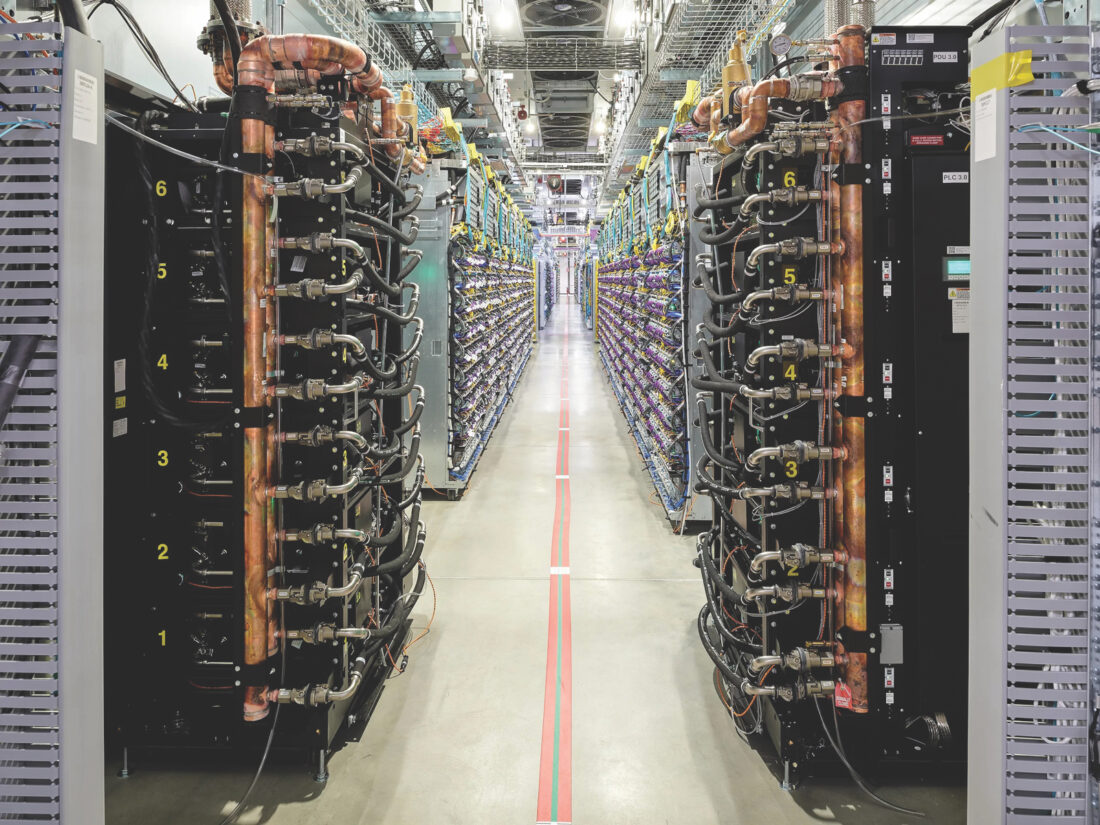
(Photo provided) Two coolant distribution units in a server aisle at the New Albany data center campus in central Ohio help keep servers cool to keep them operating efficiently.
There were questions from Washington County residents regarding the communication between the commissioners and the developers of the proposed data center in Waterford during a meeting Thursday.
“About every other day there’s communication and we’re stressing that we want to have a public meeting and we want to make sure that questions are answered,” said Commissioner Charlie Schilling.
Washington County resident Lois Morris asked about the proposed tax abatement and said if the data center developers weren’t going to cooperate with the community then they shouldn’t be given a tax abatement.
Commissioner Eddie Place said the state provides the tax abatement, not the commissioners.
“I want to be very clear that we’re not giving the tax abatement,” said Place. He said they aren’t the ones who approve or disapprove it, the state does.
He said the state can give a 75% tax abatement on real estate and it doesn’t go through their office.
“We’re giving them the other 25% because … there may not be property tax if it hits the ballot, so we’re negotiating a payment in lieu of taxes,” he said.
Schilling said once they have more information, they’ll be able to have a public meeting to discuss the details with the public.
“I think there’s going to be a better understanding of what a PILOT looks like compared to an abatement and what that looks like for the community and all of the entities involved,” said Schilling. “We’ll be happy to share that information when it’s available but it’s not even available to us.”
Washington County Veterans Service Commissioner Brad Webb advised the community to stay informed on the property tax reform if it were to appear on the ballot this year.
“Try to educate yourself the best you can on which side you want to choose on this, because you will affect this county and a lot of other counties with your vote,” he said.
Webb said he wasn’t telling people which way to vote but know that getting rid of property tax would get rid of funding for local entities.
“We know tax reform is needed but try to educate your neighbors and yourself on what’s at stake here,” he said.
The commissioners approved a letter of support to designate a section of State Route 555 as Freedom Road. The resolution was presented to the commissioners by Washington County resident Keith Nelson who said he’s been working on this project for a while.
“I’ve been thinking about this since before COVID and it just got pushed under the rug,” said Nelson. “I said, ‘it’s time to stop talking and do something about it.'”
The project will designate SR 555 beginning at Little Hocking and ending at the Washington/Morgan County boundary.
Freedom Road roughly follows the path of the Underground Railroad based on documentation and written history passed down through generations.
There are Underground Railroad markers in Little Hocking, Bartlett, and Cutler in Washington County.
According to Nelson, those markers were identified by historian and author Henry Robert Burke who discussed these markers in his research at Marietta College and published books.
Nelson said in order to designate Freedom Road, he was required by state legislators to obtain a letter of support from every county commission for each county where the project is located.
“This is something that we’ll happily support,” said Schilling.
Washington County engineer Roger Wright wasn’t present for the meeting, however, the commissioners approved the Hune Covered Bridge specifications.
According to the engineer’s document presented to the commissioners, the funding for the project would be provided through three sources.
The plans and specifications for the Hune Covered Bridge include:
≤Transportation Alternative Program: consists of 95% federal funds increased to a maximum of $2,000,000.
≤Buckeye Hills Regional Council Rural Transportation Planning Organization: consists of 100% federal funds totaling a maximum of $198,394.
≤Capital budget from 2019: $75,000.
The engineer’s estimate for the rehabilitation project was $2,240,021. The final amounts for the project would be determined once the project is bid. In the document from the engineer, the bid opening date would begin at 10 a.m. on April 28.
Local News
Marietta Main Street’s April First Friday: Happy Birthday, Marietta
Pomeroy water system receiving EPA funds
From staff reports COLUMBUS — Ohio Rep. Kevin Ritter, R-Marietta, announced this week that the Ohio ...

Wildlife photographer Dianne Wigal featured at WesBanco
Williamstown High School presents Local School Improvement Council Showcase
Washington County Commissioners say they don’t approve data center tax abatement