
Mussel boats once ruled Ohio River
Trending
The Betty Hartshorn book, Anatomy of a Moonshine Town, has stirred interest in the history of Beavertown. Various endeavors of an economic aspect concerning the community is our topic in today's column.
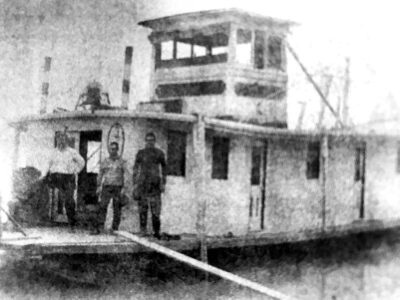
The Ohio River was flush with water mussels before the waterway was abused as a dumping ground by various plants constructed in the valley. During the pristine years these mussels provided a good living for the citizens of Beavertown. There was once a small fleet of mussel boats primarily owned by the Beaver and Mount families but which employed many residents. The men manned the boats, but women and children were also involved in the enterprise.
Mussel boats were equipped with poles roughly 10 feet long having about 40 lines hanging down from each pole. Each of the lines contained sturdy wire hooks with four blunted barbs.
The hooks would drag along the river bottom as the boats drifted and mussel shells would clamp shut over the barbs as they passed. They never let go. Once the boats were full, the catch was brought to shore for a processing which involved the women and children.
The mussels had to be completely cleaned. The women had huge fires on the shore, and they would fill big iron pots with the mussels.
After the mollusks were cooked, the shells had to be completely cleaned out which involved the children in this job.
And they didn't eat the mollusks. What they were after were the shells because this was the material from which buttons were produced in that time period. And it just so happened there was a button factory in Saint Marys, WV only a few miles downriver from Beavertown.
Mussels have now become so rare in the river that it is now illegal to attempt to catch them.
There were other boats in addition to the mussel boat fleet. The Beaver family owned at least two packet boats. Their names were Beaver No.1 and ,of course, No.2. Members of various households were crewmen aboard the boats. The Dec. 17, 1914 edition of the "Matamoras Enterprise" stated, "Beaver No.2 is going to run excursions to Marietta this week. Now is time to do your Christsmas shopping!"
Next week we will get to the main topic of the Betty Hartshorn book...moonshine.
John Miller is president of the Matamoras Area Historical Society. Membership dues are $15 per year single/couple. Life membership is $150. Contact the society at P.O. Box 1846, New Matamoras, Ohio 45767. Much of this column is built on the work of Matamoras' historian, the late Diane McMahan.