
Know Before You Grow: Tips for homegrown tomatoes
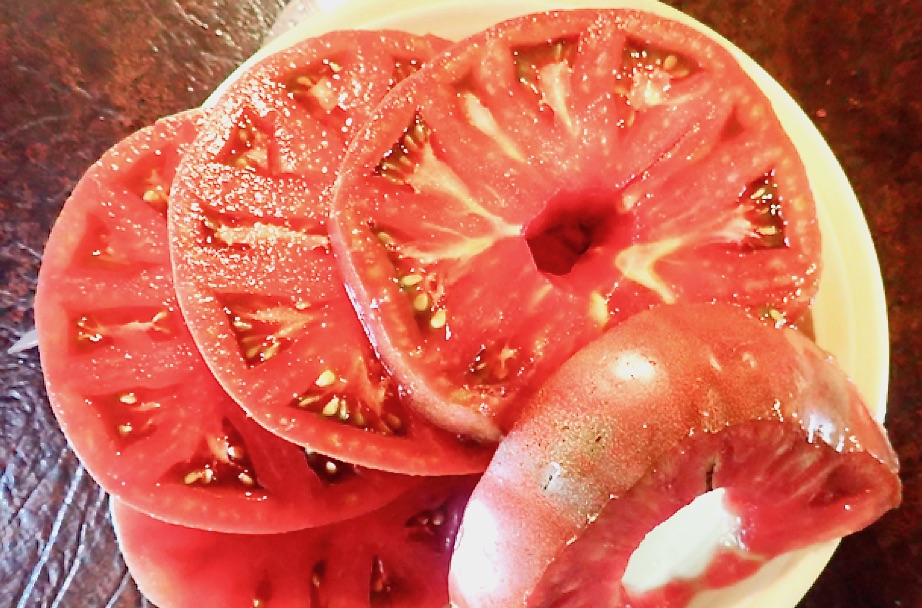
Photo Provided
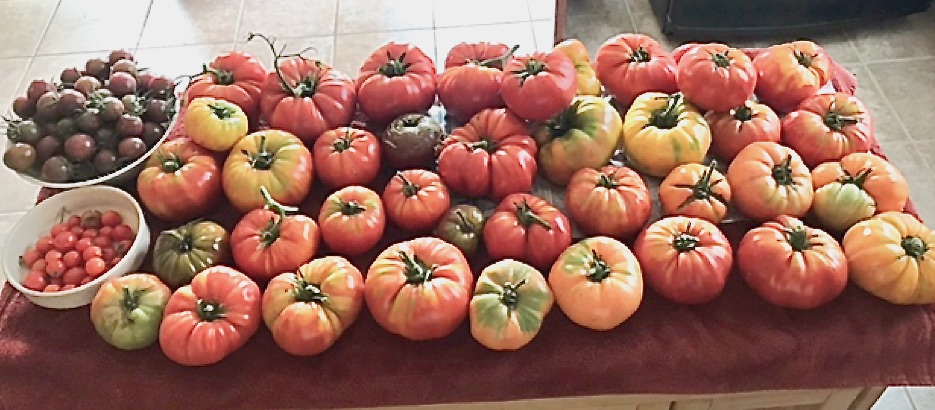
Photo Provided
Photo Provided
Photo Provided
Trending
"Only two things that money can't buy and that's true love and homegrown tomatoes." (Guy Clark)
As the song says, "Wha'd life be without homegrown tomatoes?" Of all the vegetables that can be grown in the backyard garden, I suspect that tomatoes are the most popular and for good reason, there really is no substitute. Commercial growers have tried valiantly to produce a tomato that will withstand the rigors of premature harvest, shipping, storage and setting in the grocery store waiting to be bought and still deliver the incomparable taste of a homegrown tomato but have yet to even come close.
If you already know the exquisite taste of a homegrown tomato, you probably already know how to grow them but perhaps a little review of the basics may be helpful.
Tomatoes are a warm weather crop that will not survive even a lite frost so in our area, they are usually started indoors from seeds in mid-March or started plants are purchased and set out in the garden after the danger of frost has passed. In case of a late frost, plants in the garden can be protected by covering but it is unlikely that they would survive an extended period of sub-freezing weather. Not to worry however, plants set out even in late May to early June will mature and produce fruit well before the first frost.
Set young plants deeply, up to the first set of true leaves, into a rich, well aerated soil with a slightly acid pH (6.5 to 7). They are heavy feeders so they will benefit from the addition of compost and/or fertilizer. Some additional calcium will help in the prevention of blossom end rot (I use crushed eggshells with good results). About one inch of water per week once they get established is usually sufficient and excess watering can cause the fruit to crack.
There are two types of tomato plant based on their growth habit, determinant and indeterminate. Determinant plants are fairly compact and may spread laterally. They do not require staking or pruning, and the fruit ripens over a fairly short period of time. Indeterminate types grow as long vines that require both staking and some pruning. They keep growing and producing fruit right up to the first frost of the fall.
It is advisable however to top off the plants about mid-September by removing the top 3 or 4 inches of each branch to encourage ripening of the still green fruits on the plant. As an illustration of the vigor of some of these indeterminate types, I had one tomato plant (Matts Wild Cherry) that appeared so tall that I decided to measure it.
It had grown to the top of an eight-foot stake, back to the ground and trailed along the side of the garden for some distance. When I pulled it out in the fall, I stretched it out and measured it -- 38 feet from tip to soil line!
The lesson here is to use tall, sturdy stakes as a plant loaded with fruit is quite heavy and can easily overwhelm a lesser stake and fall over, a situation that is very difficult to correct.
Beyond the two basic types, there is an exciting world of tomato varieties to explore, although there are far more indeterminate types than determinant ones. Start with fruit size. Varieties range from tiny little fruits that are harvested like picking berries to some whoppers that average over a pound apiece and every size in between. Tomatoes are colorful too and can range through the spectrum from green, pale to deep yellow and orange to red as well as shades of blue, purple, and chocolate brown. They are not monochromatic either, many are striped and multicolored as well, some of them quite beautiful.
Besides growth habit, size and color there are other considerations in choosing a variety also including resistance to a variety of tomato diseases and whether to plant hybrid or open-pollinated or heirloom varieties. Generally, hybrids are more likely to be disease resistant than heirloom varieties. Usually, you will see a series of letters following the name of a variety. These letters indicate the diseases the variety is resistant to, for example V (verticillium wilt), F, FF, or FFF (various fusarium wilts), Eb (early blight) and Lb (late blight). Although hybrids are typically more likely to have some disease resistance, heirloom varieties are often prized for their superior taste or other qualities. To avoid diseases, particularly when choosing heirloom varieties, a 3 or 4 year rotation is recommended.
In my garden I usually plant four favorite heirloom varieties each season and one or two more "new" ones to try.
Once in awhile I discover one good enough to replace one of the four regulars, the most recent "discovery" being the Kellogg Breakfast tomato. Unfortunately, if you want to be able to choose from the many hundreds of varieties available, you will need to purchase seeds and start your own plants. Although some nurseries now offer a broader selection than in years past, they cannot possibly offer all of the available varieties. Think of it as a whole new gardening (and eating) adventure. Happy gardening!
Bob Rothwell has been an OSU Extension Master Gardener since 2010. He is the chair of the OSU Teaching Gardens located at the Washington County Health Department. His gardening interests include vegetable and fruit production, native meadow plants, and backyard birds.