
First Germans assist pioneers
Trending
People of German heritage were among the earliest white settlers of Ohio. The German states in Europe were experiencing famines and political struggles, and people were eager to come to the land of plenty where citizens were allowed to participate in local government. Many migrated to the eastern states in the 1700s and a few along the Ohio River. However, before the great migration occurred in Washington County, some notable Germans were assisting in making the path ready for settlement.
Following his service as a ranger for the Virginia militia, Peter Nyghswonger, son of German and Swiss parents, was a frontiersman along the Ohio River. He was a defender of Wheeling and Fort Henry from Indian attacks, and scout who had a cabin on the island near the Muskingum River. During the Indian Wars of the 1790s, Nyghswonger and family lived in the early Marietta citizen fortification known as Picketted Point located at the confluence of the Ohio and Muskingum Rivers. Perhaps he could be called the first German settler!
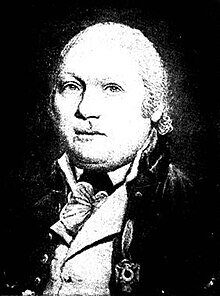
As settlements were being established in the land north and west of the Ohio River, the treaties and land disputes with the Native Americans were growing as well as a military presence. David Ziegler, a German who immigrated to Pennsylvania in 1775 and had served in the American Revolution with other German immigrants, later served with Lt. Col. Josiah Harmar in the Ohio Valley. In 1789, Ziegler, promoted to major by President George Washington, led a military escort of Native Americans to participate in the Treaty of Fort Harmar. While stationed at the fort, Ziegler married Lucy Anne Sheffield, who had come to Marietta with her mother, as she was a shareholder in the Ohio Company with her late husband, Colonel William Stacy. Ziegler participated in the unsuccessful Northwest Territory military campaigns against the Native Americans led by Josiah Harmar and Gen. Arthur St. Clair. Historian Dr. James O'Donnell wrote: "Ziegler was one of those absolutely dependable soldiers and public servants to whom the new country owed a great debt." Following the Indian War, the family moved to the Cincinnati area in the late 1790s where Ziegler was elected as the first mayor. John Heckewelder, missionary of the German-speaking Moravian Church, was an interpreter of Indian languages and noted for his knowledge of Indian customs, particularly in the Northwest Territory. He became known as a mediator between native people and the new American government when hostilities broke out in 1790. In 1792, as per request of President George Washington, Heckewelder agreed to act as a commissioner for the U.S. government on a mission with Gen. Rufus Putnam. He served as an intermediary between Putnam and Native Americans at the Post Vincennes to draw up a treaty. Heckewelder's journals about the Ohio Valley were published in the European German states in 1797 making Germans aware of new opportunities in the Northwest Territory.
Marietta struggled to grow in the Ohio frontier. Indian wars, clearing of land for crops, isolation, epidemics, and lack of new settlers hindered its prosperity. In 1834, Marietta leaders formed the Emigrant Association of Washington County in order to attract new settlers. Agents of the group distributed flyers in port cities, such as Baltimore, urging people to consider settlement in the Ohio Valley. Shortly, the Germans would be on their way!
More information about the great migration of Germans to Washington County will be in a later column.
Jann K. Adams is a WCHS member. To learn more about Washington County Historical Society services and membership call 740.373.1788 or visit wchshistory.org.