
Early Marietta: A wounded soldier goes home
Trending
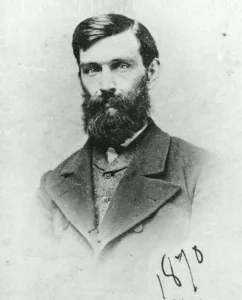
They called it the “War of Rebellion.” Southerners used the understated phrase "The Recent Unpleasantness,” as though the Civil War never happened. Over 600,000 perished from combat and illness. Many more were wounded. A seriously wounded Union officer of the 53rd Ohio Voluntary Infantry could have died but recovered. Lieutenant Colonel Ephraim Cutler Dawes tells of his harrowing experience in Service with the Sixth Wisconsin Volunteers, authored by his brother, General Rufus Dawes. Here’s an edited version.
“I was shot at Dallas, Georgia. We were in rifle pits. The rebels charged us. We gave them an awful licking. The bullet struck the left side of my lower jaw. It took off my lower lip, tore the chin so that it hangs down, took out all the lower teeth but two…It will disfigure me, but the doctors say they can fix up a face for me.
"It happened May 28, 1864; I remained in the field hospitals until May 30. (Cutler credits several surgeons for their careful attention to him). They advised me to ride in a wagon train to the railroad station at Kingston GA. Remaining at the hospital risked contracting gangrene or a deadly infection. The wagon ride was very rough. I sat on a bag of corn. My wound was much inflamed and my tongue so swollen that it was almost impossible to swallow. The misery of that night's ride was indescribable. The next day we crossed the Etowah river. As we passed a house, a woman brought out a bowl filled with buttermilk…I was weak with hunger, faint from loss of blood, and burning with thirst. Despite the awful pain, I drank nearly the whole of the buttermilk. It revived me at once.
"At Kingston, the wounded were cared for in a house. A woman brought me soup. I took off my bandage to drink it. She saw my wound, burst into tears, and ran away. An older surgeon on seeing the wound turned very white and left. I went out myself to find a surgeon. Fortunately, I found my good friend brigade surgeon Dr. Edwards. He spent an hour dressing my wound; I slept well.
"Next day, June 1st, we were transported to Chattanooga on a train, riding in empty freight cars. Despite their wounds, all were in high spirits. I went to sleep, but at Ringgold, woke with a start to find my bandages drenched with blood. At Chattanooga a nurse there was a wounded soldier. He knew exactly what to do, dressed my wound carefully, fixed a cot so that I could rest. I took a train to Nashville at 3 P.M., June 2nd. This trip was the most trying experience of all. My wound was sloughing freely, my tongue was very much swollen and it was almost black. At Nashville, under the efficient care of Dr. J. H. Green, I improved rapidly and left for home June 6th.”
Lt. Colonel Dawes was fortunate to have his jaw and lip reconstructed in an innovative procedure by Dr. George C. Blackman.: “…a lower lip was made for him by material taken from his cheek, and the point of his jaw replaced by an artificial one.” Though recovery was slow, he was able to regain his speech and somewhat normal function. He eventually began a successful business career in Cincinnati. He enjoyed a lifelong passion for history, compiling documents about the war and writing several local history books - used today for reference material. He died in 1895 and is buried in Oak Grove Cemetery in Marietta.
Dawes resumed a mostly normal life. Tens of thousands of others - and their families - suffered from permanent disabilities in what Abraham Lincoln called "this mighty scourge of war."