
Early History: The Parkersburg Resolves and West Virginia Statehood
Independence Hall at Wheeling, summer 1861 during Second Wheeling Convention for statehood. (Photo provided)

Scan to read full text of Parkersburg Resolves.
Independence Hall at Wheeling, summer 1861 during Second Wheeling Convention for statehood. (Photo provided)
Scan to read full text of Parkersburg Resolves.
Trending
West Virginia became a state in 1863 during the Civil War by separating from Virginia. It was a complex effort, unique in American history – due to 3 main factors: passionate motivation, slavery, and constitutional issues. Wood County leaders played a leading role.
MOTIVATION: In April 1861 the United States were no longer united. Eight states had passed an “Ordinance of Secession.” Virginia was next on April 17. Delegates from northwestern Virginia wanted no part of it and voted 30-17 OPPOSING secession. A pro-Union letter written by Arthur Boreman explains why: "Why should we risk a new government in the south when we are already governed by the best constitution ever and God given freedoms which might disappear under a new government…" Western Virginians resisted being dragged into secession by wealthy eastern plantation owners.
Local opposition began before Virginia actually seceded. A mass meeting on January 1, 1861, chaired by Wood County legislator John J. Jackson, passed the Parkersburg Resolves protesting secession. Its main points were 1. Secession was unconstitutional and “fatal to the Union,” 2. “Our grievances” could be resolved within the Union “under the constitution.” 3. Our “national prosperity, happiness, and future security depend on preserving the Union…” After the Virginia secession vote, leaders quickly organized a convention in Wheeling to oppose it.
SLAVERY: Northerners wanted to abolish slavery. But many West Virginians accepted or were indifferent to slavery; some leaders were slave owners. Ironically, some thought staying in the Union would preserve slavery since it was permitted then. One of the “grievances” mentioned in the Parkersburg Resolves was a “violation of the Constitutional rights of slaveholders” by the free states (certainly including Ohio). The “God given freedoms” mentioned by Arthur Boreman did not exist for slaves in the slaveholders’ world view. The initial West Virginia constitution permitted slavery, though Congress wisely required a no-slavery clause.
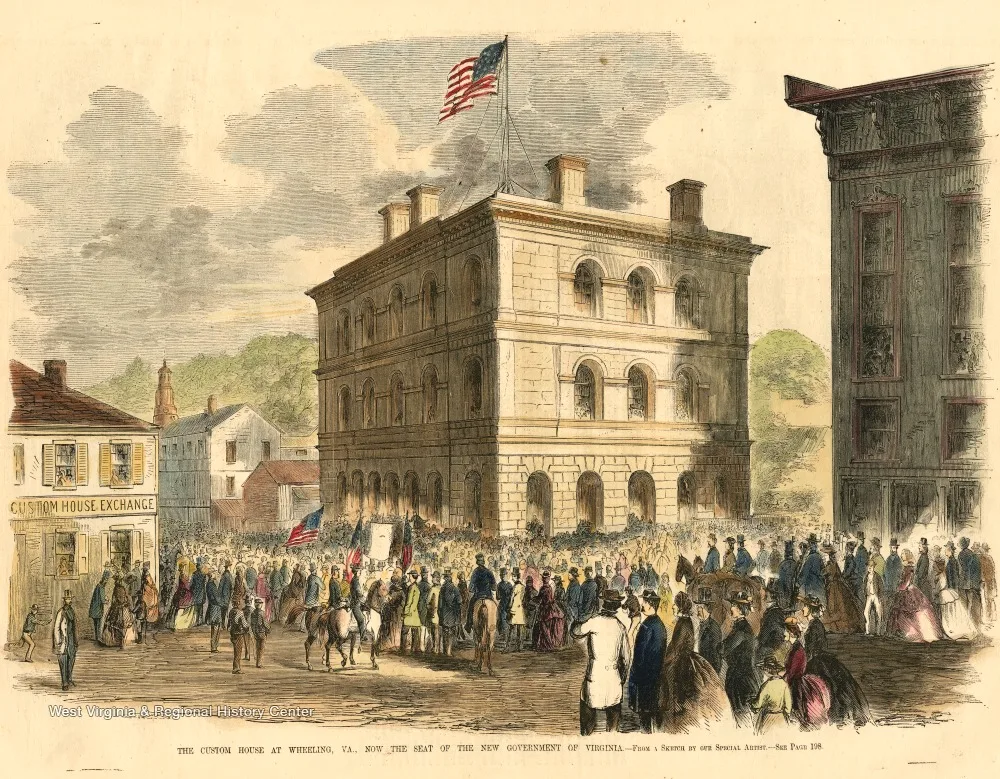
CONSTITUTIONAL ISSUES: At the first Wheeling Convention on May 13, 1861, John Carlile, a fiery former politician and slave owner, urged immediate creation of a new state. Wood Countians Boreman and Jackson counseled a more careful approach. The challenge was that the U S Constitution required approval of the state of Virginia to create the new West Virginia. No way would Confederate Virginia approve that. So, the Second Wheeling Convention in June 1861, devised a solution: they declared the Confederate Virginia government illegal. They then established the "Restored Government of Virginia" in its place. Their reasoning was that since Virginia had abandoned its authority by seceding, a successor Union government could fill the void. Pretty convoluted, but clever. Fortunately, President Lincoln recognized this as the legitimate Virginia government - a crucial step.
Next the Second Wheeling Convention approved creation of the new state, initially named Kanawha, on August 20, 1861. Voters overwhelmingly approved: 18,408 to 701. A Constitution for West Virginia was completed and ratified by voters on April 3, 1862. The restored legislature of Virginia gave the required constitutional consent on May 13. Then on to Congress. After 7 months of debate, the statehood bill passed on December 10. President Lincoln signed it on December 31, 1862. Statehood became official June 20, 1863. Arthur Boreman became the first governor.
Historians and legal scholars have debated the legality of WV statehood on several points. Examples: The Wheeling Convention was not a legally constituted body, and its delegates were not elected. Elections on statehood issues did not always allow eligible voters to vote., especially counties under Confederate control. The Restored Government of Virginia concept had no legal precedent. The legality of the statehood process was ultimately validated by the Supreme Court Decision in Virginia v. West Virginia in 1871. West Virginia, born in conflict, survived and thrived.