
Up for Debate: Candidates for Ohio governor face off at Marietta College
Candidates for Ohio governor face off at Marietta College
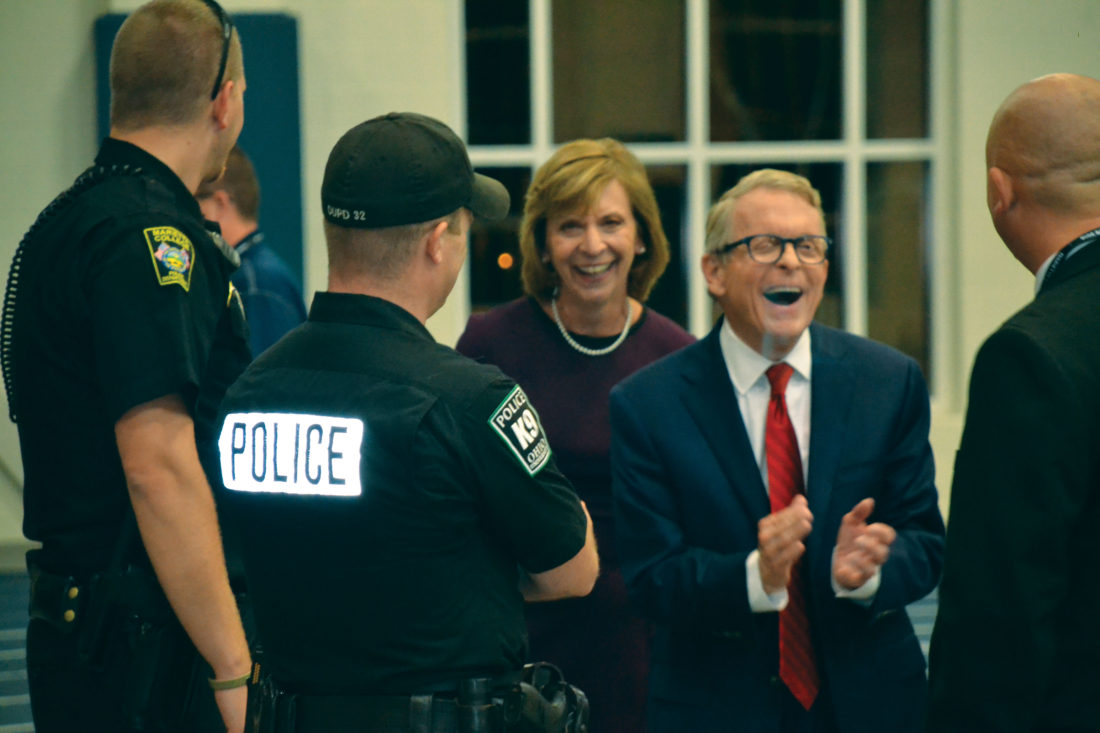
MICHAEL KELLY The Marietta Times Mike DeWine, Republican candidate for governor and Ohio attorney general, and his wife, Fran, talk to security personnel before a press conference at Marietta College following a debate with opponent Richard Cordray on Monday night.
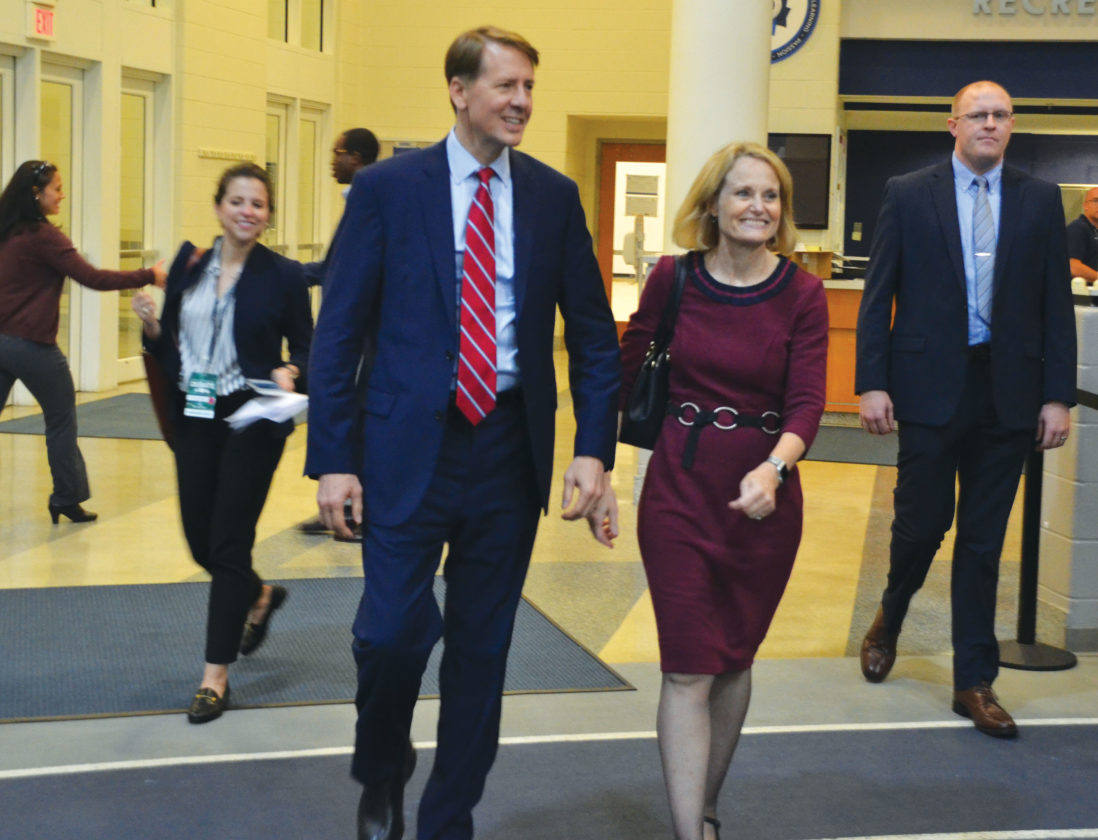
MICHAEL KELLY The Marietta Times Richard Cordray, Democratic candidate for governor, walks with his wife, Peggy, through the Ban Johnson Recreation Center at Marietta College for a press conference Monday night after a debate with opponent Mike DeWine.
MICHAEL KELLY The Marietta Times Mike DeWine, Republican candidate for governor and Ohio attorney general, and his wife, Fran, talk to security personnel before a press conference at Marietta College following a debate with opponent Richard Cordray on Monday night.
MICHAEL KELLY The Marietta Times Richard Cordray, Democratic candidate for governor, walks with his wife, Peggy, through the Ban Johnson Recreation Center at Marietta College for a press conference Monday night after a debate with opponent Mike DeWine.
Trending
MARIETTA - Health care, guns, rural economic development and education were the general topics on the minds of Ohioans who submitted questions for the second of three debates between gubernatorial candidates Richard Cordray and Mike DeWine.
The debate, at Marietta College, was organized by the NBC Columbus affiliate WCMH-TV and WTAP-TV in Parkersburg, and the moderator was Columbus news co-anchor Colleen Marshall. Candidates were given 90 seconds to reply to questions and took turns going first. The televised debate lasted an hour.
DeWine got the first opening statement, touching briefly on the "cheapest natural gas in the world" available in southeastern Ohio and the competitive edge it will give the region, a 12-point plan to deal with illegal drugs and the opioid crisis, and an education plan that included early childhood development and taking career centers "to the next level up."
Cordray said he wanted to focus on health care and accused DeWine, the Ohio attorney general, of failing to protect Ohio consumers from price gouging and opposing Medicaid expansion.
DeWine, who opposed the expansion until a few months ago, said he supports it but proposes to include a work requirement as part of qualifications.
Asked what they would do to address escalating concerns about gun violence, DeWine said he would try to get at the root causes by directing mental health services to students and teachers, and create a center to focus on social media, where indications of mass violence can sometimes be detected before killings happen. He said schools should provide school resource officers - armed law enforcement personnel - who would have an opportunity to interact with students as well as protect them.
Cordray said the government has to be "more realistic" about preventing violence with measures that could include universal background checks and outlawing "bump stocks" - attachments to rifles that allow near-automatic firing - and high-capacity magazines.
"We have to exert leadership and face the real problem," he said.
Asked about "right to work" legislation - the concept that workers should not be compelled to join labor unions in closed shop operations - both candidates said they would oppose it.
"Ohio has many issues, and we do not need the divisiveness of a fight like this right now," DeWine said.
The candidates wrangled over several questions, including a widely dispersed allegation that Cordray failed when he was attorney general to process thousands of rape kits (at that time it was up to local police departments to submit the kits) and the Electronic Classroom of Tomorrow (ECOT) financial fiasco, which occurred during DeWine's period as attorney general but had it roots during Cordray's administration.
Both candidates were enthusiastic about the future promise of plentiful and cheap natural gas in the area.
Cordray referred several times during the evening to an infrastructure program he would push as governor, and DeWine said it was important for the state to help entice companies to the area by "making sure communities are ready."
In response to what moderator Colleen Marshall described as "many people asking about the growing level of destructive, negative public discourse," DeWine and Cordray offered examples of their past accomplishments at working with the other party, with DeWine citing collaborative work with Democratic senators Jay Rockefeller, Christopher Dodd and Dick Durbin, and Cordray saying he had worked with Republican legislators during his time as state attorney general.
DeWine, asked at a press conference after the debate about Cordray's aggressive style during the evening, said, "People are getting tired of that."
Cordray a few minutes later said, "As long as you stick to the facts and tell the truth … you can't be mealy-mouthed about health care, about drugs … you can't play footsie."
Outside the auditorium, Rachel Williams of Cambridge, who attended in support of DeWine's campaign, said she was "blown away" by the negativity of Cordray's campaign and as a firearms advocate was upset by his approach to gun violence.
Willa O'Neill, chair of the Washington County Democratic Party, said, "I truly believe this is one of the most important elections we've had, a chance to change the face of the Ohio government and the federal government from one-party rule."
The third and final campaign debate takes place in Cleveland on Oct. 8.
Monday's debate was held before an audience of 150 people, all but a few chosen by the two campaigns, and was broadcast live.