
Fourth community forum focuses on addiction and recovery
Peer Recovery Support Specialists share expertise
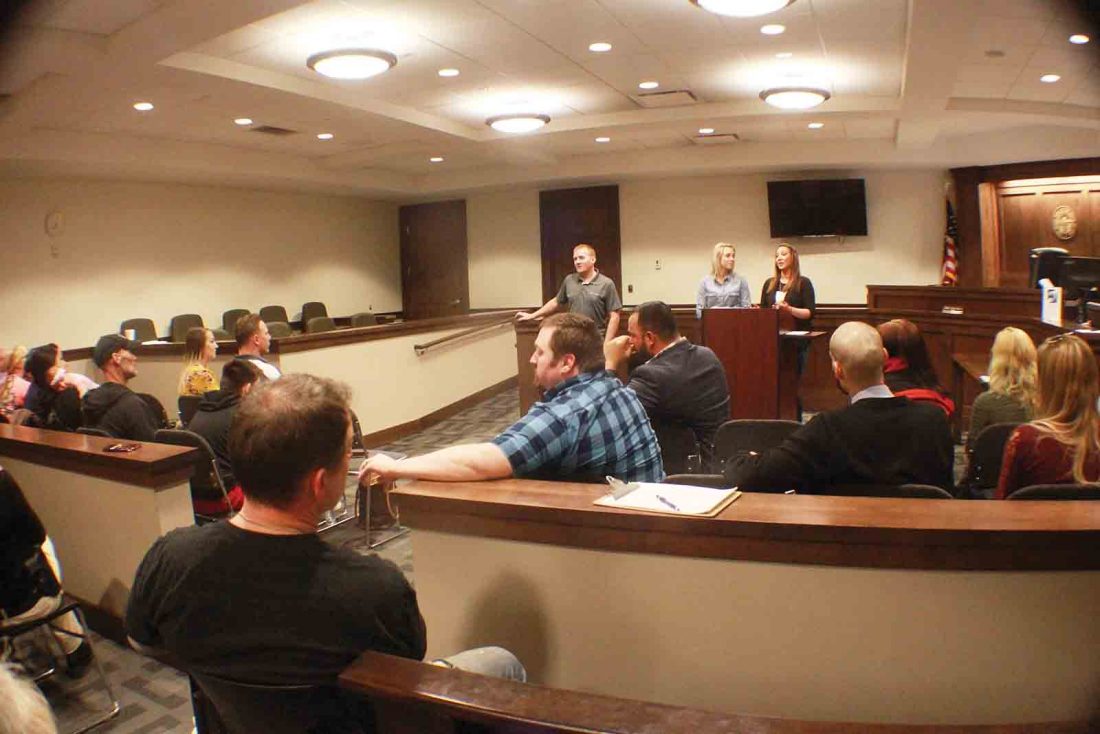
Addicts, parents and loved ones of addicts, community mental health professionals, law enforcement and other community members gather at Marietta Municipal Court Wednesday to learn about Peer Recovery Support Specialists. (Photo by Janelle Patterson)
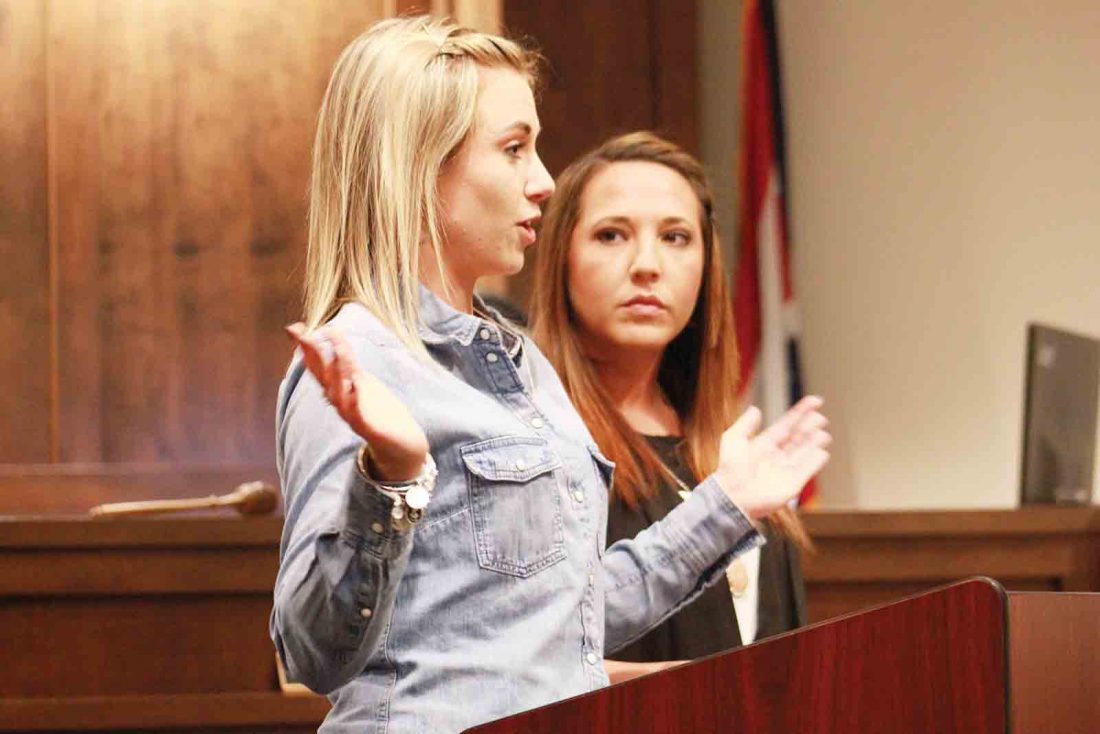
Abby Roach, left, and Shay Dunn speak about their paths to recovery from addiction during a community forum held in Marietta Municipal Court Wednesday. (Photo by Janelle Patterson)
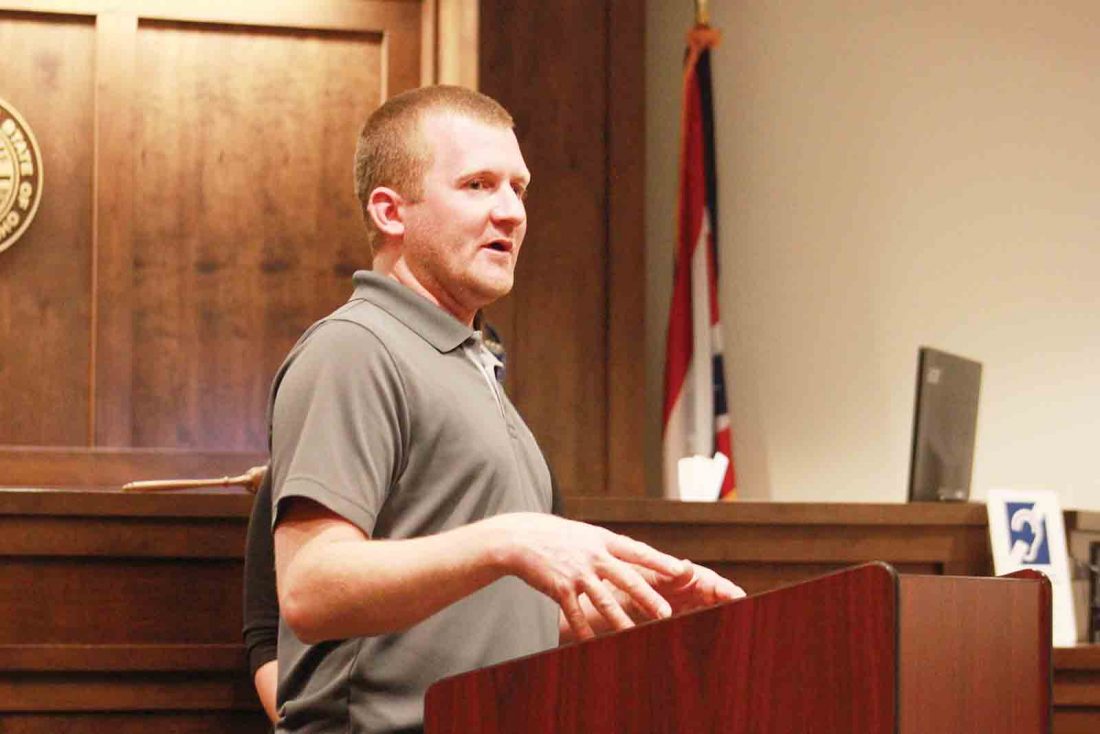
Andy Martin speaks about recovery and working as a peer support specialist to aid in others’ recovery from addiction during a community forum at Marietta Municipal Court Wednesday. (Photo by Janelle Patterson)
Addicts, parents and loved ones of addicts, community mental health professionals, law enforcement and other community members gather at Marietta Municipal Court Wednesday to learn about Peer Recovery Support Specialists. (Photo by Janelle Patterson)
Abby Roach, left, and Shay Dunn speak about their paths to recovery from addiction during a community forum held in Marietta Municipal Court Wednesday. (Photo by Janelle Patterson)
Andy Martin speaks about recovery and working as a peer support specialist to aid in others’ recovery from addiction during a community forum at Marietta Municipal Court Wednesday. (Photo by Janelle Patterson)
Trending
Marietta Municipal Court's main courtroom was filled with nearly 50 attendees Wednesday for the fourth community forum concerning addiction and recovery over the last year.
This forum's topic: Peer Recovery Support.
"Recovery has many steps," said Municipal Court Judge Janet Dyar Welch as she opened the forum. "And we could pat ourselves on the back for the number of people we've convinced to go into residential treatment but how many would fail when they'd come out… The key we realized we might be missing was the follow-up."
Welch said follow-up though had to come in a form that's more relatable and attainable rather than authoritative like the roles of probation officers and the legal system.
She emphasized the need for lived experience, to break through the barriers and double talk those in spirals of addiction use.
"One of these ladies I told once that I wasn't letting her out of jail because what if I woke up the next day to read her obituary," Welch recalled, before introducing three models of that lived experience, now in recovery and currently working to meet addicts at wherever they are in their journey and provide support.
Peer Recovery Support Specialists Abby Roach, Shay Dunn and Andy Martin shared pieces of their stories Wednesday.
Roach, with a history of felony charges stemming from a heroin addiction, is now in recovery and working for Life and Purpose Behavioral Health.
Dunn, with a long history with Municipal's Probation Department, is now contracted with that same department and teaching classes on recovery.
Martin, with a minimal criminal history, said he fought addiction for 16 years and is also contracted with the probation department as a peer recovery support specialist.
"I was a garbage can, I took anything," Martin explained. "But now where we are, here, we're a peer, a friend and some people choose God, some people choose a 12-step program, some work best with individualized counseling. For me, I tried many different paths until I found what helped me."
And all three shared how their lived experience, in the same depths of addiction as many in the room, or their family members, could be both a strength and hope.
"When I was in active addiction I only surrounded myself with other people who were using so I thought you got on drugs and I thought you lived that life until it killed you," explained Dunn. "But now recovery is our whole lives."
The three work in a similar capacity to other on-call fields, but the state has recognized their lived experience as a qualification worth investing more training in.
All three are graduates of a state certification underwritten by the Washington County Behavioral Health Board.
"It was 16 hours of online classes and then a 40-hour in-person training," described Roach.
The training armed them with the translation tools to understand different stages of crisis and addiction in a way which could be communicated both to providers and to addicts.
"It's the missing link," continued Roach.
The three were peppered with questions from those gathered at the forum, many from parents losing hope in loved ones still using.
But they were also commended by others working on staying sober.
"This gives me hope," said Seth Barnes, 27, of Marietta. "I'm just two weeks out of rehab and 97 days clean and seeing them reaching out and being that support, that's what I need."
Barnes said he for the last two years has struggled with addiction to methamphetamine and for four years alcohol.
"But I finally reached that point where something had to change, and I went to treatment and started to learn how to think better," he said. "But it's still hard, even when you have people you love who want to help you but they don't know what to say. Having someone like Shay and Andy, they've been there, and they know how to talk with you when you have a broken spirit."