
Q&A: OSHP lieutenant graduates from 10-week FBI academy course
OSHP lieutenant graduates from 10-week FBI academy course
Trending
The 6.1-mile course at the FBI National Academy known as the Yellow Brick Road includes a run through the hilly woods on a trail built by Marines, climbing walls, scaling rock faces and running through creeks. Before the finish line participants also must jump through simulated windows and crawl under barbed wire in muddy water.
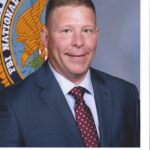
That's just one aspect of the academy that recent graduate Lt. Chris Chesar completed. Chesar, post commander of the Marietta Post of the Ohio State Highway Patrol, graduated Dec. 14 from the academy along with 248 other law enforcement officers.
Aside from physical challenges, the academy includes coursework--much of it masters level--in areas such as terrorism, law, behavioral science, law enforcement communication and forensic science.
The 10-week course was "the experience of a lifetime," said Chesar, who has spent 21 years with the patrol and nearly three as post commander in Marietta.
Question: How did your participation in the academy come to be? What's the process?
Answer: The patrol asked who was interested and I said I was. I then had to be nominated by the highway patrol to the FBI. They had to accept the nomination, I had to have a background check and they had to make sure I met all of their qualifications.
Q: Was this something you had wanted to do for a while?
A: Yes, it was. The prestige of being able to attend…it's quite an honor to be selected.
Q: In general, what's the purpose of the academy? What are you there to learn?
A: The purpose is basically three-fold. The first primary area is networking with other law enforcement agencies, national agencies, even international agencies.Then, there's the educational piece. Finally, there's the physical piece.
A bunch of people think you go there and become an FBI agent. You don't. It's just gaining some of their knowledge.
Q: Did you have a favorite aspect, or did you enjoy all three of those areas?
A: I enjoyed all three but my favorite was making relationships with people from as far away as Italy, from Vermont and some from right over in West Virginia. There were officers there from all over.
Q: How do you think that aspect will benefit you while you're working in Marietta?
A: If something happens in the southern part of West Virginia where the trooper I met is from, or if I have a question about an immigration issue and need to talk to a border patrol agent, it's a quick call. It's a direct line as opposed to multiple steps.
Q: I would imagine that aside from the professional benefits, it was just really interesting to get to talk to all of these people.
A: I got into all kinds of discussions with the international participants. For example, we talked about the legalization of marijuana. Some were fine with it, some were not. I was able to get a lot of different perspectives.
Q: How intense was the physical training?
A: It was challenging, although it was nothing that I wasn't capable of or that the others weren't capable of. It was motivating to see the others, too. We were pushing each other to get our best physical performance.
Q: What are some examples of some of the things they had you do?
A: We did a 5K run and a type of training that was like Crossfit. They presented challenges every week that were leading up to the Yellow Brick Road.
Q: How was that?
A: It was a muddy mess when we did it. It was very challenging but everyone was able to successfully complete it. It's a great personal achievement to overcome that--to know it's tough but that I can do it. It feels good on the other side.
Most of us weren't spring chickens. We had an average of 21 years in law enforcement among us.
Q: Anything you'll take away from that and do on your own?
A: They showed us a lot of workouts where you don't need weights, things you can do in your own house.
Q: Overall, what do you think the benefits of the academy were for you?
A: On the educational side, we did some papers on what our different departments are doing and found out how we can do things better.
We've had some small protests here due to fracking and we did some research on that. I learned how to instruct my officers to look for signs of a non-peaceful protest. People do have the right to a peaceful protest and we respect that but we'll know how to look for signs that they're doing some destructive things.
Q: The academy was at Quantico. Had you ever been? What was that experience like?
A: I had never been. Security was very tight. You always had to show your pass to get on the Marine base itself where Quantico is, and then another pass for the FBI part. I had never been on a military base. It was nothing to hear artillery fired or to hear military grade helicopters overhead. We would listen to the shooting they did at night. You could hear operations practice they would have at night.
Q: Is the academy something you would recommend to other troopers?
A: Absolutely. It's usually for someone ranked a lieutenant or above. It's the experience of a lifetime. Anyone in a management position looking to advance themselves, to push themselves a little bit with the physical activities, and learn to network, it does all of that.
Q: What was the highlight for you?
A: Networking was fun. We would eat there and everything, so I would try to make the effort to talk to different people every day. It felt a little strange walking up to a stranger, but we were all in the same profession and all in the same boat. It worked out really well.
Kate York conducted this interview.