
The destructive power of water
-
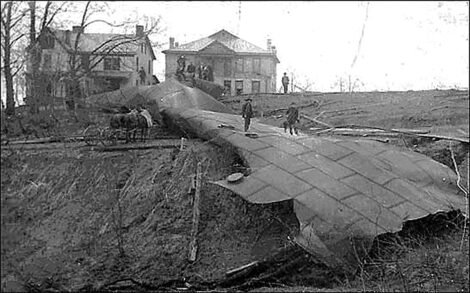
- (Photo provided) The remains of one of the tanks after the disaster.
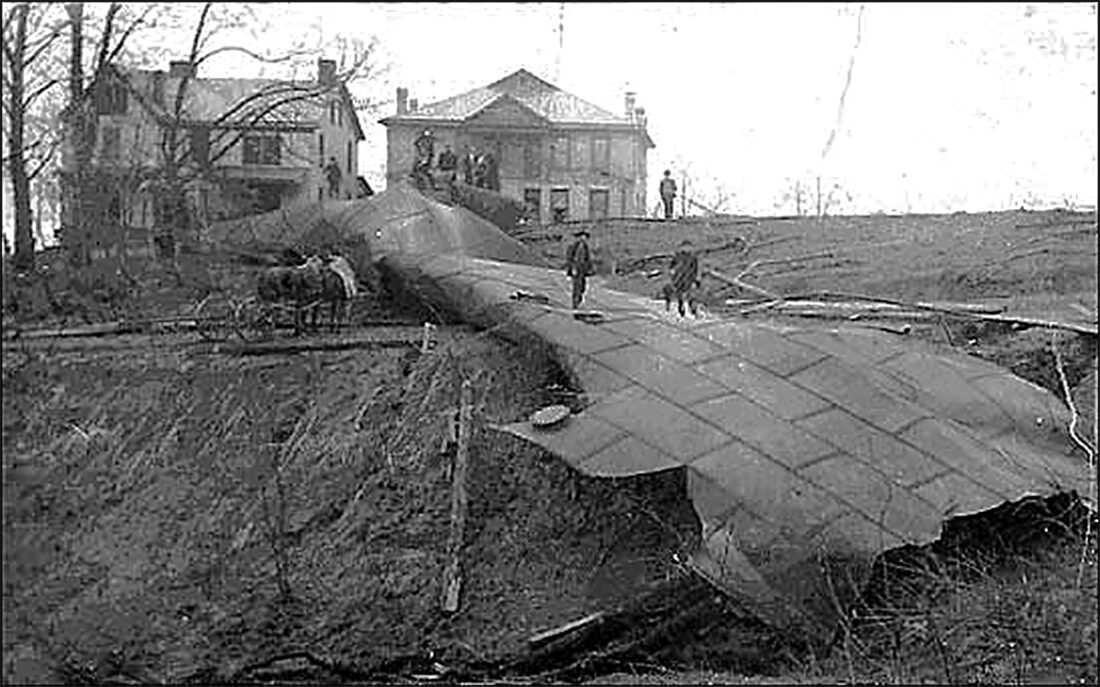
(Photo provided) The remains of one of the tanks after the disaster.
The Way I See It
Art Smith
One of the worst floods in Parkersburg history came not from the rivers, but from a hilltop overlooking the city.
Today there is a quiet park at the top of Quincy Street.
It can be reached by car, or you can take the stairs.
Nearly 200 of them will take you from Avery Street straight up the hill to the park where you will conveniently find a few benches to rest after the hike up the incline.
Many athletes use what are the largest set of steps in the region to train.
Make the trip up and down a few times and you will know what a fast heart rate feels like.
The park offers a great view of not only the Julia-Ann Historical District that lies below, but also downtown Parkersburg and the Ohio River and Blennerhassett Island.
Early on the morning of March 19, 1909, a horrible flood rained down from the top of the hill, caused not by the river, but by a pair of tanks that held the water supply for the city.
“At 5:19 o’clock this morning the water tanks on Prospect Hill burst and the wreck, ruin, destruction and death so often predicted in these columns, came to pass,” The Parkersburg News reported later that day.
“With a resounding roar a crash of falling buildings and the hideous hissing of near two million gallons of water rushing down the side of the hill in one volume like a great cataract, the very earth trembled.”
The massive tanks were filled at night so that the city would have enough water during the day.
Each tank was 10 feet deep and contained thousands of gallons of water. When one tank gave way, it took out the one sitting next to it, doubling the power of the flood.
Many reported later that it sounded like explosions as the two tanks came apart. The debris brought power lines down as it came down the hill creating sparks that some thought was lightning.
The water tore through homes and a church at the bottom of the hill.
Because the disaster happened so early, many families were still asleep in upstairs bedrooms as the wall of water tore through the bottom floor of the homes.
If it had been slightly later, families would have been downstairs eating breakfast.
“Whole families occupying wrecked and ruined homes, in houses that were smashed and torn to look like great piles of driftwood, escaped with their lives and frequently without injury to anyone,” the News reported.
Walter Wigal and his wife Flora lived in a home about 100 feet up the hill from Avery Street.
They died when the water slammed into their house on the way down the hill.
Their house was carried down the hill and across Avery Street before slamming into another house. Others were hurt as debris flowed through their homes.
St. John’s Lutheran Church was destroyed by the wall of water that slammed a house into it, smashing the walls, the stain glass windows and most everything in the church.
Debris extended for blocks from the hillside with beds, stoves, furniture, books, tables, chairs, canned fruit “and 10 thousand other things” lining the streets in every direction west of Avery Street.
The whole town mobilized the next day to clean up the mess that covered a good portion of downtown Parkersburg.
Part of one of the tanks laid broken in the middle of Quincy Street and would need cut up before the street could reopen.
By the next day, plans were already in place to replace the destroyed tanks with four 1,600-barrel tanks the following week and return Parkersburg to a normal waterflow.
The next time you are on Avery Street, take a look up the long flight of stairs heading up the hill and imagine what it must have been like with several feet of water flowing down the hill in the middle of the night.
Art Smith is online manager of The Marietta Times and the Parkersburg News and Sentinel. He can be contacted at asmith@newsandsentinel.com
Local Columns
Forgiveness is the key to overcoming anger
By Mark Wilmoth More than 300 years before Christ, the Greek philosopher Aristotle said, “Anybody can become ...
The destructive power of water
MOV Climate Corner: An icy desert
By Gina Mannarino Antarctica, known as the South Pole, is the coldest, windiest and most remote of the seven ...
Voting, the power of the people
Living Democracy Betsy Cook “We the People,” the three most important words in the Constitution, gave the ...
Catholic Church in Marietta
Donkeys and elephants can’t lead us to Heaven, but the Lamb can
By Mark Wilmoth The modern Democratic Party had its origin in 1828, rising from the remnants of the ...