
Muskingum Watershed Conservancy District supports Ohio River Basin Restoration bill, conservation work expands in Washington County
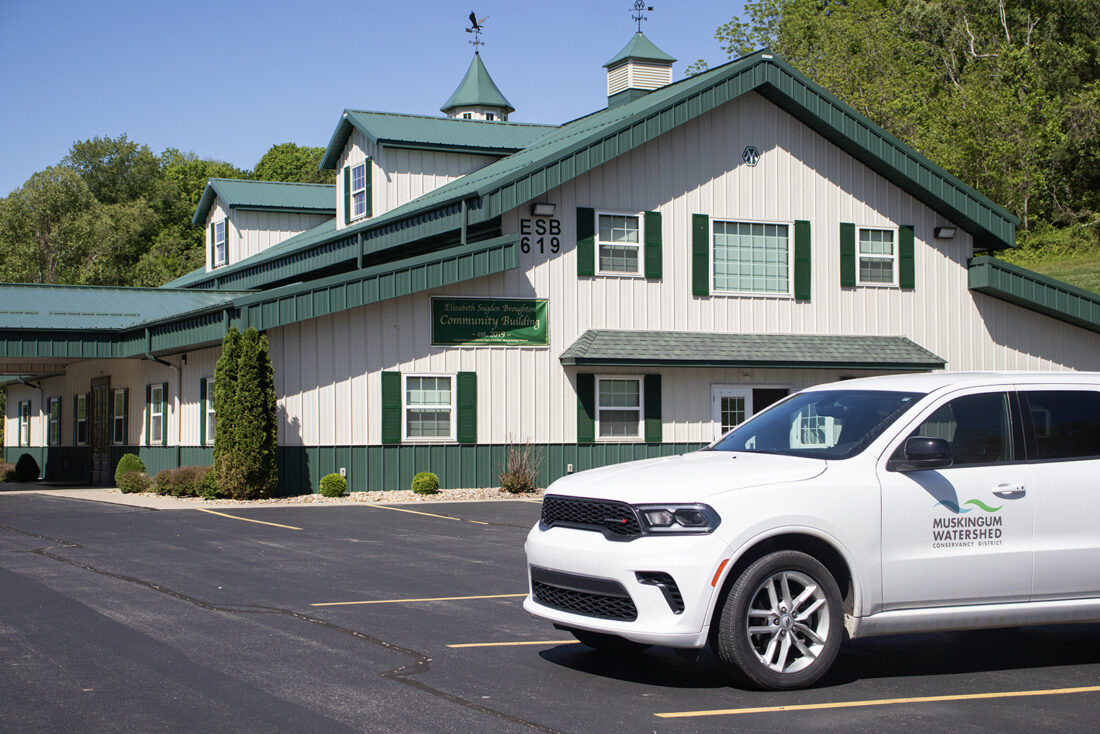
A Muskingum Watershed Conservancy District car parked outside of the Elizabeth Sugden Broughton Community Building at Broughton Nature Park Monday morning. (Photo by Gwen Sour)
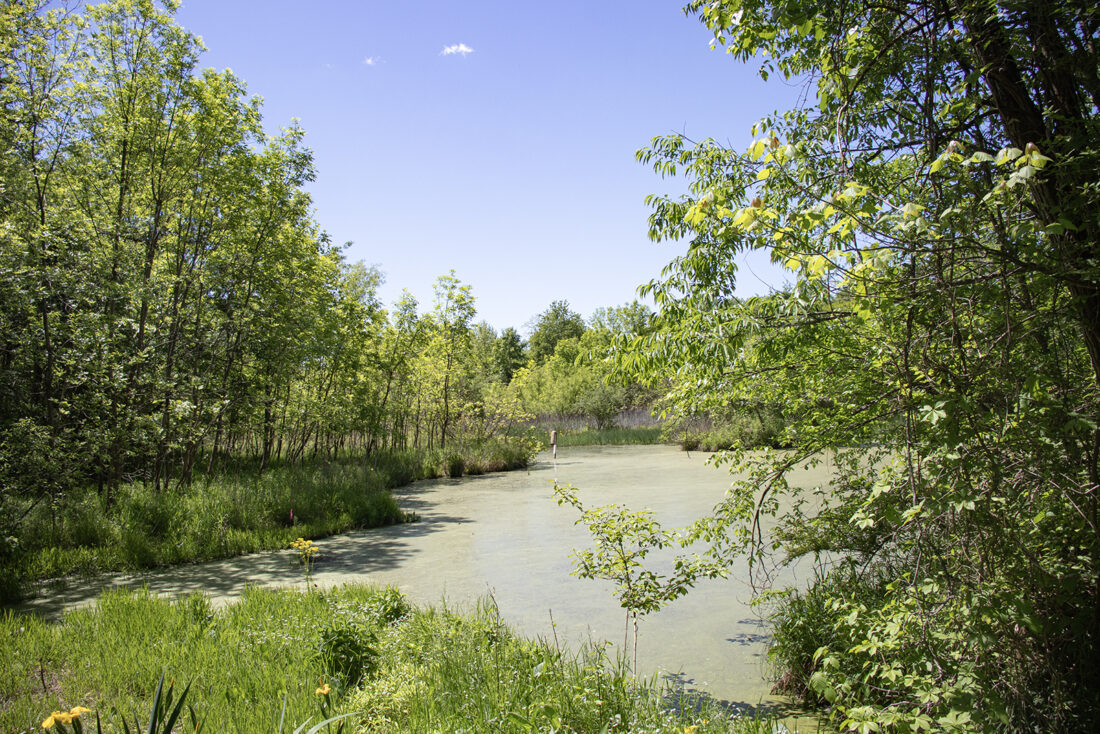
A view from the Kroger Wetlands Loop Trail, which is now a part of the Muskingum Watershed Conservancy District. (Photo by Gwen Sour)
A Muskingum Watershed Conservancy District car parked outside of the Elizabeth Sugden Broughton Community Building at Broughton Nature Park Monday morning. (Photo by Gwen Sour)
A view from the Kroger Wetlands Loop Trail, which is now a part of the Muskingum Watershed Conservancy District. (Photo by Gwen Sour)
Trending
The Muskingum Watershed Conservancy District is supporting federal legislation that would create a new Ohio River Basin Restoration Program, a proposal officials say could bring more attention and funding to conservation, recreation and water quality work across the region.
The bill, introduced in the U.S. Senate on Feb. 5, would amend the Federal Water Pollution Control Act to establish the program within the U.S. Environmental Protection Agency. The bill, titled the Ohio River Restoration Program Act of 2026, was introduced by U.S. Sen. John Fetterman, D-Pa., and U.S. Sen. Todd Young, R-Ind., and referred to the Senate Committee on Environment and Public Works.
Craig Butler, executive director of the Muskingum Watershed Conservancy District, said the district has been working with the Ohio River Basin Alliance and others to support the legislation. He said representatives planned to travel to Washington, D.C., and Columbus to advocate for passage of federal legislation and state resolutions in support of the effort.
"We'll be in Washington this week working on getting the bill passed that would bring -- set up this architecture to designate the Ohio River Basin as a federally identified area," Butler said.
According to the February version of the legislation, the program would create an Ohio River National Program Office within the EPA. That office would be responsible for coordinating restoration work, developing an action plan, working with an advisory council and reporting annually to Congress.
The bill defines the Ohio River Basin as portions of 15 states that contain the watershed of the Ohio River. Those states include Ohio, West Virginia, Kentucky, Pennsylvania, Indiana, Illinois, New York, Virginia, Maryland, North Carolina, Georgia, Alabama, Tennessee, Mississippi and South Carolina.
Butler said the recognition would be the first step in a longer process.
"It'll be a two-step process," he said. "If we can get the House and the Senate version, if we can get that put into a bill and get it passed, it would create the recognition. So then the federal EPA would be tasked to set it up, like they did with the Great Lakes Restoration Initiative, and then we'd have to go through the appropriation process."
The draft bill authorizes $350 million for each fiscal year from 2027 through 2031. The money could be used for projects that improve water quality and drinking water, reduce flood and storm risk, protect fish and wildlife habitat, control aquatic invasive species, remediate toxic substances, improve public access and recreation, collect data and support public education and involvement.
Butler said the proposed funding would serve a broad region.
"We're asking $350 million," he said. "It sounds like a lot, but the Great Lakes gets $550 million a year, and so we need some reciprocity here too."
The bill calls for projects to prioritize natural infrastructure and nature-based solutions when possible. It also would allow the EPA program director to provide grants or enter agreements with states, local governments, tribal governments, nonprofits, colleges, universities and individuals qualified to carry out eligible projects.
For MWCD, the legislation connects to its broader mission of flood management, water quality, recreation and conservation, Butler said.
The district was formed in 1933 after the 1913 flood helped drive discussion about better flood management across Ohio, he said. Butler said MWCD manages an 8,000-square-mile watershed that starts and ends near Marietta and extends north toward Akron, Canton, Mansfield and the Buckeye Lake area.
"Our primary mission is flood management throughout this 8,000 square mile watershed," Butler said.
He said the district works through a system of reservoirs in coordination with the U.S. Army Corps of Engineers. Over time, he said, MWCD's work expanded from flood control into recreation and conservation.
"We have about four-plus million visitors to our lakes," Butler said. "We have some world-class camping, RV camping and other types of camping throughout the region, and then conservation has been a stalwart markstone for us."
Butler said water quality remains central to the district's work, including tree planting, partnerships with soil and water conservation districts and farmers, and efforts to address problems before they reach lakes or waterways.
"If there's a problem, we want to maintain, keep it on the land and fix it before it gets into the lake, which is much more expensive to do," he said.
MWCD's work in Washington County has grown through its acquisition of Broughton Nature and Wildlife Education Area near Marietta, which Butler said represents the district's first local footprint in the area.
Dylan Sayer, park manager for Broughton Nature and Wildlife Education Area, said the district is transitioning signage, developing programming, planning community outreach and working with the Broughton Foundation to determine future needs for the property.
"So right now, we're transitioning all the signage, and we're doing programming, things like that," Sayer said. "We'll be doing some community outreach, as well as working with the Broughton Foundation to see kind of what the need is in this area."
Sayer said the park includes more than 25 miles of hiking and mountain bike trails, the mile-long Devola Multi-Use Trail, pavilions, ponds and 36 holes of disc golf. The district also partners with groups including the River Valley Mountain Bike Association and a disc golf organization to help maintain park amenities.
The district also is working with Rural Action on a stream restoration project on Second Creek, Sayer said. The project grew from an EPA 319 grant pursued before MWCD acquired the property.
Sayer said the work includes removing invasive species along the stream banks, stabilizing unstable areas and adding native plantings "to help improve that ecosystem."