
Senate candidates Tim Ryan and J.D. Vance answer questions
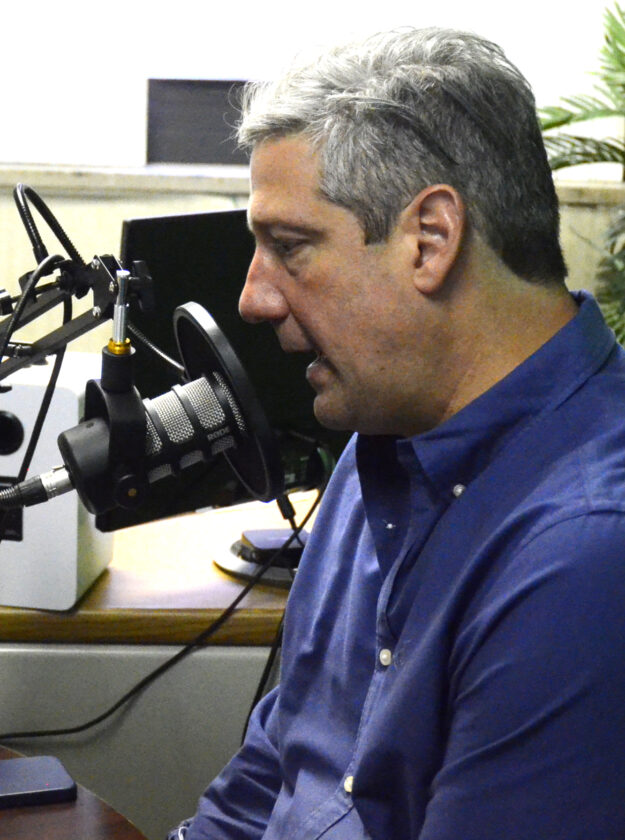
Congressman Tim Ryan. (Photo by R. Michael Semple)
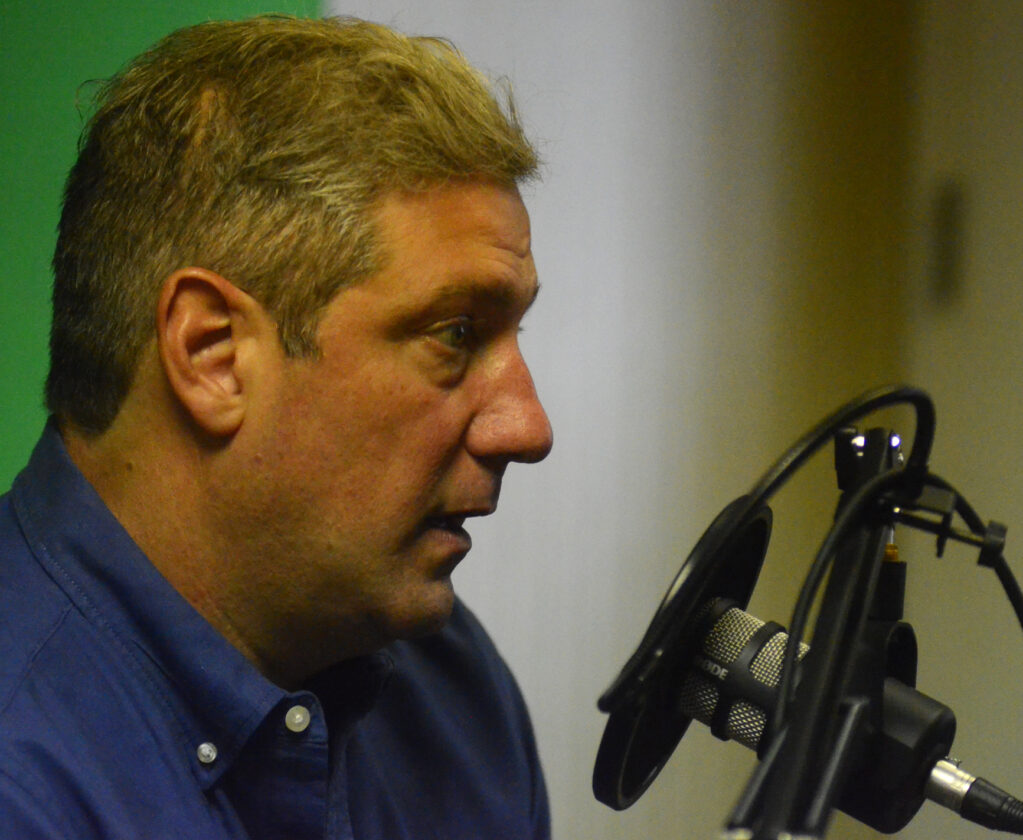
Congressman Tim Ryan. (Photo by R. Michael Semple)

Candidate JD Vance. (Photo by R. Michael Semple)
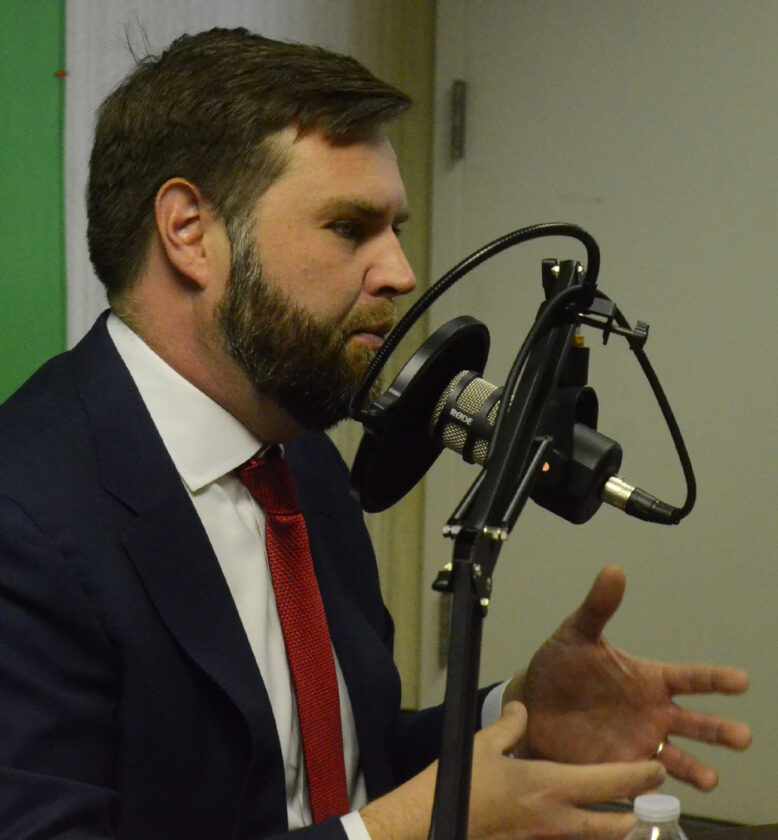
Candidate JD Vance. (Photo by R. Michael Semple)
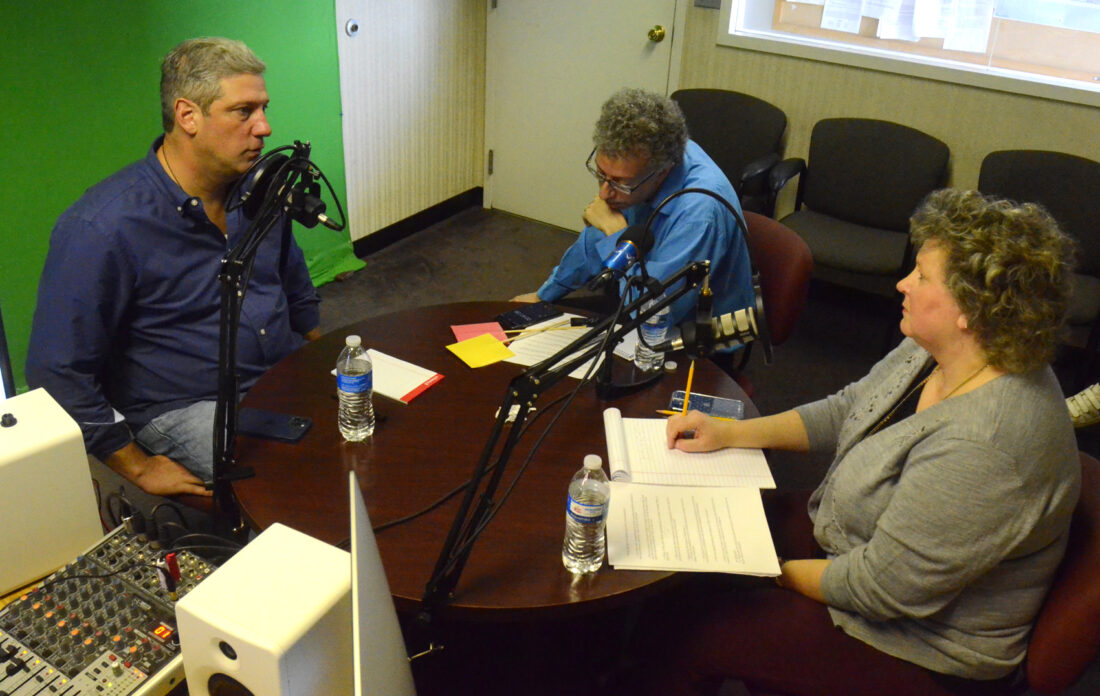
Congressman Tim Ryan, left, reporter David Skolnick, center, and editor Brenda Linert. (Photo by R. Michael Semple)
Congressman Tim Ryan. (Photo by R. Michael Semple)
Congressman Tim Ryan. (Photo by R. Michael Semple)
Candidate JD Vance. (Photo by R. Michael Semple)
Candidate JD Vance. (Photo by R. Michael Semple)
Congressman Tim Ryan, left, reporter David Skolnick, center, and editor Brenda Linert. (Photo by R. Michael Semple)
Trending
Special to The Times
WARREN, Ohio -- Tim Ryan, a Democratic 10-term congressman from Warren, and Republican J.D. Vance, a venture capitalist and author of "Hillbilly Elegy: A Memoir of a Family and Culture in Crisis" from Cincinnati, will face each other Nov. 8 in the race for U.S. Senate.
Early voting already has begun.
The two candidates each agreed to participate in individual, in-person interviews held in the Tribune Chronicle's Warren newsroom. They each were asked the same 10 questions on issues related to the race. They answered spontaneously, and their unfiltered answers are being shared here.
INFLATION
Question: What can the U.S. Senate do to slow the rise in inflation?
RYAN: I think it's going to be tough in the short, short term, which is why I think a tax cut is the best thing to do for working people and for small businesses just to help them absorb the cost. But mid- to long-term and making sure we're not in this position again, increase production of natural gas as we move to more of a natural gas-based economy, bring the supply chains back from Asia, whether it's chip manufacturing or auto or whatever, making sure we're building that stuff out here again. And that really has been the strategy with the infrastructure bill, which is bipartisan and going to create 600,000 jobs here; the CHIPS Act, which is helping us land the Intel project, which is going to be $100 billion investment, tens of thousands of jobs. What we're trying to do here in the Mahoning Valley with the electric vehicles, tractors, batteries. So there's an opportunity for us to be the manufacturing powerhouse of the world. I think that will curb inflation in addition to what we want to do with natural gas, give us more control over our economy to keep prices low for businesses and consumers.
VANCE: The most important thing we need to do to slow rising inflation is to open up America's energy markets. Energy goes into the cost of food, it goes into the cost of manufactured goods, it goes into the cost of everything. When energy goes up, that's not just gas at the pumps, that's natural gas, that's all the things that go into utilities. Then everything else becomes more expensive. Unfortunately, the Biden administration, I think, has really, really tamped down on pipeline, on new oil and gas leases and especially on the capacity for our companies to invest in fossil fuel capacity. The second thing is that we have to live within our means as a country. The borrowing and spending added to an energy-constrained economy just drives inflation through the roof. I think the combination of those two policies have really made it hard for average people to just afford the basic necessities. If we open up the American energy market, if we stop the borrowing and spending, I think we go a long way to really solving the inflation crisis.
ABORTION
Q: Are there any circumstances in which a woman should be allowed to have an abortion? And if so, is there a cut-off time?
RYAN: I think this, what we saw come out, was the largest governmental overreach into the private lives of American citizens in the history of our lifetime. This is an issue of freedom for me and personal liberty, and I think the Dobbs decision and the law here in Ohio goes way too far. Again, I think J.D. Vance is very extreme on this with the no exceptions for rape and incest and a national abortion ban and those kinds of things. Like most Americans, I think the only reason to have an abortion later in the term is if it's an issue of safety or if there's a severe tragedy happening. To me, that would be an exception towards the end of a pregnancy. But let me say real quick too, my concern is that what Justice (Clarence) Thomas wrote with his opinion around Dobbs and the abortion decision is that he wants to next go after nullifying same sex marriages, he wants to go after birth control. I just think these are very, very extreme positions that would continue to promote chaos in our society. We see women who have been raped have to go to Illinois or Indiana. A national abortion ban would force them to have to get a passport and go to Canada.
VANCE: I am pro-life. I believe very deeply that we should foster a culture of life in this country. It really bothers me when I see major American corporations refusing to offer paid maternity leave, even scaling back paid maternity leave at a time when they're throwing $5,000 at people to have an abortion. My question is why are we encouraging women to do one thing, but not supporting them if they choose to bring a baby to term? Our country could get so much better on this in a lot of ways, offer better health care and so forth. In terms of the abortion cut off, one obvious example where I think you have to allow abortion is in cases of medical necessity. Things come up. God forbid, they do. But there are these tragic circumstances where people do have to have an abortion. I think you have to make exceptions and make an allowance there. But generally speaking, I'd like to get us to a place where we're saving as many lives as possible. That's my basic view.
STUDENT LOAN FORGIVENESS
Q: Do you support President Biden's student loan forgiveness plan, and was this action lawful? Also, do you think the plan goes far enough, not far enough or about the right amount in amounts forgiven?
RYAN: I don't support it. I am sympathetic as someone who, my wife and I are still paying her student loans off, so I'm sympathetic to the cost. I think it's outrageous that the interest rates are 8, 10, 12 percent. But I just don't think we can afford this right now is one of the main reasons. And the other is we're not solving the problem of high cost college and university tuition. If we're going to spend $300 billion, we should at least get to the root cause of the problem, which this hasn't. I think there's a way to save people money, allow them to renegotiate their interest rates down to 1 or 2 percent. That'll put significant money in their pockets and allow them to maybe pay down the principal faster or have more money. But at any rate, that'll get us 70 to 80 percent of the way there. If you take out loans, I believe that you should pay them. So anything here has to be a comprehensive approach. But again, coming out of the pandemic, coming out of the economic collapse, given the three huge investments that we just made, we need to start moving into some deficit reduction, which the Inflation Reduction Act had $300 billion. This particular project would negate that savings, which I think is not a good move right now.
VANCE: I don't support President Biden forgiving student debt because, one, it is unlawful. I think the president of the United States doesn't have that power. We all learned in grade school, hopefully, the Congress gets to make the laws, the president has to enforce the laws. I don't think that there's a law on the books that allows the president to do this. But more deeply, it's just fundamentally unfair. Something that's very core to the American character is that we despise unfairness as a people. We want everybody, whatever your station in life, to have to follow the same set of rules. You've got plumbers and electricians and people who went to college and paid off their debts effectively being forced to pay the debts of people who decided to go to college and still have a lot of debt. That's a big, big problem. The unfairness is the first problem that I have with it. The second problem is I actually think it lets universities off the hook for creating this debt crisis in the first place. If you look at why we have a student debt problem, it's because administrators are taking much larger salaries. It's not going into instruction. It's not going into the quality of education. It's really going into administrative bloat. That's true at some of our local schools here in Ohio. It's true of some more national schools all across the country. We have to solve that problem and giving these colleges effectively a bailout when they're causing a massive rise in tuition and costs is exactly the wrong thing to do. It's unfair, and it adds to the problem of student costs and college costs that we already have.
GUN REFORM
Q: What, if any, gun reform legislation do you think is needed and why or why not?
RYAN: My concern is not with law-abiding citizens or hunters. My concern really is with how do the number of criminals that are getting guns, how do they get them? We have got to be able to figure this out. The number of gun crimes, gun deaths in Ohio and across the country is unacceptable, and I think we need background checks. I think we need to close the gun show loophole. I don't believe that we need weapons of war on the street. But I do think that we've got to stop politicizing this issue. I think there's significant agreement, even among gun owners, that we can find some common sense gun safety measures. You see what's going on now where the FOP is coming out against what's happening in the state with loosening of the concealed carry and permitting process and all of that. We need to sit down with the cops. We need to sit down with the gun groups. We need to sit down with schools and figure out how we can make it safer. I think we're watching these school shootings. How does an 18-year-old stumble into a gun store a few days after his birthday, buy a semi-automatic rifle and 1,600 rounds of ammunition? When we send somebody off to war, they have 300 rounds. This is something that we have to figure out. But it's going to take a bipartisan consensus. It can't be one party does it.
VANCE: The thing that I worry about with gun reform is that we have some very clear problems with violent crime in this country. The gun reform proposals that I've seen, I think, would simultaneously harm a lot of people's rights, but wouldn't actually make our communities or make our country any safer. That really is sort of the worst of all possible worlds. Just to take one obvious example, we know, for example, that the background check system has failed to catch multiple convicted felons who should not be getting a firearm. I'm a very pro-Second Amendment guy. Everybody agrees that a convicted felon should not be able to walk in, get a background check, pass that background check and walk away with a lethal firearm. But instead of solving that issue of why is it that convicted felons are able to get access to firearms, we are talking about creating additional systems and additional regulations that I think fall hardest on law-abiding Americans. The other way I, maybe statistically, highlight this is we've seen a rapid increase in gun violence in this country the last two years. Our gun laws haven't really changed. This is clearly not a gun law problem that's driving most of the violent crime. What's really driving the violent crime is that we've decided to make police terrified of doing their job, and we've also let a lot of violent career criminals out of prison. That, to me, is how you solve the gun violence problem.
IMMIGRATION
Q: What are the most important goals of immigration reform and how would you help in accomplishing those goals?
RYAN: There are eight billion people in the world and a lot of them want to live here. But they can't all live here. So we need an orderly process. I think we do need a strong border. We do need more border patrol. We do need local law enforcement to help with this. But then we also need an orderly process in where if you're here and you're undocumented that you can pay a fine, you can pay back taxes, you can pass a background check and we can assimilate you back into the country. To me that again needs to be bipartisan. Like, we can't do it with one party or the other. That's what's so frustrating is we've got to solve these problems. We don't want to pass this immigration issue on to the next generation as well. A part of this has got to be dealing with the drugs, the fentanyl, coming in. We know what's coming in from China. We know that it gets processed in Mexico and it makes its way into the country. We've got to use the technology that we have. I started the border technology caucus, which will help us figure out how we use modern technology to solve some of these problems as well. We've got all this technology, we should be able to utilize it better at the border, so it's got to be a whole government approach.
VANCE: A very, very difficult problem, and unfortunate where the Biden administration has been the worst and has delivered a lot of self-inflicted wounds here. No. 1 is border walls aren't perfect, but they certainly do help, and I think we've learned that over the last four or five years. So, I think you have to appropriate the $3 or $4 billion necessary. It's a tiny fraction in the overall federal budget to actually finish the border wall. The second thing is when I talk to border patrol agents, do you guys need more funding? What is it that you need to do your job? The thing that they most often tell me is not we need additional agents. We just need the agents who are here to be empowered to do their job. Right now, the president is effectively telling border patrol don't enforce the border at most places, which is why you see these videos of people just walking across the border. It's not because you don't have border patrol there sometimes. It's because the border patrol has been told not to do their job. So, I think the president really has to empower these guys to do what's necessary. The third thing is the president has to use his diplomatic power -- he's the chief executive of the most powerful nation in the world -- to get these Central American countries to really do the job of enforcing their own border. This is one of the things that I think the Trump administration deserves, but doesn't get a whole lot of credit for, that there were a lot of relationships that they developed, especially with the Mexican government, but also with El Salvadoran government, other Central American governments as well, to keep the migrant population in these countries to not allow them to flood into this country at such a high level. If you don't get control over this, you're going to have a huge, huge problem with fentanyl deaths, which we already have, and they're going to keep getting worse. The thing I'd like to remind people is the border problem is not primarily about the 2 or 3 million illegal aliens. That's a big part of it. But for Ohio, it's really about the amount of fentanyl that's coming into our community and killing our kids.
MEDICARE
Q: Would you seek to expand or reduce Medicare coverage? If so, please elaborate.
VANCE: I think you have to keep Medicare coverage in terms of age cut-offs about where it is. The Medicare program, a lot of people have paid into it, a lot of people expect it, and it should be there for them. One of the real big mistakes that we made in this country about 10 years ago is that we cut a lot of people off of their Medicare and shifted them onto the Obamacare system, which a lot of people found difficult to navigate and, I think, really, really harmed a lot of our seniors in the process. The one thing that I actually agree with the Biden administration on allowing Medicare to more aggressively negotiate prescription drug prices is actually a very good thing and is one way of expanding access to some of these life-saving medicines without completely blowing up the federal budget. But broadly speaking, I think the Medicare program works for our seniors. We should more or less keep it the same, obviously, expand coverage, expand access, expand options. But I've heard proposals that we should expand Medicare for all. That's a huge mistake and a slap in the face to our seniors. I've heard that we should maybe lower the eligibility to 55. It makes sense setting it at 55. But you can always make the program work a little bit better, allowing, like I said, the government to negotiate prescription drug prices is one option. I think Medicare Part D, obviously, a lot of seniors have taken advantage of that. That's increased some optionality. Things like that generally take us in the right direction. I think we can build on that stuff without taking Medicare away from our seniors.
RYAN: I would drop the Medicare age to 60 and allow people to buy in. We have a significant crisis with people in their 60s and even late 50s to get the kind of health insurance that they need. So, I think we should allow people to buy into the Medicare program. I also think we've got to continue to do what we just did. I think for the first time ever we allowed the Medicare program to be able to negotiate down drug prices. That was a significant step. We've been talking about that for a long time. We capped Medicare Part D cost at $2,000 a year. My mom, for one, falls into the doughnut hole where she'll pay $1,000 (a month) out of pocket for prescription drugs. This will cap it at $2,000 a year. We did insulin at $35. So, you know, those kinds of things. I also think we, at some point, need to move into hearing aids, dental, glasses, like make that part of the Medicare program as well, because our seniors, their retirement has significantly been reduced, not just with inflation, but we've seen people lose their pensions. We've seen a diminishment in defined benefit plans. So, anything we can do to help our seniors keep their heads above water, I think we should do, and again, that should not be a partisan issue.
BROADBAND
Q: How much of a role should the federal government play in increasing accessibility to affordable and reliable broadband?
VANCE: It's an important question. I think the federal government is just going to have to play an important role. I mean, look, if you don't have access to high-quality broadband, your local economy is going to get left behind in one form or another. Obviously, a lot of these companies in our rural areas don't want to expand broadband. Maybe it's infrastructurally too difficult. Maybe it doesn't make financial sense for them. That's one of the critical things the federal government has to do is it has to step in and encourage broadband access in our rural areas, in our small towns, but obviously in our big cities as well. The infrastructure bill that was passed about a year and a half ago, it had a lot in it that I didn't like. On net, I don't think it was a great piece of legislation. But it did have some funding for rural broadband and broadband connectivity, more broadly. I think that's the basic right approach is that the government needs to provide. One of the critical things the federal government has to do is provide core infrastructure -- good roads and bridges, good airports, and I think now in the 21st century, good broadband.
RYAN: I think the federal government has a significant role. This is reminiscent, I think, of the Tennessee Valley Authority where we needed to have the federal government get involved with making sure people had electricity. There's no way you can have a modern economy today if you don't have broadband. Traveling the state, I know that there are a significant number of counties that don't have access to quality broadband, farmers who need it for precision agriculture, schools and all the rest. I use the example of the Intel project. Here we have a $100 billion investment. We're going to see 30, 40 suppliers. We're hearing that maybe even other chip manufacturers want to move to Ohio. My goal is how do we plug this economic development and these suppliers into smaller mid-sized communities that have been left behind? So if there's 100 jobs here, 200 jobs there, how do we get them to Marietta, Portsmouth, Lima, Warren, Ohio, you know, Sandusky? But you can't do that if you don't have good broadband. So, if you're going to plug these communities in, we've got to have a significant broadband investment. So, we put a bunch of money into the infrastructure bill. We'll see where that gets us. Hopefully, it can be a public-private partnership at some point. Then also cost. You can have like in the inner cities, you may have access, but the costs are prohibitive. So, helping with costs too I think would be important.
FILIBUSTER
Q: Do you support ending the filibuster? Why or why not?
VANCE: I definitely don't support ending the filibuster. The reason why is sort of twofold. First of all, you hear a lot of talk about bipartisanship and how the parties need to work together to actually get things done. Ending the filibuster would be the end of any bipartisan legislation in this country because it would allow one party to effectively steamroll another party even if they have a very, very narrow majority. I'm obviously a Republican, I'm a conservative, I agree with my own party a lot more than I agree with the other side. But there are some things, like for example, I think that banning members of Congress from trading stocks. I think that's something you get a lot of Democrats on board and frankly, some Republicans would not be so excited about. No way a piece of legislation like that happens if you end the filibuster because it would end any reason for the parties to actually get things done outside of their own party. The other reason is that would actually empower congressional leadership even more so than they already are. We know that the Speaker of the House and the U.S. Senate majority leader are really, really powerful within their chambers. If you end the filibuster and effectively allow those leaders to completely control the legislative agenda, I actually think it would make our entire system of government work less well. I'm trying to be a senator. It would make United States senators less independent in how they conduct their business.
RYAN: I do support ending the filibuster. I think the Senate is the only legislative body in the country where you need 60 percent to pass something. Every town council, every city council, it's pretty much 50 percent -- it's 50 percent plus one. I just think that if you win an election, you should be able to pass your agenda. Now there's still, like, built-in protections from, I think, extremism. The House still has to vote on things. The Senate still needs 51 votes. Under this scenario, there's still a president who has veto power. So there's ample checks and balances. But China, if they want to do something, they move on an economic development initiative or whatever. And I just think that the country is paralyzed right now. I say this as a Democrat, like if the Republicans win elections and they control everything, they should be able to implement their agenda, and then let the people vote on what they do. Then, it's the same for Democrats. And we're kind of doing that right now. Well, I mean, we've passed a lot of stuff with 51 votes. So we're going to have to answer to the public on that. Whoever wins the election, then will have an opportunity to either change that or build upon it. I think that's fair, but we've got to get moving on it. It's a very antiquated process that we need to get rid of.
POLITICAL DIVIDE
Q: What is your view of the divide in the current state of politics in our country? If elected, would you try to change it?
VANCE: My view of the divide is that it's a symptom of a country that's moving in the wrong direction in a lot of ways. If we're being honest, has moved in the wrong direction in pretty profound ways not just over the last couple of years, but over the last 30 or 40 years. I was looking at statistics because I knew I was going to be in the Mahoning Valley, and Trumbull County, I believe, had something like 25,000 GM employees in 1972. It now has, of course, far fewer than that, hundreds of GM employees, if that, maybe 1,500 at most. You realize that a lot of the rancor and a lot of the division in our politics comes from the fact that the country isn't doing that well. Suicide rates are rising; life expectancy is dropping. I tend to think the divisiveness in American politics is because our leadership has failed, and that creates hostilities in our political system. The way to fix the divisiveness is to actually get the long-term trends in the country moving in the right direction again. We should be adding manufacturing jobs, not subtracting them. Our life expectancy should be increasing like every other civilized country, not decreasing. If you do that you create some prosperity and security in people's lives. Then the political rancor starts to go away.
RYAN: Senate is ground zero for politics today. I think I would be a good fit for reaching across the aisle. That's been my career on the Appropriations Committee has been working with guys like Dave Joyce on Great Lakes water issues. When I first got in, it was Dave Hobson, it was Ralph Regula. The Appropriations Committee is a committee where I've really learned that there's a saying in D.C.: there's Democrats, there's Republicans and there's appropriators because the appropriators always have to figure out how to come together and pass appropriations bills. The last two Congresses I've been ranked in the top 10 percent of most bipartisan members of Congress, and I would just want to continue that. And we're getting in here with low-dollar donations. I'm going to get in not owing anybody anything. I think I'm going to be in a very, very unique position to reach across the aisle without having to explain myself to anybody who gave me $40 million.
SKILLS AND EXPERIENCE
Q: What specific skills or experiences do you have that shows that you can be an effective senator?
VANCE: The first is that in my professional life I've created jobs, been involved in nearly 1,000 jobs created in the state of Ohio. I do think that it's important to bring some insights into how the economy works, if you want to create broadly shared prosperity for people in the state of Ohio. That certainly helps. The second thing is in the United States Senate, obviously, is about communication, about persuading your colleagues, and the experience that I've had shows that I can persuade people, that I can actually get people to think about new ideas, or maybe old ideas in a new light. And that's important in a U.S. Senate that's currently pretty broken and doesn't get a whole lot done for the American people -- certainly not a whole lot done for the people of Ohio. Just personally, I don't care about these issues at a purely intellectual level. I grew up in a working class family. I was raised by a pretty poor woman, my grandma, who believed in this country, but also recognized that it didn't always provide great opportunities to poor kids. I bring a certain heart to these issues. I recognize that if we don't do our job, if we fail, it's very often the least-fortunate citizens in our state who suffer because of it.
RYAN: I think you look at our area. For the last 20 years, we've been working on economic development issues. Again, not asking who's a Democrat, who's Republican, oh, we're not going to work with the chamber of commerce because that's where all the Republicans are, whatever. I think what I've shown and my leadership has shown is that you put a long-term strategy together, you bring people together around that strategy and you execute it. That's really what we've done. I've used my position on the Appropriations Committee to do that. I mean, it's the energy incubator here now in Warren, Ohio, that has companies spinning out buying industrial properties, whether it's the old WCI headquarters or warehouse or another industrial building. That was the plan 20, 15 years ago, like get new high-tech companies to spin out of an incubator that I made sure was in downtown Warren because they're going to buy properties around that. You look at what's going on in downtown Youngstown. You look at help for the amphitheater and the riverwalk and all of those things. That was part of a long-term plan. So this plan has come together. I'm not here to wave a magic wand or sell anybody anything. I'm here to say, like, we're going to put a plan together for Ohio like we're doing and continue to work it, and I think we've got some really good examples around here on how I've been able to do that.