
School addition proposals: Community discusses future of Harmar Elementary
Community discusses future of Harmar Elementary
-

- (Photo provided) An artist rendering of what the future site of Harmar School could look like.
-
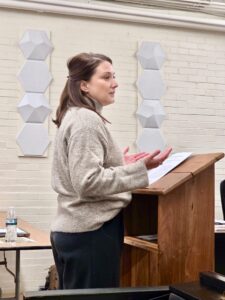
- (Photo by Gwen Sour) Stéphanie McManus, managing principal of Neighborhood Strategies, talks to Marietta City Council Thursday night about the future of the former Harmar School property.
-
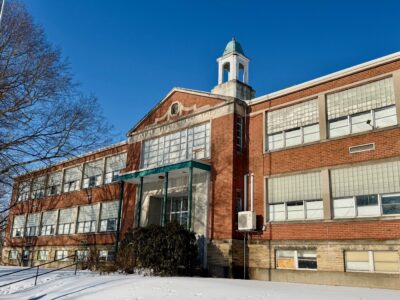
- (Photo by Amber Phipps) The future of the former Harmar Elementary School property is being discussed in Marietta, and after a year‑long community engagement effort, that vision could include blending calls for historic preservation, family‑friendly recreation and a new community nonprofit hub.
-
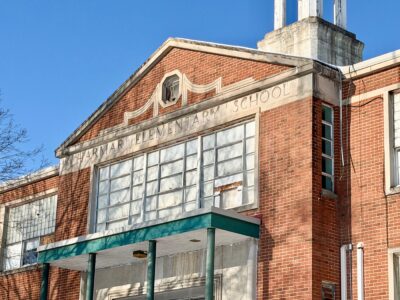
- (Photo by Amber Phipps) The future of the former Harmar Elementary School property is being discussed in Marietta, and after a year‑long community engagement effort, that vision could include blending calls for historic preservation, family‑friendly recreation and a new community nonprofit hub.
-
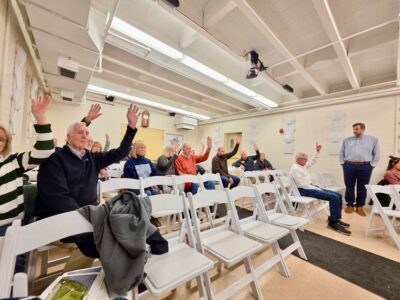
- (Photo by Gwen Sour) Members of the community ask questions about the future of the former Harmar School property during a Marietta City Council meeting Thursday.
-
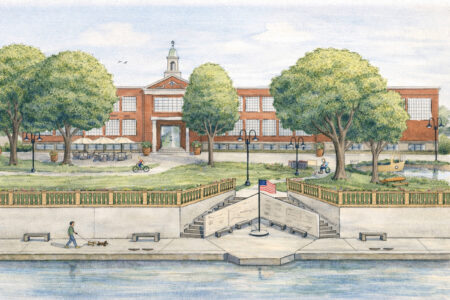
- (Photo provided) An artist rendering of what a potential riverwalk and historical memorial could look like on the site of the former Harmer Elementary.
-

- (Photo provided) An artist rendering of what a potential riverwalk could look like on the site of the former Harmer Elementary.
-
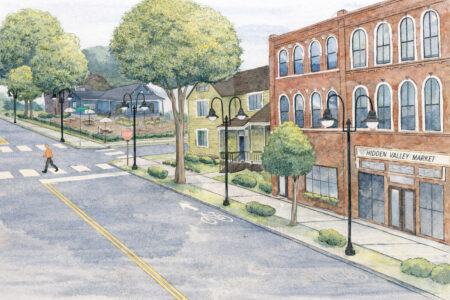
- (Photo provided) An artist rendering of what Gilman Ave could look like as a commercial and residential zone.
-
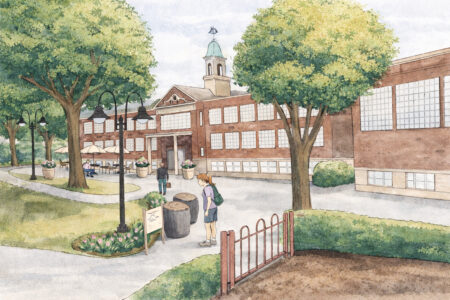
- (Photo provided) An artist’s rendering of what the future site of Harmar School could look like.
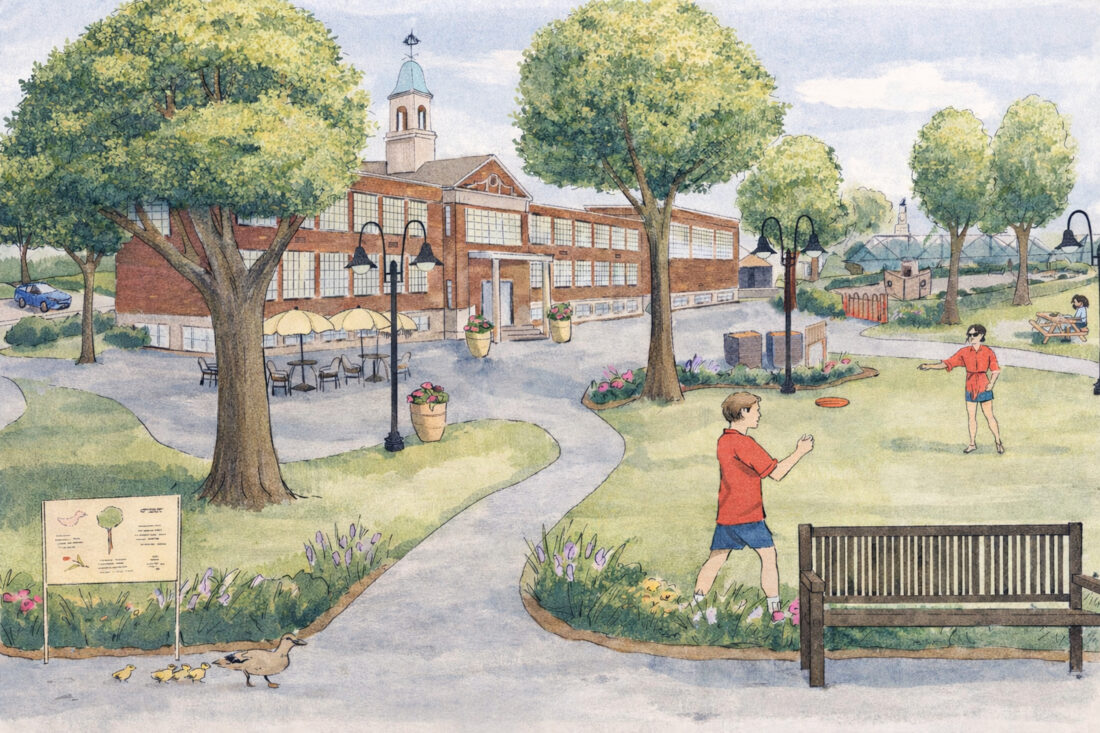
(Photo provided) An artist rendering of what the future site of Harmar School could look like.
The future of the former Harmar Elementary School property is being discussed in Marietta, and after a year‒long community engagement effort, that vision could include blending calls for historic preservation, family‒friendly recreation and a new community nonprofit hub.
Harmer officially closed its doors to students at the beginning of the 2021-2022 school year, following a board decision made in February 2020. Russ Garrison, who currently serves on the board and was board president at the time, said the move to consolidate students out of Harmer and other buildings was driven primarily by educational concerns. He said by consolidating students into larger grade-level groupings – such as the current 3-6 configuration – the district gained more classrooms and more teachers per grade.
“You now have seven or eight classrooms at the same grade,”Garrison said. “As you break into groups, your group with similar needs now instead of two or three kids, is eight or ten, and you have much better flexibility to meet the needs of that specific group for enrichment or remedial work, to bring them up, or to catch up with the class, so to speak.”
Garrison said financial pressures also played a role.
“There’s always an economic aspect as well, that operating the six buildings is more expensive than operating four, and we were in a very tight financial position,” he said.
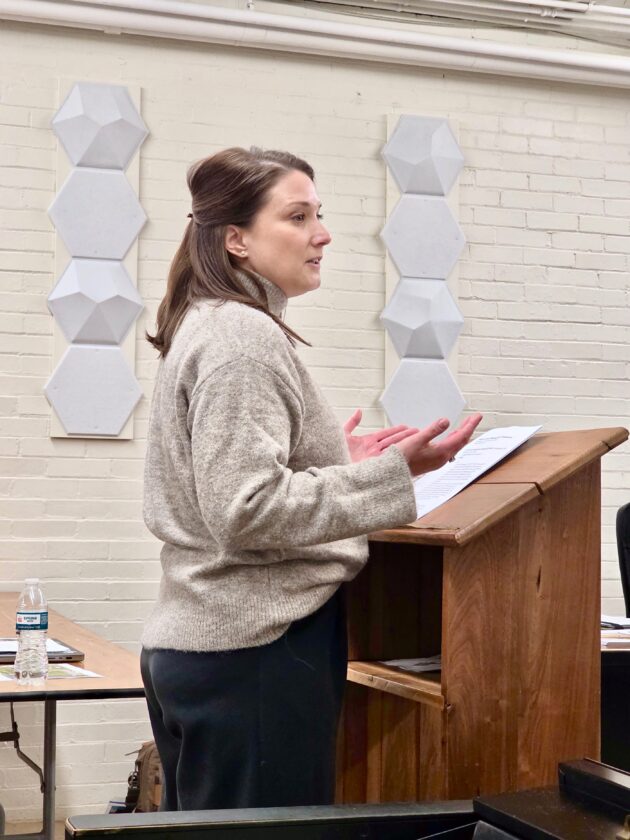
(Photo by Gwen Sour) Stéphanie McManus, managing principal of Neighborhood Strategies, talks to Marietta City Council Thursday night about the future of the former Harmar School property.
An assessment into what the property could become was initiated by Marietta City Planning and Development Director Geoff Schenkel and led by Neighborhood Strategies through the Mayor’s Partnership for Progress at Ohio University. He said whether the city wanted to be drawn into the discussion or not, they would be and to avoid being unprepared when and if the school board decides to dispose of the property, the city chose to “do its homework” now.
“It was a relatively easy thing for my department to write a little more than $51,000 grant to the Mayor’s Partnership for Progress at the Voinovich School at OU, which we competed for and received,” Schenkel said.
The assessment included input from two exploratory site visits, background research and analysis, ongoing public project website, six oversight steering committee meetings, two public meetings, two public interactive surveys, a stakeholder charrette planning workshop, youth focused websites, a youth survey, a youth drawing activity and stakeholder interviews.
Stephanie McManus, managing principal for Neighborhood Strategies, stressed this assessment was not a final redevelopment plan, but a community-informed roadmap of what the site could become.
“This effort was fundamentally a community listening process, informed by a lens of feasibility from a community and project planning standpoint,” McManus said. “The final vision we will present at the end represents an amalgamation or the complete visual interpretation of a deliberately comprehensive process, with each step building on the last while also considering feedback across the project as a whole.”
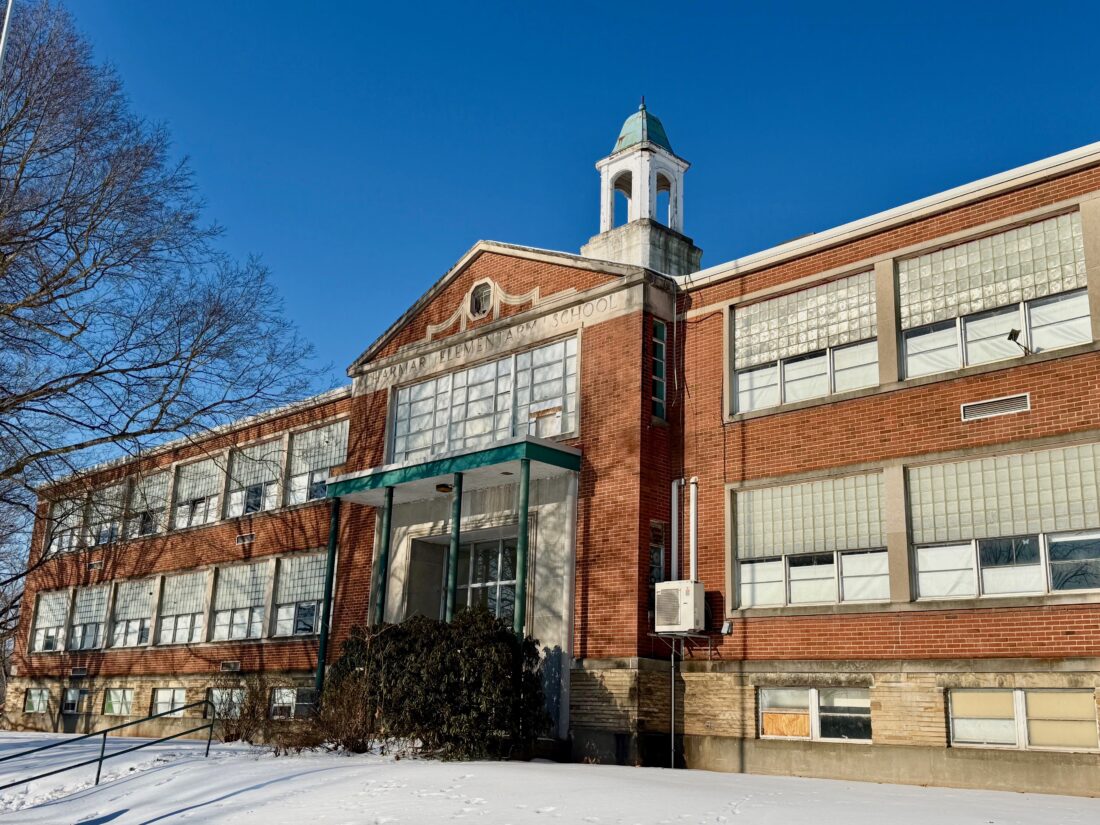
(Photo by Amber Phipps) The future of the former Harmar Elementary School property is being discussed in Marietta, and after a year‑long community engagement effort, that vision could include blending calls for historic preservation, family‑friendly recreation and a new community nonprofit hub.
After the assessment was complete, the group made presentations to both the Marietta City Schools Board of Education and Marietta City Council.
During the presentation to the Board, former member Sam Tuten said by law, the state limits how the district can handle the former school property. He said the district can either transfer or sell the property to a public entity or do a public auction.
“It’s only after the public auction that there is any kind of private sale,” Tuten told the board.
McManus said during that presentation that input from the assessment was developed into four preliminary concepts ranging from adaptive reuse of the existing school building with mixed-use development, to a fully historic park focused on Fort Harmar. She said a clear theme in the feedback was that residents did not want a single‒use project.
“Mixed use was really important,” she said. “They didn’t desire just one use for the site. They wanted multiple things that would benefit… a diverse group within the community of Marietta and Washington County. They wanted to have a lot of different amenities and activities at the site.”
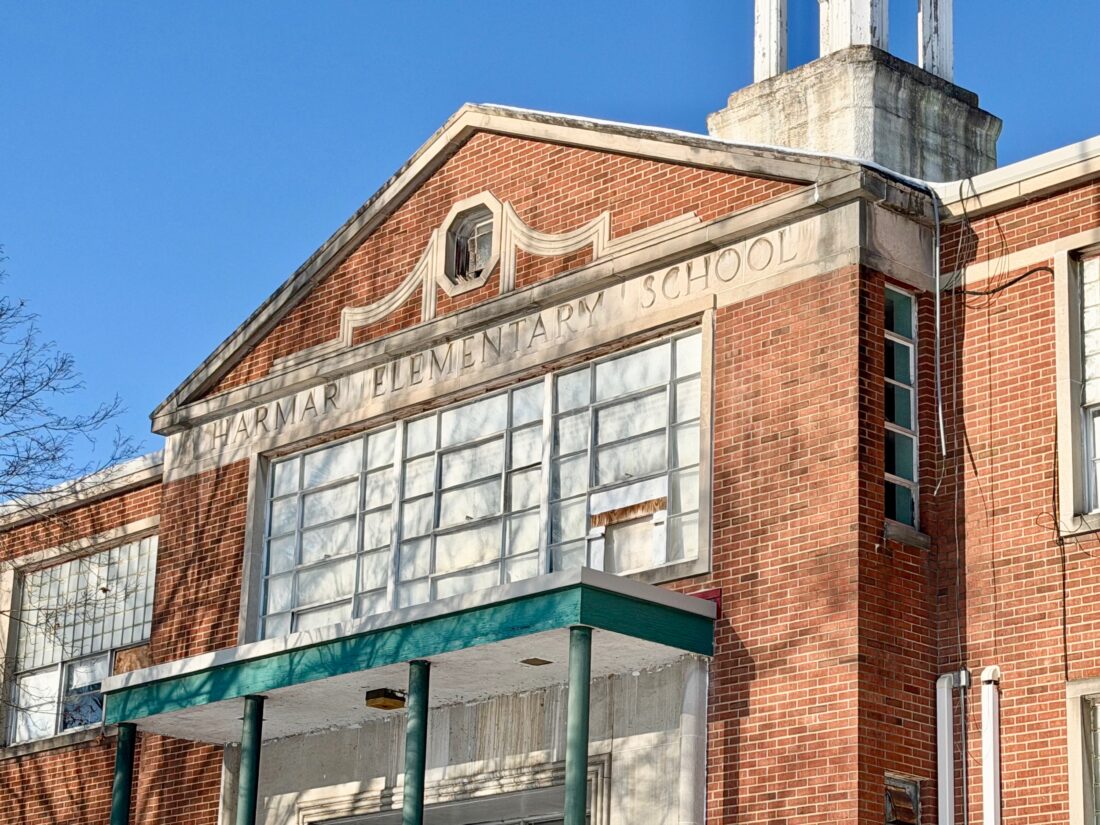
(Photo by Amber Phipps) The future of the former Harmar Elementary School property is being discussed in Marietta, and after a year‑long community engagement effort, that vision could include blending calls for historic preservation, family‑friendly recreation and a new community nonprofit hub.
She said this was then put into four preliminary concepts that were then tested with the community using a ranked‒choice survey. The concepts ranged from a “keep the building and do everything” scenario — including a shared nonprofit space, riverfront café, natural playscape and “waterscape,” and mixed‒use along Gilman Avenue — to a more limited historical park concept that closely mirrored a proposal from the Friends of Fort Harmar.
“The new park will closely resemble the natural beauty and serenity of Muskingum Park in Marietta and Fort McIntosh Park in Beaver, PA, except that our new Fort Harmar Park will overlook two rivers instead of just one,” Tom Fenton, Marietta resident and member of Friends of Fort Harmar said in a press release.
Jim Lenner, founding principal for Neighborhood Strategies, said 58% of the people surveyed wanted the property programmatically connected to Harmar Village.
“So we’re not just going to do something that doesn’t incorporate Harmar Village,” he said. “It’s not isolated. It’s connected… we want to make sure the space is being utilized to its full potential, in the public interest, not just one or two interests.”
McManus said some of the ideas were fanciful — a site‒wide trampoline park, “two muffins and a ship,” and laser tag — but many pointed toward water‒related recreation and learning.
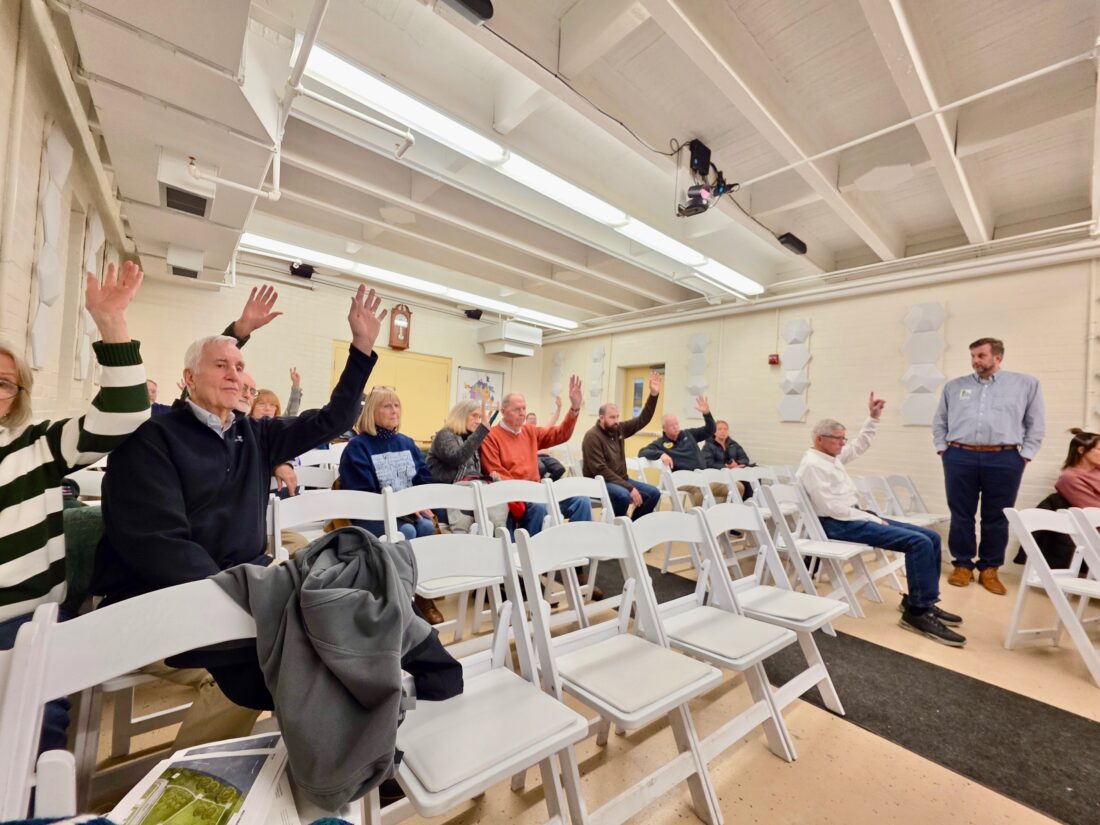
(Photo by Gwen Sour) Members of the community ask questions about the future of the former Harmar School property during a Marietta City Council meeting Thursday.
“A lot of water focused things, running the whole gamut from pool to in‒depth water amusement park,” she said “You could tell water was really important. Some of them did mention more realistic ideas that could happen at the site that we did incorporate, like, splash pads or just water activities in general.”
During a presentation to City Council, residents suggested using the property for affordable housing, but McManus concluded the structure’s layout and construction would make that option financially unrealistic for truly affordable units.
There were also concerns about unresolved property ownership issues and whether portions of the site may be historic land dating back to the 1700s. McManus said confirming ownership and easements would be a necessary step before any redevelopment could move forward. Lenner agreed, telling council members that none of the proposed concepts could proceed without first resolving property questions.
Marietta City Schools owns the building and Board President Cody Parman said the board is looking at whether this property still has value for the district and its students. He said the district is looking at possible uses to coincide with ongoing funding challenges facing educational services such as Ewing School.
“Our superintendent is talking to the Ewing School Superintendent and we’re waiting to see how all that plays out,” Parman said.
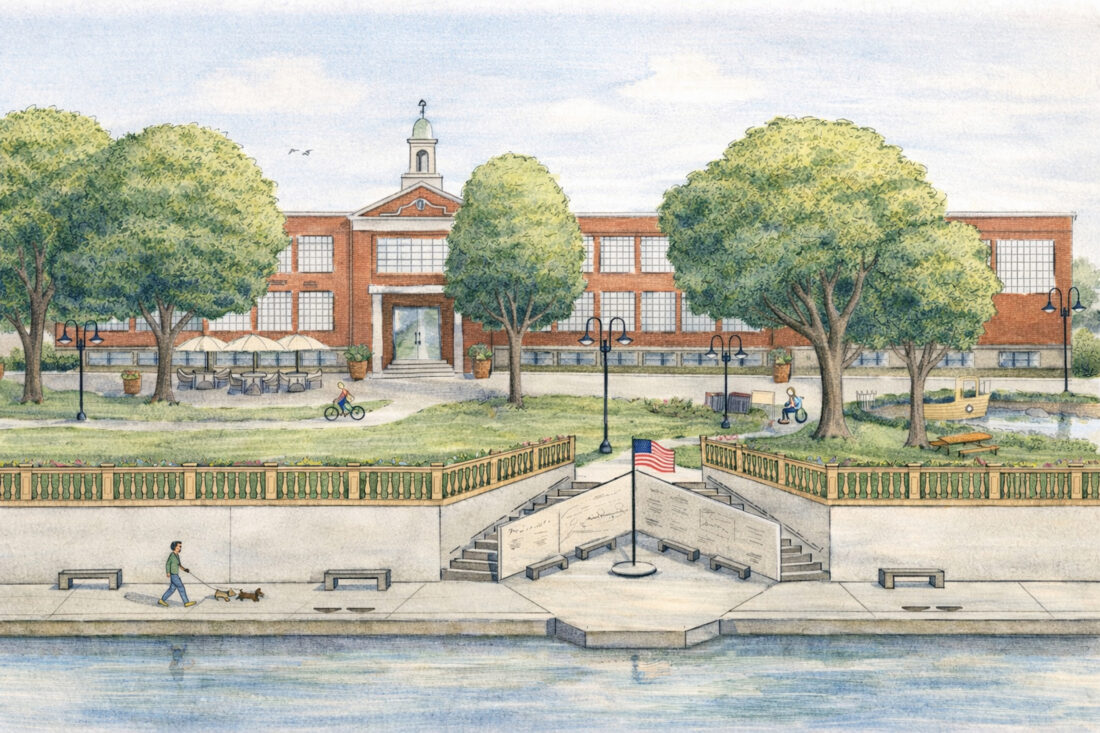
(Photo provided) An artist rendering of what a potential riverwalk and historical memorial could look like on the site of the former Harmer Elementary.
He said if the district does choose to use the building in some capacity to house students again, there would need to be significant upgrades done with funds coming from the district’s permanent improvement funds.
“It would take a significant amount of work and finances to get that building to a place where we could put kids in it for any purpose,” Parman said.
He said a Facility Committee meeting is scheduled soon to discuss that option and see if that is viable.
“Our board is committed to securing the best outcome at Harmar for both our students and the community,” he said.
McManus recommends forming an implementation committee moving forward that could include the City of Marietta, Marietta City Schools, the Southeast Ohio Port Authority, and other local partners to work through ownership, funding and phasing for the next steps in the project.
McManus said there are exciting opportunities here to incorporate engaging, quality historical components alongside other strongly desired uses.
“We’ve hinted at those in the illustrations and narrative but left the canvas blank for local input on exact design of spaces and programming,” she said.
She also said that the greenspaces and riverfront could support community events, such as the Harmar Days and Sternwheel Festivals.
“Neighborhood Strategies looks forward to seeing how this early, high-level visioning effort helps shape future conversations and outcomes,” McManus said. “And we see significant potential for this key site to enhance quality of life for Marietta residents, promote a vibrant local economy, and encourage tourism in collaboration with existing historical sites, museums and beloved establishments. We assume this early vision will be refined as it proceeds to the next steps and that all options will be considered by those involved.”
More information on the assessment and concept ideas can be found on Neighborhood Strategies’ website at: https://www.neighborhoodstrategies.co/harmar.

(Photo provided) An artist rendering of what a potential riverwalk could look like on the site of the former Harmer Elementary.
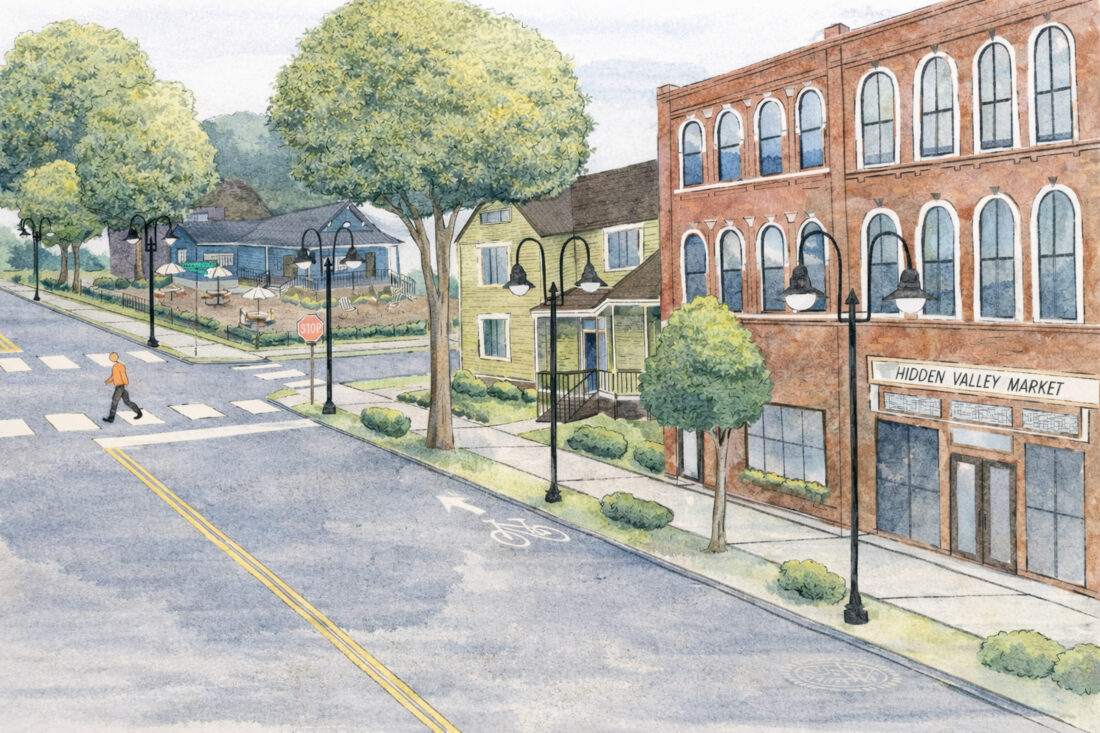
(Photo provided) An artist rendering of what Gilman Ave could look like as a commercial and residential zone.
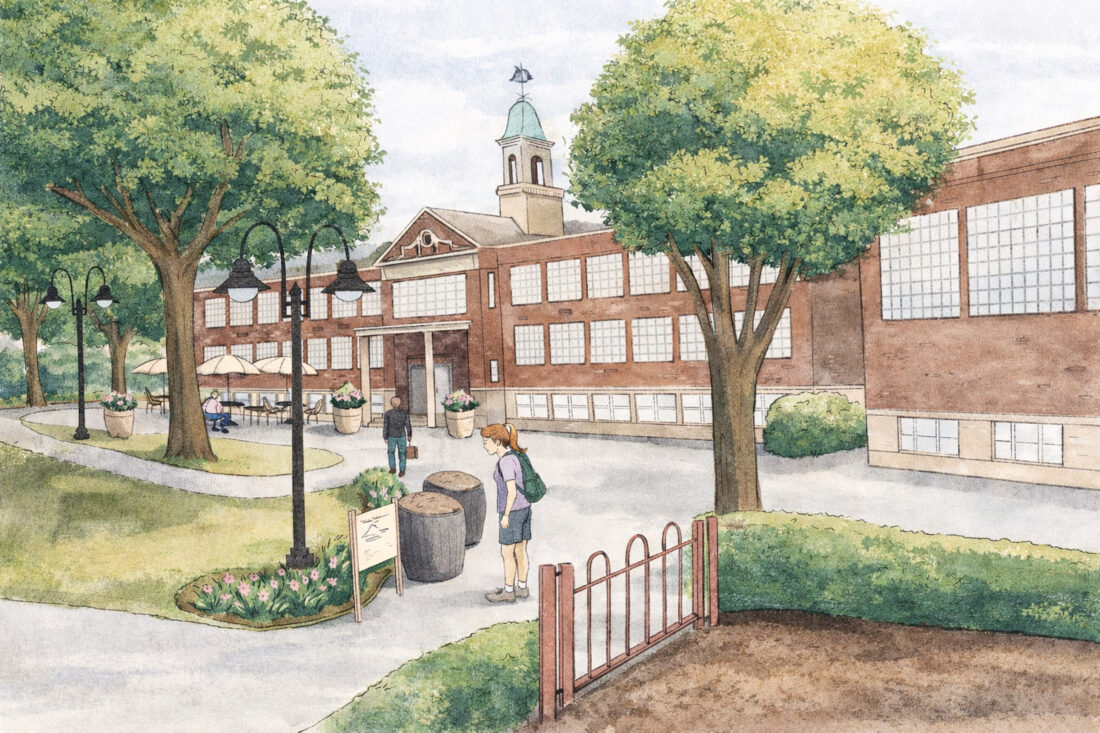
(Photo provided) An artist’s rendering of what the future site of Harmar School could look like.
Local News
School addition proposals: Community discusses future of Harmar Elementary
Commissioners select winner for Wood County “I Voted!” Sticker Contest

Teamwork makes the dream work: Parkersburg Catholic’s Sophie Lott works with others through sports, volunteer work and more

Snow falls on remaining ice across Mid-Ohio Valley
O’Neill Center releases weekly activity schedule
The O’Neill Center activity schedule for the week of Feb. 9-13: Monday, Feb. 9 - 10 a.m. – Chair ...
Info roundup: Candidates and issues appearing on primary election ballots
PARKERSBURG – All of the candidates have filed to run for the May primary which will be on Tuesday, May 5 in Ohio ...