Washington County officials: Data center could move forward without commissioners
-
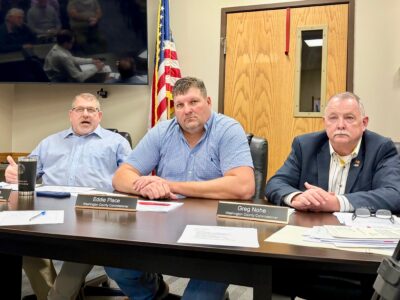
- (File Photo) Washington County Commissioner Charlie Schilling, left, responds to questions from Waterford residents regarding a preliminary data center project during a regular meeting Feb. 12.
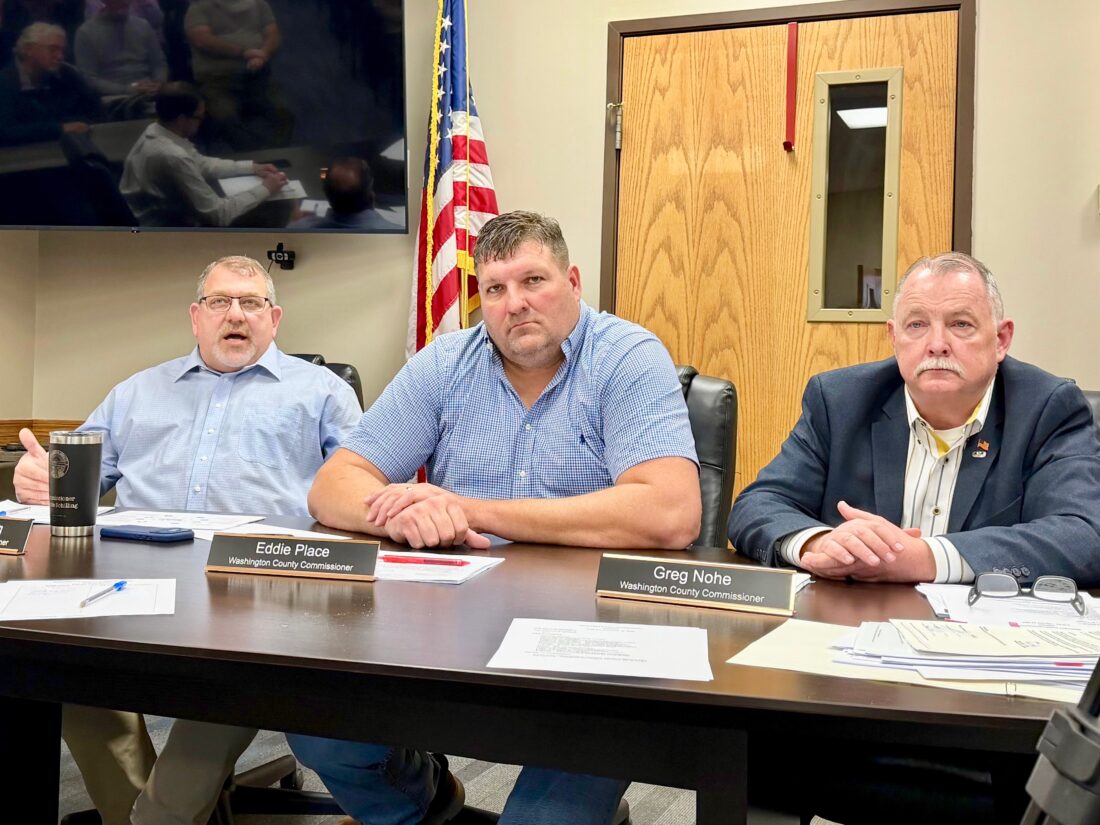
(File Photo) Washington County Commissioner Charlie Schilling, left, responds to questions from Waterford residents regarding a preliminary data center project during a regular meeting Feb. 12.
The discussion over a potential data center in Washington County continued Thursday with questions and concerns coming from the community regarding the commissioners’ roles in the process and the lack of trust between the community and the officials who represent them.
During the regular meeting of the Washington County Commission, residents who attended past meetings returned to voice concern about the NDA and proposed data center in Waterford.
Washington County resident Stephanie Lang asked the commission when the conversation started with the data centers and what the driving intent was behind the project.
“I don’t think there’s anyone here that would ever want to live near a data center,” Lang said. “Do we love the people or do we love money?”
Commissioner Charlie Schilling said there are some things such as an NDA that “are a necessary evil.” He said it is part of the rules they are bound by as commissioners, even if they’re not personally in favor of signing the NDA.
“We’re budgetary … We’re also drivers of economic development,” said Schilling. “I understand there’s concerns when it comes to the data projects and what goes into that, but from the board of commissioners perspective, the NDAs are part of a process that I can tell you I honestly don’t necessarily agree with.”
Schilling said the data center conversation began around 2021 and projects like that are becoming integrated into everyday life.
Washington County Prosecutor Nicole Coil said anything available to the public is going to be public but the NDA protects the privacy of the private entity which is entitled to remain undisclosed until an agreement has been made.
“What is being protected is the entity, who is taking part in that agreement, their private information,” said Coil. “If and when they decide to enter into an agreement with them, then it becomes public but that would discourage the type of economic development, and other types of projects, because people and other entities would be deterred from wanting to share that information.”
Coil described the process similar to “attorney-client privilege” which protects the information of both parties.
“They (data center company) can go forward without the commissioners,” she said. “There’s nothing which requires the data center to enter into a relationship or agreement with the commissioners.”
Coil said the commissioners are only exploring what opportunities could come into fruition for the county if they were to negotiate something.
“They don’t have power over the data center at all,” she said.
Marietta resident Barbara Stewart said property owners are being pitted against one another because of offers to sell their land. She said there are things that are in the commissioners control and they need to be representing the population.
“The lack of transparency here is dividing the community and that is really something that shouldn’t be happening,” said Stewart.
She said part of the commissioners job is to protect the population and look into the permits that would authorize the data center to use the county’s resources.
“That’s not our oversight,” said Schilling.
Commissioner Eddie Place said he has been doing more research and said without zoning in place, they don’t have control over the property being sold by the property owners.
Stewart asked how zoning is established.
“It’s something we’ve talked about but it’s something that gets shut down, it’s like running into a brick wall,” said Place. “A lot of people don’t want zoning, they don’t want to be told what to do out in the country.”
Schilling said the township trustees are responsible for zoning and there is one board out of the 22 townships in the county that have zoning.
“It’s maybe too late to do something, they’re already looking to sign agreements and buy land,” said Place.
Stewart said the regulation comes way after the damage. There was back and forth discussion about the “closed-loop system” the data center would use to cycle water for power. Stewart said based on the information she’s researched, there are concerns about where the replaced water goes.
Schilling said there wouldn’t be waste coming from the data center and Stewart asked to speak to an expert.
“When you involve the public, then you can get experts who know what they’re talking about, not just somebody who wants to come in here and build a data center,” said Stewart. “Of course they’re going to say it’s not hazardous waste.”
Lang also questioned the commissioner’s partnership with Sunday Creek Horizons which she said costs around $13,000 a month and equates to $156,000 annually. She asked why they needed to invest into this partnership.
Place said the Sunday Creek Horizons has opened many doors for them in terms of connections and who to reach out to. He said when he started the position as commissioner last year, it was really helpful to have that partnership.
“They don’t do the negotiations for us but they definitely open the door for us and get us to the right people,” said Place.
Schilling said this group has been beneficial when it came to House Bill 522 which Rep. Kevin Ritter had a hearing for on Wednesday.
“This group has been instrumental in us gaining our rightful funding for Wayne National Forest,” said Schilling.
According to the General Assembly of the State of Ohio, HB 522 would return the funds from oil, gas and mineral production to the county of origin.
Lang referred to Sunday Creek Horizon as “lobbyists” and Schilling said they are a “government relations firm.”
Local News
Marietta City Council discusses emergency water legislation, Maple Street repairs
Washington County officials: Data center could move forward without commissioners

Leaf on the rocks
Grand Central Mall hosting The Sportz Fanz Card Show
VIENNA — More than 70 vendors will set up at the Grand Central Mall for The Sportz Fanz Card Show that will take ...

Fancy firepower: Brooks rifle to be auctioned — again — for charity