Gas price increases add pressure across Mid-Ohio Valley economy
-
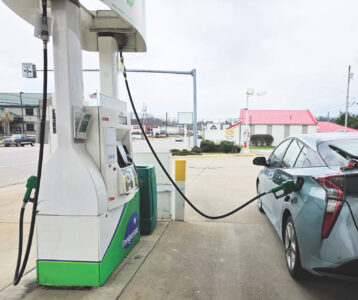
- (Photo by Gwen Sour) A car fuels up at Par-Mar on the South Side of Parkersburg Friday afternoon.
-
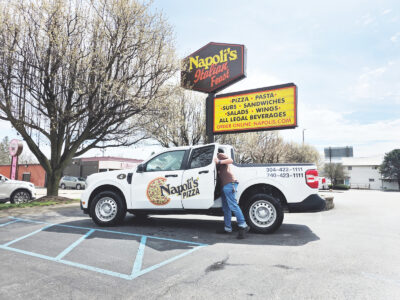
- (Photo by Gwen Sour) Alexander Van Skiver prepares to take a delivery out for Napoli’s Pizza in Belpre on Thursday.
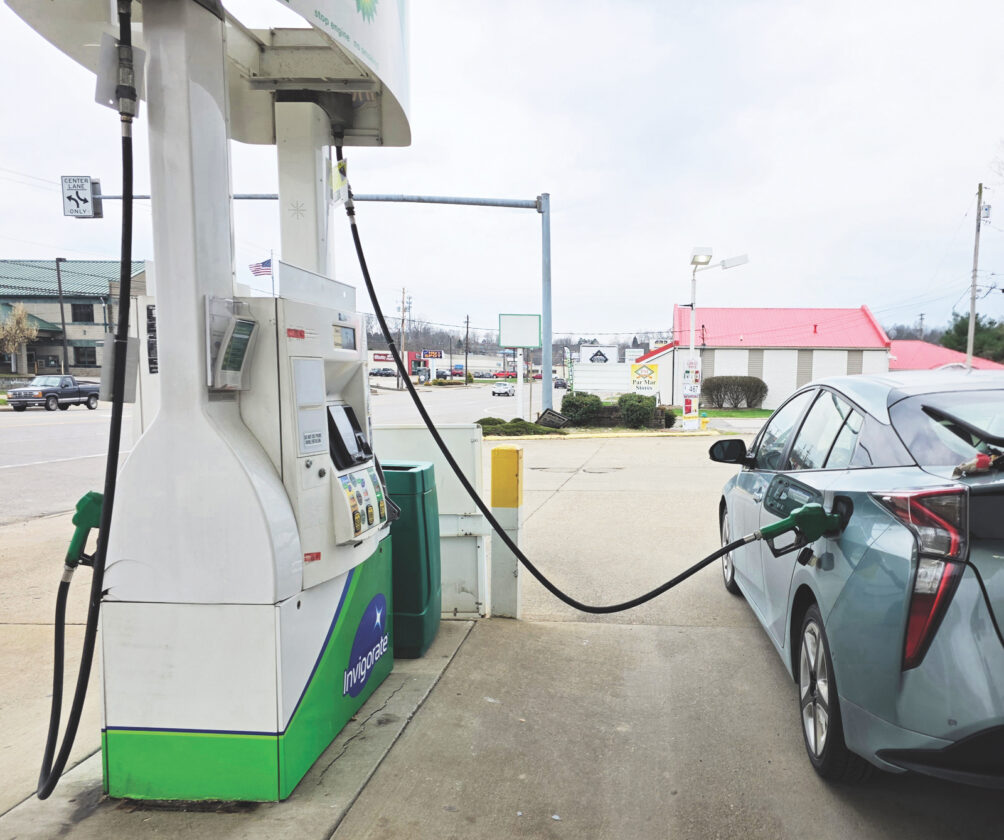
(Photo by Gwen Sour) A car fuels up at Par-Mar on the South Side of Parkersburg Friday afternoon.
Rising gas prices are beginning to ripple through the Mid-Ohio Valley, with local business owners, government officials and industry representatives warning of increasing costs and shifting consumer behavior as prices continue to climb.
According to Traci Nelson, president of the West Virginia OMEGA Oil Marketers & Grocers Association, the average price of regular gasoline in West Virginia is about $3.63 per gallon, still below the national average of roughly $3.91, but steadily increasing in recent weeks.
Nelson attributed the rise largely to what she called global supply disruptions tied to instability in the Middle East, which has affected oil production and transportation, driving up crude oil prices.
“The primary driver behind the current upward trend is global supply disruption tied to the ongoing conflict in the Middle East, including attacks and instability affecting oil production and transport in and around Iraq,” Nelson said. “These disruptions have tightened global oil supplies and pushed crude prices higher, which ultimately shows up at the pump for consumers and businesses alike.”
Local businesses say those increases are already affecting operations.
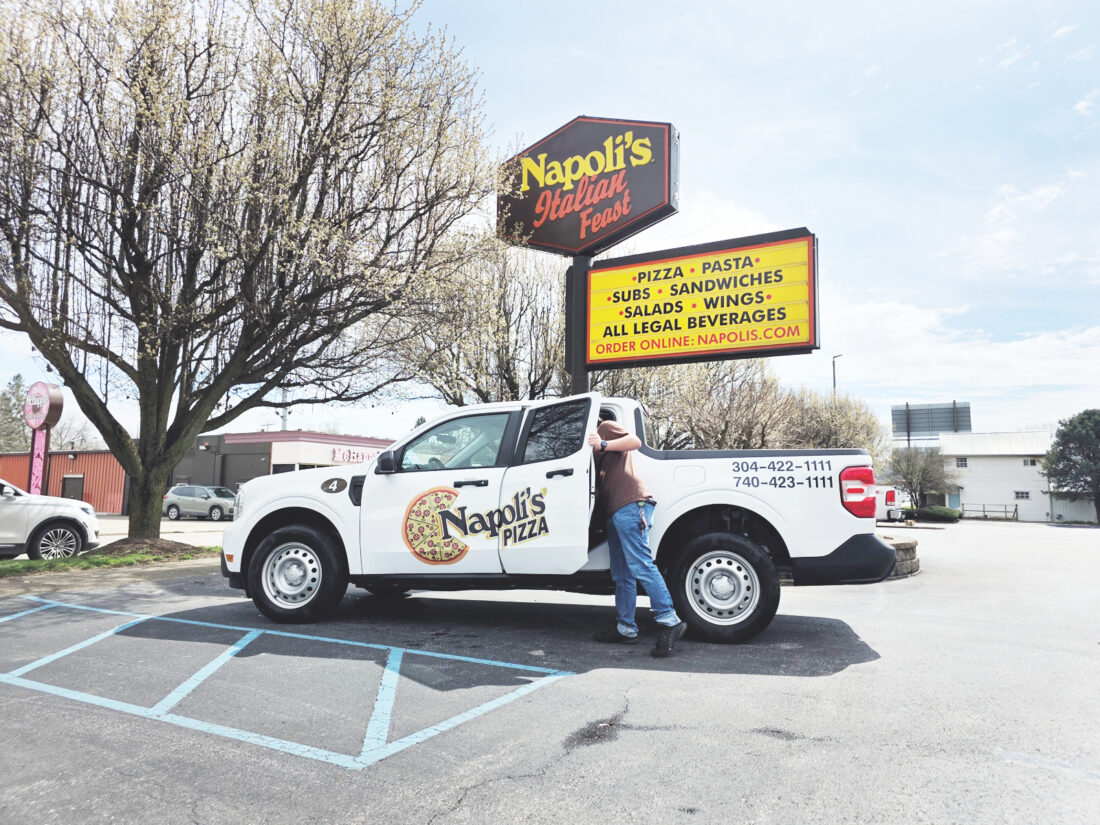
(Photo by Gwen Sour) Alexander Van Skiver prepares to take a delivery out for Napoli’s Pizza in Belpre on Thursday.
A representative of DeBarr Trucking said the company is preparing to absorb higher fuel costs as prices continue to rise.
“We’re about to start burning some expensive fuel,” the representative said, noting that while some contracts allow for percentage-based increases tied to fuel costs, many do not. “That definitely makes it a little harder.”
The representative added that if fuel prices remain elevated, companies will likely have to pass those costs along.
“The bottom line is we will have to recoup,” the representative said. “Prices will have to go up if the fuel doesn’t come down.”
Restaurants are also feeling the pressure. Wayne Waldeck, owner of Napoli’s, said the business uses more than 2,000 gallons of fuel per month for delivery vehicles, making even small increases significant.
“Every penny really counts,” Waldeck said. “It just comes off the bottom line — money we try to use for employee benefits and payroll increases.”
Waldeck said suppliers have also begun adding fuel surcharges to deliveries, compounding the impact.
“It hits from many, many angles,” he said.
If prices climb above $4 per gallon, Waldeck said the business may need to consider raising prices to offset costs.
The effects extend beyond food service and transportation. Blair Couch, Wood County Commissioner and owner-operator of DC Fleet Sales, which provides Hertz Rent-A-Car and Penske Truck Rental services, said rising gas prices are already influencing travel decisions.
“People always want to go on vacation, and the price of gas will determine where they end up going,” Couch said.
He said families often adjust plans by choosing closer destinations or consolidating travel into a single vehicle to save on fuel.
Couch also warned that higher gas prices could significantly impact moving costs, particularly for long-distance relocations using rental trucks.
“That will really hurt somebody that’s trying to move to a new opportunity and has to foot the bill themselves,” he said.
Local governments say the full impact has not yet been felt but could grow if prices continue to rise.
Vienna Mayor Chad Emrick said the city, which purchases fuel in bulk, has not experienced huge strain on their budget so far.
“We have not experienced a significant increase on our end that would put us in any budgeting crisis or shortfalls at this time,” Emrick said.
Marietta Mayor Josh Schlicher said the city’s fuel costs are partially mitigated through annual bidding and bulk purchasing, but increases still add up — particularly for departments like police.
“If gas goes up a dollar a gallon, it’s going to add significant cost,” Schlicher said, noting the police department is the city’s largest gasoline consumer.
School districts are also watching closely. Fort Frye Local Schools Superintendent Stephanie Starcher said the district has not yet felt the impact due to existing fuel reserves but is preparing for potential increases.
“We try to be very conservative in our budgeting because there are areas like this that you can’t predict,” Starcher said.
For now, many local leaders and business owners say they are hoping the current spike is temporary.
“I don’t think that anybody really has any answers right now,” the DeBarr Trucking representative said. “Obviously, going back a month would be nice.”
Local News

Teen of the week: Parkersburg South’s Zachary Farnsworth lives by the numbers

Nearly half of Ohioans don’t make enough income to be economically secure, report says

70th anniversary: Hartline
Gas price increases add pressure across Mid-Ohio Valley economy

Fort Frye club welcomes community to Senior Citizen Prom